
Monitoring soil health is essential for the success of wetland restoration projects, as it provides valuable insights into the functioning of these complex ecosystems. By understanding the intricate relationships between soil properties and plant communities, we can enhance restoration outcomes significantly and promote broader ecosystem resilience, ensuring that these vital habitats are preserved for future generations.
Soil spectroscopy has emerged as a powerful tool in this context, allowing for detailed analysis of soil composition and health that was previously unattainable. With advancements in technology, we can now monitor organic matter and other vital soil characteristics more effectively than ever, leading to better-informed management decisions and improved restoration practices.
This article explores the significance of soil health monitoring in wetland restoration, focusing on spectral characteristics, baseline measurements, and the integration of remote sensing technologies. By leveraging soil spectroscopy, we can optimize restoration efforts and track progress over time, ensuring that our interventions lead to the desired ecological outcomes and long-term sustainability of wetland ecosystems.
Why Soil Health Monitoring Is Critical in Wetland Restoration Projects
Wetlands provide critical ecosystem services, including water filtration, carbon sequestration, and biodiversity support, which are essential for both environmental health and human well-being. Monitoring soil health is vital to understanding how these ecosystems function and respond to restoration efforts, enabling us to tailor our approaches to meet specific ecological needs.
Soil health assessments help identify nutrient availability, organic matter content, and microbial activity, all of which are essential for plant growth and ecosystem stability. By establishing a baseline of soil conditions, restoration practitioners can make informed decisions about management strategies that are most likely to succeed in restoring wetland functionality.
Effective monitoring allows for the early detection of issues, such as nutrient deficiencies or erosion, which can hinder wetland recovery and ultimately compromise restoration goals. Thus, consistent soil health evaluation is a fundamental aspect of successful wetland restoration projects, ensuring that potential problems are addressed proactively rather than reactively.
Through soil spectroscopy, we can gain insights into the chemical and physical properties of wetland soils, allowing for a more nuanced understanding of underlying ecological processes. This method aids in understanding the dynamics of organic matter, which is crucial for ecosystem restoration, as it plays a significant role in nutrient cycling and habitat quality.
Ultimately, monitoring soil health contributes to the sustainability and resilience of wetland ecosystems, fostering diverse plant and animal communities that thrive in restored habitats. As we continue to refine our approaches, effective soil monitoring will remain a cornerstone of wetland restoration success, guiding future projects and enhancing our capacity to maintain these critical environments.
Spectral Characteristics of Wetland and Peat Soils
Wetland and peat soils exhibit unique spectral characteristics that reflect their organic matter content and moisture levels, which are critical indicators of soil health and functionality. By analyzing these spectral signatures, we can gain valuable insights into soil health and functionality, enabling more precise management of wetland restoration efforts.
The presence of organic matter significantly influences the reflectance properties of soil, especially in wetland environments where organic material is abundant. Wetland soils rich in organic content typically display distinct absorption features in the near-infrared range, which can be monitored through advanced spectral analysis techniques.
Different types of wetland soils can be characterized by their spectral response, assisting in the identification of specific conditions that may affect restoration success. Peat soils, for instance, exhibit strong absorption bands due to high organic matter concentration, which can be indicative of their capacity to support diverse plant communities.
Understanding these spectral characteristics enables effective monitoring of changes in soil conditions over time, providing critical feedback on the success of restoration interventions. As restoration progresses, shifts in spectral signatures can indicate improvements in soil health, allowing practitioners to adjust their strategies accordingly.
Thus, spectral analysis serves as a foundational tool for assessing the impact of restoration activities on wetland and peat soils, providing data that can guide future management decisions. By leveraging these insights, restoration efforts can be fine-tuned for better outcomes, ultimately leading to more resilient and functional ecosystems.
Establishing Pre-Restoration Baseline Measurements
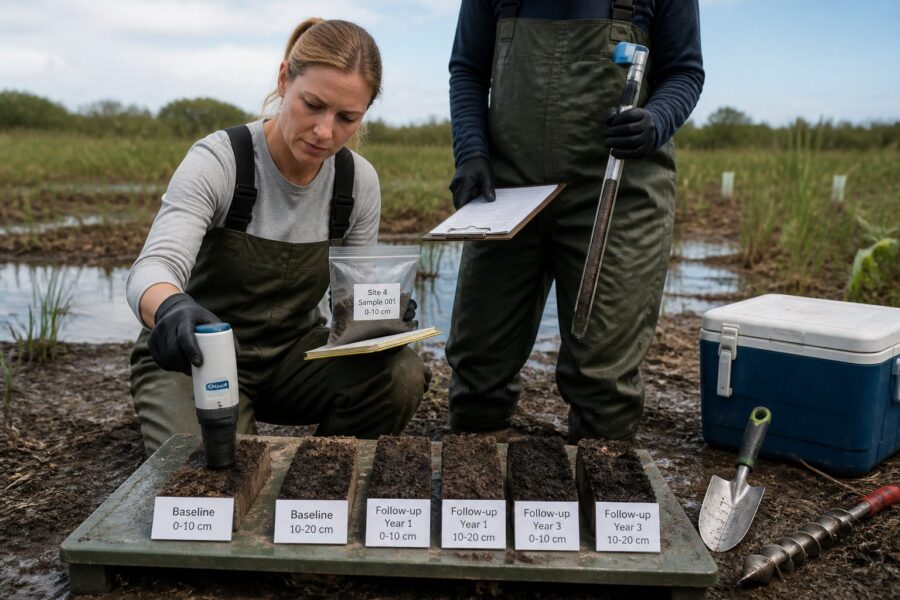
Before initiating wetland restoration, establishing a baseline of soil health is critical to understanding the current state of the ecosystem. Pre-restoration measurements provide a reference point to evaluate the effectiveness of the restoration efforts and make necessary adjustments as the project progresses.
Baseline data should include key indicators such as organic matter content, microbial activity, and nutrient levels, all of which play a significant role in overall soil health. This information allows practitioners to tailor restoration strategies based on existing conditions, ensuring that interventions are appropriate and effective in promoting recovery.
| Indicator | Measurement Method | Importance |
|---|---|---|
| Organic Matter Content | Loss on Ignition | Indicates nutrient availability |
| Nutrient Levels | Soil Testing | Guides fertilization strategies |
| Microbial Activity | Respiration Rates | Reflects soil health |
| pH Levels | pH Meter | Affects nutrient availability |
By collecting comprehensive baseline data, restoration practitioners can identify specific challenges and opportunities that may arise during the restoration process. This proactive approach sets the stage for successful restoration outcomes, as it enables practitioners to respond effectively to changing conditions in the field.
Tracking Organic Carbon Accumulation Through Post-Restoration Scans
Post-restoration monitoring is essential for assessing the effectiveness of strategies aimed at restoring organic carbon in wetland soils, which is a critical component of overall soil health. Soil spectroscopy provides a non-invasive method for tracking organic carbon accumulation over time, offering a practical solution for ongoing evaluation of restoration success.
By conducting regular spectral scans, researchers can detect changes in organic matter content that signify restoration success or highlight areas needing additional intervention. This continuous monitoring allows for adjustments to management practices when necessary, ensuring that restoration goals remain aligned with ecological needs.
Additionally, tracking organic carbon accumulation helps quantify the carbon sequestration potential of restored wetlands, further emphasizing the environmental benefits of these projects. This data can be crucial for regulatory compliance and environmental credit trading, making it an important aspect of the economic viability of wetland restoration efforts.
Through consistent monitoring, we can build a comprehensive understanding of how restored ecosystems develop over time, providing valuable insights into the long-term impacts of restoration practices. This information is invaluable for refining restoration techniques and enhancing ecosystem services, ultimately leading to healthier, more resilient wetlands.
Ultimately, tracking organic carbon with soil spectroscopy fosters a more informed approach to wetland management, allowing practitioners to demonstrate the effectiveness of their restoration efforts. By leveraging this technology, practitioners can ensure better outcomes for both the environment and local communities, emphasizing the importance of sustainable practices in ecological restoration.
Detecting Anaerobic Soil Conditions With Spectral Indices
Anaerobic conditions in wetland soils can significantly impact plant growth and microbial processes, leading to potentially detrimental effects on ecosystem health. Spectral indices derived from soil spectroscopy can effectively identify these conditions, providing critical information for managing wetland restoration efforts.
By analyzing specific spectral features, we can detect the presence of waterlogged conditions that indicate anaerobic environments, which may hinder plant growth and microbial activity. This information is vital for understanding the health of wetland ecosystems, as anaerobic conditions can lead to nutrient imbalances and reduced biodiversity.
- Soil moisture content
- Oxidation-reduction potential
- Plant stress indicators
- Microbial community analysis
- Hydric soil indicators
Detecting anaerobic conditions allows for timely interventions to promote healthier soil environments, which are essential for the success of wetland restoration projects. Restoration practitioners can adjust water management practices based on these insights for improved outcomes, ensuring that wetland ecosystems can thrive.
Ultimately, utilizing spectral indices to monitor anaerobic conditions enhances our understanding of wetland dynamics, enabling us to make informed decisions regarding restoration practices. This knowledge is crucial for developing effective restoration strategies that promote ecosystem resilience and long-term sustainability.
How Plant Community Recovery Correlates With Soil Spectral Shifts
The recovery of plant communities in restored wetlands is often closely linked to changes in soil properties, illustrating the interdependence of soil health and vegetation dynamics. Soil spectral shifts can serve as indicators of ecological recovery and health, providing valuable feedback on the effectiveness of restoration strategies.
By monitoring the spectral signatures of soil, we can observe trends that correlate with plant community dynamics, helping to identify which restoration techniques are most effective. This relationship can provide insights into the effectiveness of restoration techniques, allowing practitioners to refine their approaches based on empirical data.
Tracking changes in soil spectra helps identify shifts in nutrient availability and organic matter content, both of which are crucial for supporting healthy plant communities. This information allows practitioners to adapt management strategies to better support plant recovery, ensuring that restored ecosystems can flourish.
Understanding the connection between soil spectral shifts and plant community recovery is vital for successful restoration, as it underscores the importance of monitoring soil health. This knowledge helps enhance the resilience and diversity of restored ecosystems, ultimately contributing to the sustainability of wetland environments.
Remote Sensing Integration for Large-Scale Wetland Monitoring
Integrating remote sensing technologies with soil spectroscopy can revolutionize wetland monitoring on a large scale, enabling us to gather data across extensive areas with efficiency and precision. This combination allows for comprehensive assessments of wetland health and dynamics across vast landscapes, making it easier to identify changes and trends over time.
Remote sensing provides an efficient means of gathering data over extensive areas, complementing ground-based spectroscopy with broader coverage. By combining these methods, we can improve our understanding of wetland ecosystems and their responses to restoration efforts, ultimately leading to more effective management strategies.
Utilizing remote sensing can enhance the spatial resolution of soil monitoring, allowing for targeted management interventions based on identified problem areas. This capability enables practitioners to focus their efforts where they are most needed, maximizing the effectiveness of restoration initiatives.
Moreover, integrating these technologies can facilitate the monitoring of multiple wetland indicators simultaneously, providing a more holistic view of ecosystem health. This comprehensive approach supports more informed decision-making in restoration practices, ultimately leading to better ecological outcomes.
Ultimately, the combination of remote sensing and soil spectroscopy represents a promising frontier in wetland monitoring, offering new possibilities for enhancing our understanding and management of these critical ecosystems. By harnessing these technologies, we can better protect and restore our precious wetland ecosystems, ensuring their health and sustainability for years to come.
Comparing Restored and Reference Wetland Spectral Signatures
Comparing the spectral signatures of restored wetlands with reference sites provides valuable insights into restoration success, serving as a benchmark for evaluating the effectiveness of our interventions. This analysis highlights the extent to which restored ecosystems resemble their natural counterparts, offering a clear picture of ecological recovery.
Discrepancies between restored and reference spectral signatures can indicate areas needing further management intervention, guiding practitioners in refining their restoration strategies. Through this comparison, we can refine our restoration techniques for improved ecological outcomes, ultimately enhancing the effectiveness of future projects.
Furthermore, identifying key spectral features that differ between restored and reference sites can guide future restoration projects, providing insights into which soil properties require particular attention. This information allows practitioners to focus on specific aspects of soil health that require attention, ensuring that restoration efforts are targeted and effective.
Ultimately, understanding how restored wetlands compare to natural ecosystems informs our approach to wetland management, allowing us to adopt best practices and strategies for successful restoration. This knowledge is crucial for enhancing the effectiveness of restoration initiatives, contributing to the long-term health and sustainability of wetland environments.
Reporting Carbon Credits Using Spectroscopy-Validated Soil Data
As interest in carbon credits grows, validated soil data becomes increasingly important for demonstrating the environmental benefits of restoration projects. Spectroscopy provides a reliable method for quantifying organic matter that underpins carbon credit reporting, helping to establish the credibility of wetland restoration initiatives.
By utilizing soil spectroscopy, restoration projects can effectively demonstrate their contributions to carbon sequestration, highlighting the role of wetlands in climate change mitigation. This data is vital for participating in carbon markets and ensuring project credibility, making it an essential component of successful restoration efforts.
Moreover, accurate reporting of carbon credits can incentivize further investment in wetland restoration initiatives, driving additional funding for projects that deliver tangible environmental benefits. By showcasing the diverse ecological advantages of these projects, we can attract additional funding and support from both public and private sectors.
Ultimately, the integration of spectroscopy-validated soil data into carbon credit reporting enhances the overall impact of wetland restoration efforts, ensuring that these initiatives contribute meaningfully to climate change mitigation goals. This approach fosters a sustainable future for both ecosystems and communities, emphasizing the importance of wetlands in maintaining ecological integrity and resilience.