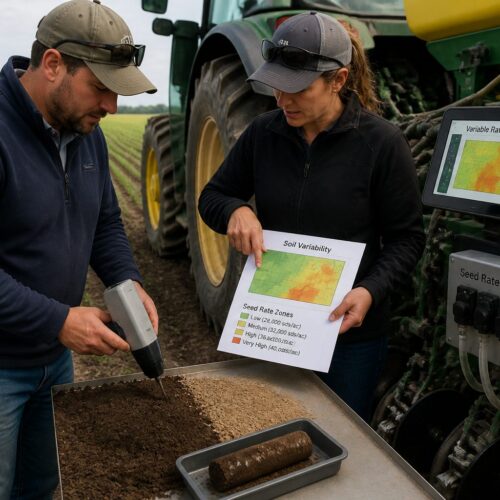


This tailored approach minimizes the risk of under- or over-application, ensuring that the right amount of herbicide reaches the target weeds while reducing the potential for negative environmental impacts. By applying the correct rates, farmers can achieve better weed management outcomes, resulting in healthier crops and improved farm profitability.
- Reduced herbicide waste, leading to cost savings and environmental benefits.
- Improved weed control effectiveness, enhancing crop health and yields.
- Enhanced crop yields through more efficient resource utilization.
- Lower environmental impact due to reduced chemical runoff and residue.
- Cost savings from optimized herbicide applications and decreased waste.
When rates are adjusted based on sorption zone classification, farmers can also improve their compliance with regulatory standards that govern herbicide use. This proactive approach can lead to better overall farm management, ensuring that practices align with both agricultural goals and environmental regulations.
Ultimately, this strategy forms part of a comprehensive weed management plan that considers the unique characteristics of each field, allowing for more sustainable farming practices in an era of increasing environmental scrutiny. By leveraging this knowledge, farmers can enhance their operations while contributing to the preservation of natural resources for future generations.
Impact of Soil Moisture on Herbicide Behavior and Spectral Predictions
Soil moisture significantly affects herbicide behavior, influencing both sorption and mobility in complex ways that can vary throughout the growing season. Understanding this relationship is essential for accurate predictions of herbicide efficacy and for timing applications to achieve optimal results.
With fluctuations in soil moisture levels, the interaction between herbicides and soil can change dramatically, leading to variations in how effectively herbicides control weed populations. This variability can lead to inconsistent weed control outcomes if not properly managed, underscoring the importance of integrating moisture data into herbicide application strategies.
Farmers must consider moisture levels when planning herbicide applications, as this can significantly impact the effectiveness of their strategies. Adjusting for soil moisture can enhance the accuracy of spectral predictions related to herbicide behavior, ensuring that applications are made under optimal conditions.
Moreover, soil moisture impacts the availability of nutrients and can affect plant health, creating an interconnected relationship between soil conditions and crop productivity. This interconnectedness highlights the need for a holistic approach to weed management that considers all aspects of soil health and moisture dynamics.
By integrating soil moisture data with herbicide application strategies, farmers can optimize weed control efforts, maximizing the effectiveness of their inputs while minimizing waste. This data-driven approach contributes to more effective precision agriculture practices that enhance productivity and sustainability.
Case Examples of Under- and Over-Application Linked to Soil Variability
Case studies have shown that under- and over-application of herbicides can be directly linked to soil variability, revealing the real-world implications of these issues in agricultural settings. These instances highlight the importance of thorough soil analysis in precision agriculture, demonstrating how understanding soil conditions can lead to more effective weed management.
For example, a farmer may apply a standard herbicide rate across a field without accounting for differing soil types and conditions present. This can lead to areas with inadequate weed control or excessive chemical application, impacting both crop yield and environmental health in ways that can be both immediate and long-lasting.
In one notable case, a field with high clay content experienced weed resurgence due to under-application of herbicides, resulting in significant economic losses for the farmer. Conversely, over-application in sandy areas led to increased herbicide runoff and potential water contamination, raising concerns about environmental safety and regulatory compliance.
These examples underscore the necessity for precise soil analysis and targeted herbicide application to address variability effectively. By addressing soil variability and tailoring applications, farmers can improve both weed management success and environmental sustainability, establishing a more responsible approach to agriculture.
As the agricultural landscape continues to evolve, adapting to these challenges will be key for future success. Implementing lessons learned from these case studies can help farmers refine their practices, ensuring that they remain competitive while also stewarding their resources responsibly.
Regulatory Considerations for Variable-Rate Herbicide Applications
Regulatory considerations play a crucial role in the implementation of variable-rate herbicide applications, as compliance with local, state, and federal guidelines is essential for sustainable agriculture practices. Farmers must stay informed about regulations governing herbicide usage, including restrictions on specific chemicals that may impact their application strategies.
Knowledge of these rules can enhance the effectiveness of precision agriculture strategies by ensuring that farmers are operating within the legal framework designed to protect both the environment and public health. In many regions, regulatory bodies require documentation of herbicide applications to ensure compliance, which includes maintaining records of application rates, timing, and targeted areas within fields.
Adhering to these regulations not only promotes environmental stewardship but also enhances public trust in agricultural practices that can sometimes be viewed with skepticism. Farmers who prioritize compliance can avoid potential legal consequences while promoting responsible land use, which is increasingly important in a world that demands transparency and accountability in food production.
In sum, understanding regulatory considerations is essential for farmers looking to implement variable-rate herbicide applications effectively and responsibly. This knowledge can facilitate better decision-making and improved outcomes in weed management, ultimately contributing to the long-term sustainability of agricultural operations.
Combining Spectroscopy With Weather Data for Improved Weed Control
Combining spectroscopy with weather data can significantly enhance weed control strategies by providing farmers with a comprehensive view of both soil and environmental conditions. This innovative approach allows farmers to integrate soil analysis with real-time environmental conditions, leading to more informed decision-making regarding herbicide applications.
By correlating spectral data with weather patterns, farmers can predict herbicide behavior more accurately, which is essential for determining optimal application times and rates. This data-driven method helps in ensuring that herbicides are applied under conditions that maximize their effectiveness while minimizing potential negative impacts on the environment.
For instance, knowing upcoming rainfall can inform decisions on herbicide application to minimize runoff, which is crucial in protecting water quality. Such proactive measures can enhance the effectiveness of weed management efforts, ultimately leading to healthier crops and more sustainable farming practices.
Moreover, leveraging both soil and weather data can lead to more sustainable practices that reduce chemical inputs while maximizing weed control efficiency. This holistic approach not only benefits farmers but also contributes to the overall health of the agricultural ecosystem, promoting biodiversity and soil health.
As agricultural technologies continue to advance, integrating these data sets will be crucial for future success in weed management and crop production. Farmers who adopt this strategy can expect better crop yields and improved environmental outcomes, positioning themselves as leaders in sustainable agriculture.
By employing infrared and near-infrared spectroscopy, farmers can obtain real-time data on soil composition, which can significantly enhance decision-making processes regarding herbicide applications. This information can lead to more informed decisions regarding herbicide applications and soil management practices, ensuring that resources are used efficiently and effectively.
| Spectroscopic Technique | Measured Parameter | Typical Application |
|---|---|---|
| NIR Spectroscopy | Clay Content | Soil Health Assessment |
| FTIR Spectroscopy | Organic Matter | Soil Fertility Analysis |
| Raman Spectroscopy | Mineral Identification | Soil Mineralogy Studies |
| UV-Vis Spectroscopy | Soil pH | Soil Acid-Base Status |
These spectroscopic methods allow for the simultaneous assessment of multiple soil characteristics, providing a more comprehensive understanding of soil health and its implications for herbicide effectiveness. Consequently, farmers can create a comprehensive profile of soil health, leading to better weed management strategies that are tailored to the specific needs of their crops.
Building Herbicide Sorption Risk Maps From Soil Spectral Data
Creating herbicide sorption risk maps is an effective way to visualize how soil properties influence herbicide behavior throughout a field. By integrating spectral data, farmers can identify areas of high and low sorption risk within their fields, allowing for targeted and efficient herbicide applications.
These maps can guide targeted herbicide applications, minimizing over-application and enhancing efficacy, which is crucial in maintaining both crop health and environmental integrity. By understanding where herbicides are likely to bind, farmers can make better decisions regarding application rates and timing, leading to more effective weed management strategies.
Additionally, these risk maps can be updated as soil conditions change over time, providing farmers with the flexibility to adapt their strategies accordingly. This adaptability ensures that farmers remain responsive to the dynamic nature of their fields, enhancing their ability to manage weeds effectively.
Utilizing technology to create these maps can significantly improve weed management strategies and enhance overall farm productivity. This approach ultimately leads to more sustainable agricultural practices and increased crop yields, which are essential for meeting the demands of a growing population.
Incorporating herbicide sorption risk maps into farm management plans helps to align agronomic practices with environmental stewardship, making it increasingly important in today’s agriculture-focused landscape. By utilizing these innovative tools, farmers can navigate the complexities of modern agriculture while ensuring the long-term health of their land.
Adjusting Herbicide Rates Based on Sorption Zone Classification
Adjusting herbicide rates based on sorption zone classification can lead to more effective weed control and better resource management overall. By understanding the sorption characteristics of different zones within a field, farmers can tailor their applications accordingly, optimizing the use of herbicides to match the needs of specific areas.
This tailored approach minimizes the risk of under- or over-application, ensuring that the right amount of herbicide reaches the target weeds while reducing the potential for negative environmental impacts. By applying the correct rates, farmers can achieve better weed management outcomes, resulting in healthier crops and improved farm profitability.
- Reduced herbicide waste, leading to cost savings and environmental benefits.
- Improved weed control effectiveness, enhancing crop health and yields.
- Enhanced crop yields through more efficient resource utilization.
- Lower environmental impact due to reduced chemical runoff and residue.
- Cost savings from optimized herbicide applications and decreased waste.
When rates are adjusted based on sorption zone classification, farmers can also improve their compliance with regulatory standards that govern herbicide use. This proactive approach can lead to better overall farm management, ensuring that practices align with both agricultural goals and environmental regulations.
Ultimately, this strategy forms part of a comprehensive weed management plan that considers the unique characteristics of each field, allowing for more sustainable farming practices in an era of increasing environmental scrutiny. By leveraging this knowledge, farmers can enhance their operations while contributing to the preservation of natural resources for future generations.
Impact of Soil Moisture on Herbicide Behavior and Spectral Predictions
Soil moisture significantly affects herbicide behavior, influencing both sorption and mobility in complex ways that can vary throughout the growing season. Understanding this relationship is essential for accurate predictions of herbicide efficacy and for timing applications to achieve optimal results.
With fluctuations in soil moisture levels, the interaction between herbicides and soil can change dramatically, leading to variations in how effectively herbicides control weed populations. This variability can lead to inconsistent weed control outcomes if not properly managed, underscoring the importance of integrating moisture data into herbicide application strategies.
Farmers must consider moisture levels when planning herbicide applications, as this can significantly impact the effectiveness of their strategies. Adjusting for soil moisture can enhance the accuracy of spectral predictions related to herbicide behavior, ensuring that applications are made under optimal conditions.
Moreover, soil moisture impacts the availability of nutrients and can affect plant health, creating an interconnected relationship between soil conditions and crop productivity. This interconnectedness highlights the need for a holistic approach to weed management that considers all aspects of soil health and moisture dynamics.
By integrating soil moisture data with herbicide application strategies, farmers can optimize weed control efforts, maximizing the effectiveness of their inputs while minimizing waste. This data-driven approach contributes to more effective precision agriculture practices that enhance productivity and sustainability.
Case Examples of Under- and Over-Application Linked to Soil Variability
Case studies have shown that under- and over-application of herbicides can be directly linked to soil variability, revealing the real-world implications of these issues in agricultural settings. These instances highlight the importance of thorough soil analysis in precision agriculture, demonstrating how understanding soil conditions can lead to more effective weed management.
For example, a farmer may apply a standard herbicide rate across a field without accounting for differing soil types and conditions present. This can lead to areas with inadequate weed control or excessive chemical application, impacting both crop yield and environmental health in ways that can be both immediate and long-lasting.
In one notable case, a field with high clay content experienced weed resurgence due to under-application of herbicides, resulting in significant economic losses for the farmer. Conversely, over-application in sandy areas led to increased herbicide runoff and potential water contamination, raising concerns about environmental safety and regulatory compliance.
These examples underscore the necessity for precise soil analysis and targeted herbicide application to address variability effectively. By addressing soil variability and tailoring applications, farmers can improve both weed management success and environmental sustainability, establishing a more responsible approach to agriculture.
As the agricultural landscape continues to evolve, adapting to these challenges will be key for future success. Implementing lessons learned from these case studies can help farmers refine their practices, ensuring that they remain competitive while also stewarding their resources responsibly.
Regulatory Considerations for Variable-Rate Herbicide Applications
Regulatory considerations play a crucial role in the implementation of variable-rate herbicide applications, as compliance with local, state, and federal guidelines is essential for sustainable agriculture practices. Farmers must stay informed about regulations governing herbicide usage, including restrictions on specific chemicals that may impact their application strategies.
Knowledge of these rules can enhance the effectiveness of precision agriculture strategies by ensuring that farmers are operating within the legal framework designed to protect both the environment and public health. In many regions, regulatory bodies require documentation of herbicide applications to ensure compliance, which includes maintaining records of application rates, timing, and targeted areas within fields.
Adhering to these regulations not only promotes environmental stewardship but also enhances public trust in agricultural practices that can sometimes be viewed with skepticism. Farmers who prioritize compliance can avoid potential legal consequences while promoting responsible land use, which is increasingly important in a world that demands transparency and accountability in food production.
In sum, understanding regulatory considerations is essential for farmers looking to implement variable-rate herbicide applications effectively and responsibly. This knowledge can facilitate better decision-making and improved outcomes in weed management, ultimately contributing to the long-term sustainability of agricultural operations.
Combining Spectroscopy With Weather Data for Improved Weed Control
Combining spectroscopy with weather data can significantly enhance weed control strategies by providing farmers with a comprehensive view of both soil and environmental conditions. This innovative approach allows farmers to integrate soil analysis with real-time environmental conditions, leading to more informed decision-making regarding herbicide applications.
By correlating spectral data with weather patterns, farmers can predict herbicide behavior more accurately, which is essential for determining optimal application times and rates. This data-driven method helps in ensuring that herbicides are applied under conditions that maximize their effectiveness while minimizing potential negative impacts on the environment.
For instance, knowing upcoming rainfall can inform decisions on herbicide application to minimize runoff, which is crucial in protecting water quality. Such proactive measures can enhance the effectiveness of weed management efforts, ultimately leading to healthier crops and more sustainable farming practices.
Moreover, leveraging both soil and weather data can lead to more sustainable practices that reduce chemical inputs while maximizing weed control efficiency. This holistic approach not only benefits farmers but also contributes to the overall health of the agricultural ecosystem, promoting biodiversity and soil health.
As agricultural technologies continue to advance, integrating these data sets will be crucial for future success in weed management and crop production. Farmers who adopt this strategy can expect better crop yields and improved environmental outcomes, positioning themselves as leaders in sustainable agriculture.
Understanding why herbicide efficacy varies across a single field is crucial for optimizing weed management strategies that are effective and environmentally conscious. Various factors contribute to this variability, including soil composition, moisture levels, and the presence of organic matter, all of which can significantly influence how well herbicides perform in different areas of a field.
The relationship between soil mineralogy and herbicide sorption is complex and multifaceted, which can have significant implications for agricultural productivity and sustainability. Knowing how these factors interact allows farmers to apply more targeted and effective weed control measures, ultimately leading to better crop yields and healthier soils.
This article explores the key drivers of herbicide efficacy variability in fields, focusing on soil characteristics that play a pivotal role in this process. By leveraging advanced soil analysis techniques, such as spectroscopy, we can improve our understanding of herbicide behavior in agricultural systems, enabling more precise management practices and better resource utilization.
Why Herbicide Efficacy Varies Across a Single Field
The efficacy of herbicides can dramatically differ across various areas of a single field due to a multitude of factors that affect their behavior and effectiveness. This inconsistency is often due to heterogeneous soil properties that affect herbicide sorption and availability, making it essential for farmers to understand these variations to improve weed management.
Soil texture, moisture, and organic matter content play significant roles in how herbicides interact with soil, impacting their absorption and persistence. These factors influence the extent to which herbicides bind to soil particles, thereby affecting their effectiveness in controlling weed populations throughout the field.
For example, areas with high clay content may retain herbicides more effectively than sandy areas, leading to variations in weed control. As a result, understanding these variations is critical for developing effective weed management strategies that can adapt to the unique characteristics of each farming environment.
Additionally, the timing of herbicide application can impact its efficacy due to changing soil conditions that occur throughout the growing season. Variable weather patterns can also exacerbate these differences in herbicide performance across a field, necessitating a flexible approach to application strategies.
Therefore, integrating soil analysis into herbicide application plans can lead to better outcomes in terms of both weed control and crop production. This approach minimizes waste and enhances crop yield through more precise management practices, ultimately contributing to sustainable agricultural practices.
Clay Content and Organic Matter as Primary Sorption Drivers
Clay content and organic matter (OM) are two primary factors that drive herbicide sorption in soils, each playing a unique role in how herbicides interact with the soil matrix. Higher clay content typically enhances the retention of herbicides, reducing their mobility and bioavailability, which can have both positive and negative consequences for weed management.
Organic matter also plays a critical role in herbicide behavior, as it can bind with chemical compounds, influencing their availability to target plants. This binding influences the effectiveness of herbicides, leading to variations in weed control efficacy that can be observed across different soil types and conditions.
In general, soils rich in organic matter may exhibit different sorption characteristics compared to those with lower organic content, which can affect how quickly and effectively herbicides act. Farmers need to be aware of these differences to optimize their herbicide applications and ensure that they achieve the desired level of weed control throughout their fields.
Understanding the interaction between clay and organic matter is essential for predicting herbicide behavior and effectiveness in various soil conditions. This knowledge can inform decisions on soil amendments and application techniques, allowing farmers to tailor their strategies to the specific needs of their soil and crops.
Effective weed management depends on recognizing how these soil properties impact herbicide sorption and behavior over time. This understanding forms the foundation for precision agriculture practices that enhance crop production while minimizing environmental impacts.
Spectroscopic Methods for Estimating Clay and OM Simultaneously
Spectroscopic methods have emerged as powerful tools for estimating soil properties, including clay content and organic matter levels, which are critical for effective weed management. These techniques offer rapid, non-destructive analysis, making them ideal for precision agriculture applications that require timely and accurate information about soil conditions.
By employing infrared and near-infrared spectroscopy, farmers can obtain real-time data on soil composition, which can significantly enhance decision-making processes regarding herbicide applications. This information can lead to more informed decisions regarding herbicide applications and soil management practices, ensuring that resources are used efficiently and effectively.
| Spectroscopic Technique | Measured Parameter | Typical Application |
|---|---|---|
| NIR Spectroscopy | Clay Content | Soil Health Assessment |
| FTIR Spectroscopy | Organic Matter | Soil Fertility Analysis |
| Raman Spectroscopy | Mineral Identification | Soil Mineralogy Studies |
| UV-Vis Spectroscopy | Soil pH | Soil Acid-Base Status |
These spectroscopic methods allow for the simultaneous assessment of multiple soil characteristics, providing a more comprehensive understanding of soil health and its implications for herbicide effectiveness. Consequently, farmers can create a comprehensive profile of soil health, leading to better weed management strategies that are tailored to the specific needs of their crops.
Building Herbicide Sorption Risk Maps From Soil Spectral Data
Creating herbicide sorption risk maps is an effective way to visualize how soil properties influence herbicide behavior throughout a field. By integrating spectral data, farmers can identify areas of high and low sorption risk within their fields, allowing for targeted and efficient herbicide applications.
These maps can guide targeted herbicide applications, minimizing over-application and enhancing efficacy, which is crucial in maintaining both crop health and environmental integrity. By understanding where herbicides are likely to bind, farmers can make better decisions regarding application rates and timing, leading to more effective weed management strategies.
Additionally, these risk maps can be updated as soil conditions change over time, providing farmers with the flexibility to adapt their strategies accordingly. This adaptability ensures that farmers remain responsive to the dynamic nature of their fields, enhancing their ability to manage weeds effectively.
Utilizing technology to create these maps can significantly improve weed management strategies and enhance overall farm productivity. This approach ultimately leads to more sustainable agricultural practices and increased crop yields, which are essential for meeting the demands of a growing population.
Incorporating herbicide sorption risk maps into farm management plans helps to align agronomic practices with environmental stewardship, making it increasingly important in today’s agriculture-focused landscape. By utilizing these innovative tools, farmers can navigate the complexities of modern agriculture while ensuring the long-term health of their land.
Adjusting Herbicide Rates Based on Sorption Zone Classification
Adjusting herbicide rates based on sorption zone classification can lead to more effective weed control and better resource management overall. By understanding the sorption characteristics of different zones within a field, farmers can tailor their applications accordingly, optimizing the use of herbicides to match the needs of specific areas.
This tailored approach minimizes the risk of under- or over-application, ensuring that the right amount of herbicide reaches the target weeds while reducing the potential for negative environmental impacts. By applying the correct rates, farmers can achieve better weed management outcomes, resulting in healthier crops and improved farm profitability.
- Reduced herbicide waste, leading to cost savings and environmental benefits.
- Improved weed control effectiveness, enhancing crop health and yields.
- Enhanced crop yields through more efficient resource utilization.
- Lower environmental impact due to reduced chemical runoff and residue.
- Cost savings from optimized herbicide applications and decreased waste.
When rates are adjusted based on sorption zone classification, farmers can also improve their compliance with regulatory standards that govern herbicide use. This proactive approach can lead to better overall farm management, ensuring that practices align with both agricultural goals and environmental regulations.
Ultimately, this strategy forms part of a comprehensive weed management plan that considers the unique characteristics of each field, allowing for more sustainable farming practices in an era of increasing environmental scrutiny. By leveraging this knowledge, farmers can enhance their operations while contributing to the preservation of natural resources for future generations.
Impact of Soil Moisture on Herbicide Behavior and Spectral Predictions
Soil moisture significantly affects herbicide behavior, influencing both sorption and mobility in complex ways that can vary throughout the growing season. Understanding this relationship is essential for accurate predictions of herbicide efficacy and for timing applications to achieve optimal results.
With fluctuations in soil moisture levels, the interaction between herbicides and soil can change dramatically, leading to variations in how effectively herbicides control weed populations. This variability can lead to inconsistent weed control outcomes if not properly managed, underscoring the importance of integrating moisture data into herbicide application strategies.
Farmers must consider moisture levels when planning herbicide applications, as this can significantly impact the effectiveness of their strategies. Adjusting for soil moisture can enhance the accuracy of spectral predictions related to herbicide behavior, ensuring that applications are made under optimal conditions.
Moreover, soil moisture impacts the availability of nutrients and can affect plant health, creating an interconnected relationship between soil conditions and crop productivity. This interconnectedness highlights the need for a holistic approach to weed management that considers all aspects of soil health and moisture dynamics.
By integrating soil moisture data with herbicide application strategies, farmers can optimize weed control efforts, maximizing the effectiveness of their inputs while minimizing waste. This data-driven approach contributes to more effective precision agriculture practices that enhance productivity and sustainability.
Case Examples of Under- and Over-Application Linked to Soil Variability
Case studies have shown that under- and over-application of herbicides can be directly linked to soil variability, revealing the real-world implications of these issues in agricultural settings. These instances highlight the importance of thorough soil analysis in precision agriculture, demonstrating how understanding soil conditions can lead to more effective weed management.
For example, a farmer may apply a standard herbicide rate across a field without accounting for differing soil types and conditions present. This can lead to areas with inadequate weed control or excessive chemical application, impacting both crop yield and environmental health in ways that can be both immediate and long-lasting.
In one notable case, a field with high clay content experienced weed resurgence due to under-application of herbicides, resulting in significant economic losses for the farmer. Conversely, over-application in sandy areas led to increased herbicide runoff and potential water contamination, raising concerns about environmental safety and regulatory compliance.
These examples underscore the necessity for precise soil analysis and targeted herbicide application to address variability effectively. By addressing soil variability and tailoring applications, farmers can improve both weed management success and environmental sustainability, establishing a more responsible approach to agriculture.
As the agricultural landscape continues to evolve, adapting to these challenges will be key for future success. Implementing lessons learned from these case studies can help farmers refine their practices, ensuring that they remain competitive while also stewarding their resources responsibly.
Regulatory Considerations for Variable-Rate Herbicide Applications
Regulatory considerations play a crucial role in the implementation of variable-rate herbicide applications, as compliance with local, state, and federal guidelines is essential for sustainable agriculture practices. Farmers must stay informed about regulations governing herbicide usage, including restrictions on specific chemicals that may impact their application strategies.
Knowledge of these rules can enhance the effectiveness of precision agriculture strategies by ensuring that farmers are operating within the legal framework designed to protect both the environment and public health. In many regions, regulatory bodies require documentation of herbicide applications to ensure compliance, which includes maintaining records of application rates, timing, and targeted areas within fields.
Adhering to these regulations not only promotes environmental stewardship but also enhances public trust in agricultural practices that can sometimes be viewed with skepticism. Farmers who prioritize compliance can avoid potential legal consequences while promoting responsible land use, which is increasingly important in a world that demands transparency and accountability in food production.
In sum, understanding regulatory considerations is essential for farmers looking to implement variable-rate herbicide applications effectively and responsibly. This knowledge can facilitate better decision-making and improved outcomes in weed management, ultimately contributing to the long-term sustainability of agricultural operations.
Combining Spectroscopy With Weather Data for Improved Weed Control
Combining spectroscopy with weather data can significantly enhance weed control strategies by providing farmers with a comprehensive view of both soil and environmental conditions. This innovative approach allows farmers to integrate soil analysis with real-time environmental conditions, leading to more informed decision-making regarding herbicide applications.
By correlating spectral data with weather patterns, farmers can predict herbicide behavior more accurately, which is essential for determining optimal application times and rates. This data-driven method helps in ensuring that herbicides are applied under conditions that maximize their effectiveness while minimizing potential negative impacts on the environment.
For instance, knowing upcoming rainfall can inform decisions on herbicide application to minimize runoff, which is crucial in protecting water quality. Such proactive measures can enhance the effectiveness of weed management efforts, ultimately leading to healthier crops and more sustainable farming practices.
Moreover, leveraging both soil and weather data can lead to more sustainable practices that reduce chemical inputs while maximizing weed control efficiency. This holistic approach not only benefits farmers but also contributes to the overall health of the agricultural ecosystem, promoting biodiversity and soil health.
As agricultural technologies continue to advance, integrating these data sets will be crucial for future success in weed management and crop production. Farmers who adopt this strategy can expect better crop yields and improved environmental outcomes, positioning themselves as leaders in sustainable agriculture.