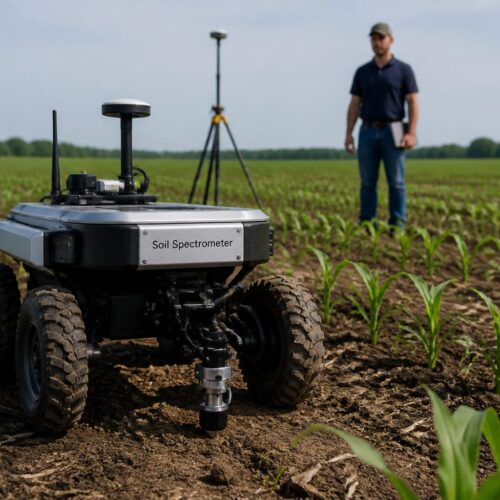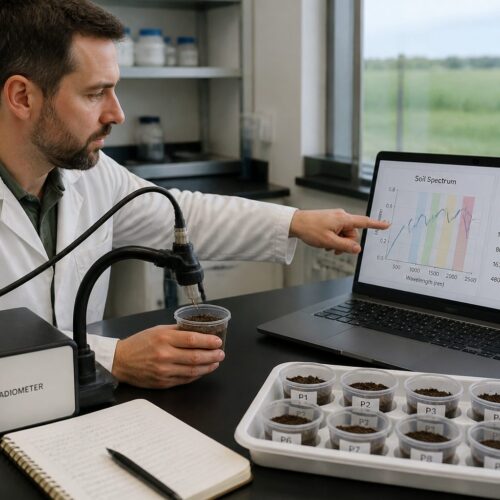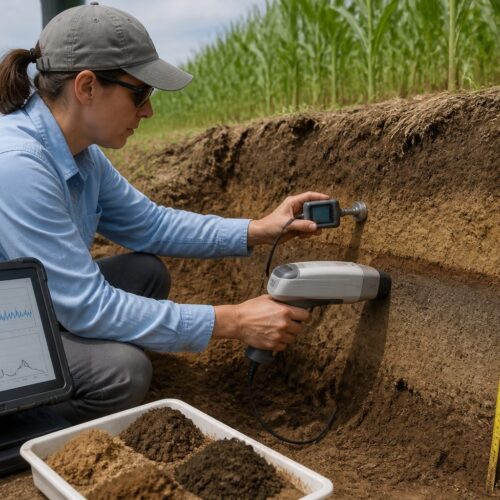

The advancement of precision agriculture relies heavily on accurate soil spectral models that can predict various soil properties and behaviors. However, a significant data problem persists that hinders the development of global soil spectral models, preventing the agricultural sector from fully realizing the potential benefits of these technological advancements.
Many farms, research facilities, and agricultural agencies possess valuable soil data that could contribute to these models, yet they face challenges in sharing this information effectively. Concerns over data privacy, security, and intellectual property often prevent collaboration, limiting the potential of soil spectroscopy to drive innovation and improve agricultural practices.
Federated learning offers a promising solution by enabling collaborative model training without the need for data transfer, thus addressing these challenges head-on. This innovative approach allows for the development of a federated machine learning soil spectral library that can leverage data from multiple sources while respecting privacy and ownership, ultimately enhancing the robustness of soil spectral modeling.
The Data Problem Holding Back Global Soil Spectral Models
Despite the wealth of soil data available across various institutions, the lack of a unified approach has stunted the progress of soil spectral modeling significantly. Different institutions often work in silos, leading to duplicated efforts, inconsistent model outputs, and missed opportunities for collaboration that could otherwise accelerate advancements in soil science.
This fragmentation results in significant barriers to the creation of robust, generalized models that are applicable across diverse agricultural contexts and environments. Without a collaborative framework, the agricultural sector struggles to harness the full potential of soil spectroscopy, which is crucial for optimizing yield and enhancing sustainability in farming practices.
Moreover, the data that is collected often varies widely in quality, format, and accuracy, complicating model training efforts and reducing the reliability of the resulting models. Addressing these disparities is crucial for developing reliable soil spectral models that can be effectively utilized in precision agriculture, providing farmers with actionable insights based on accurate data.
The reliance on centralized data repositories also raises significant concerns regarding data security and ownership, which can deter potential contributors from sharing their valuable information. Stakeholders are increasingly seeking solutions that allow them to maintain control over their data while still contributing to broader initiatives that aim to enhance soil health and productivity.
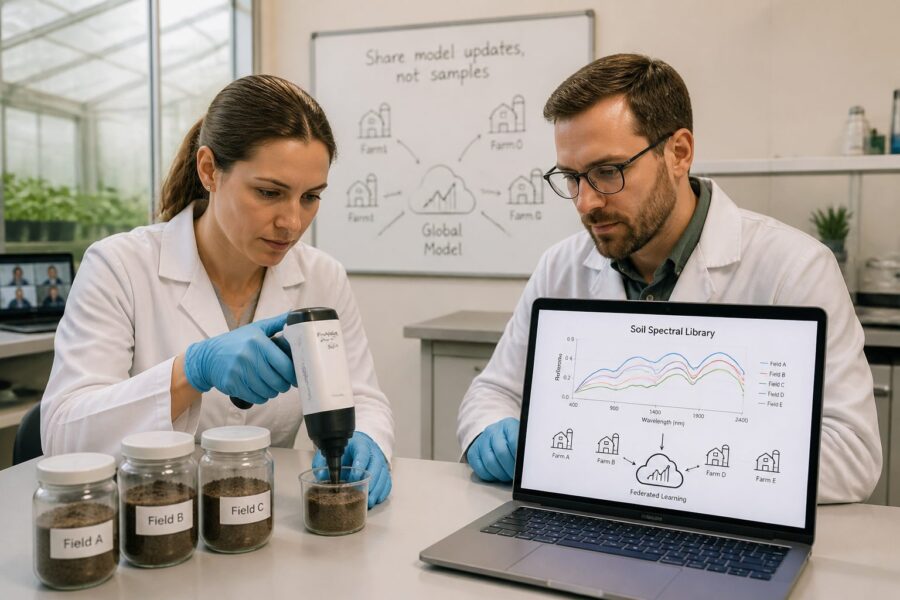
Federated learning presents a viable solution by allowing organizations to collaboratively train models without sharing raw data, thereby preserving data privacy and ownership. This approach not only enhances the collaborative development of a distributed soil spectral model that can learn from diverse datasets but also builds trust among participants, fostering a more inclusive research environment.
How Federated Learning Enables Collaborative Model Training Without Data Transfer
Federated learning is a cutting-edge technique that allows multiple parties to collaboratively train machine learning models while keeping their data local. Participants can compute model updates locally on their data and share only these updates, rather than the data itself, significantly mitigating the risk of data breaches and enhancing overall security.
This method not only protects sensitive information but also reduces the need for extensive data storage and management infrastructures, which can be costly and complex to maintain. As a result, federated learning soil data sharing can significantly enhance the efficiency of model training, enabling quicker and more effective updates to soil spectral models.
By aggregating insights from diverse datasets, federated learning enables the creation of more accurate soil spectral models that are reflective of a wider range of conditions and variables. This collaborative soil spectroscopy machine learning approach leverages the strengths of various contributors while mitigating risks associated with data handling, thus promoting a more comprehensive understanding of soil properties.
Additionally, federated learning facilitates continuous model improvement as new data becomes available, allowing models to evolve in response to changing agricultural conditions and advances in technology. This adaptability is essential for keeping pace with the evolving needs of precision agriculture, where timely and relevant information can significantly impact decision-making processes.
Ultimately, federated learning represents a paradigm shift in how agricultural data can be utilized, enabling stakeholders to collaborate effectively without compromising their data privacy. It fosters an environment of collaboration while ensuring that individual contributors retain ownership of their valuable soil data, thus encouraging wider participation in soil spectral modeling initiatives.
Architecture of a Federated Soil Spectral Library System
A federated soil spectral library system consists of several key components that work together seamlessly to facilitate collaborative model training. The architecture typically includes local data sources, a central server for aggregation, and secure communication protocols that ensure data integrity and privacy throughout the process.
Local data sources, such as farms and laboratories, generate and store soil spectral data that is critical for model training. These sources employ machine learning algorithms to train models locally, ensuring data privacy and security while contributing to the collective advancement of soil spectral libraries.
| Component | Function | Participants |
|---|---|---|
| Local Data Sources | Collect and preprocess soil data | Farms, Labs |
| Central Server | Aggregate model updates | Research Institutions |
| Communication Protocols | Secure data transmission | All Participants |
| Model Training Algorithms | Enhance model accuracy | ML Experts |
Secure communication protocols ensure that updates to the model are shared without exposing sensitive data to potential threats, which is vital in maintaining the trust of all participants involved. This architecture supports a collaborative environment conducive to developing a comprehensive soil spectral library that is both reliable and robust.
As model updates are aggregated, participants receive improved models that reflect the collective knowledge of all contributors, leading to enhanced accuracy and reliability in soil spectral analysis. This iterative process promotes continuous learning and adaptation in soil spectral analysis, thereby ensuring that models remain relevant and effective in addressing real-world agricultural challenges.
Privacy and Intellectual Property Protections Under Federated Approaches
One of the primary benefits of federated approaches is the robust privacy and intellectual property protections they offer to all participants involved. By keeping data localized, organizations can safeguard their proprietary information while still benefiting from collaborative efforts, thus fostering an environment of trust and cooperation.
Federated learning mechanisms are designed with privacy in mind, ensuring that sensitive data never leaves its original source and is only used to inform model updates. This allows farms and laboratories to maintain control over their data, fostering trust among participants and encouraging more organizations to join the collaborative effort.
Additionally, intellectual property rights can be clearly defined at the outset of a federated project, establishing guidelines for data use and ownership. Establishing these rights reduces potential disputes and encourages more organizations to participate in collaborative soil spectroscopy machine learning, thus enriching the collective knowledge base.
Transparency is also a key element in federated learning, as participants can monitor how their data is utilized in model training and updates. This openness helps build confidence in the federated learning soil data sharing process, ensuring that all contributors feel valued and respected.
Ultimately, privacy and intellectual property protections under federated approaches enhance the sustainability of collaborative efforts in soil science and agriculture. This promotes innovation and the development of advanced soil spectral models that can lead to significant improvements in agricultural productivity and sustainability.
Performance of Federated Models vs. Centralized Library Benchmarks
When comparing federated models to centralized library benchmarks, several performance metrics come into play that can influence the choice of methodology. Federated models often exhibit competitive accuracy while benefiting from a more diverse range of training data sourced from multiple contributors.
Recent studies have shown that federated models can achieve similar or even superior performance to their centralized counterparts, which is largely due to the inclusion of a wider array of soil data sources across different regions. This diversity helps to create models that are more robust and adaptable to varying agricultural conditions, enhancing their applicability in real-world scenarios.
Additionally, federated models tend to be more resilient to overfitting since they are trained on diverse datasets, which is a significant advantage in the context of machine learning. This characteristic enhances the generalizability of models in real-world agricultural scenarios, where conditions can vary widely from one location to another.
The adaptability of federated learning also allows for continuous improvements as new data is integrated into the training process. Thus, the performance of these models can evolve more rapidly compared to traditional centralized approaches, which may not have the same capacity for quick updates and adaptations based on new information.
In conclusion, federated learning offers an effective alternative to centralized soil spectral libraries, with promising performance outcomes that can significantly improve the field of precision agriculture. This approach supports a more inclusive and efficient model development process that can yield better results for farmers and agricultural stakeholders.
Participation Incentives for Farms, Labs and Agencies
Encouraging participation in federated soil spectral libraries requires clear incentives for farms, laboratories, and agencies that contribute their data and expertise. Benefits for contributors can include access to enhanced models and insights derived from collective data, which can lead to more informed decision-making in their operations.
Furthermore, participants can gain recognition for their contributions, fostering a sense of community in the agricultural sector that values collaboration and shared knowledge. This collaboration can lead to improved soil management practices, greater productivity, and ultimately, a more sustainable agricultural ecosystem.
Incentives can be structured in various ways, such as sharing model improvements or providing access to exclusive research findings that can benefit individual participants. These benefits can help attract diverse participants to the federated learning soil data sharing initiative, enriching the overall quality of the collaborative outputs.
Moreover, contributing to a federated system can enhance a participant’s reputation in the agricultural community, which is increasingly important as awareness of soil health and sustainable practices grows. As being part of innovative projects becomes more valuable, more organizations will be motivated to engage in federated learning initiatives.
- Access to advanced soil models that improve decision-making
- Collaboration with leading experts in the field of soil science
- Improved soil management practices based on collective insights
- Enhanced reputation in agriculture as a forward-thinking contributor
- Exclusive research findings that can drive innovation
Handling Heterogeneous Data Quality Across Federated Contributors
One of the major challenges in federated learning is managing heterogeneous data quality from various contributors, which can lead to inconsistencies in model training. Differences in data collection methods, equipment, and soil types can result in significant variations in data quality, complicating the development of reliable models.
To address this issue, federated learning systems must implement robust preprocessing and standardization protocols that ensure all data fed into the model meets a certain quality threshold. This enhanced focus on data quality is essential for improving overall model performance and reliability in predicting soil properties.
In addition, employing advanced algorithms can help identify and mitigate the impact of low-quality data, ensuring that only the most relevant and accurate information informs the model. This targeted approach allows federated models to learn effectively from diverse datasets, enhancing their robustness and reliability.
Moreover, establishing clear data quality metrics for contributors can foster accountability and encourage them to adhere to high standards. By setting these standards, participants are more likely to contribute high-quality data to the federated soil spectral library, thereby enhancing the overall quality of the collaborative outputs.
Ultimately, handling heterogeneous data quality is crucial for the success of federated learning in soil spectroscopy and precision agriculture. This focus on data integrity will lead to more reliable and accurate models that can significantly impact agricultural practices and sustainability.
Regulatory and Certification Pathways for Federated Model Outputs
As federated soil spectral libraries gain traction and become more widely utilized, establishing regulatory and certification pathways becomes essential for ensuring quality and reliability. These frameworks will ensure that model outputs meet industry standards and are reliable for agricultural applications, thus fostering trust among users.
Certification processes should be designed to assess the quality and accuracy of federated models, ensuring that they are suitable for real-world applications. By creating clear guidelines and standards for evaluation, stakeholders can build trust in the results generated from collaborative soil spectroscopy machine learning.
Moreover, collaboration with regulatory bodies will help align federated learning practices with existing agricultural regulations, which can facilitate smoother adoption of federated models in the agricultural sector. This alignment not only enhances compliance but also encourages stakeholders to engage more actively in federated initiatives.
Additionally, providing educational resources and training for stakeholders can enhance understanding of federated learning processes and their benefits. This knowledge will empower contributors to engage effectively in the certification process, ensuring that they are well-informed and capable of meeting the necessary standards.
In summary, developing regulatory and certification pathways is vital for the future of federated soil spectral libraries and their acceptance in the agricultural community. This will promote confidence in the collaborative model outputs and encourage widespread adoption in precision agriculture, leading to improved practices and sustainable outcomes.
Active Projects Piloting Federated Spectral Libraries Globally
Several active projects worldwide are currently piloting federated spectral libraries, showcasing the potential of this innovative approach to soil science and agriculture. These initiatives aim to create collaborative environments that enhance soil spectral modeling and precision agriculture outcomes, demonstrating the practical applications of federated learning.
Projects are underway in regions such as Europe, North America, and Australia, involving partnerships between farms, research institutions, and agricultural agencies. Each project focuses on leveraging local soil data to contribute to a global federated soil spectral library, thus promoting a more comprehensive understanding of soil health and management practices.
These initiatives not only aim to improve the accuracy of soil models but also foster a sense of community among participants who can share their expertise and insights. By showcasing the benefits of collaboration, they encourage further engagement in federated learning soil data sharing, which can lead to more innovative practices in agriculture.
Through these projects, valuable insights are being gained that will shape the future of soil spectroscopy and precision agriculture. As more organizations join these efforts, the impact on global agricultural practices will become increasingly significant, paving the way for sustainable solutions to meet the challenges of food security and environmental stewardship.