
Soil compaction poses a significant challenge in precision agriculture, impacting crop health and yield in ways that are often difficult to quantify. Traditional optical methods for detecting compaction frequently fall short of providing reliable and accurate readings in complex soil environments, where variations in soil composition and moisture content can create misleading signals.
While spectroscopy can offer valuable insights into various soil properties, it often fails to capture the subtle nuances that characterize compacted layers. This inherent limitation necessitates the exploration of alternative methods that can complement optical techniques, ultimately enhancing our ability to detect and understand soil compaction more effectively.
Recent advancements in acoustic sensing provide a promising avenue for addressing these challenges and expanding our toolkit for soil analysis. By integrating acoustic methods with optical spectroscopy, we can significantly enhance our understanding of soil compaction dynamics, leading to better-informed agricultural practices.
Optical methods rely heavily on the interaction of light with various soil components, which can be significantly influenced by factors such as moisture and organic matter content. These variables can obscure the true indicators of soil compaction, resulting in unreliable assessments that could mislead farmers and agricultural professionals in their soil management strategies.
Furthermore, compacted soil layers often exhibit similar spectral signatures to those of uncompact ones, complicating the detection process and making it even more challenging to achieve accurate assessments. As a result, optical techniques alone may not provide the necessary resolution to effectively differentiate between these states, leaving a gap in our understanding of soil health.
In contrast, the physical properties of soil change markedly in compacted areas, which can be detected through other means. As such, relying solely on optical methods can lead to misguided agricultural practices and suboptimal soil management strategies that negatively impact crop yield and sustainability.
To truly understand soil compaction and its implications for agriculture, we need to explore additional sensing technologies that can provide complementary data. Acoustic sensing offers a unique perspective by evaluating how sound waves travel through different soil conditions, allowing for a more nuanced understanding of compaction and its effects on soil health.
By leveraging both optical and acoustic data, we can create a more comprehensive picture of soil health and compaction dynamics. This dual approach is essential for precision agriculture, where every detail can significantly influence crop yield and overall farm productivity.
Acoustic waves respond differently to compacted soil layers compared to loose soil, creating an opportunity for innovative detection methods. This difference in response is primarily due to variations in density and elasticity, which subsequently affect wave speed and attenuation as they travel through the soil.
In compacted soils, sound waves tend to travel faster due to increased density and structural integrity, allowing for the precise detection of areas that are overly compacted. Understanding these unique propagation characteristics is crucial for developing accurate soil compaction detection methods that can be reliably utilized in agricultural settings.
The relationship between acoustic velocity and soil structure can provide invaluable insights for farmers who are striving to optimize their soil management practices. By analyzing these changes, we can develop more effective strategies for managing soil compaction and its impact on crop health and yield.
This knowledge enables the identification of compacted layers that may not be visibly detectable through optical methods alone. Consequently, we can make informed decisions regarding soil management practices, ultimately leading to healthier crops and more sustainable agricultural operations.
Implementing acoustic sensing alongside optical methods can lead to a more robust understanding of soil conditions over time. This combination allows for the effective monitoring of soil compaction, enhancing our ability to respond proactively to changing soil conditions and ensuring optimal crop growth.
By merging acoustic velocity data with spectral reflectance, we can create a richer and more nuanced profile of soil conditions that enhances our ability to detect compaction effectively. This fusion of data types not only improves our understanding of soil health but also allows for more comprehensive analyses of agricultural practices and their impacts on soil dynamics.
The integration of these two types of data facilitates the identification of compacted layers and their subsequent effects on crop growth and productivity. As a result, this combination can significantly improve our understanding of soil behavior under various agricultural practices, leading to more informed decision-making.
| Soil Type | Acoustic Velocity (m/s) | Spectral Reflectance (400-800 nm) |
|---|---|---|
| Sandy Loam | 1500 | 0.25 |
| Clay Loam | 1300 | 0.30 |
| Silty Clay | 1200 | 0.28 |
| Compacted Clay | 1600 | 0.22 |
Through this combined approach, we can map soil conditions more accurately and make data-driven decisions that positively impact agricultural outcomes. The potential for improving crop yield and overall soil health is significant with this enhanced understanding of soil dynamics and compaction.
Developing sensor fusion architectures is essential for integrating acoustic and optical data acquisition in a seamless manner. These innovative systems can simultaneously collect and process data from both sensing modalities, providing real-time insights into soil conditions that can inform immediate agricultural decisions.
By synchronizing both sensing modalities, we can achieve a more accurate and comprehensive assessment of soil compaction. This integration not only enhances the quality of data collected but also allows for the detection of subtle changes in soil properties that may have otherwise gone unnoticed.
Sensor fusion not only enhances data quality but also enables the detection of subtle changes in soil properties that are critical for optimal crop management. This capability is crucial for farmers who are seeking to optimize their practices and increase yields, as it equips them with the information needed to make timely interventions.
Furthermore, these advanced architectures can be designed to fit a variety of agricultural applications, making them versatile tools for farmers of all types. The technology behind sensor fusion continues to evolve rapidly, offering exciting possibilities for future advancements in soil sensing and management.
As the agricultural sector embraces these innovations, the potential for improved soil management becomes increasingly evident, paving the way for more sustainable practices. Farmers can benefit from more reliable data to inform their agricultural practices, leading to enhanced productivity and healthier soil.
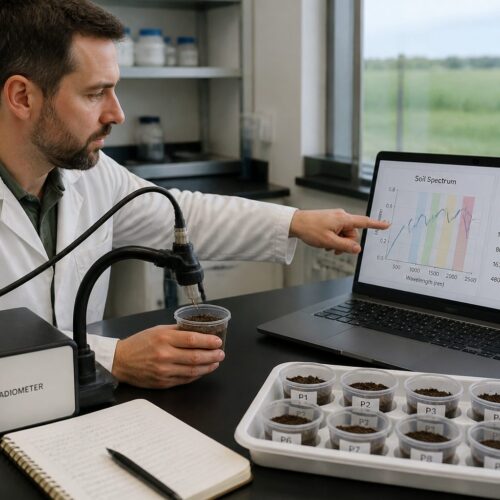
Lab validation studies play a vital role in establishing the effectiveness of combined sensing methodologies, serving as a benchmark for the reliability of these new technologies. By comparing fused sensing data with traditional penetrometer readings, we can rigorously assess the accuracy and effectiveness of our systems in real-world scenarios.
These studies typically analyze the correlation between acoustic-spectral measurements and physical soil compaction metrics, providing critical insights into the performance of integrated sensing methods. Results have consistently shown that fused sensing approaches often yield superior insights compared to traditional penetrometer data alone, reinforcing the value of this innovative approach.
By validating these methods in controlled laboratory environments, we can refine our technology and ensure that it is applicable in real-world agricultural settings. The findings contribute to building confidence in the use of non-invasive compaction measurement techniques, which can revolutionize how farmers approach soil management.
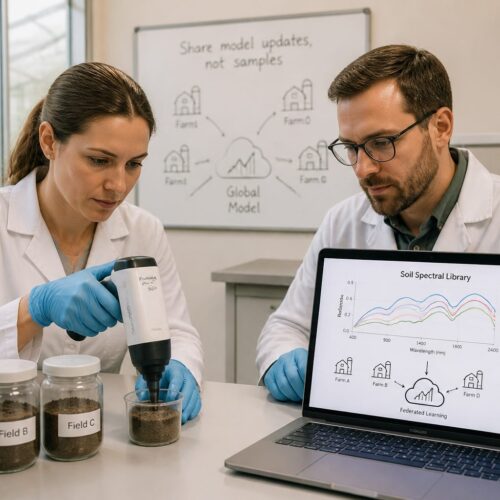
Furthermore, consistent validation helps in adjusting machine learning models that rely on both acoustic and spectral datasets to ensure they remain accurate and effective in predicting soil conditions. This ongoing validation process is essential for maintaining the reliability of these advanced predictive tools.
- Improved accuracy in compaction detection
- Reduced reliance on invasive methods
- Enhanced understanding of soil dynamics
- Cost-effective farming solutions
- Informed decision-making for farmers
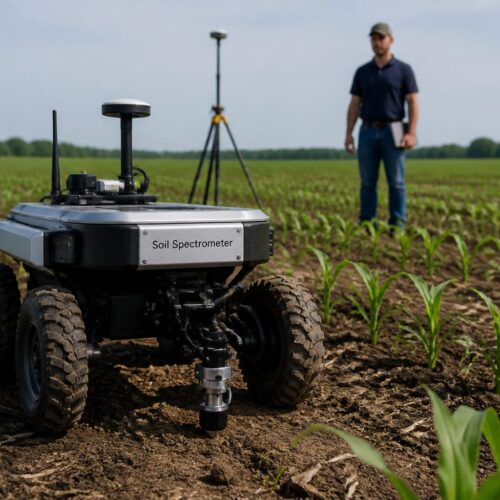
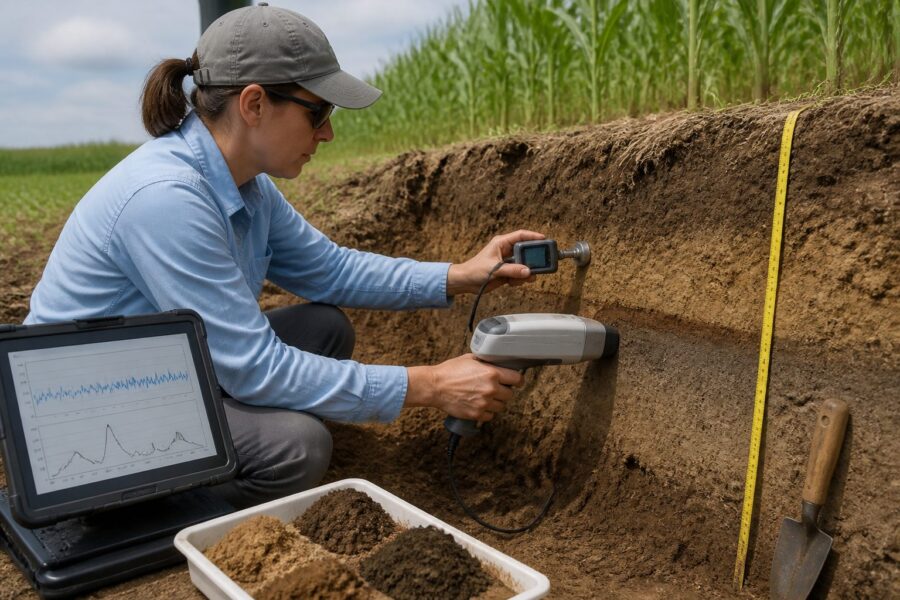
Field prototypes of combined acoustic and optical sensing systems have been deployed to evaluate their performance across various soil textures and conditions. These prototypes have demonstrated varying degrees of effectiveness, highlighting the importance of soil characteristics in compaction detection and the need for tailored approaches in different agricultural contexts.
Testing across different soil types has revealed valuable insights into the adaptability of sensor fusion technology in real-world conditions. The results indicate that while some soil textures present challenges to accurate compaction measurement, others enable precise and non-invasive evaluation of soil conditions, thus enhancing the overall effectiveness of the technology.
By thoroughly analyzing these prototypes in diverse field settings, researchers can identify strengths and weaknesses in the technology that will aid in future developments. This knowledge is critical for refining systems to be more universally applicable across various agricultural landscapes, ensuring that farmers can benefit from improved soil management practices.
Furthermore, ongoing field tests will contribute to the iterative design process of the sensors, allowing for continuous improvement and adaptation to meet the practical needs of farmers. This approach ensures that the final product not only meets theoretical standards but also functions effectively in the hands of end-users.
As field prototypes continue to evolve and undergo rigorous testing, they will play a crucial role in paving the way for broader adoption of integrated sensing technologies within the agricultural sector. The ultimate goal is to enhance agricultural productivity while maintaining soil health, contributing to a more sustainable future for farming.
Machine learning models are increasingly being utilized to analyze dual acoustic-spectral datasets for soil compaction assessment, marking a significant advancement in precision agriculture. These models leverage the strengths of both sensing modalities to improve prediction accuracy and enhance our understanding of complex soil dynamics.
By training algorithms on comprehensive datasets that include both acoustic and spectral information, researchers can develop robust models capable of distinguishing between compacted and non-compacted soil. This capability is essential for making informed agricultural decisions based on real-time data and insights that can directly impact crop yields.
Machine learning also aids in the identification of patterns and trends within the data that provide deeper insights into soil behavior and health. This advanced analytical approach empowers farmers to implement timely interventions for soil management, ultimately leading to improved agricultural outcomes and sustainability.
As these machine learning models continue to evolve and improve, their application in precision agriculture will expand, offering farmers valuable insights that were previously unattainable. The integration of machine learning with acoustic-spectral data marks a significant advancement in soil sensing technology, opening up new possibilities for optimizing agricultural practices.
Ultimately, these innovations will contribute to more sustainable agricultural practices, improving both yield and soil health in a manner that benefits the environment and the economy alike. The future of precision agriculture lies in these data-driven methodologies that leverage advanced technology for the betterment of farming.
Non-invasive sensor data plays a crucial role in making informed subsoil tillage decisions by accurately assessing soil compaction levels. By understanding when and where to till based on reliable data, farmers can optimize their practices for better crop yields while conserving resources and protecting soil integrity.
Utilizing combined acoustic and optical sensing allows for targeted interventions rather than adopting blanket approaches that may not be appropriate for all areas of a field. This precision enables farmers to conserve resources while maximizing productivity, ultimately leading to improved economic outcomes for their operations.
Furthermore, insights gained from sensor data can guide crop rotation strategies and fertilizer applications, helping farmers tailor their practices to meet the specific needs of their crops based on precise soil conditions. This level of customization fosters a more sustainable and productive agricultural system, ensuring that resources are utilized efficiently.
As a result, the integration of non-invasive compaction measurement techniques fosters a more sustainable approach to agriculture, allowing farmers to make informed decisions that positively impact their operations and the environment. The future of precision agriculture will increasingly rely on such innovative methodologies that prioritize soil health and crop productivity.
The path to commercial development for combined sensor systems involves several critical steps that must be addressed to ensure successful implementation in the agricultural sector. Initial research and development must focus on creating reliable, scalable technology that meets the diverse needs of farmers and aligns with the demands of modern agriculture.
Collaboration between researchers, agricultural experts, and technology developers is essential for successful commercialization, as this partnership will ensure that the systems are both practical and efficient in real-world applications. By engaging with end-users from the outset, developers can better understand the challenges faced by farmers and tailor solutions accordingly.
Additionally, pilot programs can provide valuable feedback from end-users, allowing for further refinement of the technology based on practical experiences and needs. This iterative approach is crucial for creating systems that farmers can trust and rely upon for accurate soil management.
Moreover, educating farmers about the benefits of integrated sensing technologies will play a significant role in fostering adoption within the agricultural community. Demonstrating the effectiveness of these systems through hands-on experiences can help build confidence and encourage greater acceptance among farmers.
As we move forward into an increasingly data-driven agricultural landscape, the commercial development of combined sensor systems promises to enhance precision agriculture significantly. Ultimately, this progress will lead to more sustainable farming practices, improved soil health, and greater productivity across the agricultural sector.