
Understanding dissolved organic matter (DOM) is crucial in assessing soil biological activity, which plays a significant role in ecosystem health and functionality. This organic fraction not only indicates nutrient availability but also reflects the dynamic interactions between microbial communities, plant roots, and soil structure, thereby influencing overall soil fertility and productivity.
Researchers increasingly rely on fluorescence spectroscopy to analyze soil DOM, providing insights into its composition, diversity, and functionality. By studying the fluorescence signatures, we can better understand the health, resilience, and activity of soil ecosystems, which are vital for sustaining agricultural output and environmental quality.
In this article, we will explore the various aspects of fluorescence spectroscopy in relation to dissolved organic matter and its implications for precision agriculture. Specifically, we will delve into the methodologies, applications, and interpretations of fluorescence data in soil science, highlighting the importance of this technique in modern agricultural practices.
What Dissolved Organic Matter Reveals About Soil Biological Activity
Dissolved organic matter is a critical indicator of soil biological activity and health, as it plays a fundamental role in nutrient cycling and microbial interactions. It serves as a source of energy and nutrients for soil microorganisms, influencing their diversity, functional capabilities, and overall contribution to soil health.
The composition of DOM can reveal much about the biochemical processes occurring in the soil, offering a window into the microbial community’s activity and resilience. For example, higher concentrations of certain organic compounds can signify active microbial communities that are efficiently degrading organic matter and recycling nutrients back into the soil ecosystem.
Moreover, the diversity of DOM can indicate the stability and functionality of soil ecosystems, reflecting the health of soil microbial populations. Variations in DOM composition can reflect changes in land use, management practices, and climatic conditions, which can either enhance or degrade soil quality over time.
Understanding DOM is essential for developing soil management strategies that enhance biological activity and promote ecosystem resilience. This, in turn, can lead to improved soil fertility, increased crop productivity, and sustainable agricultural practices that support long-term agricultural viability.
Ultimately, studying dissolved organic matter provides valuable insights into the health of soil ecosystems, facilitating a better understanding of how to manage soil effectively. It allows farmers and researchers to make informed decisions that promote sustainable agricultural practices, thereby ensuring food security and environmental stewardship.
Excitation-Emission Matrix Fluorescence and Its Applications in Soil Science
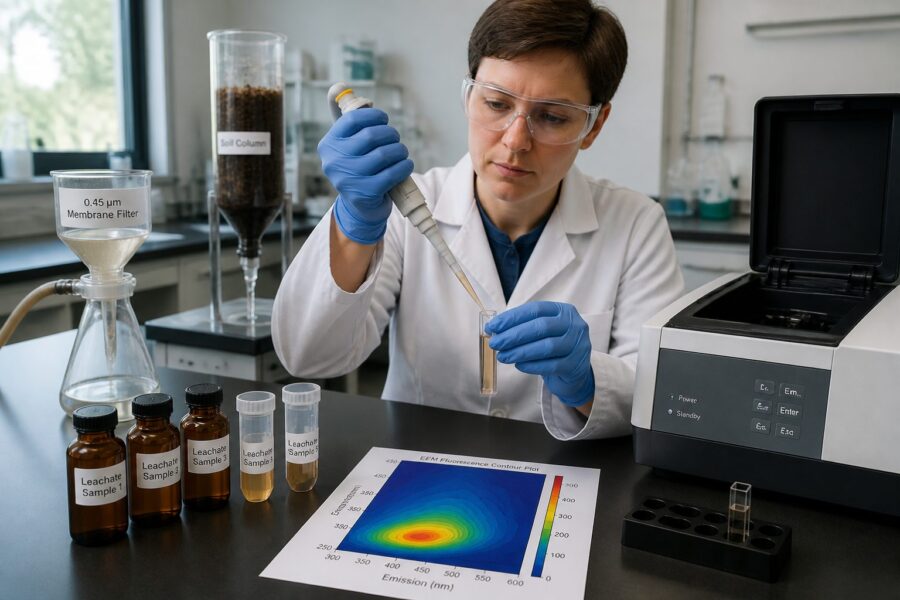
Excitation-emission matrix (EEM) fluorescence spectroscopy is a powerful tool for characterizing soil DOM, offering a sophisticated method for analyzing complex organic mixtures. It enables the simultaneous measurement of multiple fluorescence signals, providing a comprehensive view of organic matter composition and allowing researchers to explore the intricacies of soil chemistry.
The EEM approach generates a three-dimensional fluorescence spectrum that can be analyzed for distinct peaks, each corresponding to specific organic compounds or functional groups. These peaks allow researchers to identify and quantify the presence of various DOM components, facilitating a deeper understanding of organic matter dynamics within the soil matrix.
Applications of EEM fluorescence in soil science include the assessment of organic matter quality, tracking of changes over time, and identifying sources of organic matter, such as plant residues or microbial byproducts. By employing this technique, scientists can gain insights into the impacts of different agricultural practices on soil health and the overall functioning of soil ecosystems.
Moreover, EEM fluorescence can be combined with other analytical techniques, such as chromatographic methods or elemental analysis, to enhance understanding of soil properties and dynamics. For example, integrating EEM with soil nutrient analysis can provide a holistic view of soil health, linking organic matter quality with nutrient availability and microbial activity.
By utilizing EEM fluorescence, scientists can develop more effective soil management strategies that are tailored to the specific needs of different agricultural systems. This can lead to improved agricultural productivity, sustainability, and environmental protection, ensuring that farming practices are both economically viable and ecologically sound.
Extracting Soil Leachates for Fluorescence Spectroscopy Analysis
Extracting soil leachates is a vital step in fluorescence spectroscopy analysis of DOM, as the quality of the leachate directly influences the accuracy of the fluorescence data obtained. Accurate leachate collection ensures that the fluorescence data reflects the actual composition of organic matter in the soil, which is crucial for drawing meaningful conclusions about soil health.
Typically, soil leachates are obtained by saturating soil samples with water and collecting the leachate, a process that helps to solubilize and extract the dissolved organic compounds present in the soil matrix. This extraction method allows researchers to capture the bioavailable fraction of organic matter, which is essential for evaluating the activity and health of soil microbial communities.
| Extraction Method | Leachate Quality | Fluorescence Yield |
|---|---|---|
| Water extraction | High | High |
| Buffer extraction | Moderate | Moderate |
| Solvent extraction | Variable | High |
| Ultrasonic extraction | High | Very High |
Once the leachate is extracted, it is critical to analyze it promptly to prevent changes in the DOM composition that can occur due to microbial activity or chemical transformations. This ensures that the fluorescence spectroscopy data accurately represents the soil’s organic matter at the time of collection, thereby increasing the reliability of the results.
Proper extraction techniques are essential for reliable fluorescence spectroscopy analysis, as they help in minimizing contamination and maximizing the yield of dissolved organic matter from the soil. Careful consideration of extraction parameters, such as pH and extraction time, can further enhance the quality of the leachate and the fluorescence signals obtained.
Identifying Fluorescence Components Using PARAFAC Decomposition
PARAFAC (Parallel Factor Analysis) decomposition is a robust method for identifying fluorescence components in soil DOM, providing a powerful analytical tool for researchers. This analytical technique helps to separate overlapping fluorescence signals, offering clarity on the composition and sources of organic matter present in the soil.
By applying PARAFAC, researchers can quantify specific fluorophores associated with different sources of DOM, which aids in understanding the dynamics of microbial and plant-derived organic matter in soil ecosystems. This understanding is critical for developing targeted soil management strategies that enhance soil health and productivity.
Additionally, PARAFAC decomposition can reveal changes in the relative abundance of various organic matter components, allowing scientists to track shifts in soil health over time. Such insights can inform soil management practices aimed at enhancing soil health and productivity, ultimately leading to more sustainable agricultural practices.
The method also allows for the tracking of temporal changes in DOM composition, which is particularly beneficial for assessing the impact of different agricultural practices and environmental conditions on soil health. By understanding these dynamics, farmers can make informed decisions about management strategies that promote the long-term sustainability of their soils.
Overall, PARAFAC decomposition enhances the understanding of soil DOM fluorescence analysis, equipping researchers with the tools to make informed decisions in precision agriculture. This analytical capability supports the development of sustainable farming practices that improve soil quality and agricultural productivity.
Humification Indices Derived From Fluorescence EEM Data
Humification indices derived from EEM fluorescence data provide insights into the degree of organic matter decomposition, which is critical for evaluating soil health and fertility. These indices serve as important indicators of the transformation of fresh organic matter into stable organic compounds that contribute to soil structure and nutrient retention.
Humification reflects the transformation of fresh organic matter into stable organic compounds, with higher indices indicating greater decomposition and stabilization. Analyzing humification indices can thus indicate the effectiveness of soil management practices and provide insights into the long-term sustainability of agricultural systems.
- Degree of humification
- Organic matter stability
- Microbial activity levels
- Nutrient retention capacity
- Overall soil health evaluation
Furthermore, these indices can help predict the long-term sustainability of soil systems, enabling farmers and land managers to adopt practices that enhance soil organic matter. Understanding humification can guide farmers in implementing practices that improve soil quality, such as cover cropping, reduced tillage, and organic amendments.
Incorporating humification indices into soil management strategies can lead to improved crop yields and resilience against environmental stressors. This emphasizes the importance of using fluorescence spectroscopy in precision agriculture, as it provides actionable data that can enhance soil management decisions.
Differentiating Microbially Derived vs. Plant-Derived Organic Matter Signals
Distinguishing between microbially derived and plant-derived organic matter is essential for understanding soil health and functionality. Fluorescence spectroscopy allows for the identification of specific signatures associated with each source, enabling researchers to better understand the contributions of different organic matter sources to soil processes.
By analyzing the fluorescence spectra, researchers can gain insights into the dynamics of organic matter turnover and the relative contributions of microbial and plant inputs. This differentiation can inform targeted management practices to enhance soil fertility and optimize nutrient cycling.
Microbially derived organic matter typically shows distinct fluorescence characteristics compared to plant-derived matter, reflecting the unique biochemical pathways involved in their decomposition. Recognizing these differences is crucial for evaluating microbial contributions to soil health and understanding how management practices can influence these dynamics.
This understanding can help farmers optimize their soil management strategies, focusing on enhancing microbial activity and promoting healthy soil ecosystems. By improving nutrient cycling and soil structure through strategic practices, farmers can achieve better crop performance and long-term sustainability.
Overall, differentiating these organic matter signals contributes to a holistic understanding of soil ecosystems, enabling researchers and farmers to develop more effective soil management strategies. This insight supports sustainable agricultural practices aimed at enhancing soil quality, promoting resilience, and ensuring food security.
Inner Filter Effect Correction for Concentrated Soil Extracts
Inner filter effects can significantly impact fluorescence measurements in concentrated soil extracts, leading to inaccuracies in the analysis of soil DOM. Proper correction methods are necessary to ensure accurate analysis of soil DOM fluorescence data, as these corrections help account for the absorption of emitted light by the sample.
These corrections account for the absorption of emitted light by the sample, which can distort fluorescence readings and lead to misleading results. Implementing these corrections improves the reliability of fluorescence spectroscopy results, allowing researchers to draw accurate conclusions about the composition and dynamics of soil organic matter.
Various approaches exist for addressing inner filter effects, including dilution and mathematical corrections, which can be tailored to the specific requirements of each study. Each method has its advantages and can be selected based on the concentration of the soil extracts and the objectives of the analysis.
By applying these corrections, researchers can obtain more accurate fluorescence spectra that reflect the true composition of dissolved organic matter in the soil. This leads to better insights into the composition and dynamics of dissolved organic matter, enhancing our understanding of soil health.
Thus, proper handling of inner filter effects is crucial for robust fluorescence analysis, ensuring that data derived from concentrated soil extracts retains its integrity and relevance. This attention to detail can significantly enhance the quality of research findings in soil science, ultimately contributing to improved agricultural practices.
Tracking DOM Changes Across Seasons and Management Treatments
Tracking changes in dissolved organic matter across seasons is vital for understanding soil dynamics and the influences of environmental factors on soil health. Seasonal variations can significantly influence the composition and quantity of soil DOM, impacting microbial activity and nutrient availability.
By analyzing fluorescence data over time, researchers can identify trends and shifts in organic matter characteristics, which can inform agricultural practices that are tailored to seasonal changes and conditions. This information can help farmers optimize their management strategies to align with the natural rhythms of the environment, thereby enhancing productivity.
Additionally, management treatments can also affect the composition of soil DOM, with different practices leading to distinct organic matter profiles. Comparing fluorescence data before and after treatments can reveal the impacts of different agricultural practices on soil health, allowing for adaptive management strategies that respond to observed changes.
This tracking can help optimize soil management strategies to enhance fertility, resilience, and sustainability in agricultural systems. Understanding how DOM changes in response to various factors can lead to improved crop performance, better soil health, and increased resilience against environmental stressors.
Overall, monitoring DOM changes provides valuable insights into soil health and the effectiveness of different management practices. This knowledge can guide farmers in making informed decisions for better agricultural outcomes, ultimately supporting sustainable farming practices that benefit both the environment and society.
Integrating Fluorescence DOM Data With NIR Solid Soil Spectroscopy
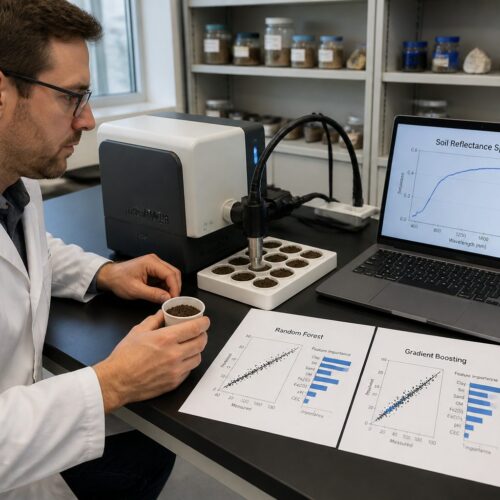
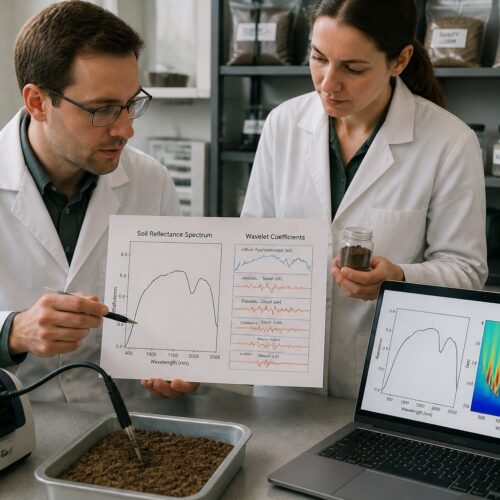
Integrating fluorescence DOM data with near-infrared (NIR) solid soil spectroscopy offers a more comprehensive view of soil health and organic matter dynamics. This combined approach enhances the understanding of both dissolved and solid organic matter, providing a richer perspective on soil composition and functionality.
The synergy between fluorescence and NIR spectroscopy allows for a deeper analysis of organic matter characteristics, linking the behavior of dissolved organic matter with that of solid soil components. This integration can lead to improved predictions of soil behavior, fertility, and responsiveness to management practices, ultimately supporting more effective agricultural strategies.
Additionally, combining these techniques can yield more robust soil management recommendations, as it provides a holistic view of soil health that accounts for multiple factors. By understanding the interplay between different organic matter forms, farmers can optimize their practices to enhance soil quality and agricultural productivity.
Furthermore, this integrated methodology supports the development of precision agriculture strategies, enabling farmers to tailor their management practices based on detailed data about soil conditions. It equips farmers with the knowledge needed to enhance soil health, improve crop yields, and minimize environmental impacts.
In conclusion, the integration of fluorescence and NIR spectroscopy represents a significant advancement in soil science, providing a powerful framework for understanding and managing soil health. This holistic approach can lead to more sustainable agricultural practices and better soil management decisions, ensuring that agriculture remains viable in the face of changing environmental conditions.