
Understanding nitrogen dynamics in soil, especially after manure application, is crucial for optimizing crop yields and minimizing environmental impact. This article discusses the importance of nitrogen tracking, how spectroscopy aids in this process, and the practical applications for precision agriculture, all of which are essential for modern farming strategies and sustainability efforts.
Precision agriculture relies on accurate data to inform nutrient management decisions, particularly concerning nitrogen. By employing advanced techniques like soil spectroscopy, farmers can enhance their nitrogen monitoring and improve overall soil health, leading to increased productivity and reduced waste in agricultural practices.
Nitrogen is a vital nutrient for plant growth, but its transformation and availability in soil can be complex. This complexity is why tracking nitrogen after manure application matters significantly in agricultural practices, as it ensures that crops receive the nutrients they require at the right time for optimal growth and development.
Why Tracking Nitrogen After Manure Application Matters
Manure is a rich source of organic nitrogen, which undergoes various transformations in the soil. Understanding these transformations helps farmers optimize their nutrient management strategies and reduce the risk of nitrogen loss to the environment, thereby promoting sustainable farming practices and protecting water quality.
Effective nitrogen tracking can lead to better crop performance, as plants can access the nitrogen they need when they need it. This is especially important in the context of precision agriculture, where every nutrient must be used efficiently to maximize yields and minimize unnecessary expenditures on fertilizers.
Post-application nitrogen monitoring also assists in preventing nitrogen leaching into groundwater, which can lead to environmental contamination. By keeping track of nitrogen levels, farmers can make informed decisions regarding further applications of fertilizers, thus ensuring that both productivity and environmental stewardship are maintained.
A comprehensive understanding of nitrogen cycling in manure-amended soils can result in enhanced soil health and productivity. This is critical not just for economic returns but also for sustainable agricultural practices that aim to balance productivity with ecological conservation.
Ultimately, effective nitrogen management can contribute to a decrease in the overall carbon footprint of farming operations. This makes tracking nitrogen post-manure application even more essential in modern agricultural practices, where sustainability is increasingly becoming a key focus area for farmers and consumers alike.
How Spectroscopy Detects Nitrogen Transformations in Soil
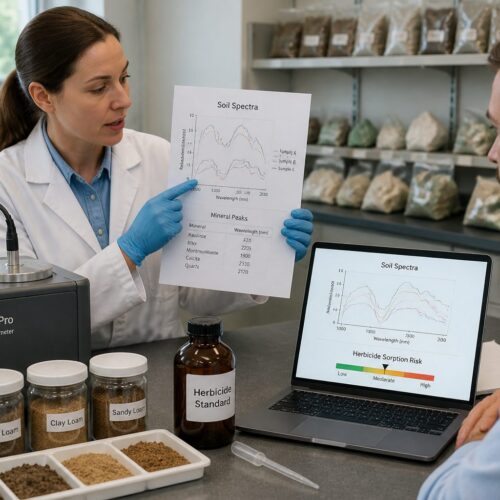
Spectroscopy offers a non-destructive method for analyzing soil nitrogen content and its transformations. By using near-infrared (NIR) spectroscopy, farmers can gain insights into nitrogen cycling in manure-amended soils, allowing them to make timely adjustments to their nutrient management practices.
This technology enables the detection of various nitrogen forms, including organic and inorganic fractions. As nitrogen transitions within the soil matrix, spectroscopy can provide real-time data for better nutrient management, enhancing the efficacy of fertilizer applications and reducing waste.
Spectroscopic techniques can also help identify the microbial processes that influence nitrogen transformations. This is crucial for understanding how quickly nitrogen becomes available to plants after manure application, ensuring that crops have sufficient nutrients during critical growth stages.
Through soil spectroscopy, nitrogen cycling can be monitored effectively, allowing for tailored management strategies that cater to specific soil conditions and crop requirements. This technology is revolutionizing how farmers approach nutrient management in precision agriculture by providing accurate and timely information.
The ability to detect changes in nitrogen forms using spectroscopy helps in making timely applications. This ensures that plants receive the nutrients they need when they need them, maximizing crop yield and health, ultimately leading to better economic returns for farmers.
Timing Your Spectral Scans Around Application Events
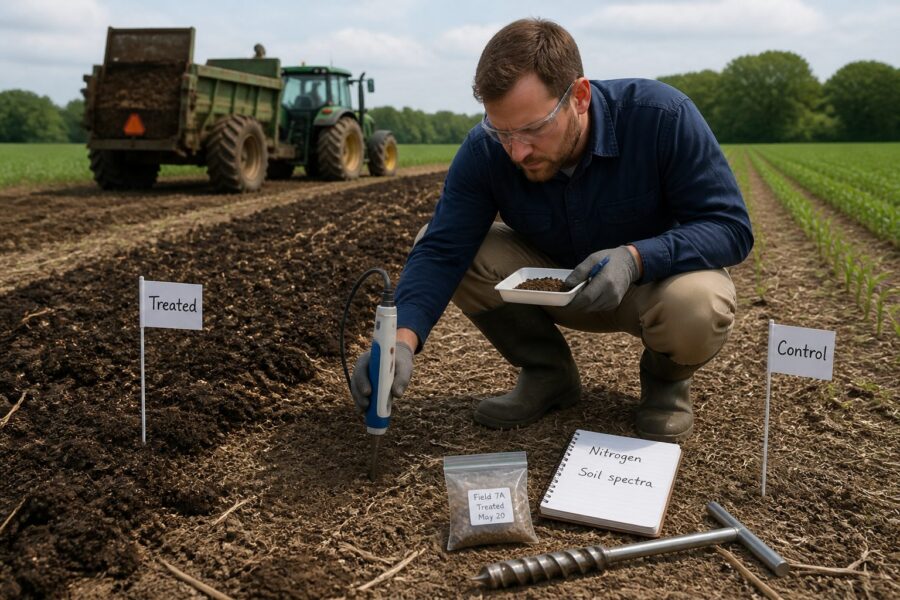
Timing is critical when it comes to conducting spectral scans after manure application. By aligning scans with application events, farmers can effectively monitor nitrogen availability in real time and adjust their management strategies accordingly.
Conducting scans immediately after manure application captures the initial nitrogen levels in the soil. Subsequent scans should be scheduled to track nitrogen transformations over time, providing a comprehensive picture of how nitrogen is utilized by crops.
| Scan Timing | Nitrogen Form Detected | Application Impact |
|---|---|---|
| Immediately post-application | Ammonium | High availability |
| 3 days later | Nitrate | Transition begins |
| 1 week later | Organic nitrogen | Microbial activity |
| 2 weeks later | Plant-available | Optimal uptake |
Such a systematic approach to timing spectral scans enables farmers to make informed decisions about subsequent nitrogen applications. This ultimately leads to more efficient use of resources and improved crop outcomes, which is essential for maintaining the viability of agricultural operations over time.
Distinguishing Organic Nitrogen From Plant-Available Inorganic Fractions
Understanding the difference between organic and inorganic nitrogen is crucial in effective nitrogen management. Soil spectroscopy allows for the clear distinction between these nitrogen forms, enhancing manure soil analysis and informing nutrient application strategies.
In one study, a dairy farm utilized spectroscopy to track nitrogen transformations after manure application. The results demonstrated improved nitrogen use efficiency and crop performance, showcasing the potential benefits of adopting advanced technologies in agricultural practices.
Another case showed that farmers who adopted spectroscopy were better equipped to manage nitrogen hotspots. This led to more precise applications and reduced environmental impacts, illustrating how technology can support sustainable farming practices.
These case studies underscore the importance of integrating advanced technologies in nutrient management. They also exemplify how spectroscopy can enhance the agricultural sustainability of dairy operations, leading to healthier soils and more productive crops.
As dairy farmers continue to face challenges related to nutrient management, the role of spectroscopy will likely grow. This technology promises to be a game-changer for precision agriculture in the dairy sector, offering innovative solutions to long-standing challenges.
Limitations and Sources of Error in Manure-Amended Soils
While spectroscopy offers numerous advantages, it also has limitations and potential sources of error. Factors such as soil composition and moisture levels can affect spectroscopic readings, leading to variations in the data obtained.
Additionally, variations in manure quality can lead to inconsistencies in nitrogen detection. Understanding these limitations is crucial for accurate manure soil analysis and nitrogen monitoring, ensuring that farmers can make well-informed decisions based on reliable data.
Regular calibration of spectroscopic equipment may help mitigate some errors. This ensures that readings remain accurate and reliable over time, enhancing the overall effectiveness of nitrogen monitoring practices.
By acknowledging these challenges, farmers can take steps to improve their nitrogen monitoring practices. This proactive approach will lead to more effective nutrient management in precision agriculture, ultimately benefiting both farm productivity and environmental health.
In conclusion, while soil spectroscopy presents unique opportunities for enhancing nitrogen management, awareness of its limitations is essential. This balance will ultimately contribute to more sustainable agricultural practices and better crop outcomes, supporting the goal of feeding a growing global population responsibly.
By understanding where nitrogen levels are adequate, farmers can reduce unnecessary applications. This not only saves costs but also minimizes the environmental impact of excess fertilizer use, aligning with sustainable agricultural practices.
Effective nitrogen management hinges on the ability to adjust applications based on real-time data. This dynamic approach promotes sustainable farming and improved crop yields, which are essential for meeting the growing demand for food.
Moreover, using nitrogen maps allows for more strategic planning in crop management. This can lead to enhanced nutrient uptake and healthier plants over time, ultimately resulting in greater farm productivity and profitability.
As farmers continue to adopt precision agriculture techniques, the integration of nitrogen mapping will become increasingly important. This ensures that nutrient management aligns with the specific needs of crops and soil conditions, paving the way for a more sustainable agricultural future.
Case Studies: Dairy Farm Nutrient Management With Spectroscopy
Several case studies illustrate the successful application of spectroscopy in dairy farm nutrient management. These examples highlight how farmers can effectively monitor nitrogen levels in manure-amended soils, ultimately enhancing their overall nutrient management strategies.
In one study, a dairy farm utilized spectroscopy to track nitrogen transformations after manure application. The results demonstrated improved nitrogen use efficiency and crop performance, showcasing the potential benefits of adopting advanced technologies in agricultural practices.
Another case showed that farmers who adopted spectroscopy were better equipped to manage nitrogen hotspots. This led to more precise applications and reduced environmental impacts, illustrating how technology can support sustainable farming practices.
These case studies underscore the importance of integrating advanced technologies in nutrient management. They also exemplify how spectroscopy can enhance the agricultural sustainability of dairy operations, leading to healthier soils and more productive crops.
As dairy farmers continue to face challenges related to nutrient management, the role of spectroscopy will likely grow. This technology promises to be a game-changer for precision agriculture in the dairy sector, offering innovative solutions to long-standing challenges.
Limitations and Sources of Error in Manure-Amended Soils
While spectroscopy offers numerous advantages, it also has limitations and potential sources of error. Factors such as soil composition and moisture levels can affect spectroscopic readings, leading to variations in the data obtained.
Additionally, variations in manure quality can lead to inconsistencies in nitrogen detection. Understanding these limitations is crucial for accurate manure soil analysis and nitrogen monitoring, ensuring that farmers can make well-informed decisions based on reliable data.
Regular calibration of spectroscopic equipment may help mitigate some errors. This ensures that readings remain accurate and reliable over time, enhancing the overall effectiveness of nitrogen monitoring practices.
By acknowledging these challenges, farmers can take steps to improve their nitrogen monitoring practices. This proactive approach will lead to more effective nutrient management in precision agriculture, ultimately benefiting both farm productivity and environmental health.
In conclusion, while soil spectroscopy presents unique opportunities for enhancing nitrogen management, awareness of its limitations is essential. This balance will ultimately contribute to more sustainable agricultural practices and better crop outcomes, supporting the goal of feeding a growing global population responsibly.
When comparing results, it is crucial to look at both qualitative and quantitative aspects. This ensures that the spectroscopic analysis aligns with established laboratory standards, thereby enhancing the credibility of the data collected.
- Accuracy of readings
- Time efficiency
- Cost-effectiveness
- Data consistency
- User-friendliness
By regularly comparing these methods, farmers can refine their use of spectroscopy in nitrogen monitoring. This helps in ensuring that soil spectral data is both reliable and actionable, ultimately leading to better nutrient management practices.
Ultimately, the goal is to integrate spectroscopy into routine soil analysis for enhanced precision agriculture practices. This will facilitate better decision-making and nutrient management, contributing to improved crop yields and reduced environmental impact.
Using Nitrogen Maps to Adjust Subsequent Fertilizer Applications
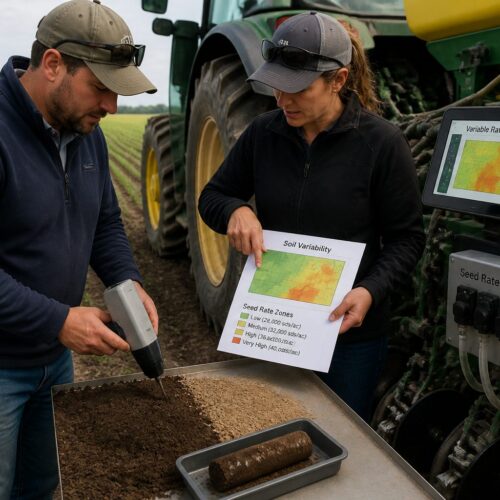
Nitrogen maps generated from spectral data provide actionable insights for farmers. These maps can guide decisions on how much fertilizer to apply in specific areas of a field, ensuring that nutrient applications are tailored to crop needs.
By understanding where nitrogen levels are adequate, farmers can reduce unnecessary applications. This not only saves costs but also minimizes the environmental impact of excess fertilizer use, aligning with sustainable agricultural practices.
Effective nitrogen management hinges on the ability to adjust applications based on real-time data. This dynamic approach promotes sustainable farming and improved crop yields, which are essential for meeting the growing demand for food.
Moreover, using nitrogen maps allows for more strategic planning in crop management. This can lead to enhanced nutrient uptake and healthier plants over time, ultimately resulting in greater farm productivity and profitability.
As farmers continue to adopt precision agriculture techniques, the integration of nitrogen mapping will become increasingly important. This ensures that nutrient management aligns with the specific needs of crops and soil conditions, paving the way for a more sustainable agricultural future.
Case Studies: Dairy Farm Nutrient Management With Spectroscopy
Several case studies illustrate the successful application of spectroscopy in dairy farm nutrient management. These examples highlight how farmers can effectively monitor nitrogen levels in manure-amended soils, ultimately enhancing their overall nutrient management strategies.
In one study, a dairy farm utilized spectroscopy to track nitrogen transformations after manure application. The results demonstrated improved nitrogen use efficiency and crop performance, showcasing the potential benefits of adopting advanced technologies in agricultural practices.
Another case showed that farmers who adopted spectroscopy were better equipped to manage nitrogen hotspots. This led to more precise applications and reduced environmental impacts, illustrating how technology can support sustainable farming practices.
These case studies underscore the importance of integrating advanced technologies in nutrient management. They also exemplify how spectroscopy can enhance the agricultural sustainability of dairy operations, leading to healthier soils and more productive crops.
As dairy farmers continue to face challenges related to nutrient management, the role of spectroscopy will likely grow. This technology promises to be a game-changer for precision agriculture in the dairy sector, offering innovative solutions to long-standing challenges.
Limitations and Sources of Error in Manure-Amended Soils
While spectroscopy offers numerous advantages, it also has limitations and potential sources of error. Factors such as soil composition and moisture levels can affect spectroscopic readings, leading to variations in the data obtained.
Additionally, variations in manure quality can lead to inconsistencies in nitrogen detection. Understanding these limitations is crucial for accurate manure soil analysis and nitrogen monitoring, ensuring that farmers can make well-informed decisions based on reliable data.
Regular calibration of spectroscopic equipment may help mitigate some errors. This ensures that readings remain accurate and reliable over time, enhancing the overall effectiveness of nitrogen monitoring practices.
By acknowledging these challenges, farmers can take steps to improve their nitrogen monitoring practices. This proactive approach will lead to more effective nutrient management in precision agriculture, ultimately benefiting both farm productivity and environmental health.
In conclusion, while soil spectroscopy presents unique opportunities for enhancing nitrogen management, awareness of its limitations is essential. This balance will ultimately contribute to more sustainable agricultural practices and better crop outcomes, supporting the goal of feeding a growing global population responsibly.
By analyzing spectral data, farmers can pinpoint where nitrogen is most concentrated in their fields. This information allows for more precise application of fertilizers, enhancing efficiency and reducing waste, which is critical for sustainable farming.
Farmers can utilize these nitrogen maps to adjust future applications based on real-time data. This targeted approach minimizes the risk of over-fertilization and promotes sustainable farming practices that protect the environment and improve farm profitability.
Furthermore, understanding nitrogen distribution can aid in crop rotation and cover cropping decisions. These practices ultimately lead to improved soil health and enhanced productivity over time, ensuring that farming remains viable for future generations.
By employing spectroscopy for nitrogen mapping, farmers can optimize their nutrient management strategies effectively. This contributes to the overall goal of precision agriculture, which is to maximize yield while minimizing environmental impact, thereby creating a more sustainable agricultural landscape.
Comparing Spectroscopic Readings to Laboratory Kjeldahl Results
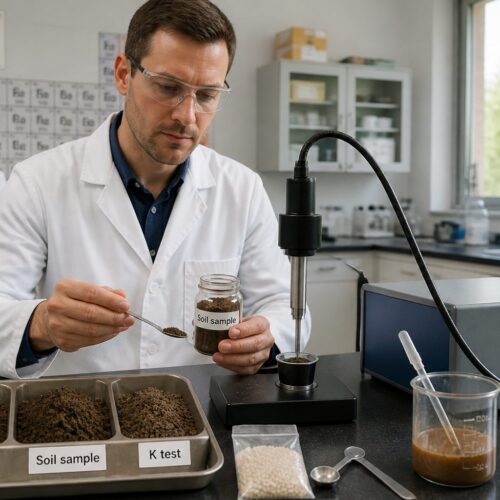
Validating spectroscopic readings against traditional laboratory methods, such as the Kjeldahl method, is essential for accuracy. The Kjeldahl method provides a reliable benchmark for assessing nitrogen content in soil, ensuring that spectroscopic results can be trusted for decision-making.
When comparing results, it is crucial to look at both qualitative and quantitative aspects. This ensures that the spectroscopic analysis aligns with established laboratory standards, thereby enhancing the credibility of the data collected.
- Accuracy of readings
- Time efficiency
- Cost-effectiveness
- Data consistency
- User-friendliness
By regularly comparing these methods, farmers can refine their use of spectroscopy in nitrogen monitoring. This helps in ensuring that soil spectral data is both reliable and actionable, ultimately leading to better nutrient management practices.
Ultimately, the goal is to integrate spectroscopy into routine soil analysis for enhanced precision agriculture practices. This will facilitate better decision-making and nutrient management, contributing to improved crop yields and reduced environmental impact.
Using Nitrogen Maps to Adjust Subsequent Fertilizer Applications
Nitrogen maps generated from spectral data provide actionable insights for farmers. These maps can guide decisions on how much fertilizer to apply in specific areas of a field, ensuring that nutrient applications are tailored to crop needs.
By understanding where nitrogen levels are adequate, farmers can reduce unnecessary applications. This not only saves costs but also minimizes the environmental impact of excess fertilizer use, aligning with sustainable agricultural practices.
Effective nitrogen management hinges on the ability to adjust applications based on real-time data. This dynamic approach promotes sustainable farming and improved crop yields, which are essential for meeting the growing demand for food.
Moreover, using nitrogen maps allows for more strategic planning in crop management. This can lead to enhanced nutrient uptake and healthier plants over time, ultimately resulting in greater farm productivity and profitability.
As farmers continue to adopt precision agriculture techniques, the integration of nitrogen mapping will become increasingly important. This ensures that nutrient management aligns with the specific needs of crops and soil conditions, paving the way for a more sustainable agricultural future.
Case Studies: Dairy Farm Nutrient Management With Spectroscopy
Several case studies illustrate the successful application of spectroscopy in dairy farm nutrient management. These examples highlight how farmers can effectively monitor nitrogen levels in manure-amended soils, ultimately enhancing their overall nutrient management strategies.
In one study, a dairy farm utilized spectroscopy to track nitrogen transformations after manure application. The results demonstrated improved nitrogen use efficiency and crop performance, showcasing the potential benefits of adopting advanced technologies in agricultural practices.
Another case showed that farmers who adopted spectroscopy were better equipped to manage nitrogen hotspots. This led to more precise applications and reduced environmental impacts, illustrating how technology can support sustainable farming practices.
These case studies underscore the importance of integrating advanced technologies in nutrient management. They also exemplify how spectroscopy can enhance the agricultural sustainability of dairy operations, leading to healthier soils and more productive crops.
As dairy farmers continue to face challenges related to nutrient management, the role of spectroscopy will likely grow. This technology promises to be a game-changer for precision agriculture in the dairy sector, offering innovative solutions to long-standing challenges.
Limitations and Sources of Error in Manure-Amended Soils
While spectroscopy offers numerous advantages, it also has limitations and potential sources of error. Factors such as soil composition and moisture levels can affect spectroscopic readings, leading to variations in the data obtained.
Additionally, variations in manure quality can lead to inconsistencies in nitrogen detection. Understanding these limitations is crucial for accurate manure soil analysis and nitrogen monitoring, ensuring that farmers can make well-informed decisions based on reliable data.
Regular calibration of spectroscopic equipment may help mitigate some errors. This ensures that readings remain accurate and reliable over time, enhancing the overall effectiveness of nitrogen monitoring practices.
By acknowledging these challenges, farmers can take steps to improve their nitrogen monitoring practices. This proactive approach will lead to more effective nutrient management in precision agriculture, ultimately benefiting both farm productivity and environmental health.
In conclusion, while soil spectroscopy presents unique opportunities for enhancing nitrogen management, awareness of its limitations is essential. This balance will ultimately contribute to more sustainable agricultural practices and better crop outcomes, supporting the goal of feeding a growing global population responsibly.
Organic nitrogen, primarily derived from manure, is not immediately available to plants. In contrast, inorganic nitrogen forms, such as ammonium and nitrate, are readily accessible for plant uptake, making them critical for crop development and productivity.
By utilizing spectroscopy for nitrogen detection, farmers can better understand how much organic nitrogen is being converted into plant-available forms over time. This information is vital for adjusting fertilizer applications and improving crop yields, ensuring that nutrient needs are met efficiently.
Such insights help in creating targeted nitrogen management plans that align with crop nutrient requirements. Over time, this can foster healthier soil ecosystems and more sustainable agricultural practices that benefit both farmers and the environment.
By distinguishing between organic and inorganic nitrogen fractions, farmers can minimize environmental impacts and optimize fertilizer use. This ultimately supports better nitrogen monitoring in precision agriculture, which is essential in our efforts to enhance food security and sustainability.
Mapping Nitrogen Hotspots Across Large Treated Fields
Mapping nitrogen hotspots refers to identifying areas in a field where nitrogen levels are higher than average. Spectroscopy can be a powerful tool for creating detailed nitrogen maps that inform management decisions and optimize fertilizer application practices.
By analyzing spectral data, farmers can pinpoint where nitrogen is most concentrated in their fields. This information allows for more precise application of fertilizers, enhancing efficiency and reducing waste, which is critical for sustainable farming.
Farmers can utilize these nitrogen maps to adjust future applications based on real-time data. This targeted approach minimizes the risk of over-fertilization and promotes sustainable farming practices that protect the environment and improve farm profitability.
Furthermore, understanding nitrogen distribution can aid in crop rotation and cover cropping decisions. These practices ultimately lead to improved soil health and enhanced productivity over time, ensuring that farming remains viable for future generations.
By employing spectroscopy for nitrogen mapping, farmers can optimize their nutrient management strategies effectively. This contributes to the overall goal of precision agriculture, which is to maximize yield while minimizing environmental impact, thereby creating a more sustainable agricultural landscape.
Comparing Spectroscopic Readings to Laboratory Kjeldahl Results
Validating spectroscopic readings against traditional laboratory methods, such as the Kjeldahl method, is essential for accuracy. The Kjeldahl method provides a reliable benchmark for assessing nitrogen content in soil, ensuring that spectroscopic results can be trusted for decision-making.
When comparing results, it is crucial to look at both qualitative and quantitative aspects. This ensures that the spectroscopic analysis aligns with established laboratory standards, thereby enhancing the credibility of the data collected.
- Accuracy of readings
- Time efficiency
- Cost-effectiveness
- Data consistency
- User-friendliness
By regularly comparing these methods, farmers can refine their use of spectroscopy in nitrogen monitoring. This helps in ensuring that soil spectral data is both reliable and actionable, ultimately leading to better nutrient management practices.
Ultimately, the goal is to integrate spectroscopy into routine soil analysis for enhanced precision agriculture practices. This will facilitate better decision-making and nutrient management, contributing to improved crop yields and reduced environmental impact.
Using Nitrogen Maps to Adjust Subsequent Fertilizer Applications
Nitrogen maps generated from spectral data provide actionable insights for farmers. These maps can guide decisions on how much fertilizer to apply in specific areas of a field, ensuring that nutrient applications are tailored to crop needs.
By understanding where nitrogen levels are adequate, farmers can reduce unnecessary applications. This not only saves costs but also minimizes the environmental impact of excess fertilizer use, aligning with sustainable agricultural practices.
Effective nitrogen management hinges on the ability to adjust applications based on real-time data. This dynamic approach promotes sustainable farming and improved crop yields, which are essential for meeting the growing demand for food.
Moreover, using nitrogen maps allows for more strategic planning in crop management. This can lead to enhanced nutrient uptake and healthier plants over time, ultimately resulting in greater farm productivity and profitability.
As farmers continue to adopt precision agriculture techniques, the integration of nitrogen mapping will become increasingly important. This ensures that nutrient management aligns with the specific needs of crops and soil conditions, paving the way for a more sustainable agricultural future.
Case Studies: Dairy Farm Nutrient Management With Spectroscopy
Several case studies illustrate the successful application of spectroscopy in dairy farm nutrient management. These examples highlight how farmers can effectively monitor nitrogen levels in manure-amended soils, ultimately enhancing their overall nutrient management strategies.
In one study, a dairy farm utilized spectroscopy to track nitrogen transformations after manure application. The results demonstrated improved nitrogen use efficiency and crop performance, showcasing the potential benefits of adopting advanced technologies in agricultural practices.
Another case showed that farmers who adopted spectroscopy were better equipped to manage nitrogen hotspots. This led to more precise applications and reduced environmental impacts, illustrating how technology can support sustainable farming practices.
These case studies underscore the importance of integrating advanced technologies in nutrient management. They also exemplify how spectroscopy can enhance the agricultural sustainability of dairy operations, leading to healthier soils and more productive crops.
As dairy farmers continue to face challenges related to nutrient management, the role of spectroscopy will likely grow. This technology promises to be a game-changer for precision agriculture in the dairy sector, offering innovative solutions to long-standing challenges.
Limitations and Sources of Error in Manure-Amended Soils
While spectroscopy offers numerous advantages, it also has limitations and potential sources of error. Factors such as soil composition and moisture levels can affect spectroscopic readings, leading to variations in the data obtained.
Additionally, variations in manure quality can lead to inconsistencies in nitrogen detection. Understanding these limitations is crucial for accurate manure soil analysis and nitrogen monitoring, ensuring that farmers can make well-informed decisions based on reliable data.
Regular calibration of spectroscopic equipment may help mitigate some errors. This ensures that readings remain accurate and reliable over time, enhancing the overall effectiveness of nitrogen monitoring practices.
By acknowledging these challenges, farmers can take steps to improve their nitrogen monitoring practices. This proactive approach will lead to more effective nutrient management in precision agriculture, ultimately benefiting both farm productivity and environmental health.
In conclusion, while soil spectroscopy presents unique opportunities for enhancing nitrogen management, awareness of its limitations is essential. This balance will ultimately contribute to more sustainable agricultural practices and better crop outcomes, supporting the goal of feeding a growing global population responsibly.