
Choosing the right cover crop can often feel like a guessing game, especially when aiming to optimize for specific soil conditions. Relying solely on regional recommendations or general guidelines might not precisely address your particular field’s needs, leading to suboptimal results. This is where soil spectroscopy offers a significant advantage, providing detailed, data-driven insights that can transform your cover crop selection process.
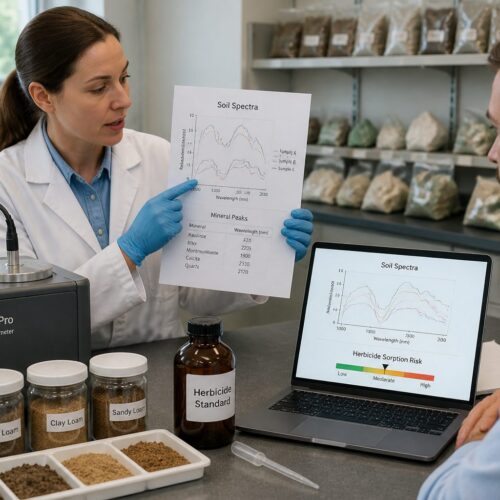
Soil spectroscopy uses light to analyze soil samples, revealing critical information about their physical and chemical makeup rapidly and non-destructively. This advanced technology equips growers with a powerful tool for precision agriculture, enabling a shift from broad recommendations to highly specific, field-tailored strategies. It helps you understand exactly what your soil requires before planting, ensuring every cover crop serves its intended purpose.
By understanding your soil’s unique characteristics through spectral analysis, you can make smarter, more confident decisions about which cover crops will thrive and provide the most significant benefits to soil health and cash crops. This approach ensures you plant the best cover crop for improving soil structure, nutrient cycling, and overall farm resilience. It brings a new level of confidence and scientific backing to your `soil spectroscopy cover crop selection` strategy, fostering truly regenerative practices.
Why Cover Crop Selection Depends on Soil Composition
The success of any cover crop hinges directly on the soil it grows in; it’s not a one-size-fits-all solution. Different cover crop species have distinct requirements for nutrients, pH, organic matter, and soil texture. Planting the wrong cover crop for your specific soil conditions can result in poor establishment, limited biomass, and minimal benefits.
For example, some legumes prefer slightly acidic soils, while others, like alfalfa, need neutral to alkaline conditions for efficient nitrogen fixation. Soil texture also plays a crucial role: sandy soils may struggle to retain moisture, while heavy clay soils can impede root penetration. Ignoring these fundamental soil properties wastes effort and resources.
Poorly matched cover crops may struggle to compete with weeds or fail to produce enough biomass for effective suppression. They might also fail to scavenge residual nutrients, leaving them vulnerable to leaching losses. This means missing out on intended benefits like nutrient retention, erosion control, and improved soil structure.
Understanding the existing `cover crop soil analysis` is the first step toward informed decisions. Without this baseline, you’re hoping for the best rather than actively managing your soil. This haphazard approach often leads to disappointing results and skepticism about cover cropping.
A deep understanding of soil structure and nutrient availability allows you to select species that genuinely improve specific conditions. For instance, low organic matter soils benefit from high-biomass cover crops that decompose slowly, building carbon. Compacted soils need deep-rooting species, like daikon radishes, to break through hardpans and improve infiltration.
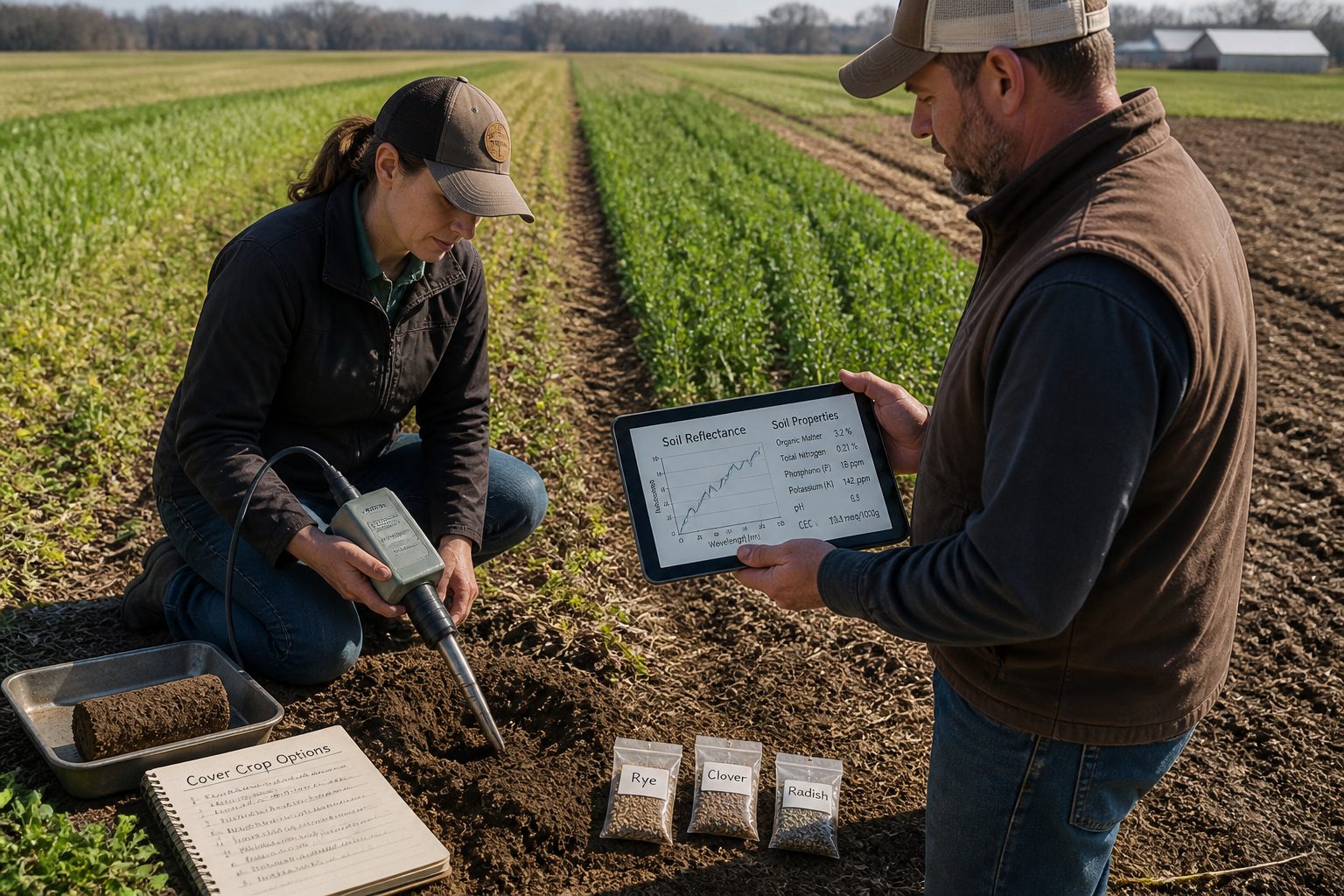
Choosing the correct cover crop also directly impacts its ability to provide crucial ecosystem services, such as erosion control, water infiltration, and beneficial insect habitat. If the plant struggles, it cannot perform these vital functions effectively. The right choice amplifies these benefits, making fields more resilient and productive.
Ultimately, the goal is a symbiotic relationship where the cover crop improves the soil, which in turn supports the cash crop. This cycle starts with an accurate assessment of what your soil needs and can support. `Soil spectroscopy cover crop selection` provides that essential starting point, moving you towards truly regenerative practices.
Failing to consider soil composition can lead to nutrient imbalances, reduced water use efficiency, or even harbor pests and diseases if the cover crop is unsuitable. It’s a fundamental input dictating the entire outcome of your cover cropping strategy. Prioritizing this foundational understanding is key for successful `soil health cover crops`.
Key Soil Properties Spectroscopy Reveals for Cover Crop Decisions
Soil spectroscopy offers a rapid, non-destructive way to uncover a wealth of information about your soil’s properties. It measures how light interacts with soil samples, creating a unique spectral signature that correlates with various chemical and physical characteristics. This immediate feedback helps you tailor your cover crop strategy with precision.
One of its most valuable insights is accurate organic matter content, a cornerstone of soil health and fertility. Spectroscopy also reveals soil texture, pH levels, cation exchange capacity (CEC), and concentrations of essential macronutrients like nitrogen, phosphorus, and potassium. Knowing these detailed metrics is a game-changer for `spectroscopy crop planning`.
Beyond macronutrients, spectroscopy can indicate levels of micronutrients and trace elements, often overlooked but critical for plant vigor. It provides a comprehensive profile of your soil’s nutrient bank, helping identify specific deficiencies or excesses. This detail allows for highly targeted cover crop choices.
The technology can differentiate between various forms of carbon, offering a nuanced understanding of organic matter dynamics. This is important for selecting cover crops that either build stable carbon or rapidly cycle nutrients, moving beyond a simple percentage to a functional understanding of soil carbon.
It also provides insights into physical properties like soil moisture holding capacity and aggregate stability, crucial for assessing a field’s resilience to drought and erosion. Cover crops play a huge role in improving these properties, but only if the right ones are selected. Knowing your starting point is essential for effective improvements.
Furthermore, spectroscopy can help identify problematic soil conditions like salinity or sodicity, which severely limit plant growth. If these issues are present, you need tolerant cover crops. Without this insight, you might inadvertently plant a sensitive species that fails, wasting time and resources.
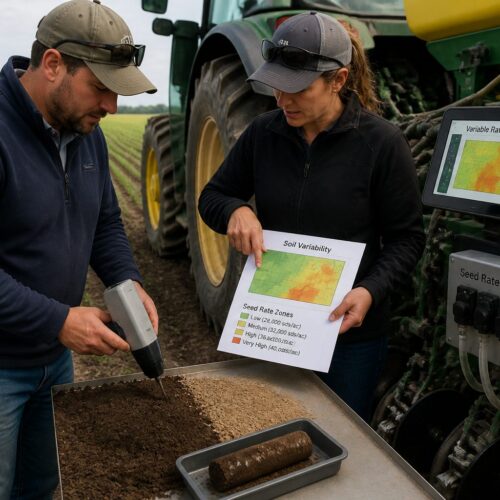
The speed of spectral analysis means you can test multiple areas within a field, mapping variability that traditional soil sampling often misses. This allows for zone-specific `soil spectroscopy cover crop selection`, ensuring every part of your field receives the most appropriate treatment. It’s about optimizing every square foot for maximum benefit.
Ultimately, these detailed spectral fingerprints empower you to make data-driven decisions about your cover crop choices, moving away from guesswork. It provides the foundational data needed for truly effective `cover crop soil analysis`. This precision ensures better outcomes for your soil, cash crops, and farm’s long-term sustainability.
Matching Cover Crop Species to Mineralogy and Organic Matter Levels
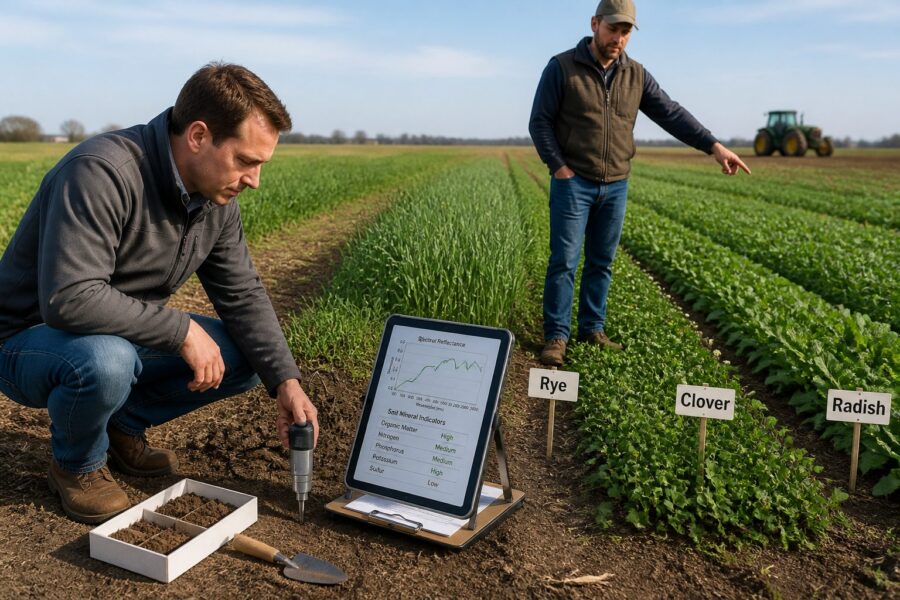
Understanding your soil’s mineralogy and organic matter content through spectroscopy is key to making intelligent `soil spectroscopy cover crop selection` decisions. Different cover crops excel under specific conditions, and matching them properly maximizes their benefits, ensuring they perform their intended functions effectively.
For soils with low organic matter, indicated by a low carbon signal, choose cover crops that produce abundant biomass and have a high carbon-to-nitrogen ratio, like cereal rye or sorghum-sudan grass. These contribute substantial organic residues that slowly build soil carbon. Conversely, soils rich in organic matter might benefit more from nutrient-cycling options or species addressing other issues. The table below provides a quick reference.
| Soil Condition | Spectroscopy Indication | Recommended Cover Crop Type | Specific Examples |
|---|---|---|---|
| Low Organic Matter | Low C, high mineral signal | High biomass producers, C:N > 25 | Cereal Rye, Sorghum-Sudan Grass, Millet |
| Compacted Soils | High bulk density, low pore space | Deep-rooting, taproot species | Radishes, Turnips, Sunflowers, Sweet Clover |
| Nitrogen Deficient | Low N, high C:N ratio | Nitrogen-fixing legumes | Crimson Clover, Hairy Vetch, Cowpeas |
| Erosion Prone (Sandy) | High sand content, low aggregation | Dense fibrous roots, ground cover | Annual Ryegrass, Oats, Buckwheat |
| Phosphorus Tie-up | High P but low availability | P-scavenging species, mycorrhizal hosts | Buckwheat, Mustard, Cereal Rye |
| Weed Pressure | Low organic matter, open canopy | Vigorous, quick-growing, allelopathic | Cereal Rye, Radishes, Buckwheat, Sudan Grass |
| Poor Water Infiltration | High clay content, poor aggregation | Deep-rooting species, high residue producers | Radishes, Cereal Rye, Sorghum-Sudan Grass |
| Salinity/Sodicity Issues | High EC, high SAR | Salt-tolerant species | Barley, Sorghum-Sudan Grass, Perennial Ryegrass |
Field Case: Using NIR Data to Choose Between Legume and Cereal Covers
Imagine Sarah, a farmer aiming to optimize her `soil health cover crops` across diverse fields. She previously used a standard mix, but her `cover crop soil analysis` showed inconsistent results. Sarah decided to implement near-infrared (NIR) spectroscopy for more precise guidance.
On Field A, her NIR scan revealed consistently low organic matter (around 1.5%) and moderate nitrogen levels, plus signs of slight compaction. A traditional approach might suggest a general cereal, but Sarah wanted a targeted solution. Her `spectroscopy crop planning` indicated a need for significant organic matter building and deep root penetration.
For Field A, the NIR data pointed to cereal rye. Known for its extensive root system that breaks up compacted layers and its high biomass production, cereal rye would substantially build organic matter. This choice directly addressed the specific issues identified by the NIR scan.
Field B presented a different scenario. The NIR scan showed good organic matter (around 3.5%) but indicated a slight deficiency in available nitrogen, following heavy nitrogen-demanding crops. Sarah aimed to reduce synthetic fertilizer inputs, making this a clear case for a legume.
For Field B, Sarah chose hairy vetch, a legume known for its excellent nitrogen-fixing capabilities. The vetch would replenish nitrogen, reducing reliance on external inputs. This decision was a direct result of the specific `soil spectroscopy cover crop selection` insights.
After a season, Sarah observed noticeable differences. Field A, with cereal rye, showed improved soil aggregation and a slight increase in surface organic matter. Field B, with hairy vetch, had vibrant growth, and subsequent soil tests confirmed higher residual nitrogen levels, as predicted by the NIR data.
This case illustrates how NIR data moves beyond general recommendations to precise, field-level decisions. It allowed Sarah to confidently choose between a legume and a cereal, optimizing for each field’s unique needs. This targeted approach, driven by `soil spectroscopy cover crop selection`, demonstrably improved her soil health outcomes and resource efficiency.
Timing Scans for Maximum Usefulness Before Planting
The timing of your `soil spectroscopy cover crop selection` scans significantly impacts their usefulness for planting decisions. Collecting data at the right moment ensures you have the most relevant and actionable information, allowing for thoughtful planning. This strategic timing helps avoid last-minute rushes and makes for better `spectroscopy crop planning`.
Ideally, conduct soil scans in late summer or early fall, several weeks before your planned cover crop planting date. This allows ample time for sample collection, analysis, interpretation, and adjusting seed orders. Rushing this process can lead to suboptimal choices. For spring-planted covers, late winter or early spring scans are similarly crucial.
- Late summer/early fall for fall-planted covers: Captures post-harvest, pre-planting soil conditions.
- Late winter/early spring for spring-planted covers: Allows assessment before spring planting for summer cover crops.
- After harvest, before tillage: Measures soil as it will be when the cover crop is planted.
- Allow 2-4 weeks for lab analysis (if sending samples): Factor in turnaround time. In-field spectroscopy offers instant results.
- Consider soil moisture conditions: Aim for consistent, moderate moisture levels for comparable readings.
- Scan areas with known variability separately: Get precise, zone-specific recommendations.
- Before any significant nutrient application: Understand baseline nutrient status.
- Annually or biennially: Track changes in soil health over time.
Integrating Spectroscopy Recommendations Into Your Rotation Plan
Integrating `soil spectroscopy cover crop selection` into your overall crop rotation plan unlocks significant long-term benefits. It moves beyond single-season decisions to building a healthier, more resilient agricultural system over time, fostering a multi-year vision for `soil health cover crops`.
Start by mapping fields based on distinct spectral signatures, identifying zones with similar soil properties or challenges. This allows developing a rotation that addresses those zone-specific needs. Some areas might consistently require organic matter building, while others need nitrogen replenishment.
Use spectral data to create a multi-year `spectroscopy crop planning` strategy. For instance, if a field consistently shows low phosphorus availability, plan a rotation including buckwheat or mustard cover crops for consecutive seasons to help scavenge and make phosphorus more available. This systematic approach tackles persistent issues.
Consider the cash crop following the cover crop. For corn, a heavy nitrogen feeder, prioritize a legume cover crop based on `cover crop soil analysis` to reduce synthetic nitrogen needs. For soybeans, which fix their own nitrogen, a high-biomass cereal cover might be more beneficial for weed suppression and carbon building.
The beauty of integrating spectroscopy is its ability to identify trends in soil health over time. Regular annual or biennial scans track changes in organic matter and nutrient levels. This feedback loop helps refine cover crop choices and overall rotation, ensuring continuous improvement.
This integration also aids in managing pest and disease cycles. Certain cover crops can act as trap crops or provide habitat for beneficial insects, while others might host specific diseases. Knowing your soil conditions helps choose cover crops that disrupt pest cycles rather than exacerbate them, creating a more balanced ecosystem.
By systematically using `soil spectroscopy cover crop selection` data, you build a more robust and sustainable farming system. It shifts from reactive management to proactive planning, leading to healthier soils, reduced input costs, and ultimately, more profitable yields. This is the essence of intelligent farm management.
Developing a flexible rotation plan incorporating spectral data allows adaptation to changing environmental conditions or market demands. It provides confidence to make informed adjustments, ensuring cover crops always work optimally for your farm. This dynamic planning is a significant step forward in precision agriculture.
Common Mistakes When Using Spectral Data for Cover Crop Decisions
While `soil spectroscopy cover crop selection` offers incredible advantages, it’s easy to make mistakes that undermine its effectiveness. Understanding these common pitfalls helps maximize the utility of your spectral data, ensuring accurate and actionable insights for your farm.
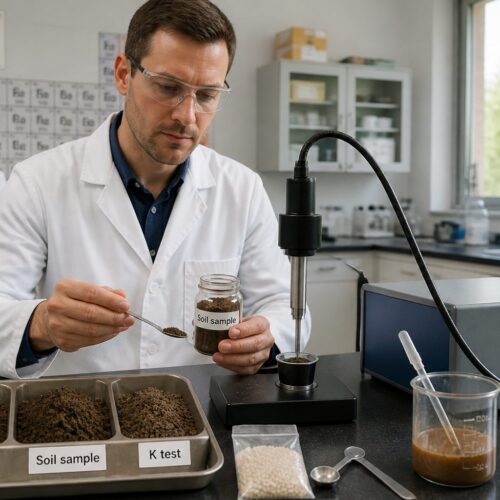
One frequent error is failing to calibrate spectral data with traditional wet chemistry soil tests, especially when starting out. Spectroscopy relies on models that perform best when validated with ground truth data from your specific region and soil types. Don’t assume universal accuracy without local calibration.
Another mistake is ignoring spatial variability within fields. Taking only one or two spectral scans for a large field can lead to averaged data that masks critical differences. Sample adequately across different zones to capture the true heterogeneity of your soil for effective `cover crop soil analysis`.
Some growers misinterpret spectral data by focusing only on one or two parameters, like organic matter, while neglecting others like pH or micronutrients. Soil health is a complex system; all relevant factors revealed by `spectroscopy crop planning` should be considered holistically. A narrow focus can lead to other imbalances.
A significant oversight is not considering the preceding and succeeding cash crops in the rotation. The cover crop needs to fit seamlessly into the overall system, supporting the cash crop and managing residues. Disconnecting the cover crop decision from the larger rotation plan is a missed opportunity for synergistic benefits.
Relying solely on spectral data without incorporating other field observations or historical knowledge is also a pitfall. Your personal experience with specific fields, observations of water infiltration, or past pest issues are invaluable. Spectral data augments, rather than replaces, your practical understanding of the land.
Lastly, some farmers fail to re-evaluate their `soil spectroscopy cover crop selection` decisions over time. Soil conditions are dynamic, changing with management practices, weather, and crop rotations. Regular monitoring and adaptive adjustments are essential to maintain and improve soil health. Don’t set it and forget it.
By being aware of these common mistakes, you can leverage soil spectroscopy more effectively to make precise and impactful cover crop decisions. This careful approach ensures your `soil health cover crops` truly benefit your farm through smart application of powerful technology.
Conclusion
Harnessing `soil spectroscopy cover crop selection` is a powerful step towards more intelligent and sustainable farming practices. It provides unprecedented detail about your soil, moving you from generalized recommendations to truly field-specific solutions. This precision helps farmers make better decisions for their land.
By understanding the unique mineralogy, organic matter levels, and nutrient profiles of each section of your farm, you can select cover crops perfectly matched to address specific soil challenges. This targeted approach maximizes cover cropping benefits, leading to healthier soils and improved crop performance. It’s a smarter way to farm.
The ability to quickly and non-destructively analyze soil samples means gathering more data, more frequently, and across more areas than ever before. This comprehensive `cover crop soil analysis` paints a complete picture of your soil’s needs, empowering you to tackle variability head-on.
Integrating these insights into your broader `spectroscopy crop planning` and rotation strategy transforms your farm into a more resilient and productive ecosystem. You’re strategically deploying biological tools to enhance soil structure, nutrient cycling, and water retention. This is proactive management at its best.
Remember to calibrate spectral data, sample adequately, and consider all soil parameters for holistic decision-making. Combine this advanced technology with your invaluable field observations and historical knowledge. This blend of science and experience yields the best results.
Embracing soil spectroscopy means investing in the long-term health and productivity of your land. It’s a commitment to precision, efficiency, and environmental stewardship. This technology helps ensure your `soil health cover crops` deliver on their promise.
The future of agriculture lies in data-driven decisions that respect the intricate complexities of natural systems. Soil spectroscopy offers a clear path to achieving this balance, providing the clarity needed to make confident, impactful choices. It’s a tool for a more sustainable tomorrow.
Start exploring how this technology can refine your cover crop strategies and unlock new potential in your fields. The insights gained are invaluable, setting the stage for continuous improvement and a thriving agricultural operation. Your soil will thank you for the precision and care.