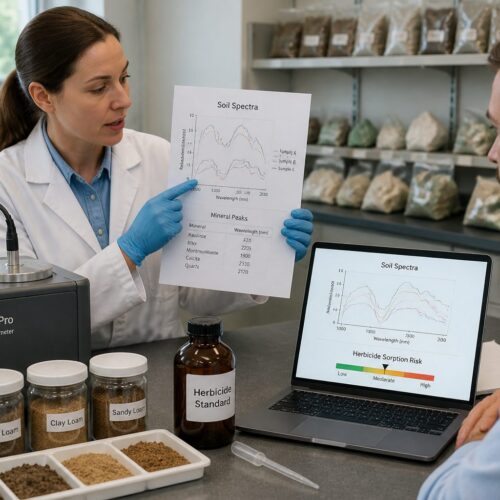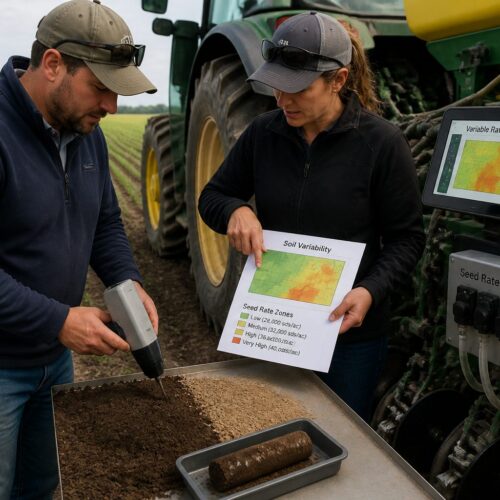


Precision agriculture is revolutionizing how we manage crops, and soil spectroscopy is at the forefront of this transformation. By analyzing the spectral reflectance of soil, we can gain valuable insights into its composition and properties.
This data enables more precise and efficient irrigation strategies, optimizing water use and improving crop yields. Soil spectroscopy offers a non-destructive and rapid method for assessing soil health, which is crucial for sustainable agriculture.
This article will guide you through using soil spectroscopy for irrigation scheduling, covering everything from the basics to advanced integration techniques. Let’s explore how this technology can help you achieve better irrigation efficiency and healthier crops.
We will delve into the practical applications of soil spectroscopy, providing you with the knowledge and tools to implement this technology effectively. By understanding the principles and techniques outlined here, you can optimize your irrigation practices and improve your overall farm management.
With the right approach, soil spectroscopy can be a game-changer for your irrigation practices. You’ll learn how to monitor plant water stress, determine optimal irrigation timing, and integrate spectroscopy data with your existing systems.
This will empower you to make more informed decisions, reduce water waste, and enhance the health and productivity of your crops. Soil spectroscopy provides a level of precision that traditional methods simply cannot match, leading to significant improvements in resource management.
The Basics of Using Soil Spectroscopy for Irrigation Scheduling
Soil spectroscopy is a technique that measures the interaction of light with soil. When light strikes the soil, some of it is absorbed, and some is reflected.
The reflected light carries information about the soil’s composition, including its moisture content, organic matter, and mineral content.
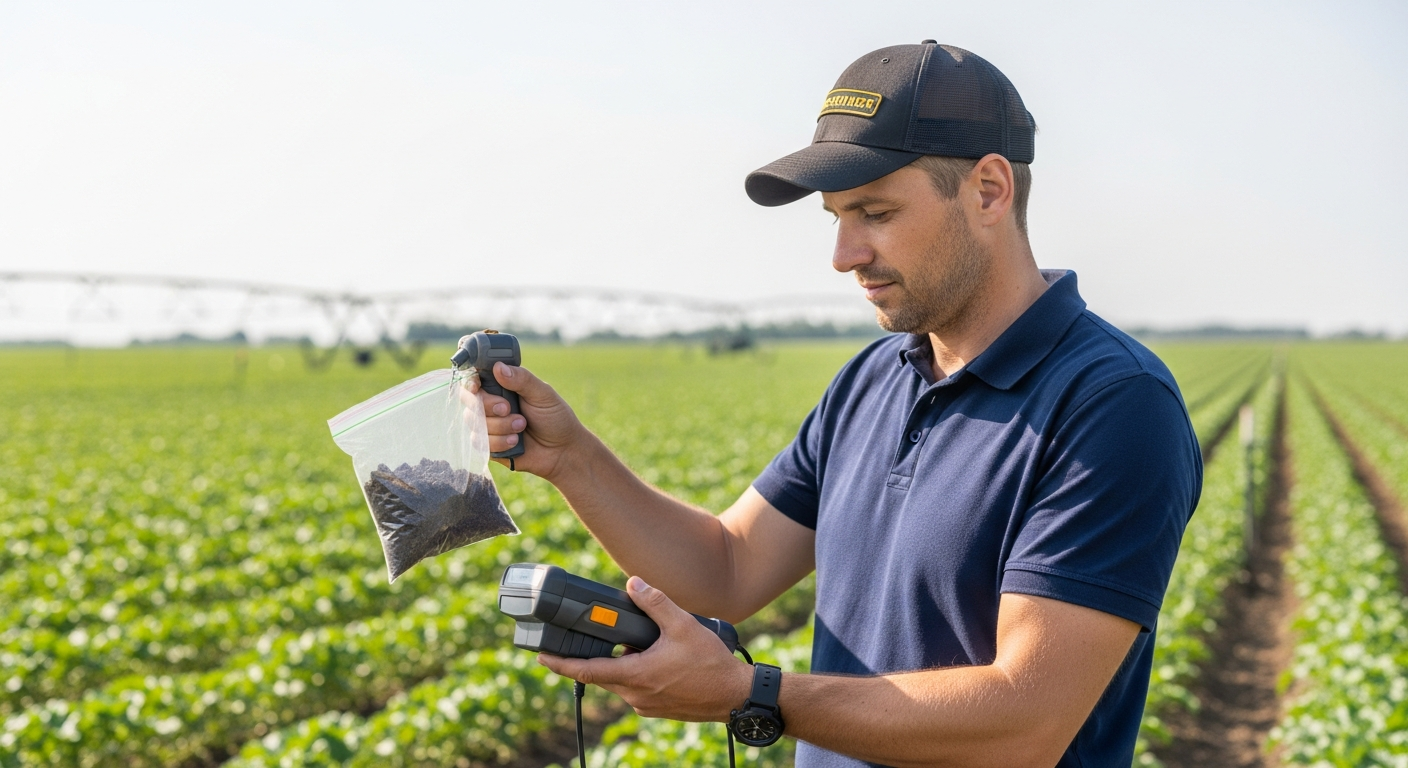
The pattern of reflected light, known as the spectral reflectance, provides information about the soil’s chemical and physical properties. This includes moisture content, organic matter, and mineral composition, all of which are crucial for effective irrigation scheduling.
By analyzing this spectral reflectance, we can infer various soil characteristics that are essential for optimizing irrigation practices. Understanding these relationships is fundamental to leveraging soil spectroscopy for efficient water management.
To perform soil spectroscopy, you’ll need a spectrometer, which can be a handheld device or a laboratory instrument. Handheld spectrometers are convenient for field measurements, while laboratory instruments offer higher accuracy and detailed analysis.
The choice between a handheld and laboratory spectrometer depends on your specific needs and resources. Handheld devices are ideal for quick assessments in the field, while laboratory instruments provide more comprehensive data for in-depth analysis.
The process involves shining a light source onto the soil sample and measuring the reflected light across a range of wavelengths. The resulting spectral data is then analyzed to determine the soil’s properties relevant to irrigation, such as water content and nutrient levels.
This analysis often involves comparing the spectral data to reference spectra or using mathematical models to predict soil properties. The accuracy of these predictions depends on the quality of the spectral data and the calibration of the models.
Understanding the relationship between spectral reflectance and soil moisture is key to using this technology effectively. Different soil components absorb and reflect light differently, so changes in moisture content will affect the spectral signature.
The presence of water in the soil alters its reflectance properties, particularly in the near-infrared region of the spectrum. By understanding these changes, we can accurately estimate soil moisture content from spectral data.
For instance, dry soil typically has higher reflectance than wet soil. By calibrating the spectrometer with known soil moisture levels, you can create a model to predict soil moisture from spectral data, enabling precise soil spectroscopy irrigation scheduling.
This calibration process involves creating a relationship between the spectral data and the corresponding soil moisture measurements. Once calibrated, the spectrometer can be used to quickly and accurately assess soil moisture levels in the field.
Monitoring Plant Water Stress with Spectral Analysis
Beyond just soil moisture, spectral analysis can also help you monitor plant water stress directly. Plants under water stress exhibit changes in their spectral reflectance, particularly in the visible and near-infrared regions.
These changes are indicative of physiological responses to water scarcity, making spectral analysis a valuable tool for early detection of stress.
These changes are due to alterations in leaf pigment concentration, cell structure, and water content. By monitoring these spectral changes, you can detect water stress early, before visible symptoms appear, and adjust irrigation accordingly.
Early detection of water stress allows for timely intervention, preventing yield losses and optimizing water use. This proactive approach is essential for sustainable agriculture in water-limited environments.
One common index used to assess plant water stress is the Normalized Difference Vegetation Index (NDVI). NDVI is calculated from the red and near-infrared reflectance values, providing an indication of plant health and vigor.
NDVI is a widely used and well-established index for assessing plant health and biomass. It is sensitive to changes in chlorophyll content, which is often affected by water stress.
Lower NDVI values often indicate water stress or other issues affecting plant health. Another useful index is the Water Band Index (WBI), which is sensitive to changes in leaf water content.
WBI provides a more direct measure of leaf water content compared to NDVI. It is particularly useful for detecting subtle changes in plant hydration status.
WBI uses specific wavelengths in the near-infrared region to estimate the amount of water in plant leaves. An increasing WBI value indicates that the plant has more water available, while a decreasing value suggests water stress.
By monitoring WBI over time, you can track changes in plant water status and identify periods of stress. This information can be used to optimize irrigation schedules and prevent water deficits.
To effectively monitor plant water stress, establish baseline spectral measurements for healthy plants under optimal conditions. Regularly compare current spectral data to these baselines to identify deviations that may indicate water stress, allowing for timely intervention and optimized irrigation efficiency.
These baselines should be established for each crop and variety, as well as for different growth stages. Regular monitoring and comparison to baselines will enable you to detect water stress early and make informed irrigation decisions.
Using Spectroscopy Data to Determine Irrigation Timing
Spectroscopy data provides a scientific basis for determining when to irrigate. Instead of relying on traditional methods like visual inspection or calendar-based schedules, you can use real-time soil and plant data to make informed decisions.
This approach ensures that irrigation is applied only when needed, minimizing water waste and maximizing crop health.
This approach ensures that irrigation is applied only when needed, minimizing water waste and maximizing crop health. By using spectroscopy data, you can avoid over- or under-watering, both of which can negatively impact crop yields.
The key is to establish thresholds for soil moisture and plant water stress based on spectral data. These thresholds will serve as triggers for irrigation, ensuring that water is applied only when necessary.
These thresholds should be determined based on the specific needs of the crop, the soil type, and the climate. Regular monitoring and adjustment of these thresholds are essential for optimal irrigation management.
| Parameter | Spectral Index | Threshold for Irrigation |
|---|---|---|
| Soil Moisture | Specific Wavelength Reflectance (e.g., 1900 nm) | Increase irrigation when reflectance exceeds calibrated threshold |
| Plant Water Stress | Normalized Difference Vegetation Index (NDVI) | Irrigate when NDVI falls below established baseline |
| Plant Water Stress | Water Band Index (WBI) | Irrigate when WBI falls below established baseline |
| Plant Health | Red Edge Position | Irrigate when Red Edge Position shifts towards shorter wavelengths |
The red edge position is another valuable indicator of plant health, reflecting changes in chlorophyll content and leaf structure. Monitoring this parameter can provide additional insights into plant water status.
For example, you might set a threshold for soil moisture at a specific wavelength, indicating that irrigation is needed when reflectance exceeds a calibrated value. Similarly, you can set thresholds for NDVI or WBI, triggering irrigation when these indices fall below established baselines.
These thresholds should be regularly reviewed and adjusted based on the specific needs of the crop and the prevailing environmental conditions. This adaptive approach ensures that irrigation is always optimized for maximum efficiency and yield.
Creating a Soil Spectral Library for Irrigation Management
A soil spectral library is a collection of spectral data linked to specific soil properties. Building one for your farm or region can significantly improve the accuracy and reliability of your irrigation scheduling.
This library serves as a valuable resource for interpreting spectral measurements and predicting soil conditions, leading to more informed irrigation decisions.
This library serves as a reference for interpreting spectral measurements and predicting soil conditions. Start by collecting soil samples from various locations within your fields.
These locations should be representative of the different soil types and conditions present in your fields. Proper sampling techniques are essential for creating a reliable spectral library.
Ensure that these samples represent the range of soil types and conditions present in your area. For each sample, measure the spectral reflectance using a spectrometer and record the corresponding soil properties, such as moisture content, organic matter, and nutrient levels.
Accurate spectral measurements and soil property data are crucial for building a high-quality spectral library. Use standardized protocols for both spectral measurements and soil analysis to ensure consistency and reliability.
Use standard laboratory methods to determine these soil properties accurately. Store the spectral data and soil property information in a database or spreadsheet, creating a comprehensive soil spectral library.
The database or spreadsheet should be well-organized and easily searchable, allowing you to quickly retrieve relevant information. Include metadata such as sampling location, date, and time to facilitate data analysis.
As you collect more data over time, update your library to reflect changes in soil conditions and improve its predictive capabilities. This will enable you to fine-tune your irrigation strategies and achieve even greater water use efficiency.
Regularly updating your spectral library is essential for maintaining its accuracy and relevance. As soil conditions change due to management practices or environmental factors, the spectral library should be updated accordingly.
Regularly validate your spectral library by comparing predicted soil properties to actual measurements. This ensures that your library remains accurate and relevant, providing reliable data for irrigation decision-making and promoting effective soil spectroscopy irrigation scheduling.
This validation process should be conducted regularly, using independent datasets to assess the accuracy of the spectral library. Any discrepancies between predicted and actual values should be investigated and addressed to improve the library’s performance.
Integrating Spectroscopy Data with Irrigation Systems
To fully leverage the power of soil spectroscopy, integrate the data with your irrigation systems. This can be achieved through various technologies, including wireless sensors, data loggers, and automated irrigation controllers.
This integration allows for real-time feedback and adjustments, ensuring that irrigation is optimized for current conditions.
Wireless sensors can continuously monitor soil moisture and plant water stress, transmitting data to a central system for analysis. Data loggers record spectral measurements over time, providing a historical record of soil and plant conditions.
These technologies enable continuous monitoring and data collection, providing a comprehensive view of soil and plant conditions. The data can then be used to inform irrigation decisions and optimize water use.
Automated irrigation controllers can use the spectral data to adjust irrigation schedules in real-time. These systems can be programmed to trigger irrigation when soil moisture or plant water stress reaches predefined thresholds.
This automation eliminates the need for manual adjustments, ensuring that irrigation is always optimized for current conditions. It also reduces the risk of human error and improves overall efficiency.
By integrating spectroscopy data with these technologies, you can create a closed-loop irrigation system that responds dynamically to changing conditions. This ensures that your crops receive the right amount of water at the right time, optimizing water use and maximizing yields.
This closed-loop system provides a continuous feedback loop, allowing for real-time adjustments and optimization of irrigation practices. This approach is essential for sustainable agriculture and efficient water management.
Consider using cloud-based platforms to manage and analyze your spectroscopy data. These platforms offer tools for data visualization, statistical analysis, and predictive modeling.
Cloud-based platforms provide a centralized location for storing, managing, and analyzing your data. They also offer powerful tools for data visualization and predictive modeling, enabling you to gain valuable insights into your irrigation practices.
They can also integrate with other farm management systems, providing a holistic view of your operations and facilitating data-driven decision-making. This integration allows for a more streamlined and efficient approach to irrigation management, enhancing your ability to achieve precise soil spectroscopy irrigation scheduling.
By integrating spectroscopy data with other farm management systems, you can gain a comprehensive view of your operations and make more informed decisions. This holistic approach is essential for optimizing resource use and improving overall farm profitability.
Case Studies: Successful Irrigation Scheduling Applications
Several case studies demonstrate the effectiveness of using soil spectroscopy for irrigation scheduling. For example, a study on a California vineyard showed that spectroscopy-based irrigation reduced water use by 20% while maintaining grape quality and yield.
This demonstrates the potential of soil spectroscopy to improve water use efficiency without compromising crop quality or yield.
The vineyard used handheld spectrometers to monitor plant water stress and adjusted irrigation schedules accordingly. Another study on a corn farm in the Midwest found that integrating spectroscopy data with automated irrigation controllers increased yields by 15% and reduced water use by 25%.
This highlights the potential of soil spectroscopy to improve both crop yields and water use efficiency in different agricultural settings.
Here are some key takeaways from successful applications:
These takeaways provide valuable guidance for implementing soil spectroscopy in your own irrigation management practices.
- Regularly calibrate spectrometers for accurate readings
- Establish baseline spectral measurements for healthy plants
- Set thresholds for soil moisture and plant water stress
- Integrate spectroscopy data with irrigation systems
- Use cloud-based platforms for data management and analysis
These steps are essential for ensuring the accuracy, reliability, and effectiveness of soil spectroscopy in irrigation scheduling.
These case studies highlight the potential of soil spectroscopy to improve irrigation efficiency and crop yields. By adopting similar strategies, you can achieve significant benefits in your own operations.
Implementing these strategies can lead to significant improvements in water use efficiency, crop yields, and overall farm profitability.
Choosing the Right Spectroscopy Equipment
Selecting the right spectroscopy equipment is essential for accurate and reliable irrigation scheduling. Several factors should be considered, including the type of spectrometer, the spectral range, and the data processing capabilities.
The choice of equipment will depend on your specific needs, budget, and technical expertise.
Handheld spectrometers are convenient for field measurements and are suitable for smaller operations. Laboratory spectrometers offer higher accuracy and are better suited for detailed analysis and research purposes.
Consider the portability, ease of use, and data storage capabilities of handheld spectrometers. For laboratory spectrometers, consider the accuracy, precision, and spectral resolution.
The spectral range of the spectrometer should cover the wavelengths relevant to soil and plant properties. For soil moisture monitoring, wavelengths in the near-infrared region (1400-2500 nm) are particularly important.
Ensure that the spectrometer covers the entire spectral range of interest, including the visible, near-infrared, and shortwave infrared regions.
For plant water stress monitoring, the visible and near-infrared regions (400-1100 nm) are crucial. Consider the data processing capabilities of the equipment, including software for spectral analysis, calibration, and data management.
The software should be user-friendly and provide the necessary tools for data analysis, calibration, and visualization. Consider the compatibility of the software with other farm management systems.
Ensure that the equipment is easy to use and maintain, with readily available support and training. Investing in high-quality spectroscopy equipment will pay off in the long run through more accurate data and improved irrigation efficiency.
Proper training and support are essential for ensuring that you can effectively use the equipment and interpret the data. Choose a vendor that offers comprehensive training and ongoing support.
Before making a purchase, research different brands and models, read reviews, and compare specifications. Consider the specific needs of your operation and choose equipment that meets those needs effectively, facilitating precise soil spectroscopy irrigation scheduling.
Consider the long-term costs of ownership, including maintenance, repairs, and software updates. Choose equipment that is reliable, durable, and cost-effective over the long term.
Overcoming Challenges in Spectroscopy-Based Irrigation
While soil spectroscopy offers numerous benefits, there are also challenges to consider. One challenge is the initial cost of equipment and training.
This cost can be a barrier to entry for some farmers, particularly those with limited resources.
Spectrometers and data analysis software can be expensive, and it takes time to learn how to use them effectively. Another challenge is the need for calibration and validation.
Proper calibration and validation are essential for ensuring the accuracy and reliability of the data.
Spectrometers must be regularly calibrated to ensure accurate readings, and spectral data must be validated against actual soil and plant measurements. Data interpretation can also be complex, requiring expertise in soil science and plant physiology.
Accurate data interpretation requires a thorough understanding of the principles of soil science and plant physiology.
To overcome these challenges, start with a pilot project to test the technology and refine your approach. Seek training and support from experts in soil spectroscopy and irrigation management.
A pilot project can help you assess the feasibility and effectiveness of soil spectroscopy in your own operation.
Collaborate with other farmers or researchers to share knowledge and resources. By addressing these challenges proactively, you can successfully implement spectroscopy-based irrigation and reap its many rewards.
Collaboration can help you learn from the experiences of others and access valuable resources.
Consider the long-term benefits of improved water use efficiency and increased crop yields when evaluating the costs. With careful planning and execution, the advantages of soil spectroscopy irrigation scheduling will outweigh the initial hurdles.
The long-term benefits of soil spectroscopy can significantly outweigh the initial costs, making it a worthwhile investment for sustainable agriculture.
The Future of Soil Spectroscopy in Agriculture
The future of soil spectroscopy in agriculture is promising, with ongoing advancements in technology and data analysis. New spectrometers are becoming more affordable and user-friendly.
These advancements will make soil spectroscopy more accessible to a wider range of farmers.
Advanced algorithms are being developed to improve the accuracy of spectral predictions. The integration of spectroscopy with other technologies, such as drones and satellite imagery, is expanding the possibilities for remote sensing and precision agriculture.
This integration will enable more comprehensive and efficient monitoring of soil and plant conditions.
As data becomes more readily available and easier to interpret, soil spectroscopy will become an increasingly valuable tool for farmers and agricultural professionals. This will lead to more sustainable and efficient irrigation practices, contributing to food security and environmental conservation.
The widespread adoption of soil spectroscopy will contribute to more sustainable and resilient agricultural systems.
Expect to see more automated systems that combine spectroscopy with machine learning to optimize irrigation in real-time. These systems will be able to adapt to changing conditions and make intelligent decisions based on vast amounts of data.
These automated systems will enable more precise and efficient irrigation management, reducing water waste and maximizing crop yields.
The development of standardized spectral libraries and data sharing platforms will also accelerate the adoption of soil spectroscopy. This will enable farmers to compare their data with others and learn from best practices, leading to continuous improvement in irrigation management.
Standardized spectral libraries and data sharing platforms will facilitate collaboration and knowledge sharing among farmers and researchers.
The convergence of these trends will transform agriculture, making it more precise, efficient, and sustainable. Soil spectroscopy irrigation scheduling will play a central role in this transformation, empowering farmers to make informed decisions and optimize their resources effectively.
Soil spectroscopy will be a key enabler of sustainable and resilient agricultural systems in the future.
Conclusion
Soil spectroscopy offers a powerful approach to optimizing irrigation scheduling. By monitoring soil moisture and plant water stress with spectral analysis, you can make data-driven decisions that improve water use efficiency and crop yields.
This technology provides a scientific basis for irrigation management, leading to more sustainable and productive agricultural practices.
While there are challenges to overcome, the benefits of this technology are clear. As the technology continues to evolve, soil spectroscopy will play an increasingly important role in sustainable agriculture, helping farmers around the world manage their resources more effectively and ensure food security.
By embracing soil spectroscopy, farmers can contribute to a more sustainable and food-secure future.