

Soil pH, a measure of soil acidity or alkalinity, significantly influences nutrient availability and microbial activity, both essential for plant health. Understanding the factors that control soil pH is therefore crucial for effective soil management in precision agriculture. One of the most influential, yet sometimes overlooked, factors is soil mineralogy soil pH.
The mineral composition of soil directly impacts its pH and buffering capacity, affecting how well it resists changes in pH when acids or bases are added. This article will explore the relationship between soil mineralogy and soil pH, discussing how different minerals contribute to soil acidity or alkalinity and outlining management strategies for optimizing soil pH through mineral amendments.
We’ll also examine methods for assessing soil mineral composition and present case studies illustrating successful pH management techniques in various agricultural settings. By understanding these principles, farmers and agricultural professionals can make informed decisions to maintain optimal soil conditions for crop production, maximizing yields and minimizing environmental impact.
Understanding the Role of Soil Mineralogy in Determining Soil pH
Soil pH is a master variable that dictates the solubility of nutrients and the activity of microorganisms, both of which are necessary for plant growth. The solid phase of the soil, particularly the mineral components, plays a significant role in determining and buffering soil pH.
Different minerals release ions that either increase or decrease the concentration of hydrogen ions (H+) in the soil solution, thereby affecting pH. For example, minerals that weather to release alkaline cations like calcium (Ca2+), magnesium (Mg2+), potassium (K+), and sodium (Na+) tend to raise soil pH, leading to more alkaline conditions.
Conversely, minerals that release acidic cations like aluminum (Al3+) or hydrogen ions (H+) directly contribute to soil acidity. The presence and abundance of these minerals influence the overall soil acidity or alkalinity, and consequently, the availability of nutrients to plants.
The weathering process of these minerals, influenced by factors like rainfall, temperature, and biological activity, further modifies the release of ions and their impact on soil pH. Understanding the mineral composition of a soil is, therefore, essential for predicting and managing its pH over time, especially in agricultural contexts where specific pH ranges are required for optimal crop growth.
The mineralogy of soil is not static; it changes over geological timescales, but also due to agricultural practices. Intensive farming can accelerate mineral weathering, altering the pH and nutrient status of the soil.

Therefore, a proactive approach to soil management, considering the underlying mineralogy, is essential. This involves regular testing and adjustments to maintain the optimal pH range for the intended crops.
Furthermore, the interaction between soil mineralogy and organic matter content significantly influences soil pH. Organic matter can buffer pH changes and enhance nutrient availability, working in synergy with the mineral components of the soil.
The type of clay minerals present also plays a crucial role in determining soil pH. For instance, soils dominated by kaolinite clay minerals tend to be more acidic compared to those dominated by smectite clay minerals, which have a higher cation exchange capacity and buffering capacity.
Identifying Minerals That Influence Soil Acidity and Alkalinity
Several minerals are known to significantly influence soil acidity. These minerals typically contain elements that, when released into the soil solution through weathering, increase the concentration of hydrogen ions (H+), thereby lowering the pH.
For instance, aluminum-bearing minerals like aluminosilicates (e.g., feldspars and micas) release aluminum ions (Al3+) during weathering, which then react with water to produce H+, increasing soil acidity. Similarly, iron-bearing minerals such as pyrite (FeS2) can oxidize to form sulfuric acid (H2SO4), which drastically lowers soil pH.
On the other hand, minerals contributing to soil alkalinity primarily release alkaline cations into the soil solution. Carbonates, such as calcium carbonate (CaCO3) and magnesium carbonate (MgCO3), are common examples that increase soil pH when they dissolve.
The dissolution of these carbonates releases calcium (Ca2+) and magnesium (Mg2+) ions, which displace hydrogen ions from the soil’s exchange sites, effectively raising the pH. Other minerals like olivine and certain types of feldspars also contribute to alkalinity by releasing cations like calcium, magnesium, and potassium upon weathering, though their effect is generally less pronounced than that of carbonates.
The rate at which these minerals weather also impacts the speed at which soil pH changes. Highly soluble minerals like gypsum (CaSO4·2H2O) can cause rapid shifts in soil pH, while more resistant minerals weather slowly, leading to gradual changes over time.
The presence of specific minerals can also influence the availability of certain nutrients. For example, in alkaline soils, the high pH can cause phosphorus to precipitate as calcium phosphate, making it unavailable to plants.
Similarly, in acidic soils, aluminum toxicity can inhibit root growth and nutrient uptake. Identifying the dominant minerals in a soil is crucial for predicting potential nutrient deficiencies or toxicities and implementing appropriate management strategies.
Furthermore, the particle size of the minerals also affects their influence on soil pH. Smaller particles have a larger surface area, leading to faster weathering rates and a greater impact on soil pH compared to larger particles of the same mineral.
How Mineralogy Affects Soil pH Buffering Capacity
Soil pH buffering capacity refers to the soil’s ability to resist changes in pH when acids or bases are added. This capacity is largely determined by the mineral composition of the soil, along with the presence of organic matter and clay content.
Soils with high buffering capacity maintain a relatively stable pH, even with the addition of acidic or alkaline substances, while soils with low buffering capacity experience rapid pH shifts. The mineralogy of the soil influences this buffering capacity through various mechanisms.
| Mineral Type | Buffering Mechanism | pH Range |
|---|---|---|
| Carbonates (e.g., CaCO3) | Dissolution and precipitation of carbonates | Alkaline (pH > 7) |
| Silicates (e.g., Feldspars) | Weathering and release of cations | Neutral to Alkaline (pH 6-8) |
| Aluminum Oxides (e.g., Gibbsite) | Adsorption and release of H+ and OH- | Acidic (pH < 7) |
| Iron Oxides (e.g., Goethite) | Adsorption and release of H+ and OH- | Acidic (pH < 7) |
For instance, soils rich in carbonates exhibit high buffering capacity in the alkaline range. The dissolution of carbonates neutralizes added acids, while the precipitation of carbonates buffers against excessive alkalinity.
Similarly, soils containing significant amounts of clay minerals and organic matter have a higher buffering capacity due to their cation exchange capacity (CEC). These components can adsorb and release hydrogen ions (H+) and other cations, helping to stabilize the soil pH against external influences.
The type of clay mineral also significantly impacts the CEC. Smectite clays, such as montmorillonite, have a much higher CEC than kaolinite clays, leading to greater buffering capacity.
Organic matter contributes to buffering capacity by providing a large surface area for adsorption and exchange of ions. Humic substances, a major component of soil organic matter, have a particularly high CEC and play a crucial role in buffering soil pH.
Understanding the buffering capacity of a soil is essential for determining the amount of amendment needed to achieve a desired pH change. Soils with high buffering capacity require larger amounts of amendment compared to soils with low buffering capacity.
Ignoring the buffering capacity can lead to over- or under-application of amendments, resulting in inefficient use of resources and potential environmental problems.
Managing Soil pH Through Mineral Amendments
Soil pH management is critical for optimizing nutrient availability and promoting healthy plant growth. Mineral amendments are commonly used to adjust soil pH to the desired range, depending on the specific needs of the crops being cultivated.
For acidic soils, the most common amendment is lime, which primarily consists of calcium carbonate (CaCO3) or dolomitic lime (CaMg(CO3)2). Lime raises soil pH by neutralizing acidity and increasing the availability of essential nutrients like phosphorus and molybdenum.
The rate of lime application depends on several factors, including the initial soil pH, the buffering capacity of the soil, and the target pH. It’s essential to conduct soil tests to determine the appropriate lime application rate to avoid over-liming, which can lead to nutrient deficiencies.
For alkaline soils, amendments such as elemental sulfur (S), ferrous sulfate (FeSO4), or aluminum sulfate (Al2(SO4)3) are used to lower the pH. These amendments increase soil acidity by releasing sulfuric acid upon oxidation or hydrolysis, which then reacts with the soil to release hydrogen ions (H+).
The choice of amendment depends on the severity of alkalinity, the soil type, and the presence of specific nutrient deficiencies. Regular monitoring of soil pH is essential to ensure that the amendments are effective and to make adjustments as needed.
Besides lime and sulfur-based amendments, other materials can be used to adjust soil pH. For example, organic matter additions can help buffer pH changes and improve soil health.
In some cases, specific mineral amendments can be used to address nutrient deficiencies associated with extreme pH levels. For instance, rock phosphate can be used to improve phosphorus availability in acidic soils.
When applying mineral amendments, it’s important to consider their particle size and distribution in the soil. Finer particles react more quickly and effectively than coarser particles.
Proper incorporation of the amendment into the soil is also crucial to ensure that it comes into contact with the soil particles and reacts effectively. The timing of amendment application can also influence its effectiveness, with applications timed to coincide with periods of high plant nutrient demand often being most beneficial.
Assessing Soil Mineral Composition for pH Management
Accurately assessing soil mineral composition is essential for effective pH management. Understanding the types and quantities of minerals present in the soil helps predict its buffering capacity and response to pH-altering amendments.
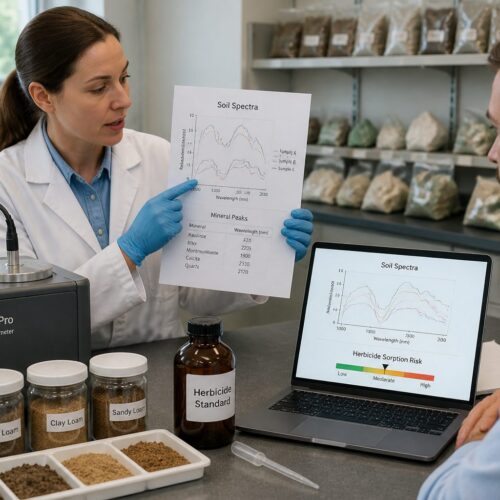
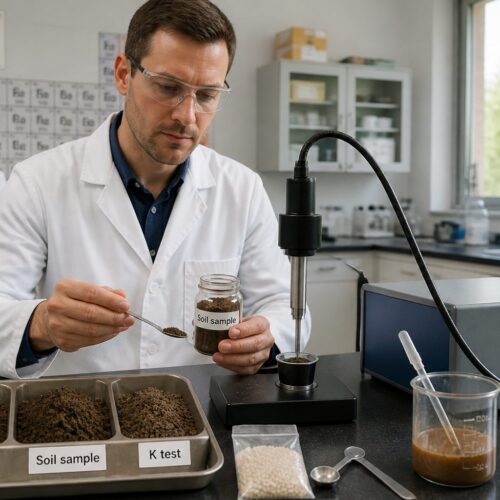
Several methods are available for assessing soil mineral composition, ranging from simple field tests to sophisticated laboratory analyses. One common field test involves observing the soil’s reaction to hydrochloric acid (HCl), which can indicate the presence of carbonates.
- X-ray diffraction (XRD)
- Scanning electron microscopy (SEM)
- Energy-dispersive X-ray spectroscopy (EDS)
- Inductively coupled plasma atomic emission spectrometry (ICP-AES)
- Wet chemical analysis
Laboratory analyses provide more detailed information about soil mineralogy soil pH. X-ray diffraction (XRD) is a widely used technique that identifies crystalline minerals based on their unique diffraction patterns.
Scanning electron microscopy (SEM) coupled with energy-dispersive X-ray spectroscopy (EDS) allows for the visualization and elemental analysis of individual mineral grains. Inductively coupled plasma atomic emission spectrometry (ICP-AES) can determine the total elemental composition of the soil, providing insights into the abundance of specific minerals.
Wet chemical analysis involves dissolving the soil sample in acid and then measuring the concentrations of different elements using techniques like atomic absorption spectroscopy (AAS). This method provides quantitative data on the elemental composition of the soil, which can be used to infer the mineral composition.
The choice of method depends on the level of detail required and the available resources. Field tests are useful for quick screening, while laboratory analyses provide more accurate and comprehensive information.
Interpreting the results of soil mineralogical analyses requires expertise in soil science and mineralogy. It’s important to consider the limitations of each method and to integrate the data with other soil properties, such as organic matter content and clay content, to obtain a complete picture of the soil.
Geochemical modeling can also be used to predict the long-term behavior of soil minerals and their impact on soil pH and nutrient availability. These models can help farmers and land managers make informed decisions about soil management and amendment application.
Case Studies: Successful pH Management Strategies
Several case studies illustrate successful pH management strategies in various agricultural settings. One example comes from the Palouse region of the Pacific Northwest, where acidic soils limit wheat production.
Farmers in this region have successfully used lime applications to raise soil pH, improving nutrient availability and increasing wheat yields. Regular soil testing and variable-rate lime application based on soil maps have optimized lime use and minimized environmental impact.
Another case study involves the management of alkaline soils in California’s Central Valley, where high pH and salinity hinder crop growth. Farmers in this region have implemented strategies such as sulfur applications and the use of acid-forming fertilizers to lower soil pH.
Additionally, they use leaching techniques to remove excess salts from the soil profile, improving soil conditions for crops like almonds and tomatoes. These case studies demonstrate the importance of tailored pH management strategies based on specific soil conditions and crop requirements.
Careful monitoring of soil pH and nutrient levels is essential to ensure the long-term success of these strategies, allowing for adjustments as needed to maintain optimal soil health and productivity.
In the Netherlands, the management of acidic sandy soils has involved the use of marl, a calcium-rich clay, to improve pH and nutrient retention. This has led to increased productivity of grasslands and arable crops.
In Australia, the reclamation of sodic soils, which are highly alkaline and have poor structure, has been achieved through gypsum application and improved drainage. This has enabled the cultivation of a wider range of crops in previously unproductive areas.
In Brazil, the management of highly weathered, acidic tropical soils has involved the use of lime and phosphorus fertilizers to improve nutrient availability and crop yields. This has transformed vast areas of the Cerrado region into productive agricultural land.
These case studies highlight the importance of understanding local soil conditions and tailoring management strategies to address specific challenges. They also demonstrate the potential for innovative solutions to improve soil health and productivity in diverse agricultural settings.
Precision Agriculture Techniques for Optimizing Soil pH
Precision agriculture offers several techniques for optimizing soil pH management. These techniques rely on advanced technologies to collect and analyze data about soil properties, enabling site-specific management decisions.
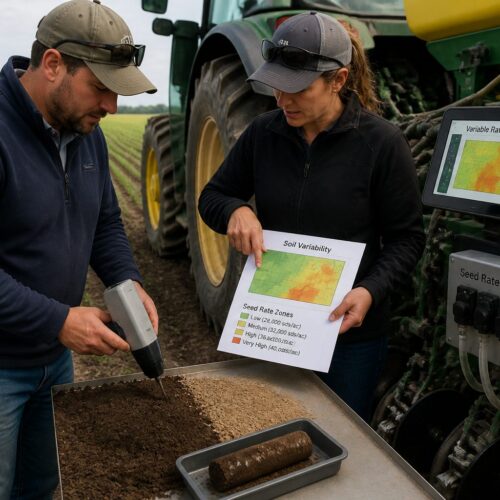
One key technique is soil mapping using GPS-guided soil sampling. This involves collecting soil samples at regular intervals across a field and analyzing them for pH, nutrient content, and mineral composition.
The data is then used to create detailed soil maps that show the spatial variability of these properties. Variable-rate application technology allows farmers to apply lime or other amendments at different rates in different parts of the field, based on the soil maps.
This ensures that amendments are applied only where they are needed, minimizing waste and reducing environmental impact. Remote sensing techniques, such as aerial or satellite imagery, can also be used to monitor soil pH and plant health.
These images can provide information about plant stress, nutrient deficiencies, and other factors that may be related to soil pH imbalances. By integrating these precision agriculture techniques, farmers can optimize soil pH management and improve crop yields while minimizing inputs and environmental impacts.
Another precision agriculture technique involves the use of soil sensors that continuously monitor soil pH and other properties in real-time. These sensors can provide valuable information for making timely adjustments to soil management practices.
Data analytics and machine learning algorithms can be used to analyze the data collected from soil sensors and remote sensing images. This can help farmers identify patterns and trends that would not be apparent from traditional soil sampling methods.
Geographic information systems (GIS) are also used to integrate data from different sources and create comprehensive maps of soil properties. These maps can be used to guide variable-rate application of amendments and other management practices.
The use of drones equipped with multispectral cameras is also becoming increasingly common in precision agriculture. Drones can capture high-resolution images of fields that can be used to assess plant health and identify areas with soil pH imbalances.
The Long-Term Impact of Soil Mineralogy on Agricultural Sustainability
Soil mineralogy has a profound long-term impact on agricultural sustainability. The mineral composition of soil influences its fertility, water-holding capacity, and resistance to erosion, all of which are critical for sustainable crop production.
Understanding how different minerals weather and release nutrients over time is essential for developing sustainable soil management practices. For example, soils rich in slowly weathering minerals like feldspars and micas can provide a long-term source of potassium and other essential nutrients.
This reduces the need for frequent fertilizer applications, minimizing the risk of nutrient runoff and water pollution. Soil mineralogy also affects the soil’s ability to sequester carbon, which is important for mitigating climate change.
Certain minerals, such as carbonates, can react with atmospheric carbon dioxide to form stable mineral forms of carbon, effectively removing CO2 from the atmosphere. By managing soil mineralogy to enhance nutrient cycling, carbon sequestration, and soil structure, farmers can improve the long-term sustainability of their agricultural systems.
This involves adopting practices such as conservation tillage, cover cropping, and crop rotation, which promote soil health and reduce reliance on external inputs.
The type of minerals present in the soil can also influence its resilience to climate change. Soils with high clay content and organic matter content are better able to withstand drought and extreme weather events.
Sustainable soil management practices can also help to improve soil structure and reduce erosion. This is particularly important in areas with steep slopes or high rainfall.
The long-term sustainability of agricultural systems depends on maintaining soil health and fertility. This requires a holistic approach that considers the interactions between soil mineralogy, organic matter, and management practices.
By adopting sustainable soil management practices, farmers can ensure that their soils remain productive for future generations.
Future Trends in Soil Mineralogy Research for Agriculture
Soil mineralogy research is continuously evolving, with several emerging trends that promise to enhance our understanding of soil processes and improve agricultural practices. One key trend is the use of advanced spectroscopic techniques to characterize soil minerals at the nanoscale.
This allows researchers to study the surface properties of minerals and their interactions with organic matter, water, and microorganisms. Another trend is the development of predictive models that can simulate mineral weathering and nutrient release under different environmental conditions.
These models can help farmers and land managers anticipate changes in soil fertility and pH over time and make informed decisions about soil management. There’s also growing interest in using mineral amendments to enhance soil carbon sequestration.
Researchers are investigating the potential of using minerals like olivine and serpentine to capture atmospheric CO2 and store it in the soil as stable carbonates. These future trends in soil mineralogy research offer exciting opportunities to develop more sustainable and resilient agricultural systems.
By combining advanced analytical techniques, predictive modeling, and innovative soil management practices, we can unlock the full potential of soil mineralogy to support food security and environmental stewardship.
The development of new mineral-based fertilizers that release nutrients slowly and efficiently is also an area of active research. This could help to reduce nutrient losses to the environment and improve crop nutrient uptake.
The use of nanotechnology to modify soil minerals and enhance their properties is another emerging trend. This could lead to the development of new soil amendments that are more effective at improving soil health and fertility.
The integration of soil mineralogy data with other soil properties, such as organic matter content and microbial activity, is also becoming increasingly important. This can provide a more holistic understanding of soil processes and improve the accuracy of predictive models.
These future trends in soil mineralogy research have the potential to transform agricultural practices and improve the sustainability of food production systems.
Conclusion
Understanding the relationship between soil mineralogy soil pH is essential for effective soil management in precision agriculture. The mineral composition of soil directly influences its pH, buffering capacity, and nutrient availability, all of which are critical for plant health and crop productivity.
By assessing soil mineral composition, managing soil pH through mineral amendments, and implementing precision agriculture techniques, farmers can optimize soil conditions for sustainable crop production. Continued research in soil mineralogy will further enhance our ability to manage soils effectively and ensure long-term agricultural sustainability.
Adopting a proactive and informed approach to soil management, based on a thorough understanding of soil mineralogy, is crucial for ensuring the long-term health and productivity of agricultural lands. This knowledge empowers farmers to make informed decisions that optimize crop yields while minimizing environmental impacts.
Ultimately, a deeper understanding of soil mineralogy and its influence on soil pH is essential for building resilient and sustainable agricultural systems that can meet the growing demands for food production while protecting our precious soil resources.