
Soil spectroscopy is rapidly emerging as a powerful tool for precision agriculture. It offers a non-destructive and cost-effective way to assess soil properties and predict crop yields. Understanding how to leverage this technology can give farmers a significant edge in optimizing their practices.
By analyzing the spectral reflectance of soil, we can infer a wealth of information about its composition and condition. This data enables more targeted interventions, ultimately leading to improved resource efficiency and higher yields. Let’s explore the practical applications of soil spectroscopy for yield prediction.
This article provides a practical guide to using soil spectroscopy for yield prediction. We’ll cover everything from the basics of spectral analysis to developing accurate prediction models. Through case studies and practical tips, you’ll discover how to integrate this technology into your agricultural operations for better decision-making.
The Basics of Using Soil Spectroscopy for Yield Prediction
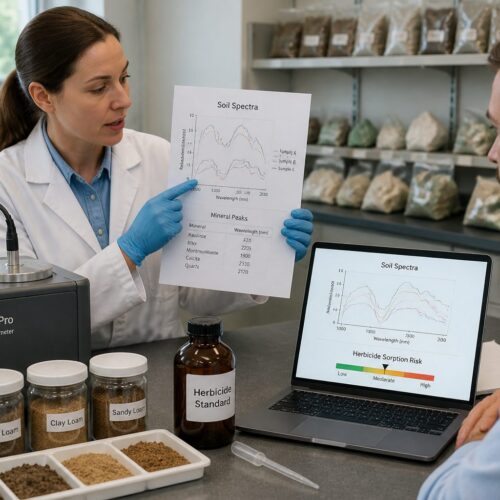
Soil spectroscopy involves measuring the interaction of electromagnetic radiation with soil samples. When light strikes the soil, certain wavelengths are absorbed, reflected, or transmitted based on the soil’s chemical and physical properties. The reflected light, or spectral reflectance, is then analyzed to identify and quantify these properties.
The key principle is that different soil components have unique spectral signatures. For example, organic matter absorbs strongly in the visible and near-infrared regions, while minerals like iron oxides exhibit characteristic absorption features. By examining these spectral patterns, we can estimate the concentration of various constituents in the soil.
To perform soil spectroscopy, you’ll need a spectrometer, a device that measures the intensity of light as a function of wavelength. Spectrometers come in various forms, from portable handheld devices to sophisticated laboratory instruments. The choice depends on the scale of your operation and the level of accuracy required.
The process typically involves collecting soil samples from the field, preparing them for analysis, and then scanning them with the spectrometer. The resulting spectral data is then processed and analyzed using specialized software. This analysis can reveal valuable insights into soil health and its potential impact on crop yield.
Electromagnetic radiation interacts with soil particles in complex ways. These interactions are influenced by the soil’s composition, texture, and moisture content. Understanding these interactions is crucial for interpreting the spectral data accurately.

The spectral signature of a soil is like its fingerprint. It provides a unique identifier that can be used to differentiate between different soil types and conditions. Analyzing these signatures requires specialized knowledge and software.
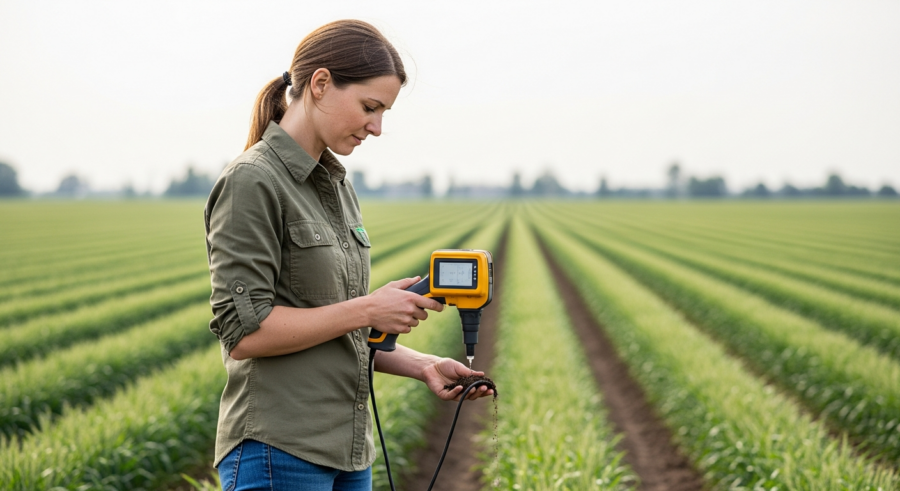
Handheld spectrometers offer convenience and portability for field measurements. However, they may have lower accuracy compared to laboratory instruments. Careful calibration and maintenance are essential for ensuring reliable data.
Laboratory spectrometers provide higher accuracy and precision. But they require more extensive sample preparation and analysis time. The trade-off between accuracy and efficiency needs to be considered.
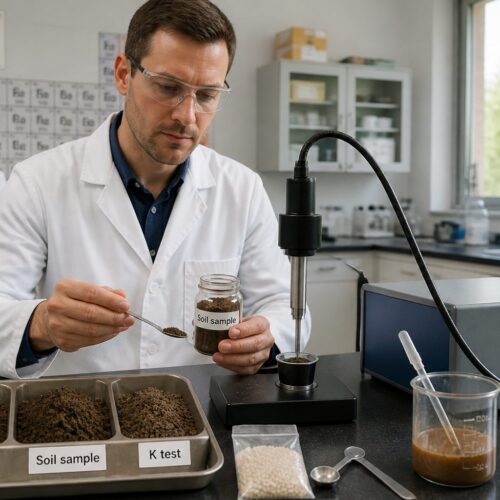
Sample preparation is a critical step in soil spectroscopy. It involves drying, grinding, and sieving the soil to ensure uniformity. Proper sample preparation minimizes variability and improves the accuracy of the spectral measurements.
Data processing involves removing noise and correcting for instrumental artifacts. This step is essential for obtaining reliable spectral data. Various software packages are available for processing spectral data.
Soil spectroscopy can be used to assess a wide range of soil properties. These properties include organic matter content, nutrient levels, texture, and moisture content. This comprehensive assessment provides a holistic view of soil health.
The information obtained from soil spectroscopy can be used to optimize fertilizer application. This leads to improved nutrient use efficiency and reduced environmental impacts. Precision fertilization is a key component of sustainable agriculture.
Soil spectroscopy can also be used to monitor soil health over time. This allows farmers to track changes in soil properties and adjust their management practices accordingly. Long-term monitoring is essential for maintaining soil fertility and productivity.
Developing Spectral Models for Accurate Yield Estimation
Once you have spectral data, the next step is to develop a spectral model that relates soil properties to crop yield. This involves using statistical techniques to find correlations between spectral reflectance and yield data from previous seasons. The goal is to create a predictive model that can estimate yield based on new spectral measurements.
One common approach is to use multiple linear regression, where yield is modeled as a linear combination of spectral reflectance values at different wavelengths. Other techniques, such as partial least squares regression (PLSR) and support vector machines (SVM), can handle more complex relationships. The choice of method depends on the dataset and the desired level of accuracy.
Building an effective spectral model requires a robust dataset that includes both spectral measurements and corresponding yield data. This data should cover a range of soil types, management practices, and environmental conditions to ensure the model is broadly applicable. The more comprehensive your dataset, the more accurate your yield predictions will be.
It’s also important to validate your model using independent data. This involves testing the model on a separate set of spectral measurements and yield data that were not used to train the model. This step helps to assess the model’s performance and identify any potential biases or limitations. A well-validated model provides a reliable basis for yield forecasting.
The selection of appropriate wavelengths is crucial for building accurate spectral models. Certain wavelengths are more sensitive to specific soil properties than others. Identifying these key wavelengths can improve the model’s performance.
Multiple linear regression is a simple and widely used technique. However, it may not be suitable for complex relationships between spectral reflectance and yield. More advanced techniques may be necessary in such cases.
Partial least squares regression (PLSR) is a powerful technique for handling multicollinearity in spectral data. It can effectively reduce the dimensionality of the data and improve the model’s stability. PLSR is often preferred for complex datasets.
Support vector machines (SVM) are a machine learning technique that can handle non-linear relationships. SVM can provide high accuracy in yield prediction. However, SVM requires careful parameter tuning and may be computationally intensive.
The size and quality of the dataset are critical for building robust spectral models. A larger dataset with representative samples will generally lead to more accurate predictions. Data quality control is essential to remove outliers and errors.
Model validation is essential to ensure that the model generalizes well to new data. Cross-validation techniques can be used to estimate the model’s performance on unseen data. A well-validated model provides confidence in its predictions.
The accuracy of the spectral model depends on various factors, including the quality of the spectral data, the choice of statistical technique, and the size and representativeness of the dataset. Careful attention to these factors is crucial for achieving accurate yield predictions.
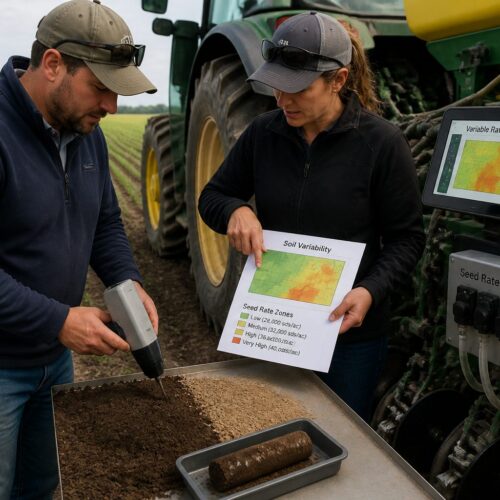
Spectral models can be used to create yield maps that show the spatial variability of yield potential across a field. These maps can be used to guide variable rate fertilizer application and other precision agriculture practices. Yield maps are valuable tools for optimizing crop management.
The development of spectral models is an iterative process. It involves collecting data, building a model, validating the model, and refining the model based on the results. Continuous improvement is essential for maintaining the accuracy and reliability of the model.
Spectral models can be integrated with other data sources, such as weather data and soil maps, to improve yield predictions. Combining different data sources can provide a more comprehensive understanding of the factors that influence crop yield. Data integration is a key trend in precision agriculture.
Factors Affecting the Accuracy of Yield Predictions
Several factors can influence the accuracy of yield predictions derived from soil spectroscopy. These factors range from the quality of the spectral data to the complexity of the agricultural system. Understanding these influences is essential for improving the reliability of your predictions.
Soil moisture content, for example, can significantly affect spectral reflectance. Wet soils tend to have lower reflectance values than dry soils, which can confound the analysis. It’s important to account for moisture variations by either drying the samples before scanning or including moisture content as a variable in the spectral model.
| Factor | Impact on Accuracy | Mitigation Strategy |
|---|---|---|
| Soil Moisture | Reduces reflectance, distorts spectral features | Dry samples before scanning; include moisture as a variable |
| Surface Roughness | Scatters light, alters spectral signatures | Grind and sieve samples to ensure uniformity |
| Organic Matter Content | Dominates spectral response, masks other features | Use appropriate spectral regions; employ advanced modeling techniques |
| Mineral Composition | Complex interactions, overlapping spectral features | Use high-resolution spectroscopy; combine with other data sources |
| Calibration Data | Limited range, biased representation | Collect representative samples; use robust validation techniques |
Soil texture also plays a role, as different particle sizes and arrangements can affect how light is scattered and absorbed. Coarse-textured soils tend to have higher reflectance values than fine-textured soils. Accounting for soil texture variations can improve prediction accuracy.
The presence of surface residue, such as crop stubble, can also interfere with spectral measurements. Residue can absorb or reflect light, masking the spectral signature of the underlying soil. Removing residue or accounting for its presence in the model is essential.
Atmospheric conditions, such as cloud cover and humidity, can affect the intensity and quality of light reaching the soil surface. These variations can introduce noise into the spectral data. Calibrating the spectrometer under different atmospheric conditions can help to mitigate these effects.
The choice of spectrometer and its calibration can also influence the accuracy of yield predictions. Using a well-calibrated spectrometer with high spectral resolution is crucial for obtaining reliable data. Regular calibration is essential for maintaining accuracy.
The complexity of the agricultural system, including crop type, management practices, and environmental conditions, can also affect prediction accuracy. Some crops are more sensitive to soil variations than others. Accounting for these factors in the model can improve its performance.
The spatial variability of soil properties within a field can also limit prediction accuracy. Soil properties can vary significantly over short distances. Collecting a sufficient number of samples to capture this variability is essential.
The temporal variability of soil properties, such as moisture content and nutrient levels, can also affect prediction accuracy. Soil properties can change over time due to weather, management practices, and other factors. Monitoring soil properties over time can improve prediction accuracy.
The availability of accurate and reliable yield data is crucial for building and validating spectral models. Yield data should be collected using standardized methods and should be representative of the entire field. Accurate yield data is essential for model development.
The choice of statistical technique can also influence the accuracy of yield predictions. Some techniques are better suited for certain types of data and relationships than others. Selecting the appropriate technique is essential for achieving accurate predictions.
The interpretation of spectral data requires specialized knowledge and expertise. Understanding the relationships between soil properties and spectral reflectance is crucial for making accurate predictions. Expert interpretation is essential for translating spectral data into actionable insights.
Integrating Spectroscopy Data with Crop Growth Models
To enhance the accuracy and utility of yield predictions, consider integrating soil spectroscopy data with crop growth models. These models simulate plant development and yield based on various factors, including weather, soil properties, and management practices. By incorporating spectral data, you can refine the model’s inputs and improve its predictive capabilities.
For instance, soil spectroscopy can provide estimates of soil nutrient availability, which can then be used to adjust the nutrient parameters in the crop growth model. Similarly, spectral data can help to assess soil water content and stress levels, allowing for more accurate simulation of plant water uptake and transpiration. This integration can lead to more realistic and reliable yield forecasts.
Crop growth models come in various forms, from simple empirical models to complex mechanistic models. Empirical models rely on statistical relationships between inputs and outputs, while mechanistic models simulate the underlying biological processes. The choice of model depends on the available data, the desired level of detail, and the computational resources available.
The integration of spectroscopy data and crop growth models requires careful calibration and validation. This involves comparing the model’s predictions with observed yield data and adjusting the model parameters to improve the agreement. Regular updates and refinements are necessary to ensure the model remains accurate and relevant over time. This approach offers a powerful framework for optimizing crop management and maximizing yields.
Integrating soil spectroscopy data with crop growth models allows for a more dynamic and responsive approach to crop management. Spectral data can be used to update the model’s inputs throughout the growing season. This allows for adjustments to be made based on real-time conditions.
Crop growth models can simulate the effects of different management practices on crop yield. This allows farmers to evaluate the potential benefits of different strategies before implementing them. This is particularly useful for optimizing fertilizer and irrigation management.
The integration of spectroscopy data and crop growth models can also help to identify areas of the field that are underperforming. By comparing the model’s predictions with observed yield data, farmers can identify areas where management practices need to be improved. This targeted approach can lead to more efficient resource use.
The choice of crop growth model depends on the specific crop and the available data. Some models are more suitable for certain crops than others. It’s important to select a model that is appropriate for the specific application.
Calibration is a critical step in the integration process. The model’s parameters need to be adjusted so that its predictions match observed yield data. This requires a good understanding of the model’s inputs and outputs.
Validation is also essential to ensure that the model is accurate and reliable. The model should be tested on independent data to assess its performance. A well-validated model provides confidence in its predictions.
The integration of spectroscopy data and crop growth models requires a multidisciplinary approach. It involves expertise in soil science, crop physiology, and computer modeling. Collaboration between different experts is essential for success.
The use of crop growth models is becoming increasingly common in precision agriculture. These models provide a powerful tool for optimizing crop management and maximizing yields. As technology advances, the integration of spectroscopy data and crop growth models is likely to become even more widespread.
The benefits of integrating spectroscopy data and crop growth models include improved yield predictions, optimized resource use, and more informed decision-making. This approach can help farmers achieve more sustainable and profitable operations. It also contributes to food security and environmental stewardship.
Using Yield Predictions for Informed Decision-Making
The ultimate goal of soil spectroscopy and yield prediction is to enable more informed decision-making in agriculture. By providing accurate and timely estimates of crop yield, this technology can help farmers optimize their management practices and improve their profitability. The key is to translate yield predictions into actionable insights.
For example, yield predictions can guide decisions about fertilizer application. If the model predicts a high yield potential, you might consider increasing fertilizer rates to ensure the crop has sufficient nutrients. Conversely, if the predicted yield is low, you might reduce fertilizer rates to save costs and minimize environmental impacts. This targeted approach can lead to more efficient resource use and higher returns.
- Optimize fertilizer application rates
- Adjust irrigation schedules
- Make informed planting decisions
- Plan harvesting and storage strategies
- Assess crop insurance needs
Yield predictions can also inform decisions about irrigation scheduling. By knowing the expected water demand of the crop, you can adjust irrigation rates to prevent water stress and maximize yield. This is particularly important in regions where water is scarce. Precise irrigation management can significantly improve water use efficiency and reduce irrigation costs.
Planting decisions can also be optimized using yield predictions. Farmers can select the most appropriate crop variety for a given field based on its yield potential. They can also adjust planting densities to maximize yield and minimize competition for resources.
Harvesting and storage strategies can be planned based on yield predictions. Farmers can estimate the total yield of their crop and plan accordingly for harvesting, transportation, and storage. This can help to minimize post-harvest losses and maximize profitability.
Yield predictions can also be used to assess crop insurance needs. Farmers can use yield estimates to determine the appropriate level of insurance coverage. This can help to protect them against financial losses due to crop failure.
The integration of yield predictions with other data sources, such as weather data and market prices, can provide even more valuable insights. This allows farmers to make more informed decisions about crop management and marketing.
The use of yield predictions can lead to more sustainable agricultural practices. By optimizing resource use and minimizing environmental impacts, farmers can improve the long-term productivity of their land. Sustainable agriculture is essential for ensuring food security and environmental stewardship.
The benefits of using yield predictions for informed decision-making are numerous. These benefits include increased profitability, improved resource efficiency, and more sustainable agricultural practices. This technology can help farmers achieve their economic and environmental goals.
The communication of yield predictions to farmers is crucial for their effective use. Predictions should be presented in a clear and understandable format. Farmers should also be provided with guidance on how to interpret and use the predictions.
The use of yield predictions is becoming increasingly common in modern agriculture. As technology advances and data availability increases, this trend is likely to continue. Embracing this technology can help farmers stay competitive and profitable.
The development of user-friendly software and tools is essential for making yield predictions accessible to farmers. These tools should be easy to use and should provide farmers with the information they need to make informed decisions. User-friendly tools are key to widespread adoption.
Case Studies: Successful Yield Prediction Applications
Several studies have demonstrated the successful application of soil spectroscopy for yield prediction in various crops. These case studies provide valuable insights into the potential of this technology and the factors that contribute to its success. Examining these examples can help you understand how to implement soil spectroscopy in your own operations.
One study in the Midwestern United States used soil spectroscopy to predict corn yield based on soil organic matter content. The researchers found a strong correlation between spectral reflectance and yield, allowing them to develop a model that could accurately estimate yield potential. This information was then used to optimize fertilizer application rates, resulting in significant cost savings and improved yields.
Another study in Australia used soil spectroscopy to predict wheat yield in arid and semi-arid regions. The researchers focused on spectral features related to soil moisture and salinity. They developed a model that could accurately predict yield based on these factors. This enabled farmers to adjust irrigation schedules and planting densities to mitigate the effects of water stress and salinity, leading to more stable and productive wheat crops.
In Brazil, soil spectroscopy has been used to predict soybean yield based on soil nutrient levels and texture. The researchers found that spectral reflectance in the near-infrared region was strongly correlated with yield. This information was then used to develop a model that could accurately estimate yield potential. This allowed farmers to optimize fertilizer application and planting densities, resulting in improved soybean yields and reduced input costs.
A case study in California demonstrated the use of soil spectroscopy for predicting almond yield. The researchers focused on spectral features related to soil nitrogen and water content. They developed a model that could accurately estimate yield potential several months before harvest. This allowed farmers to adjust irrigation and fertilization schedules to maximize yield and improve nut quality.
In Europe, soil spectroscopy has been used to predict sugar beet yield based on soil organic matter and nutrient levels. The researchers found that spectral reflectance in the visible and near-infrared regions was strongly correlated with yield. This information was then used to develop a model that could accurately estimate yield potential. This allowed farmers to optimize fertilizer application and planting densities, resulting in improved sugar beet yields and reduced input costs.
A study in Africa demonstrated the use of soil spectroscopy for predicting maize yield in smallholder farming systems. The researchers focused on spectral features related to soil fertility and water availability. They developed a model that could accurately estimate yield potential. This allowed farmers to make more informed decisions about fertilizer application and planting densities, leading to improved maize yields and food security.
These case studies highlight the versatility of soil spectroscopy for yield prediction in various crops and regions. The success of these applications depends on several factors, including the quality of the spectral data, the choice of statistical technique, and the availability of accurate yield data. Careful attention to these factors is crucial for achieving accurate and reliable yield predictions.
The use of soil spectroscopy for yield prediction is becoming increasingly common in both developed and developing countries. This technology offers a cost-effective and non-destructive way to assess soil properties and predict crop yields. As technology advances and data availability increases, soil spectroscopy is likely to become an even more important tool for precision agriculture.
Conclusion
Soil spectroscopy offers a powerful and versatile tool for predicting crop yields and improving agricultural management. By analyzing the spectral reflectance of soil, we can gain valuable insights into its properties and its potential impact on crop growth. This information can then be used to optimize management practices, improve resource efficiency, and maximize yields.
While there are challenges associated with developing accurate spectral models and integrating them with crop growth models, the potential benefits are substantial. As technology advances and data availability increases, soil spectroscopy is likely to become an increasingly important tool for precision agriculture. Embracing this technology can help farmers achieve more sustainable and profitable operations, ensuring food security and environmental stewardship.
The future of soil spectroscopy in agriculture is bright. With continued research and development, this technology is likely to become even more accurate, reliable, and accessible. This will enable farmers to make more informed decisions and improve the sustainability of their operations.
The integration of soil spectroscopy with other technologies, such as remote sensing and data analytics, will further enhance its capabilities. This will allow for a more comprehensive and integrated approach to crop management. The combination of different technologies will drive innovation in agriculture.
The adoption of soil spectroscopy by farmers will require education and training. Farmers need to understand the principles of soil spectroscopy and how to use the technology effectively. Education and training are essential for widespread adoption.
The development of user-friendly software and tools will also be crucial for promoting the adoption of soil spectroscopy. These tools should be easy to use and should provide farmers with the information they need to make informed decisions. User-friendly tools are key to success.
The benefits of soil spectroscopy extend beyond the farm level. This technology can also contribute to food security and environmental stewardship at a global scale. By improving crop yields and reducing environmental impacts, soil spectroscopy can help to feed a growing population while protecting the planet.