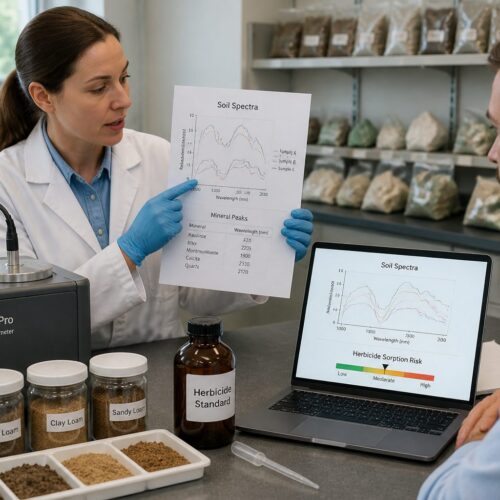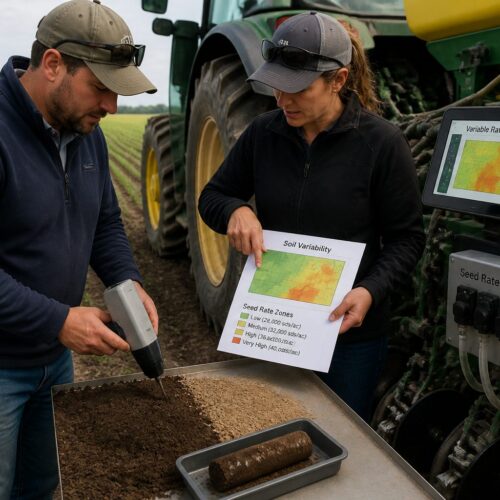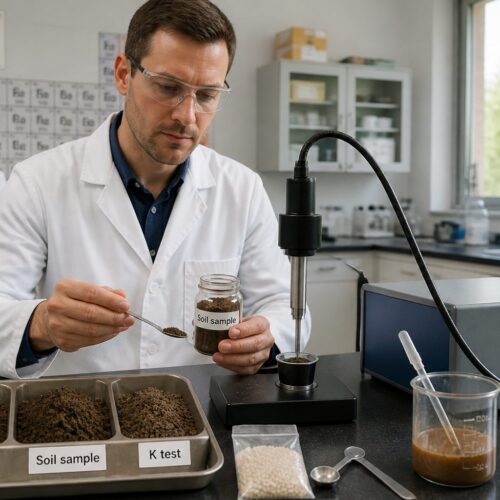


Precision agriculture is rapidly transforming how we manage crops. One of the most promising tools in this revolution is soil spectroscopy. This technique offers a rapid and cost-effective way to assess soil properties and diagnose crop health issues before they become widespread.
By understanding how soil spectroscopy can be leveraged, farmers can make data-driven decisions. These decisions can optimize fertilizer application, detect plant stress early, and ultimately improve crop yields.
In this article, we will explore the fundamentals of soil spectroscopy. We will also discuss its applications in precision agriculture, specifically focusing on how it can help diagnose and address crop health problems.
Understanding the Basics of Soil Spectroscopy
Soil spectroscopy is a technique that measures the interaction of light with soil. When light shines on a soil sample, some of it is absorbed, some is transmitted, and some is reflected.
The pattern of reflected light, known as the spectral reflectance, provides valuable information about the soil’s composition and properties. Different soil components, such as minerals, organic matter, and moisture, absorb and reflect light differently.
By analyzing the spectral reflectance, we can infer the presence and concentration of these components. This analysis forms the basis for using soil spectroscopy in various agricultural applications.
The process typically involves collecting soil samples and analyzing them using a spectrometer. The spectrometer measures the intensity of light reflected at different wavelengths.
These measurements are then compared against reference spectra. This allows us to identify and quantify the soil’s constituents.
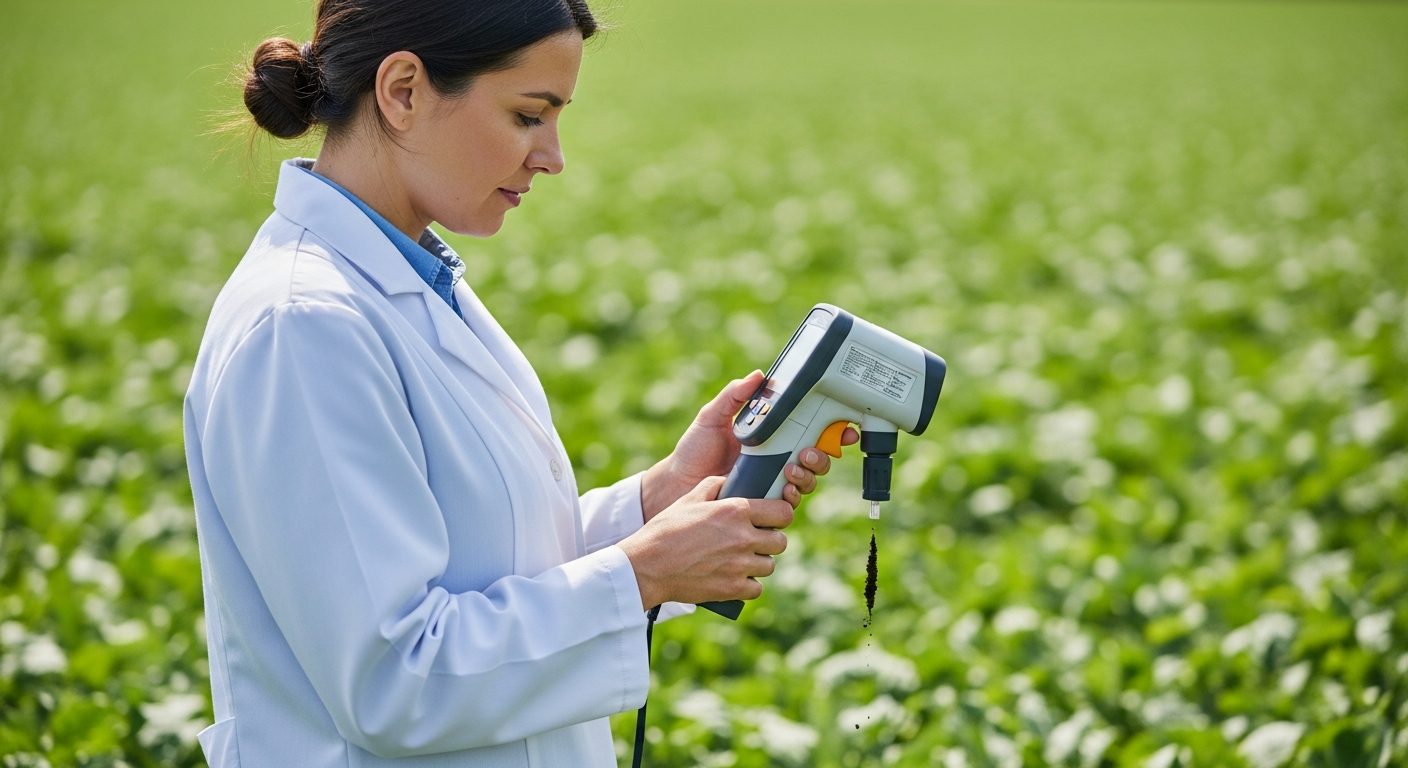
Soil spectroscopy is not just limited to visible light; it often extends into the near-infrared (NIR) and mid-infrared (MIR) regions of the electromagnetic spectrum. The NIR region is particularly sensitive to organic matter and moisture content. The MIR region provides information about the mineral composition of the soil.
The spectral reflectance data is often represented as a graph. This graph plots the intensity of reflected light against the wavelength. This graph is unique for each soil sample.
The interpretation of spectral data requires specialized software and expertise. Sophisticated algorithms are used to extract meaningful information from the complex spectral patterns.
Calibration is a critical step in soil spectroscopy. It involves relating the spectral data to known soil properties. This is typically done using statistical models.
The accuracy of the calibration model is crucial for the reliability of the results. Factors such as soil type, moisture content, and temperature can affect the spectral reflectance. These factors need to be accounted for in the calibration process.
Different types of spectrometers are available for soil analysis. These range from portable handheld devices to laboratory-based instruments. The choice of spectrometer depends on the specific application and the desired level of accuracy.
Handheld spectrometers are convenient for field measurements. However, they may have lower accuracy compared to laboratory-based instruments.
Laboratory-based spectrometers offer higher accuracy and precision. But they require more time and resources for sample preparation and analysis.
Identifying Nutrient Deficiencies with Spectroscopy
Nutrient deficiencies are a common problem in agriculture. They can significantly impact crop growth and yield.
Soil spectroscopy offers a rapid and non-destructive method for identifying these deficiencies. Plants reflect light differently depending on their nutrient status.
For example, nitrogen deficiency can cause leaves to turn yellow. This is because chlorophyll, which absorbs light for photosynthesis, requires nitrogen.
Spectroscopy can detect these subtle changes in spectral reflectance. It can also help to diagnose nutrient deficiencies before visible symptoms appear.
By comparing the spectral reflectance of healthy and deficient plants, we can identify specific wavelengths. These wavelengths are associated with particular nutrients.
The spectral signature of a plant changes as it experiences nutrient stress. These changes can be subtle, but are detectable with sensitive spectroscopic instruments.
Potassium deficiency, for example, can affect the water content of leaves. This impacts reflectance in the near-infrared region.
Phosphorus deficiency can affect root development. This indirectly impacts plant growth and spectral reflectance.
The ability to detect nutrient deficiencies early allows for timely intervention. This prevents significant yield losses.
Traditional methods of nutrient analysis, such as soil testing and plant tissue analysis, can be time-consuming and expensive. Soil spectroscopy provides a faster and more cost-effective alternative.
However, it is important to note that soil spectroscopy is not a replacement for traditional methods. It is a complementary tool that can provide valuable information for nutrient management.
The accuracy of nutrient deficiency detection using spectroscopy depends on several factors. These factors include the quality of the spectral data, the calibration model, and the specific crop and nutrient being analyzed.
Researchers are continuously working on improving the accuracy and reliability of soil spectroscopy for nutrient deficiency detection. This is done by developing more sophisticated calibration models and integrating spectral data with other data sources.
Detecting Plant Stress Early Through Spectral Analysis
Plant stress can be caused by various factors, including water stress, pest infestations, and disease. Early detection of plant stress is crucial for implementing timely interventions and preventing significant yield losses.
Spectral reflectance is sensitive to changes in plant physiology. These changes occur when plants are under stress.
| Stress Factor | Spectral Reflectance Change | Mechanism |
|---|---|---|
| Water Stress | Increased reflectance in the near-infrared region | Changes in leaf water content affect light scattering |
| Nitrogen Deficiency | Decreased reflectance in the green region | Reduced chlorophyll content leads to less light absorption |
| Pest Infestation | Increased reflectance in the red region | Damage to leaf tissue alters light reflection |
| Disease | Changes in reflectance across multiple wavelengths | Alterations in leaf structure and pigment composition |
For instance, water-stressed plants may exhibit increased reflectance in the near-infrared region. This is due to changes in leaf water content.
Similarly, plants infected with a disease may show altered reflectance patterns. These patterns are across multiple wavelengths due to changes in leaf structure and pigment composition.
Different types of plant stress can have different effects on spectral reflectance. This allows for the differentiation between various stress factors using spectral analysis.
For example, pest infestations can cause localized damage to leaf tissue. This results in changes in reflectance in the visible and near-infrared regions.
Disease can affect the pigment composition of leaves. This leads to changes in reflectance across multiple wavelengths.
Spectral indices, such as the Normalized Difference Vegetation Index (NDVI), can be used to quantify plant stress. NDVI is calculated from the red and near-infrared reflectance values.
A decrease in NDVI indicates a decrease in plant health. This can be caused by various stress factors.
Thermal imaging can also be used to detect plant stress. Stressed plants often have higher leaf temperatures due to reduced transpiration.
Combining spectral analysis with thermal imaging can provide a more comprehensive assessment of plant stress. This allows for more targeted interventions.
Early detection of plant stress is crucial for implementing timely interventions. These interventions can include irrigation, pest control, and disease management.
By detecting plant stress early, farmers can prevent significant yield losses. They can also improve the overall health and productivity of their crops.
Using Spectroscopy to Optimize Fertilizer Application
Fertilizer application is a critical aspect of crop management. However, over-fertilization can lead to environmental problems, while under-fertilization can limit crop yields.
Soil spectroscopy can help optimize fertilizer application by providing real-time information about soil nutrient levels. This ensures that crops receive the right amount of nutrients at the right time.
By analyzing the spectral reflectance of soil samples, we can estimate the concentration of essential nutrients. These include nitrogen, phosphorus, and potassium.
This information can then be used to create variable rate fertilizer application maps. These maps guide the precise application of fertilizers based on the specific nutrient needs of different areas within a field.
This approach not only improves crop yields but also reduces fertilizer waste and minimizes environmental impact. It also helps to make the process more efficient.
Variable rate fertilizer application is a key component of precision agriculture. It allows farmers to tailor fertilizer application to the specific needs of different areas within a field.
Soil spectroscopy can provide the data needed to create accurate variable rate fertilizer application maps. This ensures that fertilizers are applied only where they are needed.
Traditional methods of soil testing can be expensive and time-consuming. Soil spectroscopy provides a faster and more cost-effective alternative for assessing soil nutrient levels.
However, it is important to calibrate the spectral data with traditional soil testing methods. This ensures the accuracy of the fertilizer recommendations.
The use of soil spectroscopy for fertilizer optimization can lead to significant cost savings. This is achieved through reduced fertilizer use and increased crop yields.
It also reduces the environmental impact of agriculture. This is done by minimizing fertilizer runoff and greenhouse gas emissions.
The integration of soil spectroscopy with precision agriculture technologies can help farmers make more informed decisions about fertilizer management. This results in more sustainable and profitable farming practices.
Future research should focus on developing more accurate and reliable calibration models for soil spectroscopy. These models should account for the variability in soil types and environmental conditions.
Benefits of Spectroscopy in Precision Agriculture
Integrating soil spectroscopy data with precision agriculture systems offers numerous benefits. These benefits range from improved crop health monitoring to more efficient resource management.
By combining spectral data with other data sources, such as GPS and yield maps, farmers can gain a comprehensive understanding of their fields. This allows them to make more informed decisions and optimize their farming practices.
The integration process typically involves collecting spectral data using handheld or drone-mounted spectrometers. This data is then processed and analyzed using specialized software.
The resulting information is integrated with other data layers in a geographic information system (GIS). This creates a detailed map of soil properties and crop health indicators.
This integrated data can be used to guide various precision agriculture practices. These include variable rate irrigation, targeted pest control, and optimized planting densities.
Precision agriculture aims to optimize resource use and improve crop yields. It also aims to minimize environmental impact.
Soil spectroscopy plays a crucial role in precision agriculture by providing valuable information about soil properties and crop health. This information is used to make data-driven decisions.
The benefits of using soil spectroscopy in precision agriculture include improved crop health monitoring. This allows for early detection of plant stress and nutrient deficiencies.
It also allows for more efficient resource management. This includes optimized fertilizer application and variable rate irrigation.
This leads to increased crop yields and reduced input costs. It also minimizes the environmental impact of agriculture.
The integration of soil spectroscopy with other precision agriculture technologies, such as GPS and yield maps, can provide a more comprehensive understanding of the field. This allows farmers to make more informed decisions.
For example, by combining spectral data with yield maps, farmers can identify areas with low yields. They can then investigate the underlying causes.
This allows them to implement targeted interventions to improve yields in those areas. These interventions include fertilizer application, irrigation, and pest control.
Integrating Soil Spectroscopy Data with Precision Agriculture Systems
Integrating soil spectroscopy data with other precision agriculture technologies requires a systematic approach. This approach includes data collection, processing, and analysis, as well as integration with existing farm management systems.
The first step is to collect spectral data using appropriate sensors. These sensors can be handheld devices, drone-mounted spectrometers, or even satellite-based sensors.
- Data collection using appropriate sensors
- Data processing and calibration
- Integration with GIS and farm management software
- Development of decision support tools
- Implementation of variable rate applications
The collected data then needs to be processed and calibrated. This ensures accuracy and consistency.
The processed data is then integrated with other data layers. These data layers are in a GIS platform to create a comprehensive view of the field.
Data processing involves removing noise and correcting for atmospheric effects. This ensures the accuracy of the spectral data.
Calibration involves relating the spectral data to known soil properties and crop health indicators. This is typically done using statistical models.
The calibrated data is then integrated with other data layers in a GIS platform. These data layers include GPS data, yield maps, and soil maps.
The integrated data is used to develop decision support tools. These tools help farmers make informed decisions about crop management.
For example, decision support tools can be used to create variable rate fertilizer application maps. These maps guide the precise application of fertilizers based on the specific nutrient needs of different areas within a field.
The implementation of variable rate applications requires specialized equipment. This equipment includes variable rate fertilizer applicators and irrigation systems.
The integration of soil spectroscopy data with precision agriculture systems can be challenging. This requires expertise in data collection, processing, and analysis, as well as in GIS and farm management systems.
However, the benefits of integration are significant. These benefits include improved crop yields, reduced input costs, and minimized environmental impact.
Case Studies: Successful Applications of Crop Health Monitoring
Several case studies demonstrate the successful application of soil spectroscopy in crop health monitoring. These examples highlight the potential of this technology to improve agricultural practices and outcomes.
In one study, researchers used soil spectroscopy to monitor nitrogen levels in wheat fields. They were able to optimize fertilizer application and increase yields by 15%.
Another study focused on detecting water stress in vineyards. The spectral reflectance data allowed growers to identify areas with water stress. This allowed them to implement targeted irrigation strategies.
In a third case, soil spectroscopy was used to identify disease outbreaks in potato fields. Early detection allowed farmers to apply targeted treatments. This prevented the spread of the disease and minimized yield losses.
These case studies demonstrate that soil spectroscopy can be a valuable tool for crop health monitoring. It can improve resource management in various agricultural settings.
One case study involved the use of drone-mounted spectrometers to monitor crop health in cornfields. The spectral data was used to identify areas with nitrogen deficiency. This allowed farmers to apply nitrogen fertilizer only to those areas, resulting in significant cost savings.
Another case study focused on the use of soil spectroscopy to detect fungal diseases in soybean fields. The spectral data was used to identify areas with disease outbreaks. This allowed farmers to apply fungicides only to those areas, reducing the use of pesticides and minimizing environmental impact.
A third case study involved the use of soil spectroscopy to monitor soil salinity in irrigated cotton fields. The spectral data was used to identify areas with high soil salinity. This allowed farmers to implement targeted irrigation strategies to leach the salt from the soil, improving crop yields.
These case studies highlight the versatility of soil spectroscopy for crop health monitoring. It can be applied to a wide range of crops and environmental conditions.
The success of these applications depends on the accuracy of the spectral data and the calibration models. It also depends on the expertise of the users in data collection, processing, and analysis.
Future research should focus on developing more robust and reliable calibration models. These models should account for the variability in soil types and environmental conditions.
It should also focus on developing user-friendly software and decision support tools. This will make soil spectroscopy more accessible to farmers and agricultural professionals.
Challenges and Future Directions
While soil spectroscopy offers significant advantages, there are also challenges that need to be addressed. One of the main challenges is the need for accurate calibration models.
These models relate spectral reflectance to soil properties and crop health indicators. Developing robust and reliable calibration models requires extensive data collection. It also requires careful statistical analysis.
Another challenge is the variability in soil types and environmental conditions. This can affect the accuracy of spectral measurements.
Future research should focus on developing more sophisticated calibration models. These models should account for these factors. It should also focus on integrating soil spectroscopy with other sensing technologies.
These technologies include remote sensing and proximal sensing. This integration can provide a more comprehensive and accurate assessment of soil and crop health.
The development of accurate calibration models requires a large and representative dataset. This dataset should include a wide range of soil types and environmental conditions.
Statistical techniques, such as machine learning, can be used to develop more sophisticated calibration models. These models can account for the complex relationships between spectral reflectance and soil properties.
The integration of soil spectroscopy with other sensing technologies, such as remote sensing and proximal sensing, can provide a more comprehensive assessment of soil and crop health. Remote sensing can provide information about large areas, while proximal sensing can provide more detailed information about specific locations.
The use of drones and other unmanned aerial vehicles (UAVs) is becoming increasingly popular for collecting spectral data. Drones can be equipped with spectrometers and other sensors to collect data quickly and efficiently.
The development of user-friendly software and decision support tools is essential for making soil spectroscopy more accessible to farmers and agricultural professionals. These tools should be easy to use and provide clear and concise information about soil properties and crop health.
Future research should also focus on developing new applications of soil spectroscopy. These applications could include the detection of soil contaminants and the assessment of soil carbon sequestration.
Soil spectroscopy has the potential to play a significant role in sustainable agriculture. It can help farmers optimize resource use, improve crop yields, and minimize environmental impact.
The Role of Soil Mineralogy
Soil mineralogy plays a crucial role in determining soil fertility and plant health. Different minerals have different chemical properties. These properties affect nutrient availability and water retention.
Soil spectroscopy can be used to identify and quantify the mineral composition of soil. This information is valuable for understanding the soil’s capacity to supply nutrients to plants.
For example, the presence of clay minerals can increase the soil’s cation exchange capacity. This allows it to retain more nutrients.
Similarly, the presence of iron oxides can affect the availability of phosphorus. This is because iron oxides can bind phosphorus and make it less accessible to plants.
By understanding the soil’s mineral composition, farmers can make more informed decisions about fertilizer application. They can also make decisions about soil amendments to improve nutrient availability and plant health.
Different minerals absorb and reflect light differently. This allows for their identification using soil spectroscopy.
The spectral signatures of minerals are influenced by their chemical composition and crystal structure. These signatures can be used to differentiate between different types of minerals.
Clay minerals, such as montmorillonite and kaolinite, have distinct spectral features. These features are in the infrared region. This is due to the vibrations of water molecules and hydroxyl groups within their structure.
Iron oxides, such as hematite and goethite, have spectral features in the visible and near-infrared regions. These features are due to the electronic transitions of iron ions.
The identification and quantification of soil minerals using spectroscopy can provide valuable information about soil properties. This information includes cation exchange capacity, water holding capacity, and nutrient availability.
This information can be used to optimize fertilizer application and soil amendments. This improves crop yields and minimizes environmental impact.
The integration of soil mineralogy data with other data sources, such as soil maps and yield maps, can provide a more comprehensive understanding of the field. This allows farmers to make more informed decisions about crop management.
Future research should focus on developing more accurate and reliable methods for identifying and quantifying soil minerals using spectroscopy. This will improve the accuracy of soil property predictions and fertilizer recommendations.
Conclusion
Soil spectroscopy is a powerful tool for diagnosing crop health issues and optimizing agricultural practices. By providing rapid and non-destructive assessment of soil properties and plant stress, it enables farmers to make data-driven decisions.
These decisions can improve crop yields, reduce fertilizer waste, and minimize environmental impact. As technology continues to advance, soil spectroscopy will likely play an increasingly important role in precision agriculture.
The future of agriculture lies in the adoption of precision agriculture technologies. Soil spectroscopy is a key component of this revolution.
By embracing soil spectroscopy, farmers can improve their profitability. They can also contribute to a more sustainable and resilient food system.
The challenges associated with soil spectroscopy, such as the need for accurate calibration models, are being addressed through ongoing research and development. As these challenges are overcome, soil spectroscopy will become an even more valuable tool for farmers and agricultural professionals.
The integration of soil spectroscopy with other sensing technologies, such as remote sensing and proximal sensing, will provide a more comprehensive and accurate assessment of soil and crop health. This will enable farmers to make even more informed decisions about crop management.
Soil spectroscopy is not just a tool for diagnosing crop health issues. It is also a tool for understanding the complex interactions between soil, plants, and the environment. This understanding is essential for developing sustainable agricultural practices.
As we face the challenges of feeding a growing population while protecting the environment, soil spectroscopy will play an increasingly important role in ensuring food security and environmental sustainability.