

Precision agriculture relies on data-driven insights to optimize crop yields and resource use. Soil spectroscopy offers a rapid, cost-effective method for analyzing soil properties. It can especially improve fertilizer management practices.
Traditional soil testing methods are often time-consuming and expensive. Soil spectroscopy provides a faster, more comprehensive approach to assessing soil health and nutrient availability.
This article explores how soil spectroscopy can revolutionize fertilizer management. It also covers practical applications and integration strategies for precision agriculture.
Understanding the Role of Soil Spectroscopy in Fertilizer Management
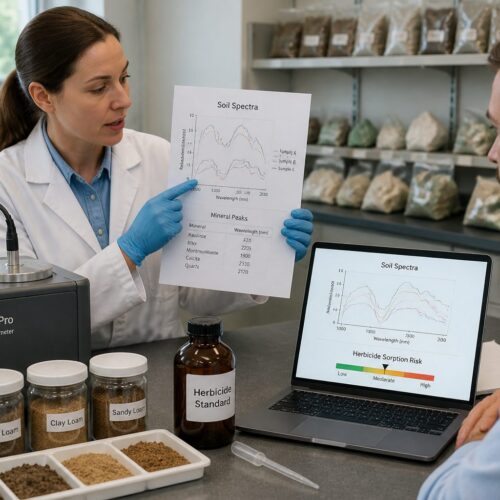
Soil spectroscopy is a technique that measures the interaction of light with soil samples. Different soil components absorb and reflect light at unique wavelengths.
By analyzing the spectral signatures, we can determine the chemical and physical properties of the soil. This includes nutrient content, organic matter, and moisture levels.
In fertilizer management, soil spectroscopy enables a more precise assessment of nutrient requirements. It also enables real-time monitoring of nutrient uptake by plants.
This technology offers a significant advantage over traditional soil testing. It provides rapid, non-destructive analysis for efficient decision-making.
The process involves shining light onto a soil sample and measuring the intensity of the reflected or absorbed light at various wavelengths. The resulting spectrum acts as a fingerprint, unique to the soil’s composition.

This fingerprint can then be compared to a library of known soil spectra. This comparison allows for the identification and quantification of various soil properties.
Beyond nutrient analysis, soil spectroscopy can also provide insights into soil texture, pH, and the presence of contaminants. This holistic view of soil health is invaluable for sustainable agriculture.
The non-destructive nature of the technique is particularly advantageous. It allows for repeated measurements on the same sample without altering its properties.
How Spectroscopy Helps Determine Optimal Fertilizer Rates
Determining the correct fertilizer rate is crucial for maximizing crop yield and minimizing environmental impact. Over-fertilization can lead to nutrient runoff and water pollution.
Under-fertilization can limit plant growth and reduce yields. Soil spectroscopy provides a detailed analysis of the soil’s nutrient status.
By measuring the levels of key nutrients like nitrogen, phosphorus, and potassium, farmers can tailor fertilizer applications. This ensures that plants receive the precise amount of nutrients they need.
Spectroscopy also helps identify nutrient deficiencies or imbalances. This allows for targeted interventions to correct these issues and optimize plant health.
Traditional methods often rely on broad recommendations based on regional averages. Soil spectroscopy allows for site-specific fertilizer recommendations, taking into account the unique characteristics of each field.
This precision reduces the risk of over-application in some areas and under-application in others. The result is a more efficient use of fertilizer resources.
Furthermore, soil spectroscopy can be used to monitor the effectiveness of fertilizer applications over time. This feedback loop allows farmers to fine-tune their fertilizer management strategies and adapt to changing conditions.
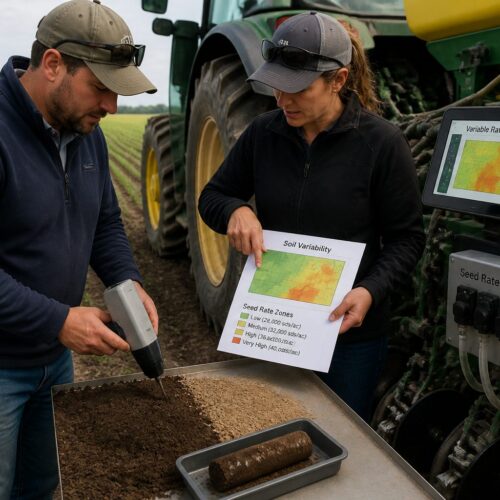
The ability to rapidly assess nutrient levels also supports variable rate fertilization. This involves applying different amounts of fertilizer to different parts of the field based on their specific needs.
Spectral Analysis of Nutrients: A Closer Look
Spectral analysis involves examining the unique patterns of light absorption and reflection by different nutrients. Each nutrient has a distinct spectral signature.
These signatures can be used to quantify the concentration of each nutrient in the soil. This provides valuable information for fertilizer management.
| Nutrient | Wavelength Range (nm) | Spectral Feature |
|---|---|---|
| Nitrogen (N) | 400-700 | Absorption by organic matter |
| Phosphorus (P) | 500-900 | Absorption by phosphate compounds |
| Potassium (K) | 700-1100 | Reflectance related to soil texture |
| Organic Matter (OM) | 350-2500 | Broad absorption across the spectrum |
| Micronutrients (e.g., Fe, Mn) | 400-700 | Specific absorption bands |
The spectral signature of nitrogen, for example, is often associated with the absorption characteristics of organic matter. This is because nitrogen is a key component of organic molecules in the soil.
Phosphorus, on the other hand, exhibits spectral features related to the presence of phosphate compounds. These compounds absorb light in specific regions of the spectrum.
Potassium’s spectral signature is often more subtle. It is indirectly related to soil texture and mineral composition, which influence the way light is reflected from the soil surface.
The broad absorption across the spectrum by organic matter makes it a key indicator of overall soil health. Higher organic matter content generally leads to improved soil fertility and water-holding capacity.
Using Spectroscopy to Monitor Nutrient Uptake by Plants
Spectroscopy isn’t just for soil analysis, it can also monitor nutrient uptake in plants. By analyzing the spectral reflectance of plant leaves, we can assess their nutrient status.
This allows for real-time monitoring of nutrient levels in crops. It also enables timely adjustments to fertilizer applications.
For example, nitrogen deficiency can be detected by changes in the chlorophyll content of leaves. This is reflected in the spectral signature.
By monitoring these changes, farmers can apply nitrogen fertilizer only when and where it is needed. This maximizes nutrient use efficiency and minimizes waste.
Plant leaves reflect light differently depending on their health and nutrient content. Healthy, well-nourished plants tend to have a distinct spectral signature compared to stressed or deficient plants.
Spectroscopy can be used to measure chlorophyll content, which is a key indicator of plant health and nitrogen status. Reduced chlorophyll levels often indicate nitrogen deficiency.
This information can be used to create maps of plant nutrient status across the field. Farmers can use these maps to target fertilizer applications to areas where plants are most in need.
This approach, known as variable rate fertilization, can significantly improve nutrient use efficiency and reduce environmental impacts.
Optimizing Fertilizer Application Timing with Spectroscopy Data
The timing of fertilizer application is as important as the rate. Applying fertilizer at the wrong time can lead to nutrient losses and reduced crop yields.
Soil spectroscopy can help optimize application timing by providing real-time data on nutrient availability. It also provides data on plant nutrient demand.
For example, if spectral analysis shows that nitrogen levels are low during a period of rapid plant growth, fertilizer can be applied immediately. This ensures that plants have access to the nutrients they need when they need them most.
This approach also helps to avoid applying fertilizer when it is not needed. For example, during periods of slow growth or dormancy.
Plants have different nutrient requirements at different stages of their life cycle. Matching fertilizer applications to these specific needs is crucial for maximizing yield and quality.
Spectroscopy can be used to monitor plant nutrient status throughout the growing season. This allows farmers to adjust fertilizer applications in response to changing conditions.
For example, if spectral analysis reveals that plants are experiencing a nutrient deficiency during a critical growth stage, fertilizer can be applied immediately to correct the problem.
This proactive approach can prevent yield losses and improve crop quality. It also minimizes the risk of over-fertilization, which can harm the environment.
Reducing Fertilizer Waste and Environmental Impact
Excessive fertilizer use is a major environmental problem. It contributes to water pollution, greenhouse gas emissions, and soil degradation.
Soil spectroscopy can help reduce fertilizer waste by enabling more precise nutrient management. By applying fertilizer only when and where it is needed, we can minimize nutrient losses to the environment.
This approach also reduces the need for synthetic fertilizers. This lowers the carbon footprint of agriculture.
Additionally, spectroscopy can help identify areas where soil health is poor. This allows for targeted interventions to improve soil quality and reduce the need for fertilizer inputs.
Nutrient runoff from agricultural fields is a major source of water pollution. Excess nitrogen and phosphorus can contaminate rivers, lakes, and coastal waters, leading to algal blooms and dead zones.
By optimizing fertilizer applications, soil spectroscopy can help reduce nutrient runoff and protect water quality. This is particularly important in areas with sensitive ecosystems.
The production and use of synthetic fertilizers also contribute to greenhouse gas emissions. Nitrogen fertilizers, in particular, can release nitrous oxide, a potent greenhouse gas, into the atmosphere.
By reducing the need for synthetic fertilizers, soil spectroscopy can help lower the carbon footprint of agriculture and mitigate climate change.
Benefits of Precision Fertilizer Management
Precision fertilizer management offers numerous benefits for farmers and the environment. It maximizes crop yields and reduces input costs.
It also minimizes environmental impacts and improves soil health. Soil spectroscopy is a key tool for achieving these benefits.
- Increased crop yields
- Reduced fertilizer costs
- Improved nutrient use efficiency
- Minimized environmental pollution
- Enhanced soil health
- Better water quality
Precision fertilizer management allows farmers to tailor fertilizer applications to the specific needs of their crops. This results in higher yields and improved crop quality.
By reducing fertilizer waste, precision management also lowers input costs. This can significantly improve the profitability of farming operations.
Improved nutrient use efficiency means that plants are able to take up a greater proportion of the fertilizer applied. This reduces nutrient losses to the environment and minimizes pollution.
Enhanced soil health is another important benefit of precision fertilizer management. Balanced nutrient levels promote healthy soil microbial communities and improve soil structure.
Integrating Spectroscopy Data with Fertilizer Management Plans
To fully realize the benefits of soil spectroscopy, it must be integrated into a comprehensive fertilizer management plan. This involves collecting and analyzing spectral data.
It also involves using this data to inform fertilizer application decisions. The first step is to establish baseline nutrient levels in the soil.
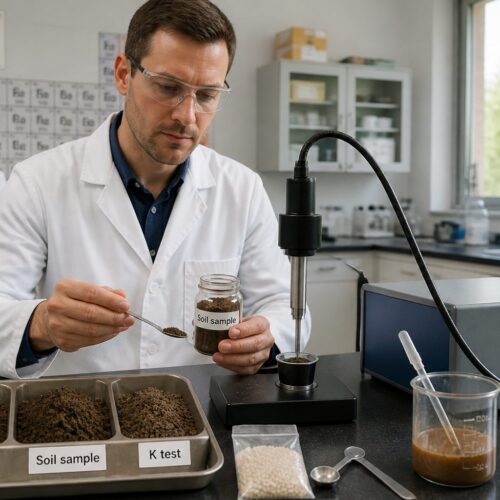
This can be done by collecting soil samples and analyzing them using spectroscopy. The spectral data is then used to create a nutrient map of the field.
This map shows the spatial variability of nutrient levels. It helps to identify areas where fertilizer is needed most.
A comprehensive fertilizer management plan should also consider other factors, such as crop type, growth stage, and weather conditions. These factors can influence nutrient requirements and fertilizer timing.
Spectroscopy data should be combined with other data sources, such as yield maps and soil maps, to create a holistic view of the field. This allows farmers to make more informed fertilizer decisions.
The fertilizer management plan should be regularly reviewed and updated based on ongoing monitoring and evaluation. This ensures that fertilizer applications are optimized for changing conditions.
Effective integration of spectroscopy data requires collaboration between farmers, agronomists, and other experts. This ensures that the data is properly interpreted and used to inform fertilizer management decisions.
Practical Steps for Implementing Soil Spectroscopy
Implementing soil spectroscopy in your fertilizer management plan involves several practical steps. First, you need to select the right equipment.
This includes a portable spectrometer and software for data analysis. Next, you need to develop a sampling strategy.
Collect representative soil samples from different areas of the field. Ensure that the samples are properly labeled and stored.
Analyze the samples using the spectrometer. Interpret the data to determine nutrient levels.
Use this information to adjust fertilizer application rates and timing. Monitor the results and make further adjustments as needed.
Choosing the right spectrometer is crucial for accurate and reliable results. Consider factors such as spectral range, resolution, and portability.
A well-designed sampling strategy is essential for obtaining representative soil samples. Divide the field into zones based on soil type, topography, and other factors.
Collect multiple samples from each zone and combine them to create a composite sample. This helps to reduce variability and improve accuracy.
Properly labeling and storing the samples is important to prevent contamination and degradation. Use waterproof labels and store the samples in a cool, dry place.
Case Studies: Success Stories in Fertilizer Management
Several case studies demonstrate the effectiveness of soil spectroscopy in improving fertilizer management. In one study, farmers in Iowa used spectroscopy to optimize nitrogen fertilizer applications in corn fields.
They reduced nitrogen fertilizer use by 20% while maintaining crop yields. This resulted in significant cost savings and reduced environmental impacts.
Another study in California used spectroscopy to monitor nutrient uptake in almond orchards. The farmers were able to detect nutrient deficiencies early and apply fertilizer in a timely manner.
This improved tree health and increased almond yields. These case studies illustrate the potential of soil spectroscopy to transform fertilizer management practices.
In a cotton-growing region of Texas, soil spectroscopy helped farmers identify areas with low potassium levels. Targeted potassium applications increased cotton yields and improved fiber quality.
A study in Brazil demonstrated the use of soil spectroscopy to optimize phosphorus fertilizer applications in soybean fields. This resulted in higher soybean yields and reduced phosphorus runoff.
These case studies highlight the versatility of soil spectroscopy and its applicability to a wide range of crops and environments. The key to success is to tailor the technology to the specific needs of the farming operation.
The integration of soil spectroscopy with other precision agriculture technologies, such as GPS and variable rate applicators, can further enhance its effectiveness.
Challenges and Future Directions in Soil Spectroscopy
While soil spectroscopy offers many advantages, there are also some challenges to overcome. One challenge is the need for accurate calibration models.
These models are used to convert spectral data into nutrient concentrations. The accuracy of these models depends on the quality of the calibration data.
Another challenge is the complexity of soil spectral data. Soil spectra can be influenced by many factors, including soil texture, moisture content, and organic matter.
Future research should focus on developing more robust calibration models. Also, developing techniques for handling complex spectral data is needed to improve the accuracy of soil spectroscopy.
Developing robust and accurate calibration models requires extensive field data and sophisticated statistical techniques. More research is needed to improve the accuracy and reliability of these models.
Addressing the influence of soil texture, moisture content, and organic matter on spectral data is a complex task. Advanced data processing techniques, such as machine learning, can help to disentangle these effects.
The development of portable and affordable spectrometers is also crucial for wider adoption of the technology. This will make soil spectroscopy more accessible to farmers in developing countries.
Future research should also focus on integrating soil spectroscopy with other precision agriculture technologies. This will enable more comprehensive and data-driven decision-making.
Conclusion
Soil spectroscopy offers a powerful tool for improving fertilizer management in precision agriculture. By providing rapid, accurate data on soil nutrient levels and plant nutrient uptake, it enables more precise and efficient fertilizer applications.
This reduces fertilizer waste, minimizes environmental impacts, and maximizes crop yields. As technology advances and calibration models improve, soil spectroscopy will play an increasingly important role in sustainable agriculture.
The adoption of soil spectroscopy is a key step towards a more sustainable and efficient agricultural system. By embracing this technology, farmers can improve their profitability while protecting the environment.
Continued research and development in soil spectroscopy will further enhance its capabilities and expand its applications. This will lead to even greater benefits for farmers and the environment.
The future of agriculture is data-driven. Soil spectroscopy is a valuable tool for harnessing the power of data to optimize fertilizer management and promote sustainable farming practices.