
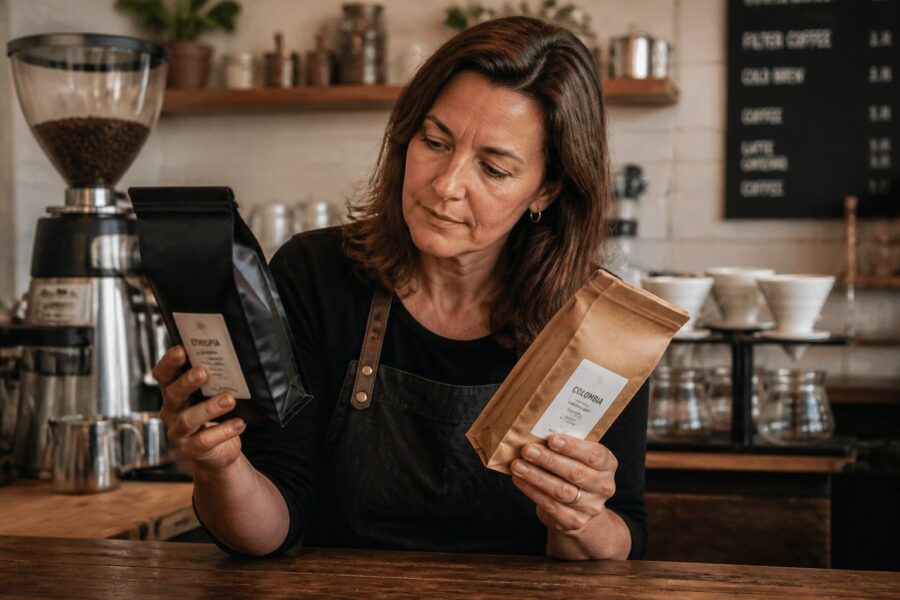
Why does coffee taste different from one bag to the next?
A cup reflects the bean, its age and storage, the water, and the way it was brewed, so even familiar coffee can shift when one variable changes.
The useful response is to look for a change you can identify rather than assuming the beans are defective.
A small, repeatable comparison can show whether the difference came from the coffee or the routine.
Start with the beans and their label
Coffee is an agricultural product, and beans from different places or harvests need not taste identical.
Variety, growing conditions, processing, and roasting each contribute to the character of the green and roasted coffee.
A bag labeled with a different origin or process may bring different acidity, aroma, sweetness, or body, even when the roast color looks familiar.
Tasting notes are descriptions, not a guarantee that every brewed cup will match them exactly.
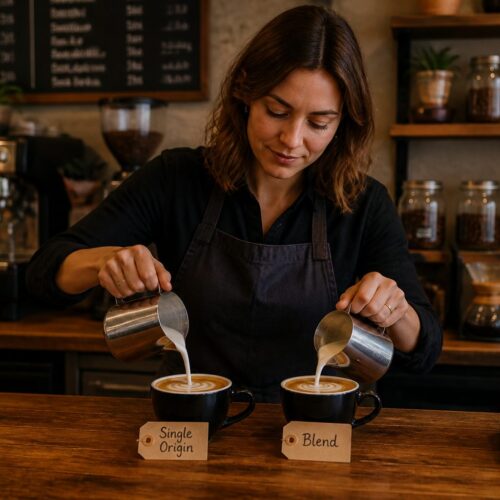
A blend may also change when its components or proportions change, while a single-origin coffee can vary between harvests.
The terms describe sourcing approaches; they do not promise a fixed flavor or quality level.
If a new bag tastes different, compare its roast level and any origin or process details with the previous bag.
Those clues can explain a shift without proving that one coffee is better than the other.
Roast and age can alter the cup
Roasting develops flavor compounds and changes the bean’s physical structure.
A lighter roast may preserve more origin character, while a darker roast often emphasizes roast-derived flavors such as toasted, smoky, or bitter notes.
A change in roast can make coffee seem less bright or more intense, but roast color is only one part of the result.
The brew can still taste thin, sour, or harsh if the preparation is poorly matched to the beans.
After roasting, coffee gradually loses some aromatic character as it is exposed to oxygen and time.
The pace and sensory effect depend on the coffee and how it is stored, so a date alone cannot predict exactly how a cup will taste.
Whole beans generally expose less surface area than ground coffee, which is one reason people grind near brewing time.
Once ground, coffee’s aroma can fade more quickly, especially if it sits open in a warm or humid place.
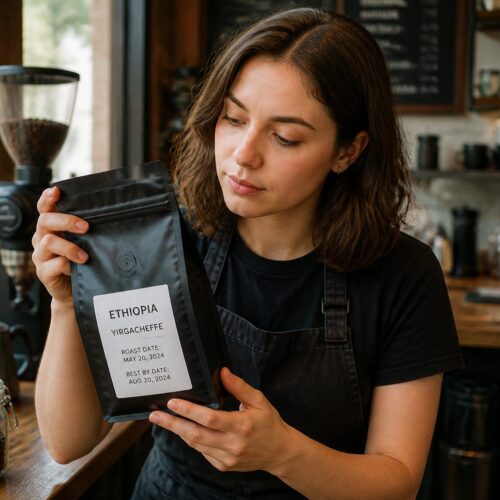
A roast date tells when roasting occurred, while a best-by date is a package’s date for quality guidance.
Neither date by itself tells you whether a particular cup will be enjoyable, and packaged coffee should be stored as directed.
Water and equipment leave a flavor signature
Coffee is mostly brewed water, so a change in the water source can change what comes through in the cup.
Tap water, filtered water, and water from a different building may differ in taste and mineral content.
If your coffee suddenly tastes unusual, try the same beans and recipe with water you already know tastes neutral to you.
This simple comparison can reveal whether water is a likely contributor without claiming a universal ideal for every household.
A brewer that retains old coffee oils can add stale or rancid notes.
Clean removable parts according to the equipment manual, and avoid applying a cleaning chemical or descaling method that the manufacturer does not recommend.
A residue problem may be more noticeable after switching from a delicate coffee to one with a strong roast flavor.
Rinsing a dripper or carafe between brews helps separate the taste of the current coffee from leftover residue.
A mug can affect the experience through heat loss, aroma, and the way a drink reaches the mouth.
If only coffee served in one cup tastes different, repeat the same brew in another clean cup before changing the whole recipe.
Brewing variables can make familiar beans taste new
Grind size affects how quickly water extracts soluble material from coffee.
A grind that is too fine for a method can contribute to a slow, harsh brew, while a grind that is too coarse may produce a weak or sour-tasting cup.
The direction of adjustment depends on the brew method and the problem you are trying to solve.
Change the grind in a small step, keep the rest of the recipe steady, and taste the result before making another adjustment.
A coffee-to-water ratio influences concentration.
If the same amount of coffee is suddenly paired with more water, the drink will usually taste less concentrated; if the water is reduced, it can taste stronger without changing the bean.
Water temperature and contact time also shape extraction.
A recipe that worked for one grind or roast may not behave exactly the same with another, so use time and taste together rather than treating one number as a diagnosis.
Pouring, stirring, agitation, filter choice, and the brewer itself can affect how evenly water contacts the grounds.
A changed pouring pace or a clogged filter can make a cup noticeably different even when the ingredients are unchanged.
A practical baseline is more useful than a supposedly perfect recipe.
Record the coffee dose, water amount, grind setting, and method, then change only one item when you want to understand what is affecting the taste.
A troubleshooting sequence for a sudden change
- Confirm that the same bag or batch is being used and check whether it was stored differently.
- Brew with the familiar method and measured coffee and water amounts.
- Use water that tastes normal on its own, and clean the brewer’s removable parts as directed.
- Check whether the grind, filter, or brewing time changed since the last good cup.
- Adjust one variable at a time and note whether the flavor moves in a preferred direction.
If several variables changed at once, return to the last routine you remember.
Restoring one familiar step at a time is a better test than replacing beans, water, grinder, and recipe in a single attempt.
Taste descriptions can help name the problem: sour, bitter, flat, woody, or stale suggest different experiences, but they are not precise chemical diagnoses.
Use them to guide a controlled adjustment, not to label the coffee as inherently bad.
A coffee that tastes different only after sitting may have cooled, been reheated, or spent time in an open container.
Temperature and exposure change aroma and perceived flavor, so compare fresh servings before changing the brew itself.
Why coffee outside the home may taste different
A cafe may use a different bean, grinder, water supply, dose, and brewing routine from the one at home.
A different cup is therefore the expected result of multiple changed variables, not necessarily evidence that home equipment is failing.
Serving size and temperature also change perception.
A small espresso is concentrated, while brewed coffee is usually diluted into a larger drink; comparing them as if they were the same style obscures what each method does.
The setting can influence what you notice as well.
A familiar home cup and a cafe drink may be consumed at different temperatures or alongside different foods, which can shift the way aroma and bitterness register.
To recreate a cafe flavor, first identify the beans and method if that information is available.
Then make one adjustment at home, such as dose or grind, instead of assuming that a new gadget alone will reproduce the result.
A repeatable cup is easier to understand
A coffee tasting different from one bag to the next is not unusual because beans and preparation both vary.
The goal is not to make every coffee identical, but to understand which changes suit your taste.
Keep a short note when a cup surprises you: bag details, storage, water, dose, grind, and method.
A few observations can expose patterns that memory alone tends to blur.
If the difference appeared suddenly, check water, grinder setting, cleaning, and the recipe before blaming the beans.
If a new bag is the only change, its origin, processing, roast, or age may explain the shift.
Coffee taste becomes easier to read when one variable changes at a time.
That approach gives you a useful answer even when there is no single universal recipe for every bean and every brewer.
Check for a changed bag, water source, grind, dose, equipment residue, or brewing routine. Hold the recipe steady and change one factor at a time.
Different beans, storage, water, grind, equipment, and serving temperature can all change a cup. Two brews made with different routines are not a controlled comparison.
A dark roast, fine grind, long contact, or brewing residue can contribute to bitterness. Adjust one brewing variable at a time and clean the brewer as directed.