
Why does pour over coffee taste sour?
A sharp, thin cup can come from under-extraction or uneven brewing.
The first step is to separate lively, fruit-like tang from unpleasant, raw sourness, then change one variable at a time.
Pour-over gives you control over grind, water, dose, and pouring, but those variables interact.
Adjusting all of them at once makes it hard to learn what changed the cup.
Sour flavor and acidity are not always the same
Coffee naturally contains acids, and a bright or citrus-like impression can be part of its flavor rather than evidence that the brew failed.
A cup that tastes sharply sour, thin, or unfinished may point to an extraction problem, especially when sweetness and fuller flavors seem absent.
Taste words are personal, so use more than one clue.
Ask whether the cup also feels weak, whether it finishes abruptly, and whether the same beans taste different when brewed with a more familiar method.
A coffee can also taste both sour and harsh at once.
That mixed impression may come from uneven wetting: some grounds contribute a sharp taste while others are extracted more intensely.
In that case, simply making the grind finer may not solve the whole problem.
Start with a controlled taste check
Before changing the recipe, let the cup cool slightly and taste it again.
Very hot coffee can make flavor distinctions harder to notice, while a cooler sip may reveal whether the main impression is bright, bitter, dry, or simply weak.
Keep the beans, brewer, filter, and dose the same for the next brew.
Record your current grind setting, approximate brew duration, and amount of water, even if you normally measure by eye.
Use this quick diagnosis as a starting point rather than a strict rule:
| What you notice | First variable to inspect | Why it may help |
|---|---|---|
| Sharp and thin, with little sweetness | Grind size or contact time | A slightly finer grind or longer contact can increase extraction. |
| Sour and bitter in the same cup | Pouring and bed wetting | Uneven flow can leave some grounds less extracted than others. |
| Bright but clear and balanced | Bean character | The acidity may be part of the coffee’s intended profile. |
| Weak and sour | Dose, water amount, and grind together | A dilute cup can make the sharp notes seem more prominent. |
This table helps narrow the search; it does not identify a single cause with certainty.
The cup’s taste and the brewer’s behavior provide more useful evidence together than either one alone.
Adjust grind size in small steps
A grind that is too coarse can let water pass through quickly and leave the coffee tasting underdeveloped.
Move the grinder one small step finer, brew again, and compare the result with the previous cup.
Do not jump from coarse to very fine.
A large change can slow the drawdown, increase bitterness, or cause a filter bed to drain poorly, which replaces one problem with another.
If the coffee becomes more balanced after a small finer adjustment, keep that setting for another brew before changing anything else.
If the cup turns dry or strongly bitter, move back slightly or inspect the pour and filter bed.
A blade grinder can produce a mix of particle sizes, making a consistent adjustment less straightforward.
In that situation, pay attention to repeatable preparation and avoid treating a single cup as proof that one exact grind setting is correct.
Check the pour and the shape of the coffee bed
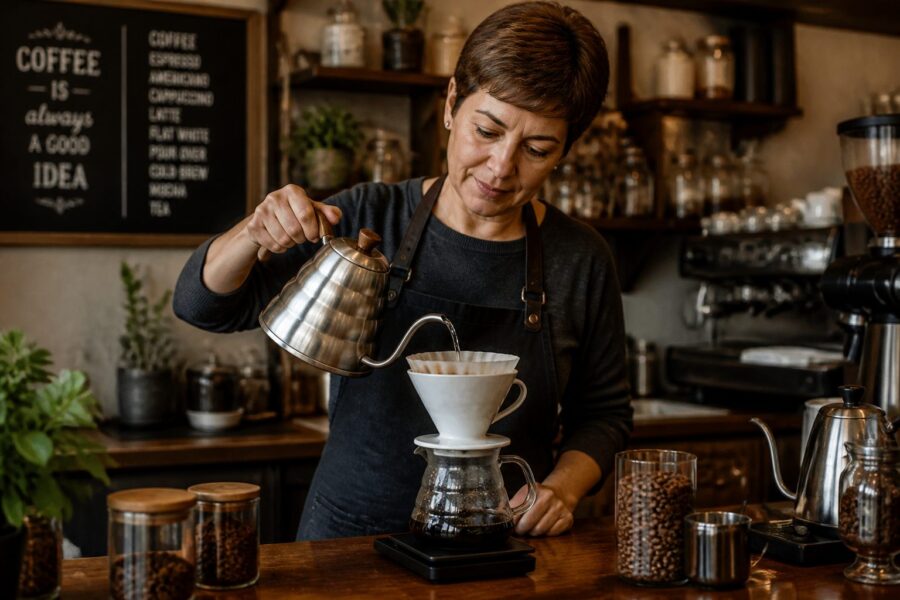
Pour steadily enough to wet the grounds rather than directing all the water at one small spot.
A stream that repeatedly digs a channel down the side can send water through one path while leaving other areas less evenly contacted.
After pouring, look at the filter bed.
A deep hole, dry clumps, or grounds stuck high on the paper can suggest uneven wetting or an overly forceful stream.
These observations are clues, not precise measurements of extraction.
Use a simple circular pour that covers the bed, and keep the height of the kettle modest so the stream does not disturb the grounds more than intended.
There is no need to imitate a complicated pouring pattern to diagnose a sour cup.
If you use a bloom, make sure the initial water reaches the dry coffee rather than only the center.
Give the grounds a moment to wet, then continue with a controlled pour; the exact timing can depend on your recipe and beans.
Keep the coffee-to-water amount consistent
Changing the amount of coffee or water changes the strength of the drink, and it can also make comparisons confusing.
Weighing both ingredients gives you a repeatable baseline, but the ideal ratio depends on taste and brewing method rather than one universal number.
If you normally pour extra water into the dripper or stop early, measure the water that actually reaches the brewer.
A cup that is more diluted than expected can taste thin even when the grounds received adequate contact.
Once the measured recipe produces a consistent cup, adjust the grind or pouring approach separately.
Do not reduce the dose, add water, and change grind size in the same test.
Consider water temperature and the beans
Water temperature affects how quickly soluble material is extracted, but exact temperature advice varies by coffee and recipe.
If your water has cooled substantially before brewing, try using freshly heated water while keeping the other variables stable.
The roast and origin can shape the cup’s natural character.
Some coffees are described with citrus, berry, or other bright notes, and those descriptions do not guarantee that every person will perceive them the same way.
If careful brewing changes do not make the coffee enjoyable, try the same beans in another preparation method or choose a different roast profile next time.
The goal is a cup you like, not the elimination of every trace of acidity.
A practical troubleshooting sequence
Use this sequence to learn from each brew without turning a morning cup into a complicated experiment:
- Taste the cup after it cools slightly and describe the main impression in plain terms.
- Repeat the recipe once with the same dose, water amount, filter, and pour.
- If the cup is still sharply sour and thin, make one small grind adjustment finer.
- If sourness and harshness appear together, focus on even wetting and a steady pour.
- Keep the change only if the next cup tastes more balanced; otherwise return to the baseline and test a different variable.
A short note such as ‘finer grind, less sharp, still weak’ is more useful than relying on memory.
After a few comparisons, patterns emerge that a single isolated change cannot show.
Questions about sour pour-over coffee
A sharply sour cup can result from under-extraction, uneven wetting, or a naturally bright coffee profile. Check whether the cup is also thin or lacks sweetness, then change one brewing variable at a time.
Start by identifying the dominant taste instead of changing the whole recipe. A sour, thin cup suggests a different test from one that is bitter, dry, or weak.
If the taste seems sharp and underdeveloped, try a small grind adjustment finer and keep the rest of the recipe stable. If the coffee remains bright but balanced, the flavor may reflect the beans rather than a brewing fault.
If you want to test temperature, the Coffee Brewing Temperature Guide shows a suggested range for your method and roast.