
If you have searched how to make coffee concentrate, the first useful distinction is between a strong coffee base and a finished drink.
Concentrate is brewed so that you can later dilute it or combine it with milk, ice, or hot water; it is not a special bean or a single fixed recipe.
At home, a cold-steeped concentrate is one practical approach because it uses a jar or French press and does not require an espresso machine.
The exact strength depends on the amount of coffee, water, grind, steep, and how thoroughly you filter it.
What coffee concentrate means
Coffee concentrate is brewed coffee intended to be used in a smaller amount than a ready-to-drink cup, often with water or milk added before serving.
The word describes how the liquid is used, rather than a standardized strength shared by every recipe.
A concentrated cold brew is different from ordinary cold brew mainly in intended use and the coffee-to-water ratio.
Recipes vary, so a jar labeled concentrate may still need adjustment to taste before drinking.
Instant coffee dissolved in a small amount of water can also create a concentrated mixture, but that is a different process from steeping ground coffee and filtering it.
Espresso is another concentrated style, produced with an espresso machine rather than a long cold steep.
How to make coffee concentrate at home
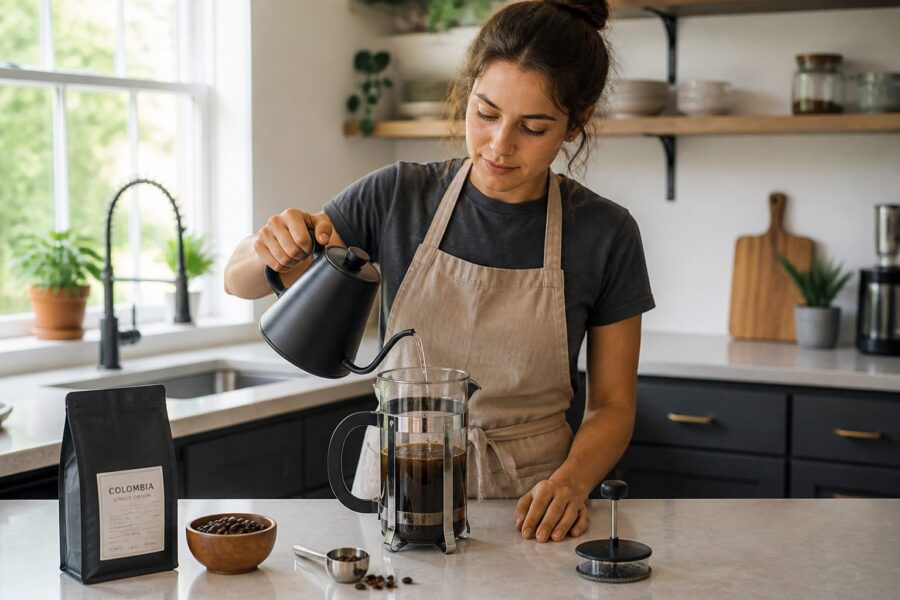
Use a clean jar or a French press, freshly ground coffee, cool drinking water, and a fine strainer or paper filter.
If using a French press, check that its capacity leaves enough room to stir without spilling.
- Measure the coffee and water by weight or by a consistent volume measure, and record the amounts so you can repeat or adjust the batch.
- Add the water gradually over the grounds, making sure they are all wet, then stir gently to break up dry pockets.
- Cover the vessel and steep it in the refrigerator or at room temperature according to the recipe you choose; time and temperature change the result.
- Separate the liquid from the grounds with the press or a strainer, then pass it through a paper filter if you want less fine sediment.
- Transfer the filtered concentrate to a clean covered container and refrigerate it promptly.
Avoid squeezing or pressing grounds aggressively through a fine filter.
That can push more particles into the liquid and make the concentrate feel gritty, while a slow drain usually gives you more control.
Choosing a coffee-to-water ratio
There is no universal coffee concentrate ratio to water because recipes use different grounds, brewing times, and serving preferences.
A sensible first batch uses a clearly measured ratio from a recipe you trust, followed by a tasting test rather than an assumption that one number suits every brewer.
If you already have a familiar cold-brew method, make a smaller amount first and use less water relative to coffee than you would for a ready-to-drink brew.
Record the ratio as coffee weight to water weight, not as an ambiguous description such as ‘strong.’
| What you notice | Adjustment to test | What to keep constant |
|---|---|---|
| The served drink tastes thin | Use less dilution water or make a stronger next batch | Keep serving size and coffee the same |
| The drink tastes intense but harsh | Add water gradually to the serving, then reassess | Do not change grind and steep time at once |
| The batch is difficult to strain | Try a coarser grind or a different filter | Keep the coffee and water amounts recorded |
| The cup has excess sediment | Filter more slowly through a suitable paper filter | Avoid pressing grounds hard |
Treat the table as a way to run small comparisons, not a guarantee that a specific change will improve every coffee.
Change one variable at a time; otherwise, it is hard to tell whether the grind, time, or dilution caused the difference.
How to dilute concentrate for a drink
Pour a small amount of concentrate into a cup and add water or milk in increments.
Taste after each addition, because a syrupy concentrate may need much more liquid than a batch that began closer to ordinary cold brew.
For an iced drink, add the concentrate first and then choose whether to use cold water, milk, or ice.
Ice melts and changes the balance, so a drink that tastes right before the ice is added may become milder as it sits.
For a hot drink, warm the dilution liquid separately and combine it with the concentrate in the cup.
Avoid heating a storage jar or assuming the concentrate should be boiled; a gentle serving temperature makes it easier to adjust the balance.
Ground coffee, French press, or instant coffee
Ground coffee gives you control over steeping and filtration, but it needs time and produces used grounds to discard.
A French press can simplify separation, though its metal screen may allow some fine particles into the drink.
Instant coffee is useful when speed and compact storage matter.
Stir the granules into a small amount of water and adjust the mixture at serving, but do not expect its flavor or texture to match a filtered cold-steeped batch.
An espresso machine makes a different kind of concentrated coffee under pressure.
If your goal is a pourable base for several chilled drinks, a cold-steeped batch may be easier to prepare in volume; if you want a small espresso-style shot, those methods are not interchangeable.
Storage and safe handling
Make only an amount you can store and use promptly.
Keep the finished liquid covered in the refrigerator, use a clean container and utensil, and discard it if it develops an unusual smell, appearance, or taste.
A homemade batch has no universal shelf life that can be inferred from the word concentrate.
Ingredients, filtration, refrigerator conditions, and handling differ, so avoid treating another recipe’s storage claim as a guarantee for your own kitchen.
Do not return used grounds to the container or top up an old batch with a new one.
Wash the jar or press after use, and follow the manufacturer’s care directions for any equipment that has removable parts.
Common mistakes that make results hard to repeat
- Measuring coffee by a different scoop each time, which changes the strength even when the vessel looks equally full.
- Using the word concentrate without deciding whether the liquid will be diluted, so a strong result is mistaken for a finished cup.
- Changing grind, steep time, and ratio together, which makes the next batch difficult to diagnose.
- Grinding too fine for the filter, which can slow draining and leave suspended sediment.
- Pouring a large amount of concentrate before tasting, when a small test serving would reveal the desired dilution with less waste.
A short note on your recipe helps: coffee amount, water amount, grind description, steep location, approximate steep duration, filter, and dilution used in the cup.
Those notes turn a vague ‘too strong’ result into something you can adjust.
A simple way to refine the next batch
Start with one measured batch and serve a small sample in several cups.
Dilute each sample differently with the same liquid, then compare them side by side; this isolates serving strength without forcing you to remake the concentrate.
If every sample tastes flat, change the brewing recipe on the next batch rather than adding more sweetener or flavoring to hide the issue.
If only one dilution works well, record it as your starting point and repeat it before changing anything else.
Coffee concentrate is easiest to understand when you separate brewing from serving.
Brew a measured base, filter it patiently, and decide how much liquid to add in the cup; the best ratio is the one that gives you a balanced drink with your chosen coffee and method.
Combine measured ground coffee and cool water in a clean vessel, steep the mixture, then strain and filter it. Keep the amounts and method consistent so you can adjust the next batch deliberately.
There is no single ratio for every recipe. Begin with a measured recipe, then add water to a small serving gradually until it tastes balanced to you.
Coffee concentrate is brewed as a stronger base intended to be diluted or combined before serving. A ready-to-drink coffee is already prepared at the strength the maker intends for the cup.