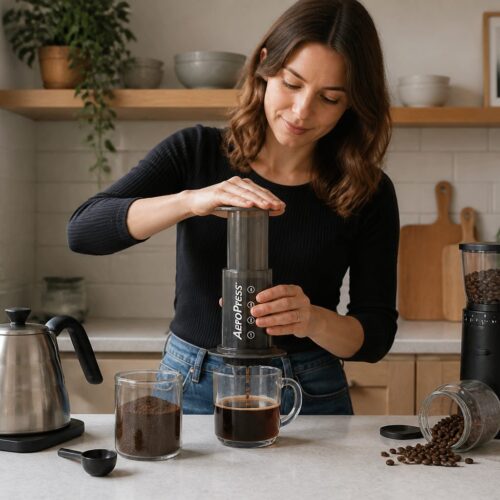


French press coffee can look muddy because the method uses a metal mesh rather than a paper filter, so some fine particles and coffee oils remain in the cup.
A small amount of sediment is common.
If the drink feels gritty, tastes harsh, or leaves a heavy layer in the cup, check the grind, filter assembly, plunge, and serving routine before changing everything at once.
The word muddy can describe different problems: visible grounds, a cloudy appearance, or a heavy flavor.
Each points to a different part of the process.
Start by identifying what you mean, then test one adjustment while keeping the coffee amount and water consistent.
What is normal in a French press cup
A French press separates brewed coffee from the grounds with a plunger screen.
The mesh catches larger particles, but it does not remove every fine particle the way a paper filter can.
A little sediment at the bottom of the mug or a fuller mouthfeel can therefore be part of the method rather than evidence that something failed.
The cup may become more gritty when the last liquid and grounds at the bottom of the carafe are poured out together.
Stop pouring when you see a layer of sediment approaching the spout, or decant the coffee carefully into another vessel after brewing.
Leaving brewed coffee sitting on the grounds can also make the flavor continue changing.
If the coffee has a cloudy look but tastes balanced, appearance alone may not need fixing. If it feels sandy or unpleasant, focus on reducing the amount of fine material that reaches the cup.
Check the grind size first
A grind that is too fine can pass through or around a French press screen more readily than larger particles.
It also exposes more surface area during steeping, which may produce a stronger or harsher cup depending on the recipe.
Try a coarser setting if your grinder allows one, changing only that setting for the next brew.
Coffee grounds described as coarse should still be reasonably consistent.
A blade grinder can produce a mix of large pieces and powder, and the fines may contribute to a muddy cup even when many pieces look coarse.
If you cannot adjust the grinder precisely, sift or brush out loose dust only if it is practical and safe for the equipment; do not expect a perfect particle distribution.
Avoid moving from very fine to extremely coarse in one jump.
Make a modest adjustment and compare the cup.
If the coffee becomes thin or weak, the change may have gone too far, or another part of the recipe may need attention.
Inspect the plunger and mesh
The screen should sit securely on the plunger assembly.
Check that the filter is assembled in the order described by the manufacturer and that the mesh has no visible tear, bend, or gap around its edge.
A damaged screen or a loose fitting can allow more grounds through.
Do not force the plunger to compensate for a problem.
If it tilts, catches, or feels unusually loose, check the parts and the manual.
Replace only parts that the manufacturer identifies as compatible; improvised screens can fit poorly and create more grounds in the drink.
Coffee oils and old particles can collect in the mesh and around the frame.
Rinse and clean the components after use, and inspect the screen against the light when it is dry.
If residue remains trapped, use the cleaning method recommended for the press rather than scraping the mesh with a sharp object.
Plunge slowly and serve carefully
Pressing the plunger down hard can stir up sediment and push fines through the screen.
Lower it in a controlled motion until the mesh reaches the grounds, without using the plunger to mash the bed.
If resistance is high, stop and check whether the grind is very fine or whether the screen is blocked.
After plunging, pour the coffee into cups or a separate carafe instead of letting it sit over the grounds.
Pour smoothly and leave the final sediment-heavy portion behind.
This small serving change often helps when the main complaint is sludge at the bottom of the mug.
If you prefer to keep the coffee in the French press, avoid repeatedly moving the plunger up and down.
That motion can mix settled material back into the drink.
A separate serving vessel is useful when the coffee will not be consumed immediately.
Use a consistent brew and diagnose the taste
Keep the coffee dose, water amount, and steeping routine steady while troubleshooting.
A familiar coffee-to-water ratio makes comparisons easier, but no one ratio suits every press and taste.
The important point is to measure consistently, then adjust in small steps.
Steeping time influences extraction and flavor, but it does not determine how much sediment passes through the mesh on its own.
Follow a method you can repeat and note the time.
If the cup is gritty, investigate grind and filter condition before extending or shortening the steep as a guess.
Taste can help separate issues.
A cup that is gritty but otherwise pleasant may need a finer screen check or more careful serving.
A cup that is both muddy and harsh may call for a coarser grind or less agitation.
A weak cup with little sediment may have a different cause, such as a coarse grind, small dose, or short steep.
Common causes and what to test
| What you notice | First thing to check | A controlled next step |
|---|---|---|
| A layer of grounds at the bottom | Pouring the last part of the carafe | Stop before the sediment reaches the spout |
| Gritty particles throughout the cup | Grind consistency or damaged mesh | Try a coarser setting or inspect the screen |
| Harsh, heavy flavor | Very fine grind or strong agitation | Change one variable and taste again |
| Grounds leaking around the plunger | Screen fit and assembly | Reassemble by the manual and inspect for damage |
| Cloudiness without much grit | Normal fines and oils from mesh filtration | Decant carefully and decide whether the texture suits you |
A table can narrow the first test, but symptoms overlap.
Do not treat it as a precise diagnosis.
If you notice a loose or damaged plunger assembly, correct that before trying recipe adjustments.
Mistakes that make sediment worse
- Grinding for a different method, such as a fine espresso setting, then using the grounds in a press.
- Plunging quickly or forcing the mesh through a resistant bed.
- Stirring vigorously and resuspending settled fines just before serving.
- Pouring every last drop from the carafe into the cup.
- Ignoring a torn screen or incorrect assembly.
- Changing grind, steep time, dose, and water amount in the same test.
If you are using pre-ground coffee, check whether its grind is intended for a French press. When you cannot change the grind, settle the grounds briefly after plunging and pour carefully, while recognizing that this will not remove all fines.
A simple troubleshooting sequence
- Decide whether the issue is visible sludge, gritty texture, cloudiness, or harsh flavor.
- Check that the screen is clean, assembled correctly, and undamaged.
- Keep the recipe steady and make the pour more careful, leaving sediment in the carafe.
- If grit persists, make a modest coarser-grind adjustment and compare the next cup.
- Change steeping or agitation only after assessing the first adjustment.
Some French press sediment is expected, and a fuller texture is one reason people choose the method.
The aim is not necessarily to remove every fine particle.
It is to avoid the level of grit and heaviness you do not enjoy while keeping the brew routine simple enough to repeat.
French press mesh allows some fine particles and oils into the cup, which can create cloudiness or sediment. A very fine grind, damaged screen, forceful plunge, or pouring the carafe’s last grounds-heavy portion can make it more noticeable.
Some fines can pass through a metal mesh, but excess grounds may point to a fine or inconsistent grind, a loose or damaged screen, or a forceful plunge. Check the press assembly and serve carefully before changing the recipe.
Use a repeatable steep time suited to your chosen recipe, then assess the taste. Steep time affects flavor, while grind size, filter condition, and pouring are more direct places to investigate when the complaint is sediment.