
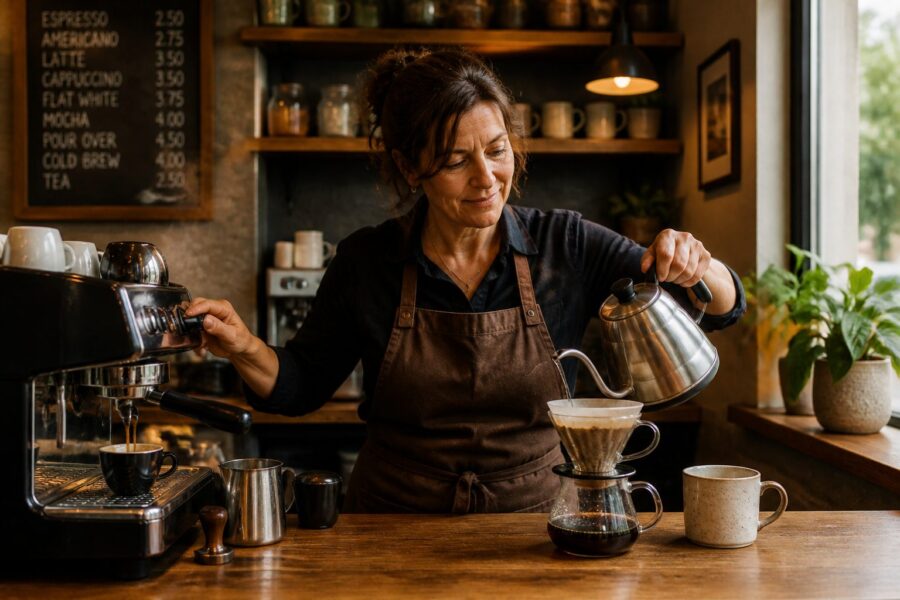
Espresso vs drip coffee is a comparison between two ways of brewing, not two different species of coffee bean.
Espresso uses a compact bed of coffee and pressurized water to make a small, concentrated serving, while drip brewing passes water through grounds and a filter to make a larger cup.
The drinks differ in texture, serving size, equipment, and concentration.
Words such as strong can mean bold flavor, concentrated liquid, or more caffeine in the whole serving, so it helps to name which comparison you mean.
How espresso is prepared
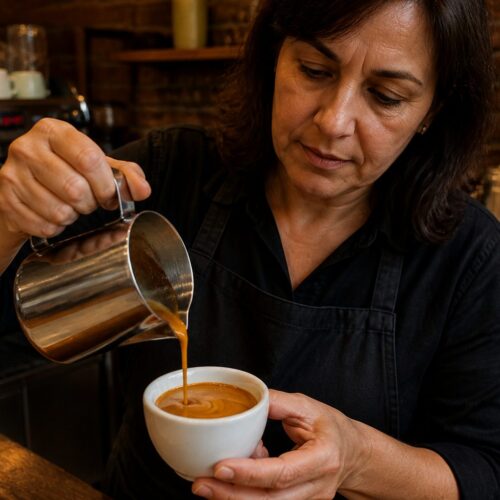
An espresso machine pushes hot water through finely ground, compacted coffee under pressure.
The result is a small serving with an intense flavor and a textured surface that may include crema, the foam-like layer formed during brewing.
Espresso is usually prepared to order, one serving at a time, and it takes equipment designed to create pressure and manage the coffee bed.
Grind adjustment, dose, distribution, and machine settings affect the result, so an espresso recipe is not simply a smaller version of a drip recipe.
The beans do not have to belong to a special botanical category called espresso beans.
A package may use ‘espresso’ to suggest a roast or intended brewing style, but the label does not make the beans unusable in a drip brewer.
How drip coffee is prepared
In a drip brewer, water moves through a bed of ground coffee and a filter, then collects in a pot or cup.
The filter and bed shape the brew, and the method can produce a larger serving that is easy to pour and share.
Drip coffee generally uses a coarser grind than espresso and a longer brewing process, although equipment and recipes differ.
A paper filter can hold back more fine particles than some reusable filters, which can give the cup a different texture.
A pour-over is also a filter-brewing method, but a person controls the pouring rather than relying on an automatic machine.
It shares the broad filtered-coffee idea with drip brewing, even though the equipment and workflow differ.
Espresso vs drip coffee at a glance
| Comparison | Espresso | Drip coffee |
|---|---|---|
| Brewing approach | Pressurized water through a compact coffee bed | Water passes through grounds and a filter |
| Typical serving style | Small, concentrated serving | Larger cup or pot |
| Equipment | Espresso machine and suitable grinder or pre-ground coffee | Automatic drip machine or manual filter brewer |
| Texture | Often dense and intense, sometimes with crema | Often lighter in texture, depending on filter and recipe |
| How to adjust | Dose, grind, distribution, and machine variables | Coffee-to-water ratio, grind, filter, and brew process |
These are broad distinctions, not fixed laws.
Equipment, coffee, grind, and serving size vary, so a specific cup may not match every general description.
Which tastes stronger?
Espresso often tastes more concentrated because a small amount of water extracts coffee from a compact dose.
Drip coffee spreads brewed coffee across a larger serving, so it may taste less intense per sip even when the full cup contains more liquid.
Strong flavor is subjective.
One person may call an espresso bold and another may prefer the cleaner or more rounded taste of a drip brew; roast, freshness, water, and recipe influence both.
If a drip cup tastes weak, first check the coffee-to-water measurement and grind before assuming that espresso is inherently stronger in every sense.
If espresso tastes harsh, that is a separate brewing issue; changing the cup size alone may not address it.
Caffeine: concentration versus total serving
Espresso is often more concentrated by volume, but a shot is much smaller than a mug of drip coffee.
Concentration and total caffeine in a serving are different comparisons, and neither can be decided from the drink name alone.
The amount of coffee used, bean type, recipe, and serving size affect caffeine in the drink.
A typical drip serving may contain more total caffeine than a single espresso shot because it is much larger, but exact amounts vary and no universal number describes every cafe or home recipe.
A fair comparison asks whether you mean caffeine per ounce or caffeine in the cup you actually drink.
If caffeine intake matters for you, use reliable product or nutrition information when available rather than using ‘stronger’ as a proxy.
Does one shot equal one cup?
One espresso shot is not automatically equivalent to one cup of drip coffee.
The drinks have different volumes and extraction methods, and the caffeine and flavor in a specific serving depend on how it was made.
For a recipe, an espresso shot can be combined with hot water to make an Americano-style drink, but the result remains different from drip coffee.
Adding water changes concentration and volume without turning the brewing method into filter brewing.
For an everyday comparison, specify the serving size and the question.
If you are comparing total caffeine, compare the whole servings; if you are comparing intensity, taste them at a similar temperature and describe the flavor rather than relying on volume alone.
Choosing a method for your routine
Espresso may suit someone who wants a small, concentrated base for drinks or enjoys dialing in a machine.
It asks for equipment and a repeatable workflow, and small changes can affect the shot noticeably.
Drip coffee may suit a person who wants a larger cup or wants to brew several servings in one cycle.
Automatic machines reduce hands-on steps, while pour-over brewing gives the brewer more control over pouring.
- Choose espresso if a compact serving and espresso-based drinks fit what you like to prepare.
- Choose drip if a mug or shared pot better matches your usual serving size.
- Consider counter space, cleanup, grinder needs, and how much attention you want to give each brew.
- Compare recipes using the same coffee when you want to understand how method changes the cup.
Neither method is automatically better.
A cup that suits your taste and routine is a better reason to choose a method than the assumption that one has more flavor or caffeine in every situation.
Common comparisons that mislead
Comparing one ounce of espresso with one ounce of drip coffee answers a concentration question, not necessarily which drink provides more caffeine in a normal serving.
Comparing a shot with a large mug answers a serving question only if the recipes and amounts are known.
The phrase ‘espresso roast’ can also confuse the comparison.
Roasters may use it as a style or recommendation, but espresso and drip coffee can be made from many of the same coffees, adjusted for the brewing method.
Finally, ‘healthier’ is too broad to settle with a simple method comparison.
Serving size, additions such as sugar or cream, and individual circumstances change the question; this guide describes preparation rather than giving personal health advice.
Espresso and drip coffee make different cups because water, grounds, pressure, filtration, and serving size differ.
Once concentration, taste, and caffeine are treated as separate questions, it becomes easier to choose the brewing style that fits your preference.
Espresso is usually more concentrated in a small serving, while a larger drip cup may feel less concentrated. ‘Stronger’ can mean flavor intensity or caffeine in the whole serving, so specify the comparison.
No fixed equivalence applies. The servings differ in volume and preparation, and their caffeine depends on the coffee and recipe.
Espresso is often more concentrated by volume, but a full drip serving may contain more total caffeine than one shot because it is larger. Exact amounts vary by coffee and preparation.