
Modern farming is adopting advanced technology at a rapid pace, moving past traditional methods towards data-driven decisions. Farmers now collect vast amounts of information about their fields, from weather patterns to soil nutrient levels. This shift makes tools like a digital twin field management system incredibly valuable for optimizing crop yields and resource use.
A digital twin, a virtual representation of a physical asset, helps us understand and predict real-world conditions. For agriculture, this means creating a dynamic, virtual model of an entire farm or specific field. This model integrates diverse data streams to offer comprehensive insights for better farm management.
One of the most powerful data sources feeding these sophisticated models is soil spectroscopy data. This technology provides detailed information about soil properties, directly influencing how a precision ag digital twin functions. Understanding how soil spectroscopy data feeds the model is key to unlocking its full potential.
What a Digital Twin Is and Why Agriculture Is Adopting It
A digital twin is essentially a living, breathing virtual copy of a physical system, object, or process. It continuously updates with real-world data, allowing for simulations, predictions, and optimized decision-making. Think of it as a sophisticated mirror reflecting and predicting the real world.
Agriculture is adopting this technology because traditional farming often relies on generalized data or infrequent manual checks. These methods can lead to inefficiencies, over-application of inputs, or missed opportunities for yield improvement. A digital twin agriculture approach offers a way to overcome these limitations by providing granular, real-time insights.
Implementing a digital twin field management system means farmers can visualize their fields in a virtual environment. This virtual field model allows them to experiment with different scenarios without affecting actual crops. They can test the impact of various planting densities, irrigation schedules, or fertilizer applications before committing resources.
The complexity of farming demands a holistic view, integrating everything from weather forecasts to historical yield data. A digital twin brings all these elements together into one cohesive platform. This integrated approach helps farmers make more informed, proactive decisions, reducing risks and increasing profitability.
Farmers face constant pressure to produce more with fewer resources while also protecting the environment. Digital twin technology helps address these challenges by enabling precision resource allocation. This means applying exactly what crops need, precisely where and when they need it, leading to significant savings and environmental benefits.
The ability to predict future conditions, such as disease outbreaks or nutrient deficiencies, is a game-changer for modern farming. A robust digital twin can forecast these issues based on current data and historical trends. This predictive power allows farmers to intervene early, preventing potential crop losses.
Ultimately, the goal of a digital twin in agriculture is to empower farmers with unprecedented control and understanding of their operations. This technology moves farming from reactive problem-solving to proactive, data-driven optimization. It offers a powerful tool for navigating the complexities of modern food production.
How Soil Spectroscopy Data Becomes a Layer in the Digital Model
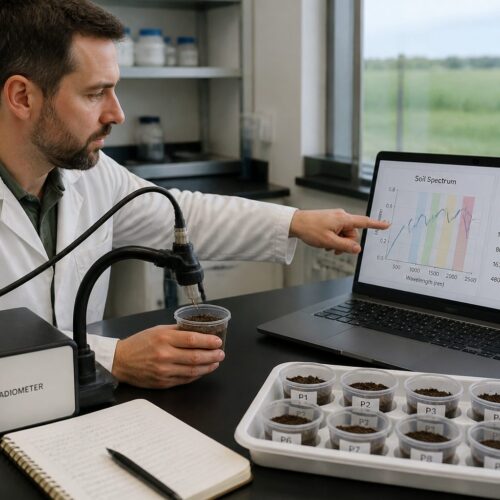
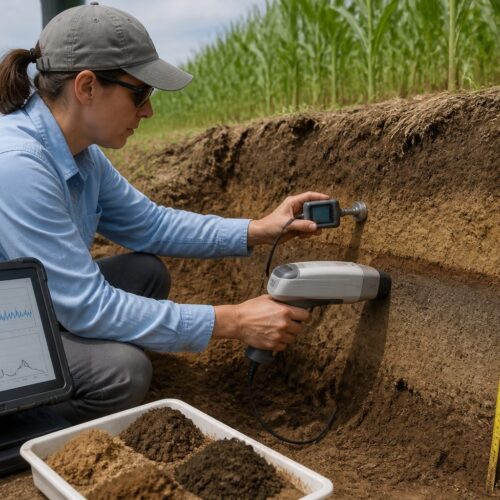
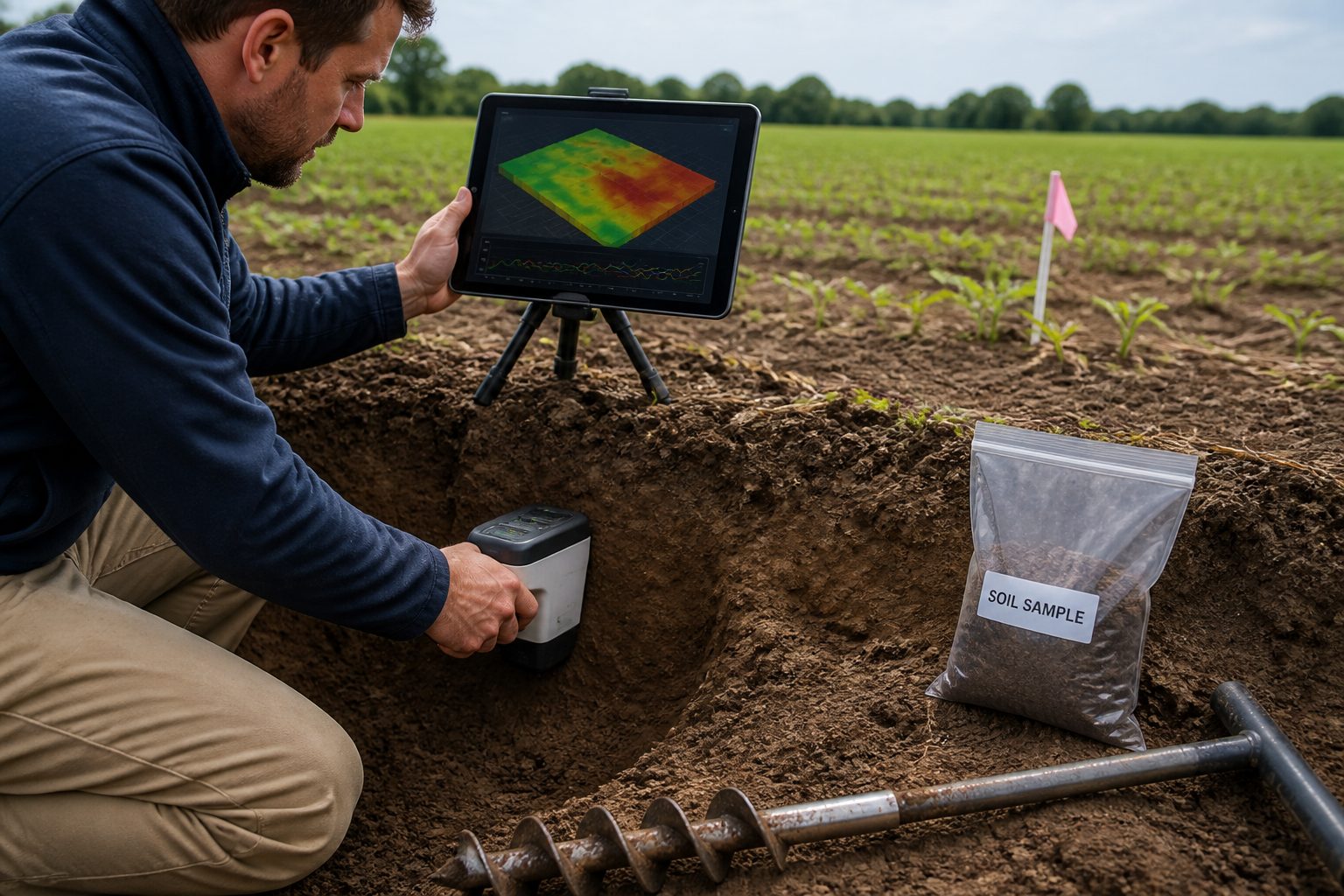
Soil spectroscopy data provides a non-destructive, rapid way to measure various soil properties, offering immediate insights into field conditions. This method uses light to analyze soil samples, revealing chemical and physical characteristics that are vital for plant growth. It gives us a window into the soil’s health and composition.
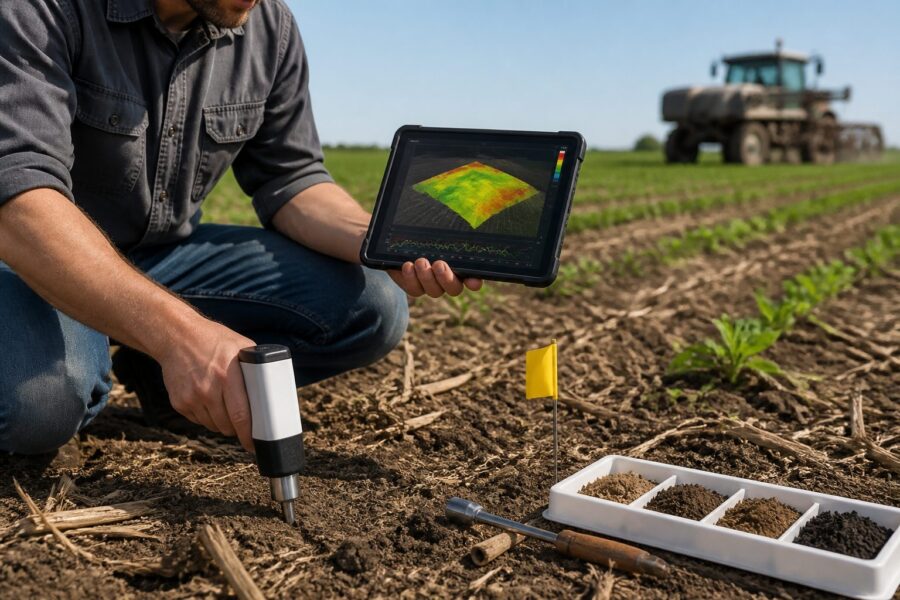
When integrated into a digital twin field management system, soil spectroscopy data forms a foundational layer of information. It maps out variability across a field, showing where nutrients are abundant or scarce, or where soil organic matter differs. This detailed map is then overlaid with other data points within the virtual field model.
| Soil Property | Spectroscopy Insight | Impact on Digital Twin |
|---|---|---|
| Organic Carbon | Measures carbon content, indicating soil health. | Models nutrient cycling and water retention capacity. |
| Nitrogen (N) | Quantifies available nitrogen for plant uptake. | Informs fertilizer application rates and timing. |
| Phosphorus (P) | Detects phosphorus levels, essential for root development. | Optimizes P inputs to prevent deficiency or excess. |
| Potassium (K) | Identifies potassium availability for plant vigor. | Guides K supplementation for crop resilience. |
| pH Level | Determines soil acidity or alkalinity. | Adjusts lime or sulfur application for nutrient availability. |
| Clay Content | Measures clay percentage, affecting water holding. | Predicts water movement and irrigation needs. |
The data from soil spectroscopy provides specific, localized information that traditional soil sampling often misses due to its sparse nature. This high-resolution data allows the digital twin to create a much more accurate representation of the field’s underlying conditions. It helps pinpoint exact areas needing attention, fostering true precision agriculture.
Each spectral reading translates into a data point that feeds directly into the digital twin’s database, enriching the virtual field model. This rich soil data virtual field model then becomes the basis for more accurate simulations and predictions. It moves beyond generalized assumptions to site-specific realities.
Linking Spectral Soil Maps to Crop Simulation Engines
Once soil spectroscopy data creates detailed spectral soil maps, the next critical step is integrating these maps with crop simulation engines. These engines are sophisticated computer programs that model crop growth and yield based on environmental factors and management practices. They predict how crops will perform under different conditions.
The spectral soil maps provide high-resolution input on soil characteristics, which are fundamental parameters for any crop simulation model. Instead of relying on broad regional averages, the simulation engine uses actual, measured soil properties from specific field zones. This detailed soil data virtual field model makes the simulations far more accurate and relevant to the farmer’s land.
For example, a crop simulation engine needs to know the soil’s water holding capacity, nutrient availability, and pH. Soil spectroscopy data provides precisely this information, often at a much finer spatial resolution than conventional lab tests. This allows the digital twin to simulate crop response to varying soil conditions across a single field.
When the spectral soil maps are fed into the simulation engine, the digital twin can then predict scenarios like “what if I apply X amount of nitrogen here?” or “how will this specific soil type react to less irrigation?” These predictions are tailored to the unique soil profile of each section of the field. This capability makes the digital twin field management system an indispensable tool for proactive planning.
The power of linking spectral data to these engines lies in its ability to optimize inputs for every square meter of a field. This level of precision was previously unimaginable, leading to more efficient use of water, fertilizers, and pesticides. It helps farmers achieve higher yields while minimizing environmental impact.
Crop simulation engines, informed by this rich soil spectroscopy data, can also forecast potential stress events. They might predict areas where drought stress is likely to occur first, or where nutrient deficiencies could limit growth. This foresight enables farmers to implement targeted interventions before problems become severe, protecting their investment.
This integration strengthens the entire digital twin agriculture framework, turning raw soil data into actionable intelligence. It moves beyond simple mapping to dynamic, predictive modeling. Farmers gain a powerful tool for understanding complex interactions between soil, crop, and environment.
Real-Time Updates: Re-Scanning Fields and Refreshing the Model
A true digital twin field management system is not static; it constantly evolves with its physical counterpart. This dynamic nature means that soil spectroscopy data collection is not a one-time event but an ongoing process. Regular re-scanning of fields is essential to maintain the accuracy and relevance of the virtual model.
Soil properties change over time due to crop cycles, weather events, tillage practices, and nutrient applications. Re-scanning fields with spectral sensors captures these changes, providing updated soil spectroscopy data. This fresh data then refreshes the digital twin, ensuring its predictions reflect the current reality on the ground.
Imagine a farmer applies a new amendment to a section of their field to adjust pH. A subsequent spectral scan can verify the effectiveness of that application, showing how the soil chemistry has responded. This immediate feedback loop is invaluable for adaptive management within the precision ag digital twin framework.
The frequency of re-scanning depends on various factors, including crop type, soil variability, and management intensity. For high-value crops or highly variable fields, more frequent updates might be beneficial. This ensures the soil data virtual field model remains highly accurate throughout the growing season.
These real-time updates are critical for the predictive capabilities of the digital twin. Without current data, the model’s simulations could drift from reality, leading to suboptimal recommendations. Maintaining a refreshed model means farmers always work with the most accurate information available, making better decisions.
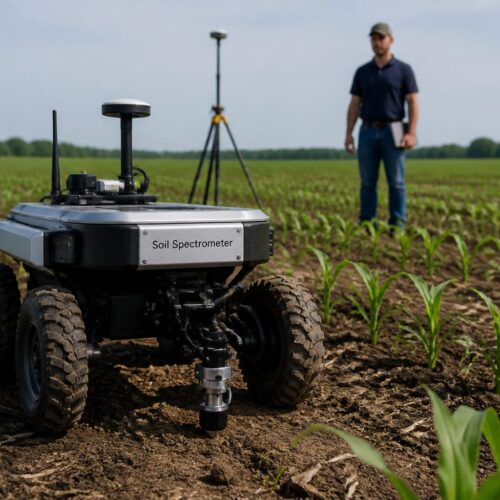
Advanced spectral sensors, often mounted on drones or ground-based vehicles, make this re-scanning process efficient and cost-effective. They cover large areas quickly, collecting vast amounts of soil spectroscopy data without disturbing the field. This efficiency supports the continuous monitoring required for a dynamic digital twin.
The ability to rapidly refresh the digital twin with new soil data is a core strength of this technology. It allows for agile responses to changing conditions, whether those are sudden nutrient depletion or unexpected shifts in soil moisture. This responsiveness helps farmers stay ahead of potential problems and maximize opportunities.
Decision Outputs a Digital Twin Can Generate From Spectral Inputs
The ultimate value of a digital twin field management system comes from the actionable decisions it helps generate. By integrating soil spectroscopy data with other layers, the digital twin transforms raw information into specific recommendations for farmers. These outputs are designed to optimize every aspect of field management.
One primary output is variable-rate fertilizer prescriptions. The digital twin analyzes spectral soil maps to identify zones with nutrient deficiencies or excesses. It then generates precise application maps, instructing machinery to apply fertilizer only where needed, in the correct amounts.
- Optimized irrigation schedules for specific zones
- Variable-rate seeding recommendations based on soil potential
- Targeted pest and disease risk assessments
- Soil amendment recommendations (e.g., lime, gypsum)
- Predicted yield maps for harvest planning
- Early detection of nutrient deficiencies or toxicities
- Best management practices for erosion control
Another powerful output involves optimized irrigation schedules. By combining soil spectroscopy data on water holding capacity with real-time weather forecasts and crop water demand models, the digital twin suggests precise irrigation timings and volumes. This prevents over-watering or under-watering, saving resources and protecting crops.
The digital twin agriculture model can also generate variable-rate seeding maps. It considers the soil’s productive potential in different zones, as revealed by spectral data, to recommend optimal seeding rates. This ensures that seeds are planted at densities that maximize their chances of success given the underlying soil conditions.
Risk assessments for pests and diseases also benefit significantly from spectral inputs. Certain soil conditions can make crops more susceptible to specific pathogens. The precision ag digital twin identifies these vulnerable areas and provides early warnings, allowing for preventative measures before outbreaks occur.
Ultimately, these decision outputs help farmers achieve higher profitability and sustainability. They move away from blanket applications and towards highly targeted interventions, saving money on inputs and reducing environmental impact. The digital twin becomes a trusted advisor, guiding complex farm management choices.
The system also offers invaluable insights for long-term soil health management. By tracking changes in soil organic matter or pH over multiple seasons through spectroscopy, the digital twin can recommend sustainable practices. This helps farmers build more resilient and productive soil ecosystems for the future.
Platforms That Support Digital Twin Integration With Spectral Data
The practical application of a digital twin field management system relies heavily on robust software platforms capable of integrating diverse data streams. These platforms must handle the massive amounts of soil spectroscopy data, process it, and present it in an actionable format. They are the backbone of any effective digital twin agriculture solution.
Many agricultural technology (ag-tech) companies now offer solutions that support or are developing towards full digital twin capabilities. These platforms typically feature advanced mapping tools, data analytics, and often integrate with farm machinery for automated execution of recommendations. They aim to be comprehensive farm management hubs.
Companies like John Deere, with their Operations Center, and Climate FieldView from Bayer, are examples of major players building sophisticated data integration platforms. While not always explicitly branded as “digital twins,” their functionalities move strongly in that direction. They consolidate various layers of farm data, including potential avenues for soil spectroscopy data.
Specialized soil mapping and analysis companies also play a role, often providing the initial spectral data processing. They then offer APIs or direct integrations with broader farm management platforms. This allows their detailed soil data virtual field model insights to flow seamlessly into a larger digital twin framework.
Emerging startups often focus specifically on digital twin agriculture, building platforms from the ground up to handle this complexity. These newer solutions frequently emphasize AI and machine learning for predictive modeling, leveraging soil spectroscopy data to its fullest potential. They are designed for deep analytical capabilities.
The best platforms offer interoperability, meaning they can connect with various hardware sensors, drone data, and existing farm equipment. This open approach is essential for farmers who might use different brands of machinery or data collection tools. Seamless data flow is a non-negotiable requirement for effective digital twin field management.
When evaluating platforms, farmers should look for systems that not only ingest soil spectroscopy data but also provide clear visualization and interpretability. The most powerful models are useless if their outputs are difficult for a farmer to understand or implement. User-friendliness remains a key factor in adoption.
Ultimately, the choice of platform depends on a farm’s specific needs, existing infrastructure, and desired level of integration. However, the trend is clear: platforms are evolving to support increasingly complex, data-rich virtual models of agricultural fields. This evolution directly benefits from the granular detail provided by soil spectroscopy.
Challenges: Data Standardization and Model Calibration Across Fields
While the promise of digital twin field management powered by soil spectroscopy data is immense, significant challenges exist in its widespread implementation. Two major hurdles are data standardization and model calibration across diverse agricultural fields. Overcoming these requires concerted effort from researchers, developers, and farmers.
Data standardization is a complex issue because various spectral sensors and analysis techniques exist, each producing data in slightly different formats. Without a common standard, integrating soil spectroscopy data from multiple sources into a single digital twin agriculture model becomes difficult. This lack of uniformity complicates data sharing and platform interoperability.
Different sensors might use varying spectral ranges, resolutions, or calibration methods. This means that a reading from one device might not be directly comparable to a reading from another, even for the same soil property. Establishing universal protocols for data collection and formatting is essential for seamless integration into a precision ag digital twin.
Model calibration presents another significant challenge because a digital twin’s predictive accuracy relies on how well its underlying models represent real-world conditions. A crop simulation model, for example, needs to be calibrated for specific soil types, climate zones, and crop varieties. This calibration process can be time-consuming and data-intensive.
A model trained on data from a sandy loam soil in Iowa might not accurately predict crop growth on a heavy clay soil in California, even with accurate soil spectroscopy data. Each unique combination of soil, climate, and crop requires specific adjustments to the model’s parameters. This makes universal applicability difficult without extensive local validation.
Furthermore, the interpretation of spectral signatures can vary based on soil moisture, residue cover, and even the time of day the scan occurs. Robust calibration models must account for these environmental variables to ensure consistent and reliable soil data virtual field model inputs. This requires careful experimental design and continuous refinement.
The cost and effort associated with collecting sufficient ground-truth data for calibration also pose a barrier for many farmers. While spectroscopy reduces the need for extensive wet chemistry lab tests, initial calibration still requires some traditional sampling to link spectral signatures to actual soil properties. This initial investment can be substantial for many operations.
Addressing these challenges involves developing open data standards, fostering collaboration among sensor manufacturers, and investing in regional calibration efforts. The agricultural community needs to work together to build more robust, adaptable digital twin frameworks. Only then can the full potential of soil spectroscopy data be realized across diverse farming operations.
Conclusion
The integration of soil spectroscopy data into digital twin field management systems marks a significant leap forward for precision agriculture. This powerful combination offers farmers an unprecedented ability to understand, predict, and optimize their field operations. It transforms abstract data into tangible, actionable insights.
By creating a dynamic, virtual replica of a farm field, a digital twin agriculture approach empowers farmers to make data-driven decisions that enhance productivity and sustainability. The detailed spectral soil maps provide the foundational layer, feeding crop simulation engines with precise, localized information. This level of detail was previously unattainable.
While challenges like data standardization and model calibration across varied fields remain, the benefits far outweigh the hurdles. The continued advancement of sensing technologies and platform capabilities promises to overcome these obstacles. The future of farming looks increasingly intelligent and efficient, guided by these sophisticated virtual models.
Farmers who embrace this technology will find themselves better equipped to manage resources, mitigate risks, and maximize yields in an ever-changing environment. A precision ag digital twin is not just a tool; it is a strategic asset for modern food production. It represents a new era of informed and adaptive farm management.
The journey towards fully integrated and universally applicable digital twins is ongoing, but the path is clear. Soil spectroscopy data will continue to be a cornerstone of this evolution, providing the granular detail needed for truly intelligent field management. This synergy unlocks immense potential for agricultural innovation.