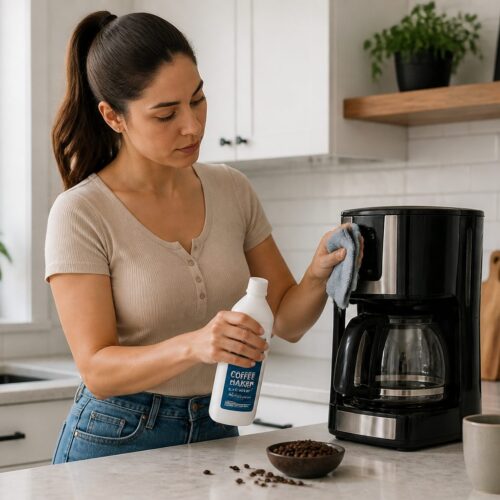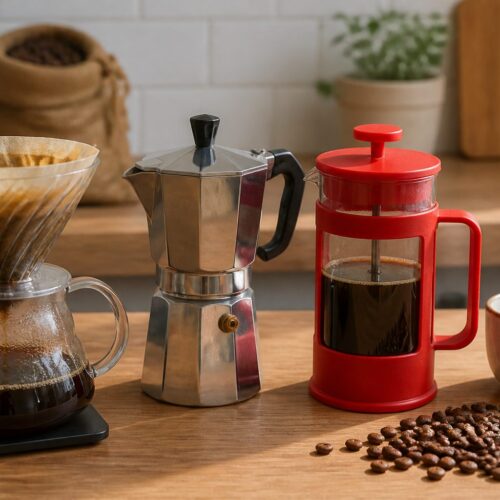


Learning how to clean a pour over coffee maker starts with separating the brewer, the carafe, and the filter.
A one-piece ceramic dripper has different care needs from a multi-part machine, and a reusable metal filter needs a different routine from disposable paper.
For most simple setups, remove used grounds promptly, rinse away residue, and wash parts that touch coffee with warm water and dish soap when their care instructions allow it.
The manufacturer’s manual takes precedence for a specific model, especially if it includes plastic, a water reservoir, or an electrical base.
Identify the parts before washing
A basic pour-over kit may include a dripper, a carafe or mug, and a paper or reusable filter.
An electric pour-over coffee maker can add a brew basket, lid, reservoir, water filter, and warming surface.
Separate removable pieces only as the manual directs.
Do not submerge an electrical base or run water over controls, and do not assume that a component is dishwasher-safe because it looks sturdy.
Check whether the filter is paper, cloth, or metal.
Paper filters are generally discarded with the grounds after brewing, while reusable filters should be emptied and cleaned according to their material and maker’s instructions.
A simple after-brew routine
- Let hot components cool enough to handle safely.
- Remove the paper filter and grounds, or empty grounds from a reusable filter into the trash or compost only if that disposal method is suitable locally.
- Rinse the dripper, carafe, and reusable filter to remove loose coffee residue.
- Wash compatible parts with warm water and a small amount of dish soap, using a soft sponge or brush.
- Rinse away soap and let the parts dry fully before storing them.
Coffee grounds can collect in the narrow ridges of a dripper or around the rim of a filter holder.
A soft brush helps reach those spots without scraping a finish or bending fine mesh.
Avoid tipping a large quantity of grounds into a sink.
They do not dissolve in water and can collect in plumbing; empty them into a waste container first, then rinse away the small residue left on the brewer.
Cleaning a reusable metal filter
A metal filter can look clean while a thin film of coffee oils remains on its surface.
After each brew, empty the grounds and rinse both sides of the mesh, paying attention to the rim and seams where residue tends to collect.
If the mesh smells stale, drains more slowly than usual, or has visible buildup, wash it with dish soap and a soft brush if the care directions permit.
Brush gently; pressure can deform a fine screen or damage a coating.
Do not use a pin, knife, or abrasive pad to force open mesh holes.
If a manufacturer recommends a particular cleaning agent or soak, follow its directions instead of trying a stronger household chemical.
Cloth filters need their own care: rinse them thoroughly after use and follow the supplier’s instructions for washing and storage.
Do not apply metal-filter advice to cloth, since the material and drying needs are different.
Removing stains and lingering odors
Brown staining on a carafe or dripper often comes from repeated contact with coffee.
Start with dish soap, warm water, and a soft sponge, then rinse well; avoid scrubbing with a material that could scratch glass, glaze, or plastic.
A lingering smell can come from coffee oils trapped in a reusable filter or a lid.
Wash the parts separately and inspect seams and removable pieces rather than masking the odor with fragrance or a scented cleaner.
Some glass and ceramic pieces tolerate a soak, while certain plastics, seals, and finishes may not.
Check the care guide before using baking soda, vinegar, bleach, or a commercial cleaner, and never mix cleaning products.
For stains that remain after washing, check the manual before using a soak or a stronger product.
The best cleaner for a drip coffee maker depends on its materials and manufacturer’s directions, so one household remedy should not be assumed safe for every device.
If you are wondering whether you can run vinegar through your coffee maker to clean it, check the model instructions first.
Some products specify a descaling solution or a particular cycle, while others warn against certain cleaners; do not mix vinegar with bleach or other cleaning agents.
When the brewer is an electric machine
For an electric pour-over maker, routine cleaning of removable parts is separate from descaling the internal water path.
KitchenAid’s product help page for its pour-over coffee maker, for example, instructs owners to wash the brew basket and carafe in hot, soapy water and rinse them; use the instructions for your own model rather than treating one brand’s directions as universal.
Unplug the appliance before wiping its exterior, and keep the plug, controls, and electrical base dry.
Empty the reservoir as the manual directs, since some models specify whether water should remain inside between uses.
Descaling removes mineral deposits from water pathways and is not the same as washing coffee oils from a basket.
Use only the method and schedule specified by the manufacturer; vinegar is not appropriate for every machine or component.
How often to clean each piece
Rinse the brewer and reusable filter after each use so grounds and oils do not sit on the surface.
Wash removable parts on a regular basis, with the exact frequency guided by the materials, how often you brew, and the appliance manual.
Descaling frequency depends on the machine and water conditions.
The manual may describe a reminder light, a recommended interval, or a specific procedure; do not substitute a schedule borrowed from another model.
| Part | Routine care | Check before doing more |
|---|---|---|
| Ceramic or glass dripper | Rinse and wash with dish soap | Dishwasher and abrasive-cleaner guidance |
| Metal mesh filter | Empty grounds, rinse both sides, wash gently | Approved soaking agents and brushes |
| Carafe | Wash and dry after use | Dishwasher, thermal walls, and lid care |
| Electric base and controls | Wipe exterior with a damp cloth if permitted | Never immerse; follow model instructions |
| Water path | Descale only as directed | Cleaner type and descaling interval |
Common cleaning mistakes to avoid
- Leaving wet grounds in the filter for long periods, which makes cleanup harder.
- Pushing grounds down the sink instead of removing them first.
- Using abrasive tools that scratch surfaces or distort fine mesh.
- Running vinegar or another cleaner through an electric brewer without checking the manual.
- Putting a component in the dishwasher based only on its appearance.
- Reassembling parts while they are still wet when the manual calls for drying.
If a part remains stained after ordinary washing, check the care guide before escalating to a soak or stronger cleaner.
A cosmetic stain does not always mean a brewer is dirty, but persistent odor, residue, or a change in flow is a useful reason to inspect it more carefully.
A short rinse after brewing and a more complete wash of compatible parts keep a pour-over setup manageable.
For model-specific questions about dishwasher use, descaling, or cleaning agents, the maker’s instructions are the reliable source.
Frequently asked questions
Remove used grounds, rinse the dripper and carafe, and wash compatible parts with warm soapy water and a soft sponge. Follow the product manual for reusable filters, dishwasher use, and any electric components.
Discard a paper filter after use. Empty grounds from a reusable filter, rinse both sides, and wash it gently with dish soap if its care instructions allow.
Empty the grounds, rinse the mesh on both sides, then gently brush with dish soap if the manufacturer permits. Avoid abrasive tools and check the product instructions before soaking it.