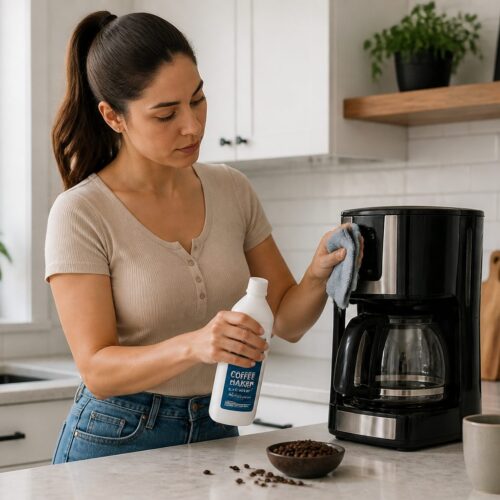

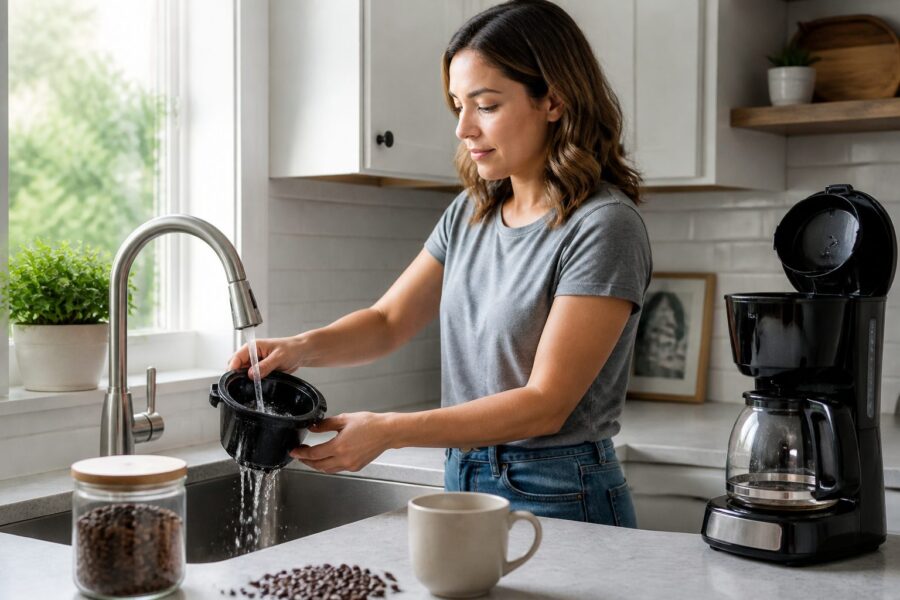
Cleaning a drip coffee maker involves two different jobs: washing removable parts that collect coffee residue and descaling the internal water path when the manufacturer calls for it.
A carafe, brew basket, and lid may need routine washing, while descaling instructions vary by machine.
Check the manual before adding vinegar, citric acid, or any other cleaner to the reservoir.
A simple habit prevents stale coffee oils and damp grounds from lingering in the basket.
Empty the filter after brewing, wash the removable parts, and wipe spills from the exterior.
Use a machine’s dedicated clean cycle only as its instructions describe; buttons and cleaning agents differ across models.
Separate daily cleaning from descaling
Routine cleaning removes coffee residue from surfaces that touch grounds or brewed coffee.
The carafe, lid, brew basket, and reusable filter are common examples.
These parts are usually easier to clean soon after a brew, before coffee dries onto them.
Descaling addresses mineral deposits inside parts that carry heated water.
Water hardness and machine design affect how often it is needed, so a universal calendar schedule is not reliable.
Follow the model’s indicator, manual, or manufacturer guidance rather than assuming every machine needs the same cycle.
A cleaning cycle does not necessarily replace washing the basket and carafe.
Likewise, washing removable parts does not remove mineral deposits from the internal water path.
Treat the two tasks separately and use the product instructions for each.
Wash the removable parts
- Turn off and unplug the machine, then let hot surfaces cool.
- Discard the used paper filter and grounds, or empty the reusable filter.
- Remove the carafe, brew basket, and other washable pieces as the manual allows.
- Wash permitted parts with warm water and dish soap, or use a dishwasher only if the manufacturer says they are dishwasher-safe.
- Rinse well, dry the pieces, and wipe the machine exterior with a damp cloth where appropriate.
Coffee oil can leave a brown film on glass and plastic.
A soft sponge and ordinary dish soap are often sufficient for washable parts.
Avoid abrasive pads that could scratch a coated surface or cloud a carafe.
The water reservoir may be fixed in place.
Do not submerge the machine or pour water over its housing.
If the reservoir can be removed, check the manual before washing it and dry it thoroughly before reinstalling.
Run a clean or descaling cycle safely
First identify the machine’s recommended cleaner and cycle.
Some models have a clean button, while others require a sequence described in the manual.
The amount and type of solution are model-specific, so a recipe found for another machine should not be assumed to fit yours.
If the manufacturer approves a descaling solution, use the stated amount and follow the cycle instructions.
If the machine calls for a rinse afterward, run the specified fresh-water cycles before brewing coffee.
Do not mix cleaning agents, and never leave a solution in a machine longer than instructed.
Vinegar is commonly suggested online, but it is not a universal cleaner for every brewer.
It may be discouraged for some machines, parts, or warranties, and lingering odor can affect coffee until the unit is rinsed properly.
Check the manual before using it, even if another brand recommends vinegar for its own model.
Do not substitute baking soda, bleach, or an unrelated household cleaner for a recommended descaler.
They may not remove mineral buildup as intended and could leave residue or damage components.
Use only products and methods that the manufacturer permits.
How often should a drip coffee maker be cleaned?
Wash the basket and carafe after use or whenever residue builds up, and empty used grounds rather than leaving them damp in the brewer.
Wipe occasional spills before they dry.
This regular care is different from descaling, which should follow the machine’s own schedule or alert.
If coffee flow slows, the machine signals that cleaning is needed, or deposits appear, consult the troubleshooting section of the manual. A slow brew can have causes besides scale, including a clogged basket or an incorrect setup, so avoid running repeated cleaning cycles without checking the instructions.
Household use, water, and machine design vary. Use the maker’s maintenance guidance as the reliable reference instead of a fixed weekly or monthly schedule borrowed from a different model.
What to do about lingering cleaner smell
If an approved cleaning cycle leaves an odor, follow the manual’s rinse procedure.
Remove and wash the carafe and brew basket separately, then run only the fresh-water cycle the instructions recommend.
Do not add extra cleaner to mask an odor.
If the smell persists after the stated rinse steps, pause before brewing and check the manufacturer’s troubleshooting advice. Some machines require a particular number of rinses; inventing a rinse count could fail to solve the cause.
Never taste a cleaning solution or drink liquid from a cleaning cycle. Empty it as directed, rinse the machine appropriately, and keep cleaning products away from coffee ingredients and food.
Common cleaning mistakes
- Using a vinegar-to-water ratio copied from a different brand or model.
- Putting a removable part in the dishwasher without checking its care instructions.
- Submerging the machine or wetting its electrical housing.
- Mixing cleaners or using bleach, baking soda, or abrasive tools without approval.
- Treating descaling and washing the carafe as the same task.
- Leaving used grounds and a wet filter basket in the machine for an extended time.
If you are unsure whether a part is washable, keep it out of water until you can check the manual. Many issues are easier to prevent than to fix after moisture reaches the wrong area.
A quick maintenance checklist
After brewing, dispose of the grounds and filter, wash the basket and carafe as directed, and leave the parts to dry.
Clean up drips on the warming plate or counter after the machine cools.
When a descale alert appears, look up the exact procedure for your model before adding anything to the reservoir.
This routine keeps everyday residue separate from internal maintenance.
The machine’s manual determines which products, parts, and cycles are safe.
If the brewer behaves unusually after a cleaning cycle, stop using it and consult the manufacturer rather than repeating the cycle by guesswork.
A clean-looking exterior does not tell you whether internal descaling is due. A clean alert does not mean the carafe can be left unwashed.
Think of the machine as having separate coffee-contact surfaces and a water-heating path. Regularly clearing the first and following the maker’s directions for the second keeps maintenance focused without relying on folk recipes.
Keep the manual nearby when a light or cleaning indicator appears, since its meaning can vary by model.
Use the cleaner specified or approved in the machine’s manual. Recommendations vary, so do not assume vinegar or another household product is safe for every model.
Follow the model’s manual for the cleaning solution, reservoir amount, button sequence, and rinse steps. Clean cycles are not identical across machines.
Wash removable coffee-contact parts regularly, ideally after use, and descale according to the manufacturer’s schedule or machine alert. Water and model differences make a single schedule unsuitable for all brewers.