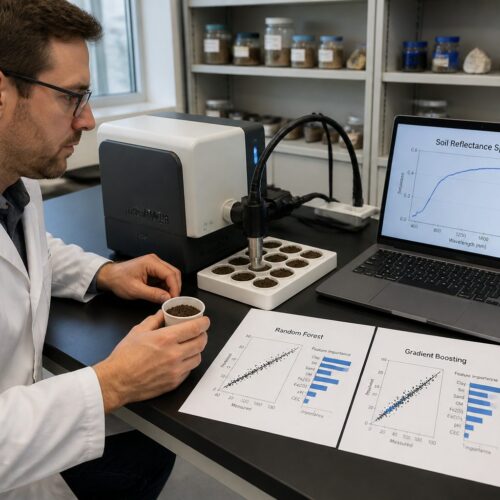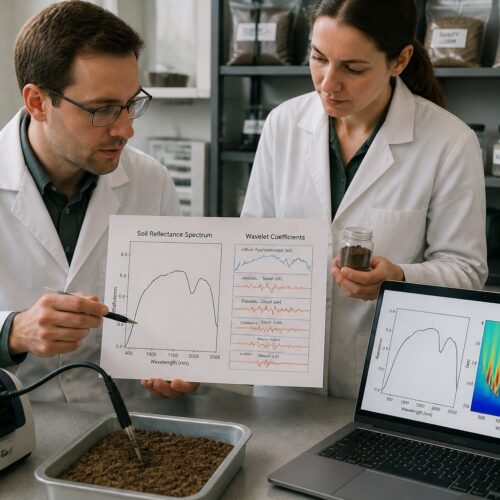

Deploying a portable NIR spectrometer for precision agriculture offers immense potential for real-time soil analysis. This technology provides rapid, non-destructive data crucial for informed decision-making on the farm. However, the true power of these devices hinges on the quality of their underlying calibration models.
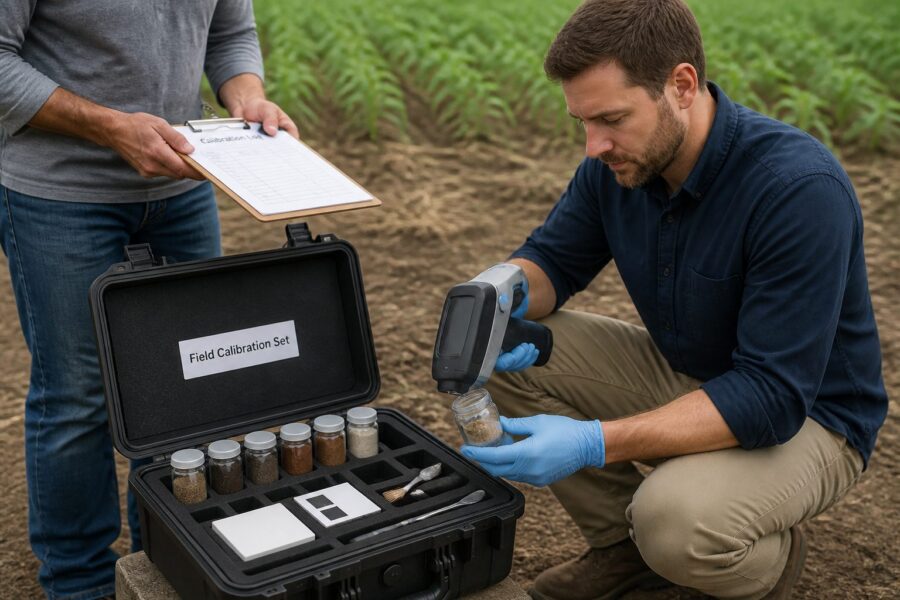
A robust field calibration set is not merely a collection of data points; it is the foundation upon which accurate spectral predictions are built. Without a well-constructed local calibration, your portable spectrometer may provide misleading results, undermining the very precision you seek. This guide will walk you through the essential steps to create an effective field calibration set portable NIR spectrometer, ensuring your measurements are reliable and actionable.
Establishing a strong NIR calibration soil model for your specific region and farm conditions is a critical investment. It directly impacts the accuracy of your real-time soil nutrient and property measurements, allowing for truly data-driven agricultural practices. We should focus on practical steps to achieve this goal effectively.
Why Global Models Fail in Local Conditions and When to Recalibrate
Many portable NIR spectrometers come equipped with pre-loaded global calibration models. These models are built from vast datasets collected across diverse geographical regions and soil types. While they offer a convenient starting point, their broad applicability often limits their accuracy in specific local conditions.
Soil properties like mineralogy, organic matter composition, and moisture content can vary significantly even within a single field. A global model, by its nature, averages these variations, making it less precise when predicting properties for your unique soil. This is why a local calibration spectroscopy approach is indispensable for high-accuracy results.
The spectral signatures of soil constituents are influenced by factors such as particle size, soil structure, and the presence of specific clay minerals. Global models cannot fully account for these localized nuances, leading to systematic errors in predictions. You will find that predictions for your soil often drift from actual lab values without a tailored model.
Recalibration becomes necessary when you observe a consistent bias or high error rates in your spectrometer’s predictions. This often happens when moving to new fields with different soil types or after significant changes in agricultural practices. Ignoring these signs means you are operating with potentially incorrect data, which can lead to inefficient nutrient applications or misdiagnosed soil health issues.
Environmental factors like temperature and humidity can also subtly affect spectral readings, necessitating periodic checks and recalibration. Even slight changes in instrument performance over time might require updates to your portable spectrometer calibration. It pays to be vigilant about your data quality.
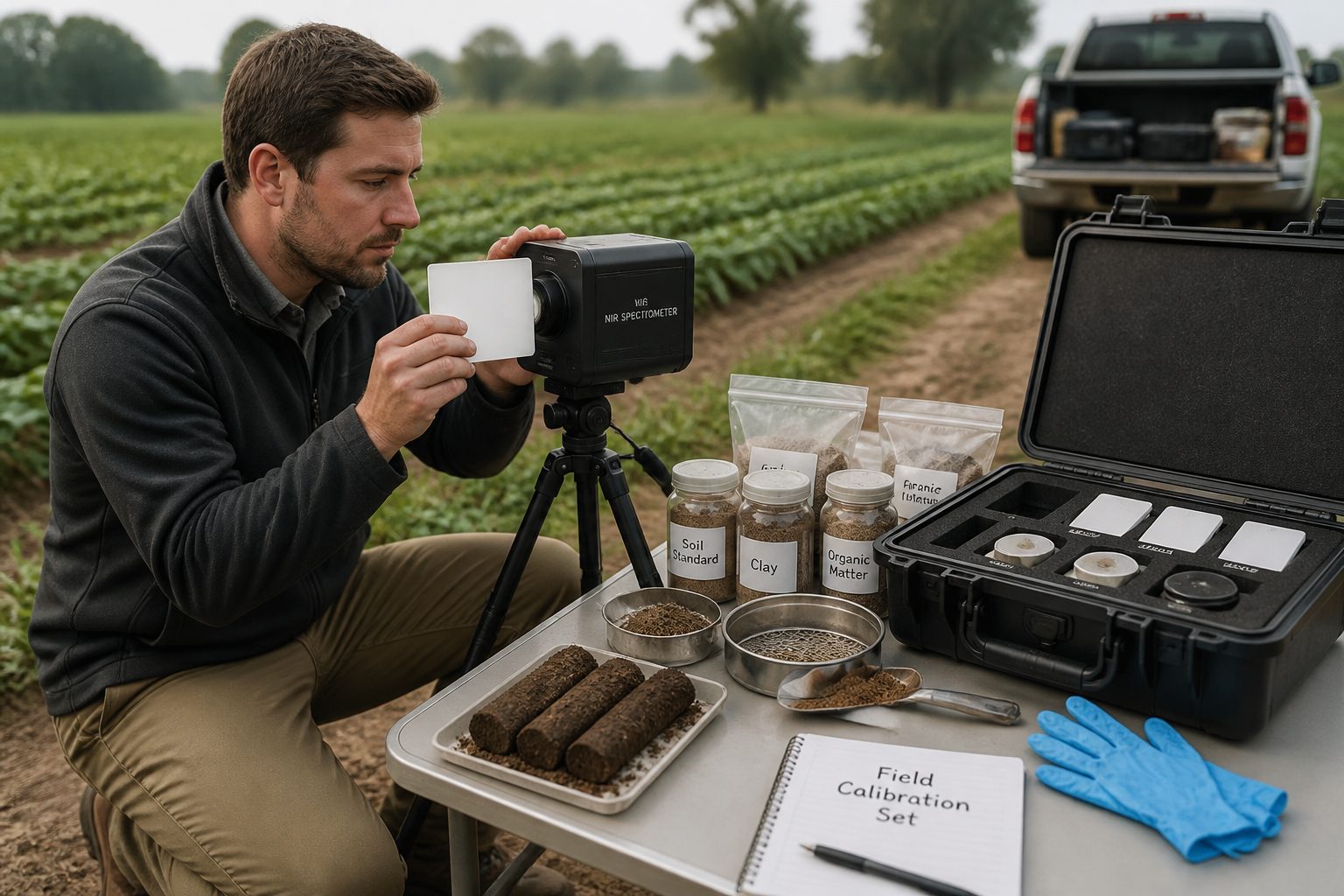
A good rule of thumb is to periodically compare a subset of your spectrometer’s predictions against traditional lab analyses. If these comparisons reveal a consistent discrepancy, it is a clear indicator that your existing field calibration set portable NIR spectrometer requires an update. This proactive approach maintains the integrity of your soil data.
Furthermore, if you introduce new crop rotations or tillage practices, the soil’s physical and chemical properties may change. These alterations can shift the spectral characteristics of your soil, rendering an older calibration less accurate. Regular recalibration ensures your data remains relevant and precise for your evolving farm management.
How Many Samples Do You Need for a Valid Local Calibration Set
Determining the optimal number of samples for a local calibration set is a balance between thoroughness and practical constraints. Too few samples will not capture the full variability of your soil, leading to a weak model. Too many samples might be unnecessarily costly and time-consuming for lab analysis.
The ideal number depends on several factors, including the complexity of your soil, the specific properties you want to predict, and the desired accuracy. Generally, a robust field calibration set portable NIR spectrometer requires at least 30-50 samples to start, but often more are needed for truly diverse areas. You want your sample set to represent all the different soil conditions you expect to measure.
| Soil Property | Typical Variability | Recommended Initial Sample Range |
|---|---|---|
| Organic Carbon | Low to High | 50-75 |
| Clay Content | Moderate to High | 60-90 |
| pH | Low to Moderate | 40-60 |
| Cation Exchange Capacity | Moderate to High | 70-100 |
| Nitrogen (Total) | Low to Moderate | 50-70 |
| Phosphorus (Available) | Moderate to High | 60-80 |
Selecting Representative Samples That Cover Your Soil Variability
The quality of your local calibration spectroscopy model relies heavily on the representativeness of your sample collection. You cannot just randomly pick spots; you must actively seek out the full range of soil conditions present in your fields. This strategic sampling ensures your portable spectrometer calibration is robust across all your unique areas.
Start by dividing your farm into distinct management zones or areas with known differences in soil type, topography, or historical yield. This could involve using existing soil maps, yield maps, or even satellite imagery to identify areas with differing characteristics. These zones then become your sampling strata.
Within each identified zone, collect samples that represent the spectrum of variability. For instance, if a zone has areas of both high and low organic matter, make sure your samples capture both extremes, as well as the intermediate values. You want to avoid oversampling common soil types while neglecting rarer but significant variations.
Consider factors like slope position, drainage patterns, and historical crop performance when choosing sample locations. These elements often correlate with underlying soil property differences that your NIR calibration soil model needs to learn. A diverse sample set makes for a more resilient model.
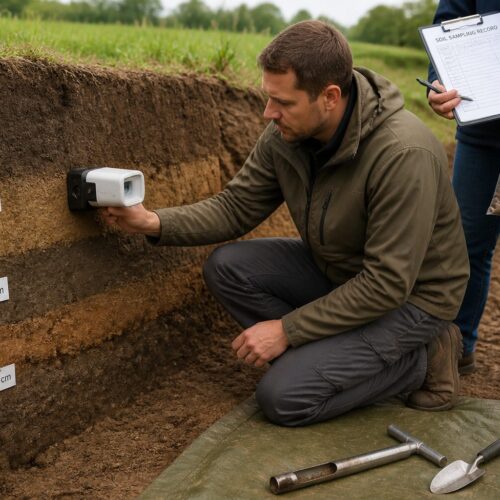
It is also wise to include samples from different depths if you anticipate measuring at varying soil profiles. A surface soil calibration will not perform well if you later try to predict properties at 30 cm depth. Plan your sampling strategy according to your intended use cases for the field calibration set portable NIR spectrometer.
Using a grid-based or targeted sampling approach can help ensure adequate coverage. Grid sampling provides a systematic distribution, while targeted sampling allows you to focus on identified areas of high variability. Combining both methods can often yield the most comprehensive sample set.
Remember that the goal is not just quantity, but quality and diversity in your samples. Each sample should contribute unique spectral information to help the model learn the complex relationships between spectra and soil properties. A thoughtful sampling strategy is the bedrock of a successful NIR application.
Lab Analysis Methods to Use as Reference Values
Once you have collected your representative soil samples, the next critical step is to obtain accurate laboratory reference values for the properties you want to predict. These “gold standard” lab results are what your portable spectrometer calibration will be trained against. The reliability of your NIR calibration soil model directly depends on the quality of these reference data.
For common soil properties like organic carbon, pH, and nutrient levels, choose reputable analytical labs that use standardized and well-established methods. For example, total organic carbon is often determined by dry combustion, while pH is measured in a soil-water slurry. Consistency in lab methods is paramount for your local calibration spectroscopy.
Ensure the lab prepares samples in a way that aligns with how you collect and present them to your portable NIR spectrometer. If your field spectrometer measures air-dried, sieved soil, then your lab samples should also be air-dried and sieved to a similar particle size. Any mismatch can introduce errors into your field calibration set portable NIR spectrometer.
For elements like nitrogen, phosphorus, and potassium, specify the extraction methods used by the lab (e.g., Olsen, Bray-1, Mehlich-3 for phosphorus). Different extraction methods can yield varying results, so consistency is key. Documenting these methods is important for reproducibility and understanding your data.
Consider getting duplicate analyses for a subset of your samples to assess the lab’s analytical precision. This gives you confidence in the reference data you are using to build your model. High-quality reference data minimizes uncertainty in your final predictions.
Some properties, like clay content, might require specialized analyses such as hydrometer or pipette methods. Discuss these specific requirements with your chosen lab to ensure they can provide the necessary data. The more precise your reference values, the more accurate your spectral model will become.
Do not underestimate the importance of meticulous sample handling and labeling throughout this process. Errors at the collection or lab analysis stage will propagate through your entire calibration, making your portable spectrometer calibration unreliable. Every step requires careful attention to detail.
Building and Testing the Model: Cross-Validation Basics
With your collected spectra and laboratory reference values in hand, you are ready to build the predictive model for your portable NIR spectrometer calibration. This involves using statistical techniques to find the relationship between the spectral data and the soil properties. Cross-validation is a fundamental technique for evaluating your model’s performance reliably.
Cross-validation helps you assess how well your model will generalize to new, unseen samples, preventing overfitting to your training data. It gives you a more realistic estimate of your model’s predictive accuracy for future field measurements. This process is crucial for a robust field calibration set portable NIR spectrometer.
- Splitting data into training and validation sets
- Training the model on the training data subset
- Predicting values for the validation data
- Calculating prediction errors (RMSE, RPD)
- Repeating the process multiple times with different splits
Updating the Calibration Set as You Collect More Field Data
Building an initial field calibration set portable NIR spectrometer is a great start, but it is not a one-time event. Soil properties change over time, and your understanding of your fields deepens with more data. Regularly updating your NIR calibration soil model is crucial for maintaining its accuracy and relevance.
As you collect more field spectra with your portable NIR spectrometer, you will encounter new soil conditions or variations that were not fully captured in your initial calibration. These new data points represent opportunities to strengthen and expand your model. Integrating them improves the robustness of your portable spectrometer calibration.
A smart strategy involves identifying “outlier” spectra—those for which your current model produces unusually high prediction errors. These outliers often indicate unique soil characteristics not well represented in your existing local calibration spectroscopy. Sending these specific samples for lab analysis and adding them to your calibration set is highly beneficial.
You can also implement a systematic approach, such as sending a small percentage of routinely collected field samples for lab analysis each season. This continuous expansion incrementally improves your model over time. This method ensures your calibration remains dynamic and responsive to your agricultural practices.
When adding new samples, it is essential to ensure they are properly prepared and analyzed using the same methods as your original calibration samples. Consistency across your entire dataset prevents introducing new sources of error. Maintaining uniform data quality is a top priority.
Periodically re-evaluate your entire calibration set with the newly added samples and re-run your cross-validation. This step confirms that the updated model performs better and that the new samples have genuinely improved its predictive power. You want to see consistent gains in accuracy metrics.
Think of your calibration set as a living database that evolves with your farm. The more diverse and representative data you feed into it, the more intelligent and reliable your portable NIR spectrometer becomes. This ongoing commitment to data quality yields long-term benefits in precision agriculture.
Transferring a Calibration Set Between Instruments of the Same Model
You might find yourself needing to transfer a carefully developed field calibration set portable NIR spectrometer between multiple instruments of the same model. This is a common scenario for larger operations with several spectrometers or when replacing an older unit. While seemingly straightforward, this process requires careful attention to detail.
Ideally, instruments of the same model should produce very similar spectral readings for identical samples. However, minor manufacturing variations or slight differences in sensor performance can lead to subtle spectral offsets. These small discrepancies can impact the accuracy of a transferred portable spectrometer calibration.
Before transferring the NIR calibration soil model, it is crucial to perform an instrument matching or standardization procedure. Many manufacturers provide software tools or specific protocols to align the spectral responses of different instruments. This step minimizes the impact of instrument-to-instrument variability.
The standardization process often involves measuring a set of stable reference materials (e.g., ceramic standards) with both the source and target instruments. The software then applies a mathematical correction to the target instrument’s spectra, making them more consistent with the source instrument. This alignment is vital for accurate local calibration spectroscopy.
After standardization, transfer the calibration model files to the new instrument following the manufacturer’s instructions. Once transferred, it is highly recommended to validate the calibration on the new device. Measure a subset of known samples that were part of your original calibration set with the new instrument.
Compare the predictions from the new instrument against the known lab values for these validation samples. If the predictions are consistent and within acceptable error margins, your calibration transfer was successful. If not, further investigation into the instrument matching or calibration itself might be necessary.
Maintaining a set of “transfer standards” that can be measured regularly across all your instruments is a good practice. These standards help monitor the long-term stability and consistency of your devices, ensuring any transferred calibration remains robust. This systematic approach saves you from unexpected data discrepancies.
Conclusion
Building a robust field calibration set portable NIR spectrometer is an iterative and systematic process, not a quick fix. It demands careful planning, meticulous execution, and ongoing commitment to data quality. The effort you invest in creating a strong NIR calibration soil model directly translates into more accurate and actionable insights for your farm.
Embracing local calibration spectroscopy moves you beyond generic global models, tailoring the technology to the unique characteristics of your fields. This personalized approach ensures that your portable spectrometer calibration provides reliable data, empowering truly precision agriculture decisions. It is about making the technology work specifically for you.
The continuous refinement of your calibration set through regular updates and validation keeps your system responsive to changing conditions and evolving farm practices. This commitment solidifies the value of your investment in portable NIR technology, driving sustainable and profitable outcomes. Your data becomes a true asset, guiding every step you take.