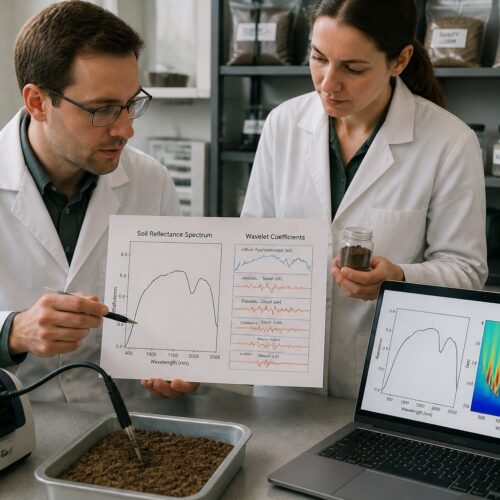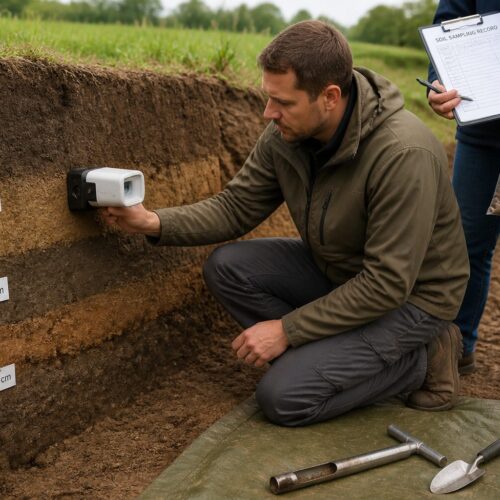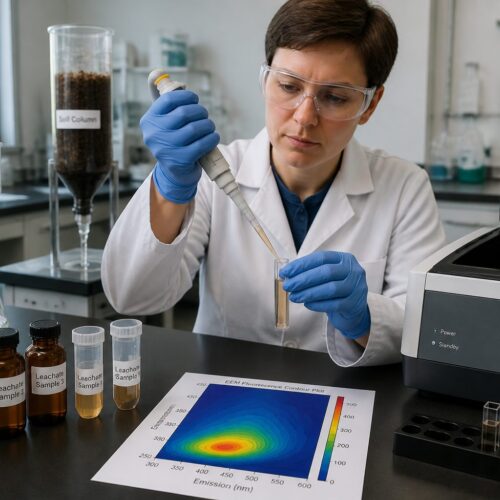


Soil spectroscopy has become an integral tool in precision agriculture, enabling farmers to assess soil health and optimize crop yields effectively through various advanced analytical techniques. The application of ensemble methods in this field has emerged as a viable alternative to traditional Partial Least Squares (PLS) regression models, which have dominated soil property prediction for many years.
Ensemble methods like Random Forest and Gradient Boosting offer improved accuracy and robustness in soil property predictions while addressing some of the limitations inherent in traditional models. In this article, we will explore why these methods challenge PLS in soil spectroscopy, highlighting their advantages and discussing how they can enhance our understanding of soil mineralogy and its implications for agricultural practices.
We will delve into the architecture of Random Forest and Gradient Boosting variants such as XGBoost, LightGBM, and CatBoost to illustrate their unique contributions to soil spectroscopy. Additionally, we will discuss hyperparameter tuning strategies, effective handling of collinearity, and benchmarking these models against PLS and CNN baselines to provide a comprehensive overview of their capabilities and performance.
Partial Least Squares (PLS) has long been the go-to method for modeling soil properties from spectral data, primarily due to its ability to handle multicollinearity and simplify complex datasets. However, ensemble methods have shown superior performance due to their inherent ability to capture complex interactions and non-linear relationships that often characterize soil properties and their spectral signatures.
Ensemble methods aggregate predictions from multiple models, thereby reducing variance and improving accuracy across various types of datasets. This characteristic allows them to handle the noisy and high-dimensional nature of soil spectral data more effectively than PLS, which can struggle with intrinsic complexities found in such datasets.
Moreover, ensemble methods can manage feature selection automatically, identifying the most relevant wavelengths for prediction without extensive manual intervention. This capability is particularly beneficial in soil spectroscopy, where numerous wavelengths can complicate the modeling process and potentially lead to overfitting if not addressed appropriately.
As a result, researchers are increasingly turning to ensemble learning approaches for soil Near-Infrared (NIR) applications, reflecting a significant shift in analytical methodologies. This shift is driven by the need for more accurate and reliable predictions of soil properties, which are essential for effective crop management and environmental sustainability.
Ultimately, the challenge posed by ensemble methods to PLS highlights the evolution of analytical techniques in soil science, underscoring the importance of adopting innovative approaches in research and application. By leveraging these advanced methodologies, we can enhance our understanding of soil mineralogy and its implications for precision agriculture, paving the way for more efficient farming practices.
Random Forest operates by constructing multiple decision trees during training and outputting the mode of their predictions, allowing for a comprehensive analysis of the input data. This architecture is particularly suitable for hyperdimensional spectral data due to its inherent ability to manage overfitting and high dimensionality, which are common challenges in soil property prediction.
Each tree in the Random Forest is trained on a random subset of the data and a random subset of features, promoting diversity among the trees. This randomness ensures that the ensemble captures various patterns within the data, leading to improved generalization and predictive performance across different soil types and conditions.
The robustness of Random Forest enables it to handle the complex relationships present in soil spectroscopic data, which can include interactions between multiple soil constituents. This capability is crucial for accurately predicting soil properties such as organic matter content, nutrient levels, and moisture content, all of which significantly impact crop health and agricultural productivity.
Additionally, Random Forest provides inherent measures of feature importance, allowing researchers to identify which wavelengths contribute most to predictions. This feature is invaluable in guiding future research directions in soil spectroscopy, as it helps prioritize which spectral regions warrant further investigation and analysis.
Overall, the architecture and capabilities of Random Forest make it a powerful tool for soil spectral data analysis, enabling researchers to derive meaningful insights from complex datasets. Its application is essential for advancing precision agriculture practices through better soil property predictions and informed decision-making processes.
Gradient Boosting has gained immense popularity due to its flexibility and performance in various machine learning tasks across different domains. Variants like XGBoost, LightGBM, and CatBoost have emerged as powerful tools in soil spectroscopy for predicting soil properties, each offering unique advantages that cater to specific requirements in data analysis.
XGBoost is known for its speed and efficiency, making it a popular choice for soil property prediction, especially in large-scale datasets. Its parallel processing capabilities enable it to handle large datasets typical in soil spectroscopy, resulting in faster training times and improved model performance.
| Algorithm | Key Features | Soil Spectroscopy Application |
|---|---|---|
| XGBoost | Fast, scalable | Soil nutrient prediction |
| LightGBM | Efficient, low memory | Organic matter content estimation |
| CatBoost | Categorical features support | Soil texture classification |
LightGBM excels in memory efficiency and speed, making it ideal for large-scale soil data, particularly when rapid processing is required for real-time applications. CatBoost, on the other hand, is particularly useful when dealing with categorical features, enhancing model performance in cases with varied soil types and characteristics that traditional models might struggle to interpret effectively.
These gradient boosting variants collectively improve the accuracy of soil spectral models by leveraging unique algorithmic advancements to process data more effectively. Their diverse capabilities make them indispensable in advancing soil science applications, enabling more refined and accurate predictions that can significantly impact agricultural practices.
Hyperparameter tuning is critical for optimizing ensemble models in soil spectroscopy, as it directly affects the performance metrics of the models being used. Effective tuning can significantly enhance model performance and improve prediction accuracy, making it an essential step in the modeling process.
Common strategies for hyperparameter tuning include grid search, random search, and Bayesian optimization, each offering distinct advantages and applicable scenarios. Each of these methods has its strengths, allowing practitioners to find the best combination of hyperparameters for their specific soil spectral datasets, thus optimizing the model for better results.
Grid search exhaustively evaluates all possible combinations of a specified set of hyperparameters, providing a thorough exploration of the parameter space. While comprehensive in its approach, it can be computationally expensive, especially with high-dimensional spectral data where the search space can quickly expand.
Random search, on the other hand, samples a subset of hyperparameter combinations, providing a balance between exploration and computational efficiency that can be particularly beneficial in high-dimensional spaces. This method is often more effective than grid search, especially when the number of hyperparameters is large and the computational resources are limited.
Bayesian optimization employs a probabilistic model to identify promising hyperparameter combinations, iteratively refining its search based on past evaluations. This strategy is increasingly popular due to its efficiency and effectiveness in finding optimal parameters quickly, which is particularly advantageous in the context of soil spectroscopy where timely insights are crucial.
Understanding feature importance is crucial for interpreting soil spectral models effectively and for making informed decisions based on model outputs. Ensemble methods like Random Forest and Gradient Boosting provide valuable insights into which wavelengths significantly influence predictions, which can be pivotal for practical applications.
These insights can guide future research and improve the targeting of soil sampling efforts, ensuring that resources are allocated efficiently in the pursuit of accurate soil assessments. By focusing on the most relevant wavelengths identified through feature importance analysis, we can enhance the efficiency of soil property assessments and subsequent agricultural interventions.
- Key wavelengths for nitrogen prediction
- Wavelengths influencing organic matter estimation
- Important bands for pH levels
- Influential wavelengths for moisture content
- Critical bands for soil texture classification
Ultimately, recognizing the wavelengths that matter helps refine soil spectral models, enabling more effective predictions that align closely with real-world soil conditions. This understanding is essential for advancing precision agriculture practices, as it allows farmers and researchers to make data-driven decisions that enhance crop yields and sustainability.
Collinearity is a common challenge in high-dimensional spectral datasets that can complicate the modeling process significantly. This issue can lead to overfitting and unreliable predictions in soil property assessments, undermining the validity of the results produced by traditional modeling approaches.
Ensemble methods inherently mitigate collinearity through their structure, which allows them to aggregate multiple models and reduce the impact of correlated features on overall predictions. By leveraging the diversity of individual trees, these methods can effectively navigate the complexities introduced by collinearity, leading to more accurate and reliable predictions.
Moreover, techniques such as feature selection and dimensionality reduction can further address collinearity, ensuring that only the most informative wavelengths are retained for modeling. These methods help identify and eliminate redundant features that may not contribute significantly to the model’s predictive capabilities, streamlining the analysis process.
Addressing collinearity is essential for enhancing model interpretability and validity, particularly in fields like soil science where accurate predictions are critical for informed decision-making. By implementing robust strategies to handle collinearity, researchers can improve the reliability of soil spectral models and enhance their applicability in real-world agricultural scenarios.
Benchmarking ensemble models against traditional PLS and Convolutional Neural Networks (CNNs) is vital for evaluating their effectiveness in soil property prediction. This comparison provides insights into their relative strengths and weaknesses in soil spectroscopy, helping researchers and practitioners identify the best modeling approaches for their specific needs.
Ensemble models generally outperform PLS in terms of accuracy and robustness, especially in complex datasets that exhibit non-linear relationships. Meanwhile, CNNs offer deep learning capabilities that can capture intricate patterns in soil spectral data, making them a valuable alternative for certain applications.
Comparative studies often highlight that while PLS can provide a useful baseline for evaluation, ensemble methods and CNNs tend to deliver superior predictions that better reflect the underlying soil properties. This trend underscores the growing preference for advanced machine learning techniques in soil science, as researchers seek to harness the power of data to improve agricultural outcomes.
As researchers continue to explore these models, the results will inform best practices for soil property prediction, ultimately enhancing the efficiency and effectiveness of soil management strategies. Understanding the nuances of each approach is crucial for optimizing soil management strategies, ensuring that farmers can make informed decisions based on accurate soil assessments.
Ultimately, benchmarking these models helps clarify the future direction of soil spectroscopy research and application, highlighting areas where further advancements may be needed. The ongoing advancements in machine learning will undoubtedly shape the landscape of precision agriculture, providing new tools and techniques to enhance farming practices and food security.
Computational costs and inference speed are critical considerations for deploying models in on-farm applications, where timely decision-making can significantly impact agricultural outcomes. Efficient models are essential for ensuring that farmers receive rapid insights from soil spectral data, enabling them to respond to changing conditions effectively.
Random Forest and Gradient Boosting models generally have higher computational demands compared to simpler methods like PLS, which can limit their feasibility in certain operational contexts. However, their increased accuracy and robustness often justifies the additional resources required, particularly when considering the potential benefits to crop yields and soil health.
Inference speed is also a key factor, as farmers need rapid insights from soil spectral data to make timely interventions that can affect crop growth and health. Optimizing model performance while maintaining reasonable inference times is fundamental for practical applications, ensuring that farmers can utilize the insights gained from these models effectively.
Strategies such as model pruning and quantization can enhance inference speed without sacrificing accuracy, allowing models to run more efficiently in real-time conditions. These techniques ensure that predictions can be made quickly and efficiently in real-world scenarios, facilitating better decision-making processes in precision agriculture.
Ultimately, balancing computational costs with performance is crucial for the adoption of advanced machine learning techniques in agriculture, particularly as the industry continues to evolve. This balance will facilitate better soil management practices and crop yield optimization, ultimately contributing to sustainable agricultural development and food security.
Implementing a Random Forest model for soil property prediction in Python involves several key steps that are essential for successful analysis. First, you need to import essential libraries such as scikit-learn and pandas, which provide the foundational tools for data manipulation and modeling.
Next, you will load your soil spectral dataset and preprocess it for analysis, a critical step that includes handling missing values and normalizing the spectral data to ensure consistency across measurements. Proper preprocessing helps improve the quality of the data and the overall performance of the model.
After preprocessing, you can split the data into training and testing sets to evaluate the model’s performance accurately. This division is crucial as it helps prevent overfitting and ensures that the model can generalize well to unseen data.
Once the data is ready, you can initialize the Random Forest model and fit it to the training data, allowing the algorithm to learn from the input features. Following this, you can assess the model’s accuracy using metrics such as R-squared and Mean Absolute Error, which provide valuable insights into its predictive capabilities.
Finally, you can visualize feature importance to identify the most influential wavelengths in your predictions, providing a clearer understanding of what drives the model’s outputs. This workflow empowers researchers and practitioners to effectively model soil properties using Random Forest in Python, facilitating data-driven decision-making in agricultural practices.