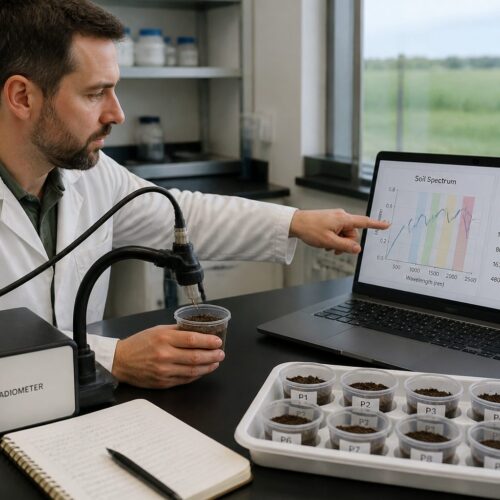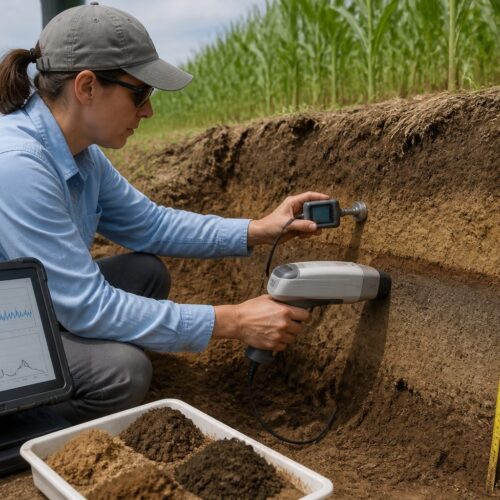

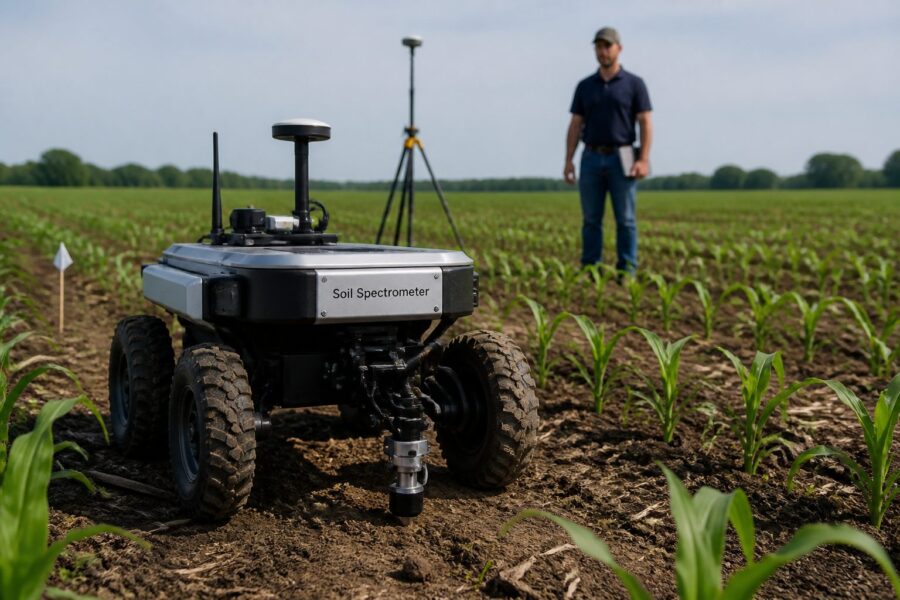
The practice of soil sampling has traditionally been subject to human variability, which can lead to inconsistent results and hinder the effectiveness of precision agriculture in various ways, often leaving farmers unsure about the true conditions of their soil. By removing this variability through advanced technology, we can significantly improve the accuracy and reliability of soil analysis, paving the way for more informed agricultural practices that are based on solid data rather than assumptions.
Autonomous robot soil spectral sampling is becoming a game-changer in the field of agriculture, offering a level of precision that was previously unattainable with manual methods. These advanced systems are designed to perform soil sampling with high precision and efficiency, ensuring that the data collected is both consistent and reliable across different fields and conditions.
As the agricultural sector increasingly turns to automation for improved productivity, understanding the technology behind autonomous soil samplers becomes essential for farmers looking to optimize their operations. This article explores various components and advancements in soil spectroscopy and mineralogy, focusing particularly on how these innovations contribute to the overall goals of precision agriculture in a modern context.
The Case for Removing Human Variability From Soil Sampling
Human error is an unavoidable factor in traditional soil sampling methods, introducing a level of unpredictability that can compromise the integrity of soil data. Factors such as fatigue, inconsistency in sampling techniques, and even environmental influences can significantly affect the quality of the data collected, leading to potential misinterpretations that could impact crop yields and soil health.
With autonomous soil sampler robots, the role of human operators can be minimized, thereby reducing the potential for error. This transition ensures that the soil sampling process is standardized, leading to enhanced accuracy in soil analysis, which is critical for making informed decisions based on reliable data.
By implementing robotic systems, farmers can achieve a more uniform sampling strategy across their fields, creating a baseline of data that reflects the true conditions of the soil. This consistency is crucial for making informed decisions in precision agriculture, as it allows for the accurate identification of soil health issues and nutrient deficiencies.
The data collected from these robots allows for better analysis and interpretation, thereby reducing the risk of misguided agricultural practices that could lead to poor crop performance. Ultimately, removing human variability enhances the overall efficiency of soil management, ensuring that crops receive exactly what they need for optimal growth.
Furthermore, these robots are capable of sampling at a higher frequency, capturing a more comprehensive array of data points across the field. This abundance of data can lead to more effective soil management strategies that are tailored to specific field conditions, thus maximizing the potential for crop yield and sustainability.
Navigation Systems That Allow Robots to Follow Precise Sampling Grids
Effective navigation is critical for autonomous robots performing soil sampling in large agricultural fields, where precision can make all the difference. Advanced GPS and sensor technology enable these robots to follow precise sampling grids with remarkable accuracy, ensuring that every inch of the field is adequately assessed without any omissions or redundancies.
These navigation systems allow robots to efficiently cover designated areas without missing spots or duplicating efforts, which is vital for maintaining the quality of the data collected. This precision enhances the quality of data collected and supports better decision-making in precision agriculture, enabling farmers to optimize their resources and efforts.
By employing real-time mapping techniques, these robots can adapt to changing field conditions, such as variations in terrain or obstacles that may arise during sampling. This adaptability is essential for maintaining high levels of accuracy during soil spectral sampling, as it allows robots to adjust their paths and techniques in real-time to meet the demands of the environment.
Moreover, robots equipped with advanced navigation systems can operate effectively in various terrains and under different weather conditions, which broadens their applicability in diverse agricultural contexts. This versatility is key to maximizing the effectiveness of soil sampling operations, as it enables farmers to deploy these technologies in a wide range of situations without concern for environmental limitations.
Ultimately, the integration of sophisticated navigation technologies is a significant step forward in the realm of autonomous soil sensing, revolutionizing the way soil data is collected and analyzed. These systems not only improve efficiency but also enhance the reliability of the data collected, providing farmers with actionable insights that can lead to better agricultural outcomes.
Spectrometer Integration on Wheeled and Tracked Ground Vehicles
The integration of spectrometers into wheeled and tracked ground vehicles is revolutionizing soil analysis by enabling real-time data collection that enhances the precision of soil assessments. These devices allow for real-time spectral data collection during the sampling process, providing farmers with immediate insights that can significantly influence agricultural practices.
The ability to analyze soil characteristics on-the-go provides immediate insights that can influence agricultural practices, allowing farmers to respond more quickly to soil health issues. This immediacy can enhance decision-making and allow for timely interventions in the field, ultimately leading to improved crop health and yield.
| Vehicle Type | Spectrometer Type | Application |
|---|---|---|
| Wheeled Robot | Near-Infrared | Soil Moisture Analysis |
| Tracked Vehicle | Visible-NIR | Nutrient Mapping |
| Wheeled Robot | Mid-Infrared | Organic Matter Assessment |
| Tracked Vehicle | Fourier Transform | Soil Composition Analysis |
By utilizing different spectrometer types, robots can analyze various soil properties, allowing for comprehensive assessments that address multiple aspects of soil health. This information is invaluable for farmers aiming to implement precision agriculture techniques effectively, as it allows them to tailor their interventions based on detailed soil profiles.
The integration of these technologies enhances the overall capabilities of autonomous soil sampler robots, making them indispensable tools for modern agriculture. As technology improves, we can expect to see even more advanced spectrometers designed specifically for agricultural applications, further elevating the standards of soil analysis.
Soil Contact Pressure Control for Consistent Spectral Acquisition
Maintaining consistent soil contact pressure is crucial for reliable spectral data acquisition, as variability in contact pressure can lead to inconsistent readings and inaccurate soil assessments. This aspect of soil sampling is often overlooked, yet it plays a pivotal role in ensuring that the data collected accurately reflects the true soil conditions.
Advanced robotic systems are now equipped with technologies to control soil contact pressure effectively, which contributes to the overall accuracy of the spectral data collected. This level of precision ensures that the spectral data collected is both accurate and reproducible, allowing for reliable comparisons over time.
- Adaptive pressure sensors
- Real-time pressure monitoring
- Automated pressure adjustments
- Enhanced spectral resolution
- Improved data reliability
By optimizing soil contact pressure, these robots can collect data that reflects true soil conditions, minimizing the risk of errors that could lead to misguided agricultural practices. This enhancement is particularly important in precision agriculture, where data accuracy is paramount to ensuring that interventions are both timely and effective.
As research continues in this area, we can anticipate further innovations that will enhance soil contact pressure control, leading to even more reliable data collection methods. These improvements will undoubtedly contribute to the ongoing development of autonomous robot soil spectral sampling, making these technologies even more valuable for farmers.
Power Management for Extended Autonomous Field Operations
Power management is a critical aspect of autonomous robot operation in agricultural fields, as efficient power systems are essential to ensure that these robots can operate for extended periods without interruption. The success of autonomous soil samplers largely depends on their ability to maintain power over long durations, particularly when navigating expansive fields.
Innovations in battery technology and energy-efficient designs allow autonomous soil sampler robots to maximize their operational time without frequent recharging, which is particularly important for covering large fields where downtime can be costly. With advancements in energy storage solutions, these robots can complete extensive sampling missions with minimal interruptions, enhancing their overall effectiveness.
- Solar-powered options
- Energy-efficient motors
- Smart battery management systems
- Extended lifespan batteries
- Real-time energy consumption tracking
Moreover, advancements in energy recovery systems can further enhance the operational efficiency of these robots by harnessing energy from their movements or environmental sources. With improved power management, farmers can rely on robots to conduct thorough soil assessments without frequent downtime, allowing for continuous data collection and analysis.
The ongoing development of power management technologies is vital for the success of autonomous soil sensing solutions, as they directly impact the feasibility and efficiency of robotic operations in the field. This progress will ultimately support the widespread adoption of robotic systems in precision agriculture, revolutionizing how soil data is collected and utilized.
Data Telemetry: Uploading Spectral Data While the Robot Continues Sampling
Data telemetry plays a crucial role in modern autonomous soil sampling operations, as it enables the continuous upload of spectral data, allowing robots to maintain workflow efficiency without interruptions. This capability is particularly valuable in the fast-paced agricultural sector, where timely access to soil data can make a significant difference in farming outcomes.
This capability allows for real-time data analysis, helping farmers make informed decisions quickly based on the most current information available. The seamless transfer of information enhances the overall effectiveness of precision agriculture practices, as it enables rapid adjustments to be made in response to the data collected during sampling.
- Real-time data streaming
- Cloud-based storage solutions
- Integrated data analysis tools
- Remote access for farmers
- Quick data retrieval
As technology evolves, we can expect improvements in data telemetry systems for autonomous robots, making data collection and analysis even more efficient. Enhanced data management will further streamline the soil sampling process, reducing the time between data collection and actionable insights, which is crucial for effective precision agriculture.
Ultimately, effective data telemetry is essential for maximizing the benefits of autonomous soil sampler robots in precision agriculture, as it ensures that farmers are equipped with the best possible information to inform their decisions. By keeping data flowing continuously, farmers can ensure they are making the best possible decisions based on accurate, real-time information about their soil.
Safety Standards and Obstacle Avoidance in Active Agricultural Fields
Safety is a paramount concern when deploying autonomous robots in agricultural fields, particularly given the dynamic nature of these environments. Implementing robust safety standards helps prevent accidents and ensures the well-being of both the robots and human workers who may be nearby during operations.
Obstacle avoidance technologies are critical for the safe operation of these robots, as they navigate complex agricultural environments filled with potential hazards. By utilizing advanced sensors and machine learning algorithms, robots can effectively detect and avoid obstacles, ensuring safe movement without endangering themselves or the people working in the field.
- 360-degree obstacle detection
- Emergency stop features
- Predictive path planning
- Human presence detection
- Environmental condition monitoring
With these safety measures in place, farmers can confidently deploy autonomous soil sampler robots in active fields, knowing that the technology is equipped to handle various challenges. This increases efficiency while maintaining a safe working environment, which is essential for fostering trust in these new technologies.
As technology continues to advance, we can expect further enhancements in safety protocols for agricultural robots, making them even more reliable and effective. These improvements will contribute to the overall acceptance and usage of autonomous technologies in farming, ultimately leading to a safer and more productive agricultural sector.
Comparative Studies: Robot vs. Human Sampling Reproducibility
Comparative studies highlight the differences between robot and human soil sampling techniques, providing valuable insights into the advantages of automation. These analyses often reveal that robots can achieve higher reproducibility in soil spectral data collection, which is critical for maintaining consistency in agricultural practices.
Human variability can lead to discrepancies in sampling methods, whereas robots maintain consistent protocols that are programmed to minimize error. This consistency is crucial for ensuring the reliability of data used in precision agriculture, as it enables farmers to make decisions based on accurate information rather than guesswork.
- Higher data accuracy
- Reduced sampling errors
- Increased data consistency
- Faster sampling rates
- Better overall efficiency
Studies indicate that the integration of autonomous robot soil spectral sampling can significantly enhance data quality, which in turn leads to improved decision-making in agricultural practices. As a result, farmers can make better-informed decisions based on reliable soil assessments, ultimately leading to more sustainable practices and improved yields.
These findings underscore the importance of adopting robotic technologies in agriculture, as they present a viable solution to the challenges posed by traditional sampling methods. The ongoing research in this area will likely lead to even more advancements in soil sampling methodologies, further solidifying the role of robotics in modern farming.
Commercially Available Robots and Development Timelines
The market for autonomous soil sampler robots is rapidly evolving, with several commercially available options that cater to the diverse needs of farmers. These robots are designed to meet the growing demands of precision agriculture while providing reliable soil analysis that can inform better management practices.
Development timelines for these technologies are becoming shorter, allowing farmers to access advanced solutions more quickly than ever before. Continuous innovation in this space is essential for improving agricultural practices and ensuring that farmers have the tools they need to succeed in a competitive market.
- Current leading models
- Future prototypes in testing
- Expected release dates
- Market trends
- Investment opportunities
As the demand for efficient soil sampling solutions grows, we can expect to see more players enter the market, further propelling advancements in technology. This competition will drive innovation and improve the quality of autonomous soil sensing technologies, ultimately benefiting farmers who seek to enhance their productivity and sustainability.
In conclusion, the advancements in autonomous robot soil spectral sampling are transforming precision agriculture, providing farmers with tools that allow for greater accuracy and efficiency in their soil management practices. By embracing these technologies, farmers can achieve higher accuracy and efficiency in soil management practices, ensuring that they are well-equipped to meet the challenges of modern agriculture.