
By calculating SOC at various depths, researchers can develop a comprehensive view of carbon stocks in agricultural systems, which is vital for evaluating the role of soils in mitigating climate change. This information can be instrumental in informing policy decisions and agricultural practices aimed at enhancing soil carbon storage.
Depth-stratified estimates also allow for more precise tracking of changes in carbon stocks over time, which is essential for assessing the effectiveness of soil management practices aimed at enhancing carbon sequestration. This ability to monitor changes can provide valuable feedback to farmers and researchers, guiding future soil management strategies.
Furthermore, integrating SOC data with other soil property assessments can provide insights into overall soil health, helping to create a holistic understanding of soil systems. This approach supports better decision-making in soil management practices, ultimately enhancing agricultural sustainability.
Ultimately, accurate carbon stock calculations using depth-stratified spectral SOC estimates are essential for promoting sustainable agriculture. This contributes to both environmental conservation and agricultural productivity, allowing for a balanced approach to food production and ecological health.
Recommended Protocols for Reproducible Vertical Soil Spectral Profiling
For effective vertical soil spectral profiling, adhering to recommended protocols is essential for ensuring the reliability and reproducibility of results. These protocols provide a structured approach to soil analysis that enhances the trustworthiness of the findings.
Key protocols include systematic core sampling, consistent processing methods, and standardized spectral acquisition techniques that help streamline the analytical process. Following these guidelines enhances the accuracy of the insights gained from soil spectroscopy, which is crucial for effective soil management.
Additionally, regular calibration of equipment and validation of models against local data are critical steps in maintaining the integrity of the spectral data. This ensures that the results remain applicable and relevant to current agricultural practices, allowing for more effective decision-making.
In conclusion, implementing these recommended protocols fosters a more robust understanding of vertical soil variability. This contributes to enhanced agricultural practices and improved soil management strategies that are essential for sustainable farming and environmental conservation.
This targeted approach helps in maximizing nutrient uptake by crops while minimizing waste and reducing costs associated with fertilizer application. It also reduces the risk of nutrient runoff, which is crucial for environmental sustainability and the protection of water quality in surrounding ecosystems.
For instance, if analysis shows that certain nutrients are concentrated in deeper layers, farmers can adjust their fertilization strategies to ensure that the crops receive optimal nutrition throughout their growing cycle. This not only enhances crop performance but also contributes to resource conservation and reduced environmental impact.
Additionally, integrating depth profile data aids in developing soil health management practices, which are essential for long-term sustainability. This contributes to improved crop resilience against adverse conditions, such as drought or nutrient deficiencies, which can threaten agricultural productivity.
In summary, leveraging depth-stratified soil analysis enhances nutrient management strategies that are both efficient and environmentally responsible. This leads to improved crop yields and a more sustainable agricultural system that can meet the demands of a growing global population.
Carbon Stock Calculations From Depth-Stratified Spectral SOC Estimates
Estimating soil organic carbon (SOC) stocks is crucial for understanding soil health and carbon sequestration potential, both of which are vital for sustainable agriculture. Depth-stratified spectral analysis provides a more accurate assessment of SOC across different soil layers, allowing for better management practices.
By calculating SOC at various depths, researchers can develop a comprehensive view of carbon stocks in agricultural systems, which is vital for evaluating the role of soils in mitigating climate change. This information can be instrumental in informing policy decisions and agricultural practices aimed at enhancing soil carbon storage.
Depth-stratified estimates also allow for more precise tracking of changes in carbon stocks over time, which is essential for assessing the effectiveness of soil management practices aimed at enhancing carbon sequestration. This ability to monitor changes can provide valuable feedback to farmers and researchers, guiding future soil management strategies.
Furthermore, integrating SOC data with other soil property assessments can provide insights into overall soil health, helping to create a holistic understanding of soil systems. This approach supports better decision-making in soil management practices, ultimately enhancing agricultural sustainability.
Ultimately, accurate carbon stock calculations using depth-stratified spectral SOC estimates are essential for promoting sustainable agriculture. This contributes to both environmental conservation and agricultural productivity, allowing for a balanced approach to food production and ecological health.
Recommended Protocols for Reproducible Vertical Soil Spectral Profiling
For effective vertical soil spectral profiling, adhering to recommended protocols is essential for ensuring the reliability and reproducibility of results. These protocols provide a structured approach to soil analysis that enhances the trustworthiness of the findings.
Key protocols include systematic core sampling, consistent processing methods, and standardized spectral acquisition techniques that help streamline the analytical process. Following these guidelines enhances the accuracy of the insights gained from soil spectroscopy, which is crucial for effective soil management.
Additionally, regular calibration of equipment and validation of models against local data are critical steps in maintaining the integrity of the spectral data. This ensures that the results remain applicable and relevant to current agricultural practices, allowing for more effective decision-making.
In conclusion, implementing these recommended protocols fosters a more robust understanding of vertical soil variability. This contributes to enhanced agricultural practices and improved soil management strategies that are essential for sustainable farming and environmental conservation.
Understanding vertical soil variability is crucial for effective precision agriculture, as it directly impacts crop productivity and sustainability. Traditional surface sampling methods often fail to capture the intricate differences present in soil layers, leading to potential misinterpretations of soil health and nutrient availability.
As soil properties can change dramatically with depth, relying solely on surface samples can misrepresent nutrient availability and soil health, resulting in a lack of understanding of the underlying complexities. This oversight can lead to suboptimal farming practices that may ultimately result in reduced yields and increased costs for farmers.
To address these challenges, adopting depth-stratified soil sampling techniques is essential for gaining a comprehensive understanding of soil profiles. This approach enhances our understanding of vertical soil profiles, promoting better-informed agricultural decisions that can lead to improved crop management and resource allocation.
Why Vertical Soil Variability Cannot Be Captured by Surface Sampling Alone
Vertical soil variability refers to the differences in soil properties at various depths, which can significantly affect crop performance and soil management practices. Surface sampling provides only a snapshot of the uppermost layer, neglecting the rich complexity that resides beneath, which can include vital nutrients and distinct microbial communities.
Moreover, many essential nutrients and minerals may be concentrated in deeper layers, rendering surface samples inadequate for a thorough analysis of soil fertility. For example, phosphorus and potassium can exhibit significant depth-dependent distribution patterns, which surface sampling might completely overlook, leading to misguided nutrient management strategies.
Ignoring these variations can lead to misguided nutrient management strategies that fail to address the actual needs of crops at various growth stages. Consequently, farmers may apply fertilizers ineffectively, resulting in wasted resources, increased costs, and potential environmental harm through runoff and leaching.
Incorporating vertical sampling techniques allows for a more thorough understanding of soil health and its implications for crop growth. This knowledge can ultimately enhance crop yields through targeted interventions that are tailored to the specific nutrient needs of plants at different depths in the soil profile.
Utilizing depth-stratified sampling can significantly improve the accuracy of soil assessments and enable farmers to better understand their fields. By capturing the variability inherent in soil profiles, farmers can implement precision agriculture practices that are both effective and sustainable, ultimately leading to better resource management and environmental stewardship.
Standard Depth Increment Schemes Used in Agronomic and Environmental Studies
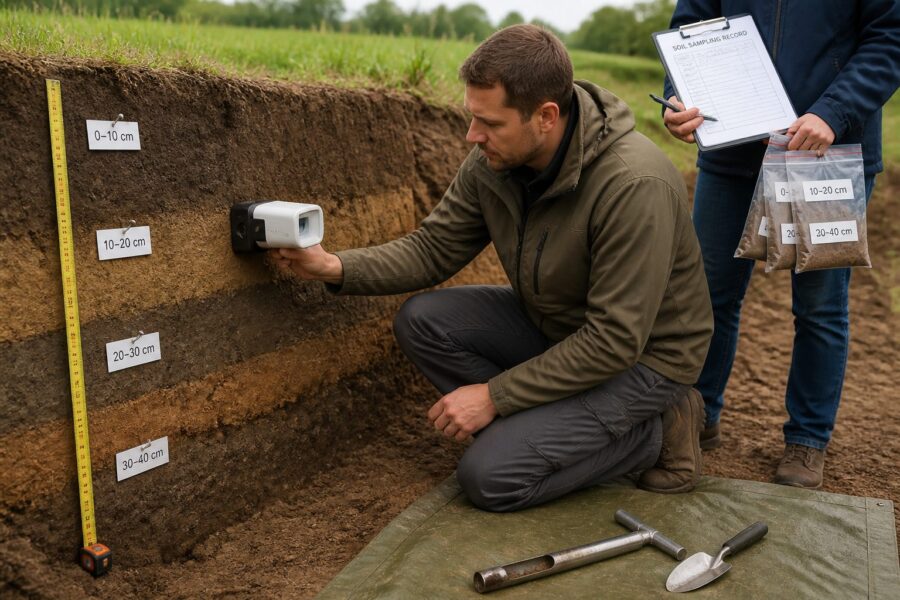
Standard depth increment schemes are critical to achieving reliable depth-stratified soil analysis and play a fundamental role in agricultural and environmental research. Commonly, these schemes include sampling depths of 0-5 cm, 5-15 cm, and 15-30 cm, which provide a standardized framework for analyzing soil properties at varying depths.
These increments allow researchers and farmers to analyze soil properties at different depths effectively, which is essential for understanding the vertical variability of soils. By using these standardized intervals, it becomes easier to compare results across different studies and locations, enabling a more comprehensive understanding of regional soil conditions.
Other systems might adopt 0-10 cm and 10-20 cm increments for more detailed assessments that can capture subtle changes in soil properties. These variations can provide valuable insights into how different soil layers interact and influence overall soil health, leading to more informed agricultural practices.
Choosing the right depth increments is essential for accurately capturing vertical soil variability, as different crops may have varying root depths and nutrient uptake patterns. This choice should reflect the specific objectives of the study or farming practices in question, ensuring that the most relevant data is collected for effective decision-making.
Ultimately, employing systematic depth increments fosters a better understanding of soil dynamics and enhances the ability to manage soil health effectively. This understanding can inform nutrient management and improve crop productivity, creating a more sustainable agricultural system.
Core Extraction Methods That Minimize Sample Disturbance for Spectroscopy
Minimizing sample disturbance during core extraction is vital for accurate soil spectroscopy results that reflect the true nature of the soil. Methods such as the use of PVC tubes or specialized corers can help in obtaining undisturbed soil samples that maintain the original structure and properties of the soil.
These techniques ensure that the soil structure and moisture content remain intact, preserving the integrity of the sample for analysis. This is especially important for depth-stratified soil analysis, where the layering must be maintained to accurately assess the properties of each soil horizon.
| Core Method | Description | Advantages |
|---|---|---|
| PVC Tube | Using a rigid tube to extract soil cores | Preserves soil structure and minimizes disturbance |
| Soil Auger | A drill-like tool to obtain samples from various depths | Effective for deeper layers and heterogeneous soils |
| Modified Dutch Auger | Reduces disturbance during extraction to maintain sample integrity | High sample integrity with minimal soil disturbance |
| Hand Coring | Manual extraction for small areas, allowing for targeted sampling | Low cost, easy to implement, and suitable for small-scale studies |
Employing these core extraction methods enhances the reliability of results obtained from soil spectroscopy, which is critical for understanding soil characteristics. Accurate sampling directly correlates with the precision of subsequent analyses and interpretations, making it essential for effective soil management.
Processing Depth-Stratified Samples for Consistent Spectral Acquisition
Once depth-stratified samples are collected, proper processing is crucial for consistent spectral acquisition and reliable analysis. This involves drying, grinding, and homogenizing the samples to ensure uniformity, which can significantly impact the quality of the spectral data obtained.
Such processing minimizes variability that could arise from changing moisture levels or differences in particle sizes, which could otherwise skew the results. Consistency in sample preparation ultimately enhances the accuracy of soil profile spectroscopy results, making it essential for robust analyses.
- Drying samples uniformly to a consistent moisture level
- Grinding to similar particle sizes to ensure homogeneity
- Homogenizing for even distribution of soil material
- Minimizing contamination risk during processing
- Ensuring proper storage conditions to maintain sample integrity
By following standardized processing protocols, researchers can achieve reproducible results across different studies and locations, enhancing the reliability of the findings. This reliability is essential for building effective calibration models that can be applied in real-world agricultural scenarios.
Additionally, consistent processing allows for better comparison between different soil profiles, facilitating the identification of trends and patterns in soil health. It aids in the development of predictive models that account for vertical soil variability, ultimately contributing to improved soil management and agricultural practices.
How to Build Depth-Specific Calibration Models or Apply Generic Ones
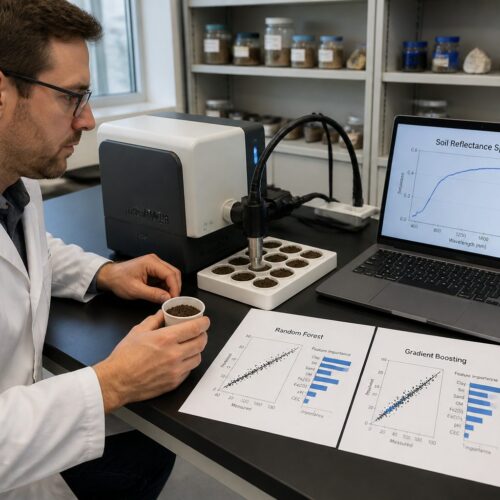
Building depth-specific calibration models is vital for accurate soil analysis using spectroscopy, as these models provide tailored insights for specific soil conditions. These models take into account the unique spectral response of soil at different depths, creating a more precise understanding of soil properties.
To create these models, data from depth-stratified samples are analyzed to establish relationships between spectral features and soil properties, which can involve statistical techniques such as regression analysis and machine learning algorithms. These approaches enable the identification of key spectral indicators that correlate with important soil characteristics, enhancing the predictive power of the models.
Alternatively, generic calibration models can be applied when specific depth models are unavailable, providing a more generalized understanding of soil properties. These models are based on broader datasets and can still provide useful insights, although they may lack the precision of depth-specific alternatives and should be used with caution.
When using generic models, it is essential to validate their predictions against local soil conditions to ensure their applicability. This validation process ensures that any recommendations derived from the models are relevant and applicable to specific agricultural contexts, ultimately enhancing their effectiveness.
As the demand for precision agriculture grows, developing robust calibration models becomes increasingly important for farmers. This will enable them to make data-driven decisions that enhance crop productivity and sustainability, ensuring the long-term viability of agricultural systems.
Visualizing Vertical Soil Property Profiles From Spectral Data
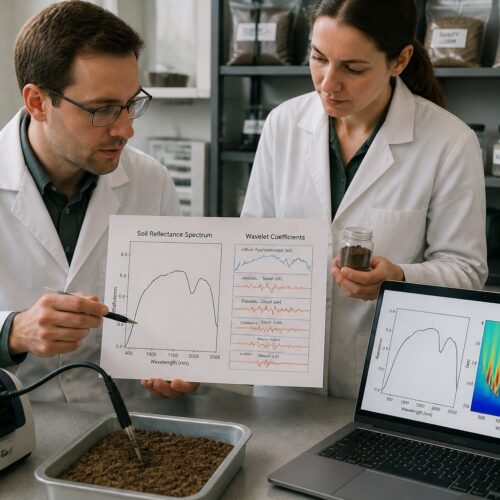
Visualizing vertical soil property profiles is essential for interpreting spectral data effectively, as it can provide clarity and insight into complex soil information. Graphical representations can help convey complex soil information in an understandable format, making it easier for stakeholders to grasp the significance of the data.
Common visualization techniques include using profiles, heat maps, and 3D surface plots that highlight the distribution of various soil properties. These methods allow stakeholders to easily identify trends and anomalies within soil properties at various depths, which can inform better management decisions.
- Profile plots showing property changes across depths for clear comparisons
- Heat maps for nutrient distribution to identify rich and poor zones
- 3D surface plots for comprehensive views of soil attributes
- Comparative graphs for different depths to highlight variability
- Interactive maps for user engagement and detailed exploration of data
By employing these visualization techniques, farmers and agronomists can make informed decisions based on the soil’s vertical variability, leading to more targeted nutrient management strategies. This can ultimately improve crop outcomes and drive better agricultural practices that are more attuned to soil health.
Ultimately, effective visualization of soil profiles enhances communication among stakeholders, including farmers, agronomists, and researchers. This contributes to a shared understanding of soil health and the necessary actions to improve it, fostering collaboration and innovation in soil management practices.
Integrating Depth Profile Data With Agronomic Nutrient Management
Integrating depth profile data into agronomic nutrient management can significantly improve efficiency and effectiveness in farming practices. By understanding how soil properties change with depth, farmers can tailor their nutrient applications accordingly, leading to more precise and informed decisions.
This targeted approach helps in maximizing nutrient uptake by crops while minimizing waste and reducing costs associated with fertilizer application. It also reduces the risk of nutrient runoff, which is crucial for environmental sustainability and the protection of water quality in surrounding ecosystems.
For instance, if analysis shows that certain nutrients are concentrated in deeper layers, farmers can adjust their fertilization strategies to ensure that the crops receive optimal nutrition throughout their growing cycle. This not only enhances crop performance but also contributes to resource conservation and reduced environmental impact.
Additionally, integrating depth profile data aids in developing soil health management practices, which are essential for long-term sustainability. This contributes to improved crop resilience against adverse conditions, such as drought or nutrient deficiencies, which can threaten agricultural productivity.
In summary, leveraging depth-stratified soil analysis enhances nutrient management strategies that are both efficient and environmentally responsible. This leads to improved crop yields and a more sustainable agricultural system that can meet the demands of a growing global population.
Carbon Stock Calculations From Depth-Stratified Spectral SOC Estimates
Estimating soil organic carbon (SOC) stocks is crucial for understanding soil health and carbon sequestration potential, both of which are vital for sustainable agriculture. Depth-stratified spectral analysis provides a more accurate assessment of SOC across different soil layers, allowing for better management practices.
By calculating SOC at various depths, researchers can develop a comprehensive view of carbon stocks in agricultural systems, which is vital for evaluating the role of soils in mitigating climate change. This information can be instrumental in informing policy decisions and agricultural practices aimed at enhancing soil carbon storage.
Depth-stratified estimates also allow for more precise tracking of changes in carbon stocks over time, which is essential for assessing the effectiveness of soil management practices aimed at enhancing carbon sequestration. This ability to monitor changes can provide valuable feedback to farmers and researchers, guiding future soil management strategies.
Furthermore, integrating SOC data with other soil property assessments can provide insights into overall soil health, helping to create a holistic understanding of soil systems. This approach supports better decision-making in soil management practices, ultimately enhancing agricultural sustainability.
Ultimately, accurate carbon stock calculations using depth-stratified spectral SOC estimates are essential for promoting sustainable agriculture. This contributes to both environmental conservation and agricultural productivity, allowing for a balanced approach to food production and ecological health.
Recommended Protocols for Reproducible Vertical Soil Spectral Profiling
For effective vertical soil spectral profiling, adhering to recommended protocols is essential for ensuring the reliability and reproducibility of results. These protocols provide a structured approach to soil analysis that enhances the trustworthiness of the findings.
Key protocols include systematic core sampling, consistent processing methods, and standardized spectral acquisition techniques that help streamline the analytical process. Following these guidelines enhances the accuracy of the insights gained from soil spectroscopy, which is crucial for effective soil management.
Additionally, regular calibration of equipment and validation of models against local data are critical steps in maintaining the integrity of the spectral data. This ensures that the results remain applicable and relevant to current agricultural practices, allowing for more effective decision-making.
In conclusion, implementing these recommended protocols fosters a more robust understanding of vertical soil variability. This contributes to enhanced agricultural practices and improved soil management strategies that are essential for sustainable farming and environmental conservation.