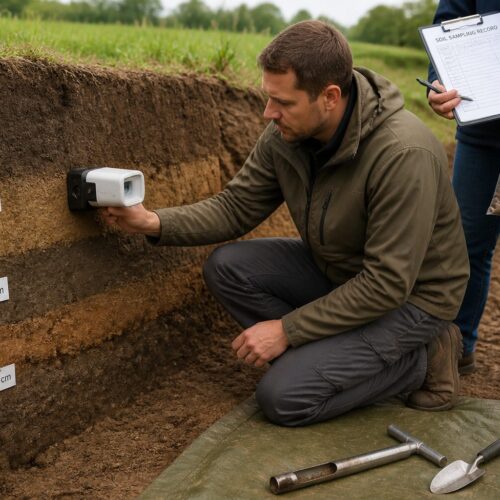


External validation involves testing the model on a completely separate dataset that was not used during the model training process, providing a more accurate assessment of its predictive capabilities in real-world scenarios. This is crucial for avoiding overfitting and ensuring that the model is applicable in practical applications, helping to bridge the gap between theoretical modeling and actual agricultural practice.
By integrating external validation sets, researchers can gain a clearer understanding of their model’s strengths and limitations, ensuring that their findings are both credible and applicable. This additional validation layer enhances the overall reliability and applicability of soil spectral models, making them more useful for stakeholders in the agricultural sector.
In conclusion, external validation sets are indispensable for robust soil spectral model validation, as they provide an essential check on the model’s performance and applicability. Researchers who adopt this comprehensive approach will produce models that are better suited for practical applications in precision agriculture, ultimately leading to improved farming outcomes.
Common Cross-Validation Mistakes in Soil Spectroscopy Publications
Despite the importance of cross-validation, several common mistakes can undermine the integrity of soil spectroscopy publications and reduce the credibility of the findings presented. One frequent error is using inappropriate cross-validation techniques that do not suit the dataset’s characteristics or the specific research questions being addressed, leading to misleading results.
Additionally, failing to report the cross-validation methodology in detail can lead to a lack of transparency in research, making it difficult for others to replicate the findings or build upon them. This lack of transparency can undermine the reproducibility of results and diminish the credibility of the findings, hindering progress in the field.
Another common pitfall is neglecting to consider the potential for overfitting, often due to inadequate model evaluation and validation practices. Researchers must remain vigilant about this risk to maintain the quality of their models and ensure that their predictions are grounded in sound scientific principles.
Moreover, using only internal validation without external checks can lead to misleading conclusions about model performance, giving a false sense of confidence in the model’s generalizability. By avoiding these pitfalls and adhering to best practices in cross-validation, researchers can significantly improve the reliability of their soil spectral models and the accuracy of their findings.
In summary, awareness of common cross-validation mistakes is essential for advancing soil spectroscopy and for fostering a culture of rigorous scientific inquiry. Researchers who prioritize proper validation techniques and transparency will contribute to more accurate and credible findings in the field, ultimately benefiting agricultural practices and sustainability efforts.
When training error continues to decrease while validation error begins to increase, it indicates that the model is learning noise rather than meaningful patterns inherent in the data. This divergence serves as a clear warning sign that the model may be overfitting, thus compromising its predictive capabilities.
Monitoring this relationship allows researchers to take corrective measures, such as simplifying the model architecture or employing regularization techniques to mitigate overfitting. By addressing overfitting proactively, researchers can enhance the predictive power of their soil spectral models, leading to more accurate and reliable outcomes.
Ultimately, understanding the dynamics between training and validation errors is vital for effective model validation and for maintaining the quality of predictive models in soil spectroscopy. Researchers who stay vigilant in this regard will contribute to the advancement of soil spectroscopy and the development of better agricultural practices.
In summary, actively detecting overfitting is essential for ensuring model reliability and robustness in predictions. By continuously monitoring training and validation error divergence, researchers can maintain high standards in soil spectral modeling, leading to more trustworthy and applicable results.
External Validation Sets: Why Internal CV Alone Is Insufficient
While internal cross-validation is a valuable tool for assessing model performance, relying solely on it can be misleading and may not provide a complete picture of a model’s generalizability. External validation sets are essential for confirming the generalizability of soil spectral models beyond the training data, providing a necessary layer of assurance regarding their predictive capabilities.
External validation involves testing the model on a completely separate dataset that was not used during the model training process, providing a more accurate assessment of its predictive capabilities in real-world scenarios. This is crucial for avoiding overfitting and ensuring that the model is applicable in practical applications, helping to bridge the gap between theoretical modeling and actual agricultural practice.
By integrating external validation sets, researchers can gain a clearer understanding of their model’s strengths and limitations, ensuring that their findings are both credible and applicable. This additional validation layer enhances the overall reliability and applicability of soil spectral models, making them more useful for stakeholders in the agricultural sector.
In conclusion, external validation sets are indispensable for robust soil spectral model validation, as they provide an essential check on the model’s performance and applicability. Researchers who adopt this comprehensive approach will produce models that are better suited for practical applications in precision agriculture, ultimately leading to improved farming outcomes.
Common Cross-Validation Mistakes in Soil Spectroscopy Publications
Despite the importance of cross-validation, several common mistakes can undermine the integrity of soil spectroscopy publications and reduce the credibility of the findings presented. One frequent error is using inappropriate cross-validation techniques that do not suit the dataset’s characteristics or the specific research questions being addressed, leading to misleading results.
Additionally, failing to report the cross-validation methodology in detail can lead to a lack of transparency in research, making it difficult for others to replicate the findings or build upon them. This lack of transparency can undermine the reproducibility of results and diminish the credibility of the findings, hindering progress in the field.
Another common pitfall is neglecting to consider the potential for overfitting, often due to inadequate model evaluation and validation practices. Researchers must remain vigilant about this risk to maintain the quality of their models and ensure that their predictions are grounded in sound scientific principles.
Moreover, using only internal validation without external checks can lead to misleading conclusions about model performance, giving a false sense of confidence in the model’s generalizability. By avoiding these pitfalls and adhering to best practices in cross-validation, researchers can significantly improve the reliability of their soil spectral models and the accuracy of their findings.
In summary, awareness of common cross-validation mistakes is essential for advancing soil spectroscopy and for fostering a culture of rigorous scientific inquiry. Researchers who prioritize proper validation techniques and transparency will contribute to more accurate and credible findings in the field, ultimately benefiting agricultural practices and sustainability efforts.
RMSECV reflects the model’s performance during cross-validation, providing insights into how well the model fits the training data, while RMSEP indicates how well the model predicts new, unseen data in real-world situations. Both metrics provide valuable insights that help researchers refine their models, guiding them toward improvements that enhance predictive power and applicability.
Additionally, bias metrics serve as indicators of systematic errors within the model, highlighting areas where the model may consistently over- or under-predict soil properties. Proper interpretation of these metrics allows researchers to identify areas for improvement and ensure that their models are grounded in reliable soil chemistry, thereby enhancing their confidence in the results.
Ultimately, a thorough understanding of RMSECV, RMSEP, and bias metrics is vital for effective soil spectral model validation, as they provide the foundation for evaluating model performance. By correctly interpreting these values, researchers can confidently evaluate their models and make informed adjustments as needed, leading to enhanced accuracy in soil assessments.
In conclusion, accurate interpretation of model metrics is crucial for the advancement of soil spectroscopy and for fostering trust in the findings presented. Researchers who prioritize these aspects will contribute to the development of more reliable predictive models that can support sustainable agricultural practices and informed decision-making.
Detecting Overfitting Through Training vs. Validation Error Divergence
Detecting overfitting is a crucial aspect of developing reliable soil spectral models that can perform well across different datasets and conditions. One effective method for identifying overfitting is to analyze the divergence between training and validation errors, providing insights into the model’s learning process.
When training error continues to decrease while validation error begins to increase, it indicates that the model is learning noise rather than meaningful patterns inherent in the data. This divergence serves as a clear warning sign that the model may be overfitting, thus compromising its predictive capabilities.
Monitoring this relationship allows researchers to take corrective measures, such as simplifying the model architecture or employing regularization techniques to mitigate overfitting. By addressing overfitting proactively, researchers can enhance the predictive power of their soil spectral models, leading to more accurate and reliable outcomes.
Ultimately, understanding the dynamics between training and validation errors is vital for effective model validation and for maintaining the quality of predictive models in soil spectroscopy. Researchers who stay vigilant in this regard will contribute to the advancement of soil spectroscopy and the development of better agricultural practices.
In summary, actively detecting overfitting is essential for ensuring model reliability and robustness in predictions. By continuously monitoring training and validation error divergence, researchers can maintain high standards in soil spectral modeling, leading to more trustworthy and applicable results.
External Validation Sets: Why Internal CV Alone Is Insufficient
While internal cross-validation is a valuable tool for assessing model performance, relying solely on it can be misleading and may not provide a complete picture of a model’s generalizability. External validation sets are essential for confirming the generalizability of soil spectral models beyond the training data, providing a necessary layer of assurance regarding their predictive capabilities.
External validation involves testing the model on a completely separate dataset that was not used during the model training process, providing a more accurate assessment of its predictive capabilities in real-world scenarios. This is crucial for avoiding overfitting and ensuring that the model is applicable in practical applications, helping to bridge the gap between theoretical modeling and actual agricultural practice.
By integrating external validation sets, researchers can gain a clearer understanding of their model’s strengths and limitations, ensuring that their findings are both credible and applicable. This additional validation layer enhances the overall reliability and applicability of soil spectral models, making them more useful for stakeholders in the agricultural sector.
In conclusion, external validation sets are indispensable for robust soil spectral model validation, as they provide an essential check on the model’s performance and applicability. Researchers who adopt this comprehensive approach will produce models that are better suited for practical applications in precision agriculture, ultimately leading to improved farming outcomes.
Common Cross-Validation Mistakes in Soil Spectroscopy Publications
Despite the importance of cross-validation, several common mistakes can undermine the integrity of soil spectroscopy publications and reduce the credibility of the findings presented. One frequent error is using inappropriate cross-validation techniques that do not suit the dataset’s characteristics or the specific research questions being addressed, leading to misleading results.
Additionally, failing to report the cross-validation methodology in detail can lead to a lack of transparency in research, making it difficult for others to replicate the findings or build upon them. This lack of transparency can undermine the reproducibility of results and diminish the credibility of the findings, hindering progress in the field.
Another common pitfall is neglecting to consider the potential for overfitting, often due to inadequate model evaluation and validation practices. Researchers must remain vigilant about this risk to maintain the quality of their models and ensure that their predictions are grounded in sound scientific principles.
Moreover, using only internal validation without external checks can lead to misleading conclusions about model performance, giving a false sense of confidence in the model’s generalizability. By avoiding these pitfalls and adhering to best practices in cross-validation, researchers can significantly improve the reliability of their soil spectral models and the accuracy of their findings.
In summary, awareness of common cross-validation mistakes is essential for advancing soil spectroscopy and for fostering a culture of rigorous scientific inquiry. Researchers who prioritize proper validation techniques and transparency will contribute to more accurate and credible findings in the field, ultimately benefiting agricultural practices and sustainability efforts.
This method is particularly useful for capturing the dynamics of spectral data, which can vary considerably across different wavelengths and require careful consideration during model validation. By employing contiguous block cross-validation, researchers can further enhance model robustness by validating against sequential data blocks, ensuring that the model remains stable and reliable across the entire spectrum.
- Overlapping data segments ensure comprehensive coverage
- Increased model stability across spectral ranges
- Sequential data validation for consistency in results
- Improved spectral analysis through targeted evaluation
- Efficient use of available data for robust modeling
Both methods aim to address the unique characteristics of spectral data, ensuring comprehensive model evaluation that accounts for the variability inherent in soil properties. By utilizing these techniques, researchers can better understand the behavior of their models across various spectral ranges, leading to improved predictions and insights into soil characteristics.
In summary, Venetian blinds and contiguous block cross-validation are invaluable for advancing soil spectroscopy by providing researchers with powerful tools for enhancing model validation and improving the accuracy of predictions. Their application can lead to more reliable soil spectral models that are better equipped to handle real-world complexities and variabilities.
Interpreting RMSECV, RMSEP and Bias Metrics Correctly
Root Mean Square Error of Cross-Validation (RMSECV) and Root Mean Square Error of Prediction (RMSEP) are critical metrics for evaluating soil spectral models and understanding their performance characteristics. Understanding these metrics is essential for assessing model accuracy and diagnosing potential overfitting, which can undermine the reliability of predictions.
RMSECV reflects the model’s performance during cross-validation, providing insights into how well the model fits the training data, while RMSEP indicates how well the model predicts new, unseen data in real-world situations. Both metrics provide valuable insights that help researchers refine their models, guiding them toward improvements that enhance predictive power and applicability.
Additionally, bias metrics serve as indicators of systematic errors within the model, highlighting areas where the model may consistently over- or under-predict soil properties. Proper interpretation of these metrics allows researchers to identify areas for improvement and ensure that their models are grounded in reliable soil chemistry, thereby enhancing their confidence in the results.
Ultimately, a thorough understanding of RMSECV, RMSEP, and bias metrics is vital for effective soil spectral model validation, as they provide the foundation for evaluating model performance. By correctly interpreting these values, researchers can confidently evaluate their models and make informed adjustments as needed, leading to enhanced accuracy in soil assessments.
In conclusion, accurate interpretation of model metrics is crucial for the advancement of soil spectroscopy and for fostering trust in the findings presented. Researchers who prioritize these aspects will contribute to the development of more reliable predictive models that can support sustainable agricultural practices and informed decision-making.
Detecting Overfitting Through Training vs. Validation Error Divergence
Detecting overfitting is a crucial aspect of developing reliable soil spectral models that can perform well across different datasets and conditions. One effective method for identifying overfitting is to analyze the divergence between training and validation errors, providing insights into the model’s learning process.
When training error continues to decrease while validation error begins to increase, it indicates that the model is learning noise rather than meaningful patterns inherent in the data. This divergence serves as a clear warning sign that the model may be overfitting, thus compromising its predictive capabilities.
Monitoring this relationship allows researchers to take corrective measures, such as simplifying the model architecture or employing regularization techniques to mitigate overfitting. By addressing overfitting proactively, researchers can enhance the predictive power of their soil spectral models, leading to more accurate and reliable outcomes.
Ultimately, understanding the dynamics between training and validation errors is vital for effective model validation and for maintaining the quality of predictive models in soil spectroscopy. Researchers who stay vigilant in this regard will contribute to the advancement of soil spectroscopy and the development of better agricultural practices.
In summary, actively detecting overfitting is essential for ensuring model reliability and robustness in predictions. By continuously monitoring training and validation error divergence, researchers can maintain high standards in soil spectral modeling, leading to more trustworthy and applicable results.
External Validation Sets: Why Internal CV Alone Is Insufficient
While internal cross-validation is a valuable tool for assessing model performance, relying solely on it can be misleading and may not provide a complete picture of a model’s generalizability. External validation sets are essential for confirming the generalizability of soil spectral models beyond the training data, providing a necessary layer of assurance regarding their predictive capabilities.
External validation involves testing the model on a completely separate dataset that was not used during the model training process, providing a more accurate assessment of its predictive capabilities in real-world scenarios. This is crucial for avoiding overfitting and ensuring that the model is applicable in practical applications, helping to bridge the gap between theoretical modeling and actual agricultural practice.
By integrating external validation sets, researchers can gain a clearer understanding of their model’s strengths and limitations, ensuring that their findings are both credible and applicable. This additional validation layer enhances the overall reliability and applicability of soil spectral models, making them more useful for stakeholders in the agricultural sector.
In conclusion, external validation sets are indispensable for robust soil spectral model validation, as they provide an essential check on the model’s performance and applicability. Researchers who adopt this comprehensive approach will produce models that are better suited for practical applications in precision agriculture, ultimately leading to improved farming outcomes.
Common Cross-Validation Mistakes in Soil Spectroscopy Publications
Despite the importance of cross-validation, several common mistakes can undermine the integrity of soil spectroscopy publications and reduce the credibility of the findings presented. One frequent error is using inappropriate cross-validation techniques that do not suit the dataset’s characteristics or the specific research questions being addressed, leading to misleading results.
Additionally, failing to report the cross-validation methodology in detail can lead to a lack of transparency in research, making it difficult for others to replicate the findings or build upon them. This lack of transparency can undermine the reproducibility of results and diminish the credibility of the findings, hindering progress in the field.
Another common pitfall is neglecting to consider the potential for overfitting, often due to inadequate model evaluation and validation practices. Researchers must remain vigilant about this risk to maintain the quality of their models and ensure that their predictions are grounded in sound scientific principles.
Moreover, using only internal validation without external checks can lead to misleading conclusions about model performance, giving a false sense of confidence in the model’s generalizability. By avoiding these pitfalls and adhering to best practices in cross-validation, researchers can significantly improve the reliability of their soil spectral models and the accuracy of their findings.
In summary, awareness of common cross-validation mistakes is essential for advancing soil spectroscopy and for fostering a culture of rigorous scientific inquiry. Researchers who prioritize proper validation techniques and transparency will contribute to more accurate and credible findings in the field, ultimately benefiting agricultural practices and sustainability efforts.
By prioritizing diversity in the selected samples, the Kennard-Stone method ensures that the calibration set captures the variability of the entire dataset, which is crucial for developing models that can generalize well to new data. This results in a more robust and reliable soil spectral model that can provide accurate predictions across various soil types and conditions.
Using the Kennard-Stone method helps reduce overfitting by providing a well-distributed training set that encompasses the full spectrum of soil characteristics. Consequently, the validation results become more indicative of the model’s performance on unseen data, enhancing the confidence in its applicability in real-world scenarios.
Overall, employing the Kennard-Stone sample selection method can greatly enhance the efficacy of soil spectral modeling by ensuring that the training and validation sets are well-balanced and representative. Researchers who utilize this technique can expect improved model performance, greater validity in their analyses, and more reliable outcomes in their studies.
In summary, the Kennard-Stone algorithm offers an effective approach for sample selection in diverse soil datasets, particularly in the context of soil spectroscopy. By balancing calibration and validation sets through this method, it contributes to the development of more trustworthy soil spectral models that can be relied upon for accurate soil assessments.
Venetian Blinds and Contiguous Block Cross-Validation for Spectral Data
Venetian blinds and contiguous block cross-validation are specialized techniques designed for handling spectral data in soil spectroscopy, addressing the unique challenges posed by this type of data. Venetian blinds involve splitting the spectral dataset into overlapping sections, allowing for a thorough examination of model stability and performance across different spectral ranges.
This method is particularly useful for capturing the dynamics of spectral data, which can vary considerably across different wavelengths and require careful consideration during model validation. By employing contiguous block cross-validation, researchers can further enhance model robustness by validating against sequential data blocks, ensuring that the model remains stable and reliable across the entire spectrum.
- Overlapping data segments ensure comprehensive coverage
- Increased model stability across spectral ranges
- Sequential data validation for consistency in results
- Improved spectral analysis through targeted evaluation
- Efficient use of available data for robust modeling
Both methods aim to address the unique characteristics of spectral data, ensuring comprehensive model evaluation that accounts for the variability inherent in soil properties. By utilizing these techniques, researchers can better understand the behavior of their models across various spectral ranges, leading to improved predictions and insights into soil characteristics.
In summary, Venetian blinds and contiguous block cross-validation are invaluable for advancing soil spectroscopy by providing researchers with powerful tools for enhancing model validation and improving the accuracy of predictions. Their application can lead to more reliable soil spectral models that are better equipped to handle real-world complexities and variabilities.
Interpreting RMSECV, RMSEP and Bias Metrics Correctly
Root Mean Square Error of Cross-Validation (RMSECV) and Root Mean Square Error of Prediction (RMSEP) are critical metrics for evaluating soil spectral models and understanding their performance characteristics. Understanding these metrics is essential for assessing model accuracy and diagnosing potential overfitting, which can undermine the reliability of predictions.
RMSECV reflects the model’s performance during cross-validation, providing insights into how well the model fits the training data, while RMSEP indicates how well the model predicts new, unseen data in real-world situations. Both metrics provide valuable insights that help researchers refine their models, guiding them toward improvements that enhance predictive power and applicability.
Additionally, bias metrics serve as indicators of systematic errors within the model, highlighting areas where the model may consistently over- or under-predict soil properties. Proper interpretation of these metrics allows researchers to identify areas for improvement and ensure that their models are grounded in reliable soil chemistry, thereby enhancing their confidence in the results.
Ultimately, a thorough understanding of RMSECV, RMSEP, and bias metrics is vital for effective soil spectral model validation, as they provide the foundation for evaluating model performance. By correctly interpreting these values, researchers can confidently evaluate their models and make informed adjustments as needed, leading to enhanced accuracy in soil assessments.
In conclusion, accurate interpretation of model metrics is crucial for the advancement of soil spectroscopy and for fostering trust in the findings presented. Researchers who prioritize these aspects will contribute to the development of more reliable predictive models that can support sustainable agricultural practices and informed decision-making.
Detecting Overfitting Through Training vs. Validation Error Divergence
Detecting overfitting is a crucial aspect of developing reliable soil spectral models that can perform well across different datasets and conditions. One effective method for identifying overfitting is to analyze the divergence between training and validation errors, providing insights into the model’s learning process.
When training error continues to decrease while validation error begins to increase, it indicates that the model is learning noise rather than meaningful patterns inherent in the data. This divergence serves as a clear warning sign that the model may be overfitting, thus compromising its predictive capabilities.
Monitoring this relationship allows researchers to take corrective measures, such as simplifying the model architecture or employing regularization techniques to mitigate overfitting. By addressing overfitting proactively, researchers can enhance the predictive power of their soil spectral models, leading to more accurate and reliable outcomes.
Ultimately, understanding the dynamics between training and validation errors is vital for effective model validation and for maintaining the quality of predictive models in soil spectroscopy. Researchers who stay vigilant in this regard will contribute to the advancement of soil spectroscopy and the development of better agricultural practices.
In summary, actively detecting overfitting is essential for ensuring model reliability and robustness in predictions. By continuously monitoring training and validation error divergence, researchers can maintain high standards in soil spectral modeling, leading to more trustworthy and applicable results.
External Validation Sets: Why Internal CV Alone Is Insufficient
While internal cross-validation is a valuable tool for assessing model performance, relying solely on it can be misleading and may not provide a complete picture of a model’s generalizability. External validation sets are essential for confirming the generalizability of soil spectral models beyond the training data, providing a necessary layer of assurance regarding their predictive capabilities.
External validation involves testing the model on a completely separate dataset that was not used during the model training process, providing a more accurate assessment of its predictive capabilities in real-world scenarios. This is crucial for avoiding overfitting and ensuring that the model is applicable in practical applications, helping to bridge the gap between theoretical modeling and actual agricultural practice.
By integrating external validation sets, researchers can gain a clearer understanding of their model’s strengths and limitations, ensuring that their findings are both credible and applicable. This additional validation layer enhances the overall reliability and applicability of soil spectral models, making them more useful for stakeholders in the agricultural sector.
In conclusion, external validation sets are indispensable for robust soil spectral model validation, as they provide an essential check on the model’s performance and applicability. Researchers who adopt this comprehensive approach will produce models that are better suited for practical applications in precision agriculture, ultimately leading to improved farming outcomes.
Common Cross-Validation Mistakes in Soil Spectroscopy Publications
Despite the importance of cross-validation, several common mistakes can undermine the integrity of soil spectroscopy publications and reduce the credibility of the findings presented. One frequent error is using inappropriate cross-validation techniques that do not suit the dataset’s characteristics or the specific research questions being addressed, leading to misleading results.
Additionally, failing to report the cross-validation methodology in detail can lead to a lack of transparency in research, making it difficult for others to replicate the findings or build upon them. This lack of transparency can undermine the reproducibility of results and diminish the credibility of the findings, hindering progress in the field.
Another common pitfall is neglecting to consider the potential for overfitting, often due to inadequate model evaluation and validation practices. Researchers must remain vigilant about this risk to maintain the quality of their models and ensure that their predictions are grounded in sound scientific principles.
Moreover, using only internal validation without external checks can lead to misleading conclusions about model performance, giving a false sense of confidence in the model’s generalizability. By avoiding these pitfalls and adhering to best practices in cross-validation, researchers can significantly improve the reliability of their soil spectral models and the accuracy of their findings.
In summary, awareness of common cross-validation mistakes is essential for advancing soil spectroscopy and for fostering a culture of rigorous scientific inquiry. Researchers who prioritize proper validation techniques and transparency will contribute to more accurate and credible findings in the field, ultimately benefiting agricultural practices and sustainability efforts.
Implementing stratified sampling helps to minimize bias by ensuring that minority classes, such as less common soil types or specific soil properties, are adequately represented in the validation process. This is particularly important in soil spectroscopy, where certain soil types may be underrepresented in the dataset, leading to skewed results and unreliable predictions.
| Soil Type | Proportion in Dataset | Samples in Cross-Validation |
|---|---|---|
| Clay | 30% | 3 |
| Sandy | 50% | 5 |
| Silty | 20% | 2 |
By ensuring that each fold in K-fold cross-validation contains a representative sample of the different soil types, researchers can improve model performance and increase the accuracy of predictions made from soil spectral data. This approach leads to more reliable predictions and reduces the risk of model overfitting, thereby enhancing the overall utility of the spectral models in various agricultural contexts.
In conclusion, stratified sampling is a crucial consideration in the development of soil spectral models that accurately reflect the complexities of the soils being studied. By using this method, researchers can enhance the representativeness of their datasets, resulting in improved model validation outcomes that support effective decision-making in agriculture.
Kennard-Stone Sample Selection for Balanced Calibration and Validation Sets
The Kennard-Stone algorithm is a powerful method for selecting representative samples from a dataset, particularly in the context of soil spectroscopy. This technique is particularly useful in creating balanced calibration and validation sets that ensure the model is trained on a diverse set of observations, thereby capturing the full range of variability present in the soil data.
By prioritizing diversity in the selected samples, the Kennard-Stone method ensures that the calibration set captures the variability of the entire dataset, which is crucial for developing models that can generalize well to new data. This results in a more robust and reliable soil spectral model that can provide accurate predictions across various soil types and conditions.
Using the Kennard-Stone method helps reduce overfitting by providing a well-distributed training set that encompasses the full spectrum of soil characteristics. Consequently, the validation results become more indicative of the model’s performance on unseen data, enhancing the confidence in its applicability in real-world scenarios.
Overall, employing the Kennard-Stone sample selection method can greatly enhance the efficacy of soil spectral modeling by ensuring that the training and validation sets are well-balanced and representative. Researchers who utilize this technique can expect improved model performance, greater validity in their analyses, and more reliable outcomes in their studies.
In summary, the Kennard-Stone algorithm offers an effective approach for sample selection in diverse soil datasets, particularly in the context of soil spectroscopy. By balancing calibration and validation sets through this method, it contributes to the development of more trustworthy soil spectral models that can be relied upon for accurate soil assessments.
Venetian Blinds and Contiguous Block Cross-Validation for Spectral Data
Venetian blinds and contiguous block cross-validation are specialized techniques designed for handling spectral data in soil spectroscopy, addressing the unique challenges posed by this type of data. Venetian blinds involve splitting the spectral dataset into overlapping sections, allowing for a thorough examination of model stability and performance across different spectral ranges.
This method is particularly useful for capturing the dynamics of spectral data, which can vary considerably across different wavelengths and require careful consideration during model validation. By employing contiguous block cross-validation, researchers can further enhance model robustness by validating against sequential data blocks, ensuring that the model remains stable and reliable across the entire spectrum.
- Overlapping data segments ensure comprehensive coverage
- Increased model stability across spectral ranges
- Sequential data validation for consistency in results
- Improved spectral analysis through targeted evaluation
- Efficient use of available data for robust modeling
Both methods aim to address the unique characteristics of spectral data, ensuring comprehensive model evaluation that accounts for the variability inherent in soil properties. By utilizing these techniques, researchers can better understand the behavior of their models across various spectral ranges, leading to improved predictions and insights into soil characteristics.
In summary, Venetian blinds and contiguous block cross-validation are invaluable for advancing soil spectroscopy by providing researchers with powerful tools for enhancing model validation and improving the accuracy of predictions. Their application can lead to more reliable soil spectral models that are better equipped to handle real-world complexities and variabilities.
Interpreting RMSECV, RMSEP and Bias Metrics Correctly
Root Mean Square Error of Cross-Validation (RMSECV) and Root Mean Square Error of Prediction (RMSEP) are critical metrics for evaluating soil spectral models and understanding their performance characteristics. Understanding these metrics is essential for assessing model accuracy and diagnosing potential overfitting, which can undermine the reliability of predictions.
RMSECV reflects the model’s performance during cross-validation, providing insights into how well the model fits the training data, while RMSEP indicates how well the model predicts new, unseen data in real-world situations. Both metrics provide valuable insights that help researchers refine their models, guiding them toward improvements that enhance predictive power and applicability.
Additionally, bias metrics serve as indicators of systematic errors within the model, highlighting areas where the model may consistently over- or under-predict soil properties. Proper interpretation of these metrics allows researchers to identify areas for improvement and ensure that their models are grounded in reliable soil chemistry, thereby enhancing their confidence in the results.
Ultimately, a thorough understanding of RMSECV, RMSEP, and bias metrics is vital for effective soil spectral model validation, as they provide the foundation for evaluating model performance. By correctly interpreting these values, researchers can confidently evaluate their models and make informed adjustments as needed, leading to enhanced accuracy in soil assessments.
In conclusion, accurate interpretation of model metrics is crucial for the advancement of soil spectroscopy and for fostering trust in the findings presented. Researchers who prioritize these aspects will contribute to the development of more reliable predictive models that can support sustainable agricultural practices and informed decision-making.
Detecting Overfitting Through Training vs. Validation Error Divergence
Detecting overfitting is a crucial aspect of developing reliable soil spectral models that can perform well across different datasets and conditions. One effective method for identifying overfitting is to analyze the divergence between training and validation errors, providing insights into the model’s learning process.
When training error continues to decrease while validation error begins to increase, it indicates that the model is learning noise rather than meaningful patterns inherent in the data. This divergence serves as a clear warning sign that the model may be overfitting, thus compromising its predictive capabilities.
Monitoring this relationship allows researchers to take corrective measures, such as simplifying the model architecture or employing regularization techniques to mitigate overfitting. By addressing overfitting proactively, researchers can enhance the predictive power of their soil spectral models, leading to more accurate and reliable outcomes.
Ultimately, understanding the dynamics between training and validation errors is vital for effective model validation and for maintaining the quality of predictive models in soil spectroscopy. Researchers who stay vigilant in this regard will contribute to the advancement of soil spectroscopy and the development of better agricultural practices.
In summary, actively detecting overfitting is essential for ensuring model reliability and robustness in predictions. By continuously monitoring training and validation error divergence, researchers can maintain high standards in soil spectral modeling, leading to more trustworthy and applicable results.
External Validation Sets: Why Internal CV Alone Is Insufficient
While internal cross-validation is a valuable tool for assessing model performance, relying solely on it can be misleading and may not provide a complete picture of a model’s generalizability. External validation sets are essential for confirming the generalizability of soil spectral models beyond the training data, providing a necessary layer of assurance regarding their predictive capabilities.
External validation involves testing the model on a completely separate dataset that was not used during the model training process, providing a more accurate assessment of its predictive capabilities in real-world scenarios. This is crucial for avoiding overfitting and ensuring that the model is applicable in practical applications, helping to bridge the gap between theoretical modeling and actual agricultural practice.
By integrating external validation sets, researchers can gain a clearer understanding of their model’s strengths and limitations, ensuring that their findings are both credible and applicable. This additional validation layer enhances the overall reliability and applicability of soil spectral models, making them more useful for stakeholders in the agricultural sector.
In conclusion, external validation sets are indispensable for robust soil spectral model validation, as they provide an essential check on the model’s performance and applicability. Researchers who adopt this comprehensive approach will produce models that are better suited for practical applications in precision agriculture, ultimately leading to improved farming outcomes.
Common Cross-Validation Mistakes in Soil Spectroscopy Publications
Despite the importance of cross-validation, several common mistakes can undermine the integrity of soil spectroscopy publications and reduce the credibility of the findings presented. One frequent error is using inappropriate cross-validation techniques that do not suit the dataset’s characteristics or the specific research questions being addressed, leading to misleading results.
Additionally, failing to report the cross-validation methodology in detail can lead to a lack of transparency in research, making it difficult for others to replicate the findings or build upon them. This lack of transparency can undermine the reproducibility of results and diminish the credibility of the findings, hindering progress in the field.
Another common pitfall is neglecting to consider the potential for overfitting, often due to inadequate model evaluation and validation practices. Researchers must remain vigilant about this risk to maintain the quality of their models and ensure that their predictions are grounded in sound scientific principles.
Moreover, using only internal validation without external checks can lead to misleading conclusions about model performance, giving a false sense of confidence in the model’s generalizability. By avoiding these pitfalls and adhering to best practices in cross-validation, researchers can significantly improve the reliability of their soil spectral models and the accuracy of their findings.
In summary, awareness of common cross-validation mistakes is essential for advancing soil spectroscopy and for fostering a culture of rigorous scientific inquiry. Researchers who prioritize proper validation techniques and transparency will contribute to more accurate and credible findings in the field, ultimately benefiting agricultural practices and sustainability efforts.
In the realm of soil spectroscopy, robust model validation is crucial for ensuring the accuracy and reliability of predictions made based on spectral data analysis. Cross-validation serves as a non-negotiable component in developing effective soil spectral models, preventing overfitting and enhancing model generalizability, which ultimately allows for better decision-making in agricultural practices.
The challenges of soil variability demand sophisticated techniques for model validation, making cross-validation essential in the context of soil spectroscopy. Understanding different cross-validation methods can significantly impact the outcomes of soil spectral model validation, as each approach has its unique advantages and limitations that can affect the model’s performance.
This article delves into the intricacies of cross-validation in soil spectroscopy, focusing on methods, metrics, and common pitfalls that researchers may encounter. By mastering these concepts, researchers can improve their models and contribute to the advancement of precision agriculture, ultimately leading to more sustainable and productive farming practices.
Why Cross-Validation Is Non-Negotiable in Soil Spectral Modeling
Cross-validation is a critical process for validating soil spectroscopy models due to the inherent variability in soil properties that can arise from differing environmental conditions and management practices. By partitioning the dataset into training and validation subsets, cross-validation helps to mitigate the risk of overfitting, ensuring that the model remains robust and reliable when faced with new, unseen data.
The primary goal of cross-validation is to ensure that the model performs well on unseen data, which is a fundamental requirement for any predictive modeling effort. This is particularly important in soil chemistry, where diverse soil types can lead to varying spectral responses that must be accurately captured to inform agricultural decisions effectively.
Without cross-validation, there is a substantial risk that models may learn noise rather than meaningful patterns present in the data. This could lead to models that perform exceedingly well during training but fail to generalize effectively in practical applications, ultimately resulting in poor predictions and misguided agricultural strategies.
Moreover, cross-validation provides vital insights into the overall performance of the model, including its predictive accuracy and reliability. This is essential for stakeholders in precision agriculture, who rely on accurate soil assessments and predictions to make informed decisions that can significantly impact crop yields and environmental sustainability.
Overall, implementing cross-validation is not just a best practice; it is a necessity for developing trustworthy soil spectral models that can withstand the scrutiny of scientific evaluation and real-world application. By ensuring robust validation, researchers can confidently apply their findings in real-world agricultural contexts, ultimately enhancing the effectiveness of precision agriculture initiatives.
K-Fold vs. Leave-One-Out Cross-Validation: When to Use Each
K-fold cross-validation and leave-one-out cross-validation (LOOCV) are two prevalent techniques used in soil spectral modeling to assess the performance and generalizability of predictive models. K-fold cross-validation divides the dataset into ‘k’ subsets, allowing for a more flexible and computationally efficient validation process that can adapt to various sizes and characteristics of datasets.
In contrast, LOOCV uses each individual data point as a validation set, which can be highly accurate but computationally expensive, particularly with larger datasets. The choice between these methods depends largely on the size of the dataset, the specific objectives of the modeling effort, and the computational resources available to the researcher.
K-fold cross-validation is advantageous for larger datasets, as it balances bias and variance effectively while allowing researchers to gauge model performance across multiple iterations. This method increases confidence in model predictions, as it provides a more comprehensive view of how the model behaves across different subsets of the data.
On the other hand, LOOCV is particularly useful when the dataset is small, maximizing the training data available for each iteration and ensuring that each observation is utilized in the validation process. However, it is essential to monitor for overfitting with LOOCV, as it can sometimes lead to overly optimistic performance estimates that do not hold up in real-world applications.
Ultimately, understanding the strengths and limitations of each method is crucial for effective soil spectral model validation and for making informed choices about which approach to employ. By selecting the appropriate cross-validation technique, researchers can enhance the robustness and applicability of their models, leading to better outcomes in soil analysis and agricultural decision-making.
Stratified Sampling for Cross-Validation in Heterogeneous Soil Datasets
Stratified sampling is an essential technique for cross-validation, particularly in heterogeneous soil datasets that exhibit diverse characteristics across different regions and soil types. This method ensures that each subset of the data reflects the overall distribution of soil characteristics, which is vital for accurate model validation and for achieving representative outcomes.
Implementing stratified sampling helps to minimize bias by ensuring that minority classes, such as less common soil types or specific soil properties, are adequately represented in the validation process. This is particularly important in soil spectroscopy, where certain soil types may be underrepresented in the dataset, leading to skewed results and unreliable predictions.
| Soil Type | Proportion in Dataset | Samples in Cross-Validation |
|---|---|---|
| Clay | 30% | 3 |
| Sandy | 50% | 5 |
| Silty | 20% | 2 |
By ensuring that each fold in K-fold cross-validation contains a representative sample of the different soil types, researchers can improve model performance and increase the accuracy of predictions made from soil spectral data. This approach leads to more reliable predictions and reduces the risk of model overfitting, thereby enhancing the overall utility of the spectral models in various agricultural contexts.
In conclusion, stratified sampling is a crucial consideration in the development of soil spectral models that accurately reflect the complexities of the soils being studied. By using this method, researchers can enhance the representativeness of their datasets, resulting in improved model validation outcomes that support effective decision-making in agriculture.
Kennard-Stone Sample Selection for Balanced Calibration and Validation Sets
The Kennard-Stone algorithm is a powerful method for selecting representative samples from a dataset, particularly in the context of soil spectroscopy. This technique is particularly useful in creating balanced calibration and validation sets that ensure the model is trained on a diverse set of observations, thereby capturing the full range of variability present in the soil data.
By prioritizing diversity in the selected samples, the Kennard-Stone method ensures that the calibration set captures the variability of the entire dataset, which is crucial for developing models that can generalize well to new data. This results in a more robust and reliable soil spectral model that can provide accurate predictions across various soil types and conditions.
Using the Kennard-Stone method helps reduce overfitting by providing a well-distributed training set that encompasses the full spectrum of soil characteristics. Consequently, the validation results become more indicative of the model’s performance on unseen data, enhancing the confidence in its applicability in real-world scenarios.
Overall, employing the Kennard-Stone sample selection method can greatly enhance the efficacy of soil spectral modeling by ensuring that the training and validation sets are well-balanced and representative. Researchers who utilize this technique can expect improved model performance, greater validity in their analyses, and more reliable outcomes in their studies.
In summary, the Kennard-Stone algorithm offers an effective approach for sample selection in diverse soil datasets, particularly in the context of soil spectroscopy. By balancing calibration and validation sets through this method, it contributes to the development of more trustworthy soil spectral models that can be relied upon for accurate soil assessments.
Venetian Blinds and Contiguous Block Cross-Validation for Spectral Data
Venetian blinds and contiguous block cross-validation are specialized techniques designed for handling spectral data in soil spectroscopy, addressing the unique challenges posed by this type of data. Venetian blinds involve splitting the spectral dataset into overlapping sections, allowing for a thorough examination of model stability and performance across different spectral ranges.
This method is particularly useful for capturing the dynamics of spectral data, which can vary considerably across different wavelengths and require careful consideration during model validation. By employing contiguous block cross-validation, researchers can further enhance model robustness by validating against sequential data blocks, ensuring that the model remains stable and reliable across the entire spectrum.
- Overlapping data segments ensure comprehensive coverage
- Increased model stability across spectral ranges
- Sequential data validation for consistency in results
- Improved spectral analysis through targeted evaluation
- Efficient use of available data for robust modeling
Both methods aim to address the unique characteristics of spectral data, ensuring comprehensive model evaluation that accounts for the variability inherent in soil properties. By utilizing these techniques, researchers can better understand the behavior of their models across various spectral ranges, leading to improved predictions and insights into soil characteristics.
In summary, Venetian blinds and contiguous block cross-validation are invaluable for advancing soil spectroscopy by providing researchers with powerful tools for enhancing model validation and improving the accuracy of predictions. Their application can lead to more reliable soil spectral models that are better equipped to handle real-world complexities and variabilities.
Interpreting RMSECV, RMSEP and Bias Metrics Correctly
Root Mean Square Error of Cross-Validation (RMSECV) and Root Mean Square Error of Prediction (RMSEP) are critical metrics for evaluating soil spectral models and understanding their performance characteristics. Understanding these metrics is essential for assessing model accuracy and diagnosing potential overfitting, which can undermine the reliability of predictions.
RMSECV reflects the model’s performance during cross-validation, providing insights into how well the model fits the training data, while RMSEP indicates how well the model predicts new, unseen data in real-world situations. Both metrics provide valuable insights that help researchers refine their models, guiding them toward improvements that enhance predictive power and applicability.
Additionally, bias metrics serve as indicators of systematic errors within the model, highlighting areas where the model may consistently over- or under-predict soil properties. Proper interpretation of these metrics allows researchers to identify areas for improvement and ensure that their models are grounded in reliable soil chemistry, thereby enhancing their confidence in the results.
Ultimately, a thorough understanding of RMSECV, RMSEP, and bias metrics is vital for effective soil spectral model validation, as they provide the foundation for evaluating model performance. By correctly interpreting these values, researchers can confidently evaluate their models and make informed adjustments as needed, leading to enhanced accuracy in soil assessments.
In conclusion, accurate interpretation of model metrics is crucial for the advancement of soil spectroscopy and for fostering trust in the findings presented. Researchers who prioritize these aspects will contribute to the development of more reliable predictive models that can support sustainable agricultural practices and informed decision-making.
Detecting Overfitting Through Training vs. Validation Error Divergence
Detecting overfitting is a crucial aspect of developing reliable soil spectral models that can perform well across different datasets and conditions. One effective method for identifying overfitting is to analyze the divergence between training and validation errors, providing insights into the model’s learning process.
When training error continues to decrease while validation error begins to increase, it indicates that the model is learning noise rather than meaningful patterns inherent in the data. This divergence serves as a clear warning sign that the model may be overfitting, thus compromising its predictive capabilities.
Monitoring this relationship allows researchers to take corrective measures, such as simplifying the model architecture or employing regularization techniques to mitigate overfitting. By addressing overfitting proactively, researchers can enhance the predictive power of their soil spectral models, leading to more accurate and reliable outcomes.
Ultimately, understanding the dynamics between training and validation errors is vital for effective model validation and for maintaining the quality of predictive models in soil spectroscopy. Researchers who stay vigilant in this regard will contribute to the advancement of soil spectroscopy and the development of better agricultural practices.
In summary, actively detecting overfitting is essential for ensuring model reliability and robustness in predictions. By continuously monitoring training and validation error divergence, researchers can maintain high standards in soil spectral modeling, leading to more trustworthy and applicable results.
External Validation Sets: Why Internal CV Alone Is Insufficient
While internal cross-validation is a valuable tool for assessing model performance, relying solely on it can be misleading and may not provide a complete picture of a model’s generalizability. External validation sets are essential for confirming the generalizability of soil spectral models beyond the training data, providing a necessary layer of assurance regarding their predictive capabilities.
External validation involves testing the model on a completely separate dataset that was not used during the model training process, providing a more accurate assessment of its predictive capabilities in real-world scenarios. This is crucial for avoiding overfitting and ensuring that the model is applicable in practical applications, helping to bridge the gap between theoretical modeling and actual agricultural practice.
By integrating external validation sets, researchers can gain a clearer understanding of their model’s strengths and limitations, ensuring that their findings are both credible and applicable. This additional validation layer enhances the overall reliability and applicability of soil spectral models, making them more useful for stakeholders in the agricultural sector.
In conclusion, external validation sets are indispensable for robust soil spectral model validation, as they provide an essential check on the model’s performance and applicability. Researchers who adopt this comprehensive approach will produce models that are better suited for practical applications in precision agriculture, ultimately leading to improved farming outcomes.
Common Cross-Validation Mistakes in Soil Spectroscopy Publications
Despite the importance of cross-validation, several common mistakes can undermine the integrity of soil spectroscopy publications and reduce the credibility of the findings presented. One frequent error is using inappropriate cross-validation techniques that do not suit the dataset’s characteristics or the specific research questions being addressed, leading to misleading results.
Additionally, failing to report the cross-validation methodology in detail can lead to a lack of transparency in research, making it difficult for others to replicate the findings or build upon them. This lack of transparency can undermine the reproducibility of results and diminish the credibility of the findings, hindering progress in the field.
Another common pitfall is neglecting to consider the potential for overfitting, often due to inadequate model evaluation and validation practices. Researchers must remain vigilant about this risk to maintain the quality of their models and ensure that their predictions are grounded in sound scientific principles.
Moreover, using only internal validation without external checks can lead to misleading conclusions about model performance, giving a false sense of confidence in the model’s generalizability. By avoiding these pitfalls and adhering to best practices in cross-validation, researchers can significantly improve the reliability of their soil spectral models and the accuracy of their findings.
In summary, awareness of common cross-validation mistakes is essential for advancing soil spectroscopy and for fostering a culture of rigorous scientific inquiry. Researchers who prioritize proper validation techniques and transparency will contribute to more accurate and credible findings in the field, ultimately benefiting agricultural practices and sustainability efforts.