
The vision of continuous soil sensing during field operations is becoming a reality in precision agriculture, marking a significant shift in how farmers approach their work. By utilizing on-tractor soil spectroscopy, farmers can gain invaluable insights into soil properties in real time, allowing them to optimize their planting and fertilization strategies to suit the specific conditions of their fields.
The Vision of Continuous Soil Sensing During Field Operations
The integration of real-time sensing technologies is transforming how soil management is approached, making it more responsive and data-driven than ever before. Continuous data collection allows for timely adjustments to farming practices that enhance crop yields while also promoting environmental sustainability, ultimately benefiting both farmers and the ecosystem.
Farmers can access critical information such as nutrient levels, moisture content, and pH directly from their tractors, eliminating the need for time-consuming lab tests. This real-time soil measurement during planting ensures that decisions are based on the most current data available, leading to more informed and effective agricultural practices.
As technology advances, the ability to monitor soil health continuously will lead to more informed agricultural practices that are adaptable to changing conditions. This proactive approach minimizes waste and maximizes productivity across various field conditions, ultimately resulting in healthier crops and improved overall farm profitability.
Overall, the vision of continuous soil sensing is about empowering farmers with knowledge that was previously difficult to obtain in real time. Such advancements in inline soil sensing tillage will revolutionize traditional farming methods, ushering in a new era of precision agriculture that is both efficient and sustainable.
Hardware Challenges of Mounting Spectrometers on Moving Equipment
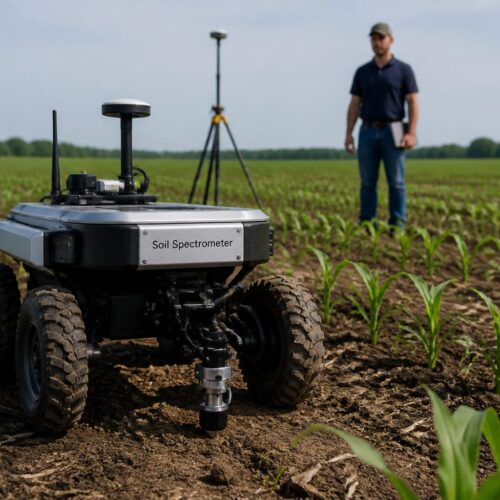
Mounting spectrometers on moving equipment presents several unique hardware challenges that engineers must address to ensure reliable performance. Issues related to vibration, weight distribution, and accessibility must be carefully considered to develop systems that operate efficiently and effectively in the field.
Vibration can significantly affect the performance of a tractor-mounted spectrometer, leading to data inaccuracies that could undermine the entire sensing process. Therefore, engineers must design robust mounting systems that can absorb shock and stabilize the sensors during operation, ensuring that the data collected is both accurate and reliable.
Additionally, the exposure to dust and moisture can hinder the functionality of these devices, potentially rendering them useless if not properly safeguarded. Protective casings and seals are essential to prevent environmental damage while maintaining sensor performance, thereby increasing the longevity of the equipment in harsh agricultural conditions.
The weight of the spectrometer should also be carefully considered so that it does not compromise the tractor’s performance or stability. A balance must be struck between durability and the feasibility of mounting equipment without negatively impacting the tractor’s handling and efficiency, ensuring that farmers can operate their machinery effectively.
In summary, addressing these hardware challenges is crucial for the successful implementation of on-tractor soil spectroscopy, as any failure could disrupt farming operations. A well-designed system will ensure that real-time sensing capabilities are both reliable and effective, ultimately contributing to better agricultural outcomes.
Sensor Designs Built to Withstand Vibration, Dust and Moisture
To ensure accurate data collection, sensor designs must be engineered to withstand harsh field conditions that are typical in agricultural environments. This includes robust housing that protects against vibration, dust, and moisture, ensuring that the sensors can operate without interruption and produce reliable results.
Advanced materials and engineering techniques are being employed to create spectrometers that can endure the rigors of agricultural environments, thus enhancing their durability. These innovations not only improve the lifespan of tractor-mounted spectrometers but also ensure they deliver consistent performance under challenging conditions.
| Feature | Description | Benefit |
|---|---|---|
| Shock Absorption | Mounting systems that reduce vibration | Improves accuracy of readings |
| Waterproof Housing | Sealed to prevent moisture ingress | Increases durability |
| Dust Resistance | Filters and seals to block particles | Ensures consistent performance |
| Lightweight Design | Optimized materials for weight reduction | Maintains equipment balance |
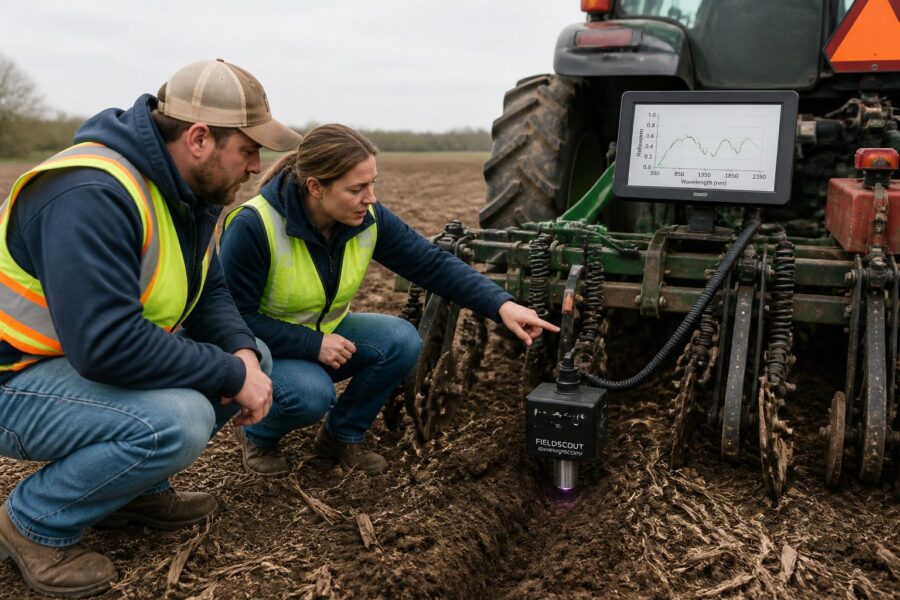
Incorporating these features into sensor designs allows for reliable performance during inline soil sensing tillage, ensuring that farmers can trust the data collected. This trust is critical for making informed decisions that directly affect crop health and productivity, leading to more successful farming operations.
Data Acquisition Rates and GPS Synchronization in Motion
Efficient data acquisition rates are critical for capturing accurate soil information during field operations, as changes in soil conditions can occur rapidly. High-frequency sampling ensures that quick changes in soil properties are noted and addressed, allowing farmers to respond promptly to varying field conditions.
GPS synchronization is equally important in this context, as it allows for precise geolocation of soil data, linking specific measurements to exact locations in the field. This combination enhances the value of real-time soil measurement planting by correlating data with specific field locations, facilitating targeted interventions based on accurate information.
The integration of GPS technology with spectrometers enables farmers to create detailed maps of soil health across their fields, providing a visual representation of soil conditions. Such mapping facilitates targeted interventions, improving overall management practices and enabling farmers to allocate resources more effectively based on real data.
Furthermore, the ability to collect data while in motion allows for continuous monitoring, significantly reducing the need for additional passes over the field, which can lead to soil compaction and other issues. This efficiency not only saves time and labor costs but also minimizes soil disturbance, promoting healthier soil ecosystems.
In conclusion, the advancement in data acquisition and GPS synchronization will further enhance the capabilities of tractor-mounted spectrometers, transforming farming practices. This technology will play a pivotal role in the future of precision agriculture, allowing farmers to adopt more precise and efficient methodologies.
Preprocessing Spectra Collected at Variable Tillage Speeds
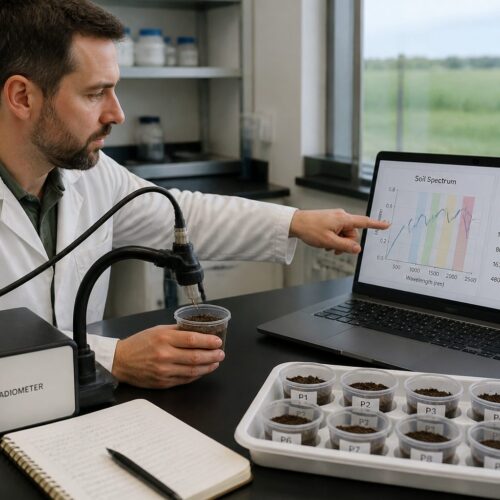
Preprocessing spectra data is essential when collecting soil information at variable tillage speeds, as differences in speed can introduce noise and inconsistencies in the data. These inconsistencies must be addressed to ensure that the analysis yields accurate and meaningful insights that can guide farming decisions.
By applying preprocessing techniques such as normalization and smoothing, the quality of the spectral data can be significantly improved, thereby enhancing the reliability of the findings. This ensures that the insights derived from the data are actionable and can lead to improved agricultural practices based on sound evidence.
Additionally, advanced algorithms can be developed to adaptively filter the data based on the speed of the equipment, providing real-time correction to any discrepancies. This capability enhances the overall accuracy of the measurements, allowing farmers to make timely decisions based on the most reliable data available.
Ultimately, effective preprocessing of spectra collected during variable tillage speeds is crucial for generating high-quality soil data that farmers can trust. By ensuring that the data is clean and reliable, farmers benefit from enhanced decision-making capabilities that can significantly improve crop yields and resource management.
In this way, preprocessing acts as a vital step in the workflow of on-tractor soil spectroscopy, serving as the foundation for successful data integration into farming practices. It enables a seamless flow of information from the field to decision-makers, enhancing the overall efficiency and effectiveness of agricultural operations.
Integrating Real-Time Soil Data With Planter and Seeder Controllers
The integration of real-time soil data with planter and seeder controllers is a game-changer for precision agriculture, allowing for a level of automation that was previously unattainable. This technology allows for automated adjustments based on current soil conditions, leading to optimal planting outcomes that can significantly enhance crop performance.
Farmers can benefit from increased efficiency and reduced input costs by leveraging data-driven decisions, which can lead to a more sustainable approach to farming. This integration enhances the overall effectiveness of planting operations, making it easier for farmers to achieve their production goals without wasting resources.
- Automated seed depth adjustments based on soil conditions
- Variable rate fertilization tailored to specific areas of the field
- Optimized planting speed based on real-time data
- Real-time monitoring of seed placement to ensure accuracy
- Enhanced crop emergence due to more precise planting
Moreover, the feedback loop created by this integration allows for continual improvement in farming practices, as data from each planting season can inform future decisions. As farmers gain insights from their operations, they can refine their strategies for even greater success, creating a cycle of learning and adaptation that benefits their overall productivity.
In essence, the combination of real-time soil measurement planting with automated equipment marks a significant advancement in agriculture, representing a shift towards more intelligent and responsive farming practices. This evolution not only enhances operational efficiency but also contributes to a more sustainable agricultural landscape.
Early Commercial Systems and Their Performance in the Field
Early commercial systems for on-tractor soil spectroscopy have begun to emerge, showcasing their potential in real-world applications that can drastically alter farming practices. These systems demonstrate the benefits of inline soil sensing tillage, particularly in enhancing farm productivity and resource management.
Performance in the field has varied considerably, with many users reporting improved crop yields and better resource management due to the insights provided by these systems. However, challenges remain, particularly in achieving optimal sensor accuracy and data integration across different platforms and technologies.
Some systems have struggled to maintain data quality under diverse field conditions, leading to inconsistent results that can affect farmers’ trust in the technology. Continuous feedback from early adopters is crucial for refining these technologies and addressing limitations, ensuring that they meet the practical needs of farmers in various environments.
Nonetheless, the positive impact of these systems is evident, as they pave the way for broader adoption of soil spectroscopy in agriculture. As technology evolves and improvements are made, further enhancements in performance are anticipated, promising even greater returns for farmers who embrace these advancements.
In conclusion, early commercial systems are setting the stage for the future of precision agriculture, highlighting the importance of real-time data in decision-making processes. Their performance in the field provides valuable insights that will drive advancements in soil sensing technologies, ultimately benefiting the agricultural community as a whole.
Data Management and Connectivity for High-Volume Inline Sensing
The management of data generated from high-volume inline sensing is a critical component of modern agriculture, as the sheer volume of data can be overwhelming for farmers. Efficient data connectivity ensures that valuable soil information is easily accessible and actionable, empowering farmers to make timely decisions based on real data.
Cloud-based solutions and mobile applications can facilitate real-time data sharing between farm equipment and decision-makers, streamlining the data flow and making it easier for farmers to analyze and utilize their soil data effectively. Such innovations help bridge the gap between data collection and practical application, ensuring that farmers can fully leverage the insights provided by their sensors.
Moreover, integrating data from various sources enhances the overall understanding of soil health and conditions, providing a comprehensive view that can inform better farming practices. This comprehensive approach allows for better-informed agricultural practices, ultimately leading to more sustainable and productive farming operations.
As the volume of data continues to increase, robust data management systems will be essential for farmers to keep up with the demands of precision agriculture. These systems must be capable of handling large datasets while ensuring security and accessibility for farmers, allowing them to protect their data while still benefiting from its insights.
In summary, effective data management and connectivity are vital for maximizing the benefits of on-tractor soil spectroscopy and ensuring that farmers can make informed decisions. These elements will drive the future success of precision agriculture, shaping how farming is practiced worldwide.
Where On-Tractor Spectroscopy Will Be in Five Years
In five years, on-tractor soil spectroscopy is poised to become an integral part of precision agriculture, seamlessly integrating with other farming technologies to create a holistic approach to crop management. Advancements in technology will lead to more sophisticated and user-friendly systems that can be easily adopted by farmers, regardless of their technological expertise.
We can expect improvements in sensor accuracy, data processing capabilities, and integration with other farming technologies, which will enhance the overall effectiveness of soil management strategies. This evolution will further optimize real-time soil measurement planting, enabling farmers to make data-driven decisions that positively impact their operations.
Moreover, the adoption of artificial intelligence and machine learning will allow for more predictive analytics in soil management, enabling farmers to anticipate changes in soil conditions and adjust their practices accordingly. Farmers will benefit from tailored recommendations that maximize yields while minimizing environmental impact, making agriculture more sustainable.
As the agricultural landscape continues to evolve, on-tractor soil spectroscopy will play a key role in sustainable farming, helping farmers to not only increase productivity but also to protect natural resources. The future of agriculture will be characterized by data-driven decision-making and enhanced resource management, creating a balance between efficiency and environmental stewardship.
In conclusion, the next five years will bring significant advancements in on-tractor soil spectroscopy technology, positioning it as a cornerstone of modern agriculture. This will ultimately lead to a more efficient and sustainable agricultural industry, benefiting farmers and consumers alike while addressing the pressing challenges of food security and environmental sustainability.