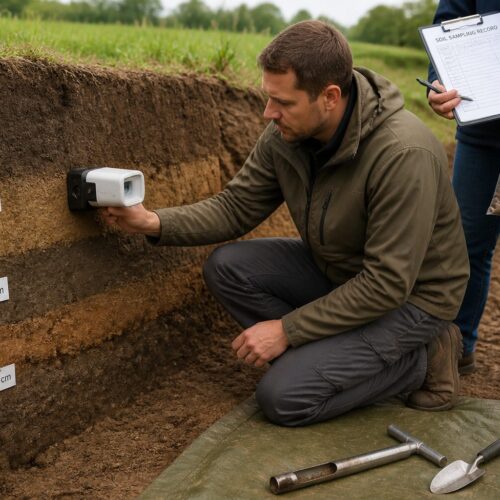


In the realm of soil science, obtaining representative samples is paramount for accurate analysis. Spectroscopy, a technique that analyzes the interaction of light with matter, is increasingly used to determine soil properties. However, the accuracy of soil spectroscopy hinges on the quality of the soil samples used for analysis, which is where composite sampling comes into play.
Composite sampling soil spectroscopy involves combining multiple individual soil samples into a single, more representative sample. This method is particularly useful when dealing with heterogeneous soils or when the spatial variability of soil properties is high.
By understanding the principles and best practices of composite sample preparation, we can ensure that our soil spectroscopy data accurately reflects the overall characteristics of the area under investigation. This guide provides a practical overview of composite sampling techniques, focusing on how to create representative composite samples and prepare them for efficient soil spectroscopy analysis.
Understanding Composite Sampling in Soil Science
Composite sampling is a method used to reduce the number of individual samples needed for analysis while still obtaining a representative estimate of the average soil properties of a given area. Instead of analyzing numerous individual samples separately, composite sampling combines multiple samples into one.
The underlying principle is that by mixing multiple samples, the variability within the area is averaged out, providing a more accurate representation of the overall soil characteristics. This approach is based on statistical principles, aiming to minimize the error associated with spatial variability in soil properties.
The representativeness of a composite sample depends on several factors, including the number of individual samples included, the spatial distribution of those samples, and the homogeneity of the mixing process. Proper planning and execution are essential to ensure that the composite sample accurately reflects the average properties of the area of interest.
Composite sampling is particularly useful when dealing with large areas or when the cost of analyzing individual samples is high. It allows for a more efficient use of resources while still providing valuable information about soil properties.
Consider the scenario of evaluating the overall nutrient status of a large agricultural field. Analyzing individual samples from every square meter would be impractical and expensive. Composite sampling allows for a more manageable approach.

By collecting multiple samples from different locations within the field and combining them, a single analysis can provide a representative estimate of the average nutrient levels. This information can then be used to make informed decisions about fertilizer application, optimizing crop yields and minimizing environmental impact.
It’s also important to consider the scale of the area being sampled. For very large areas, multiple composite samples may be needed to capture the overall variability. These composite samples can then be analyzed separately to provide a more detailed understanding of the spatial patterns in soil properties.
Furthermore, the selection of appropriate sampling locations is crucial for ensuring the representativeness of the composite sample. A well-designed sampling plan should consider factors such as topography, soil type, and land use history.
When to Use Composite Sampling
Composite sampling is most appropriate when the goal is to estimate the average soil properties of a field or area. It is especially useful when spatial variability is high, and analyzing individual samples would be cost-prohibitive.
Consider using composite sampling when assessing nutrient levels in agricultural fields, monitoring soil contamination over a large area, or evaluating the overall soil health of a region. In these scenarios, the average value of a soil property is often more important than the specific value at any given point.
However, composite sampling may not be suitable when detailed information about the spatial distribution of soil properties is needed. If the objective is to create a high-resolution map of soil properties or to identify localized areas of contamination, individual samples analyzed separately would be more appropriate.
Also, avoid composite sampling when dealing with properties that are highly variable and sensitive to small-scale changes, such as soil pH or electrical conductivity near a point source of contamination. In these cases, the averaging effect of composite sampling could mask important localized variations.
Imagine a scenario where you are investigating potential soil contamination near a former industrial site. If you suspect a localized spill of a contaminant, composite sampling might dilute the concentration and obscure the extent of the contamination.
In such cases, it would be more prudent to collect individual samples at closely spaced intervals to map the contaminant plume accurately. This approach allows for the identification of hotspots and a better understanding of the spatial distribution of the contaminant.
Conversely, if you are assessing the overall soil health of a large agricultural field to determine the general nutrient status, composite sampling is a more efficient approach. By collecting multiple samples from different parts of the field and combining them, you can obtain a representative estimate of the average nutrient levels.
This information can then be used to make informed decisions about fertilizer application, optimizing crop yields and minimizing environmental impact. Therefore, the decision of whether to use composite sampling depends on the specific objectives of the study and the nature of the soil properties being investigated.
How to Create a Representative Composite Sample
Creating a representative composite sample involves careful planning and execution to ensure that the final sample accurately reflects the average properties of the area of interest. The first step is to define the area to be sampled and determine the number of individual samples needed.
The number of samples should be sufficient to capture the spatial variability within the area, with more samples needed for highly variable soils. Next, decide on a sampling pattern that ensures adequate coverage of the area, such as a grid pattern, a random pattern, or a systematic pattern.
| Sampling Pattern | Description | Advantages | Disadvantages |
|---|---|---|---|
| Grid Pattern | Samples are collected at regular intervals along a grid. | Simple to implement, provides uniform coverage. | May not capture random variability, can be time-consuming. |
| Random Pattern | Samples are collected at randomly selected locations. | Captures random variability, statistically unbiased. | May not provide uniform coverage, requires careful planning. |
| Systematic Pattern | Samples are collected at predetermined locations based on a specific system (e.g., every 10 meters along a transect). | Provides good coverage, easy to implement. | May be biased if the sampling interval coincides with a periodic variation in soil properties. |
| Targeted Sampling | Samples are collected at locations strategically selected based on prior knowledge of soil variability. | Efficiently captures known variability, reduces the number of samples needed. | Requires prior knowledge, may miss unexpected variations. |
Once the sampling pattern is chosen, collect individual samples at the selected locations using a consistent sampling depth and technique. Ensure that each sample is of equal volume or weight to avoid biasing the composite sample towards certain areas.
After collecting the individual samples, thoroughly mix them together in a clean container to create the composite sample. This mixing process is crucial for ensuring homogeneity and representativeness.
Consider a field with varying topography and soil types. A simple grid pattern might not adequately capture the variability in nutrient levels across the field. A stratified random sampling approach, where the field is divided into zones based on topography or soil type, and random samples are collected within each zone, would be more appropriate.
Furthermore, the sampling depth should be consistent across all locations to ensure that the composite sample is representative of the soil profile. Using a soil corer or auger to collect samples at a uniform depth is recommended.
When mixing the individual samples, use a clean, non-reactive container to avoid contaminating the sample. A plastic tub or a stainless-steel bowl is suitable for this purpose.
Thoroughly mix the samples by repeatedly turning and shaking the container, or by using a mechanical mixer. Ensure that the mixing process is sufficient to create a homogeneous mixture, where the soil particles are evenly distributed throughout the sample volume.
Subsampling Techniques for Composite Samples
Once a composite sample has been created, it is often necessary to take a subsample for analysis. Subsampling involves selecting a smaller portion of the composite sample that is representative of the whole. This is particularly important when the composite sample is too large to be analyzed directly or when multiple analyses are required.
To ensure that the subsample is representative, it is essential to thoroughly mix the composite sample before taking the subsample. This can be achieved by repeatedly turning and shaking the sample in a container, or by using a mechanical mixer.
One common subsampling technique is the quartering method, where the composite sample is spread out on a clean surface and divided into four equal quadrants. Two diagonally opposite quadrants are then discarded, and the remaining two quadrants are combined and mixed again.
This process is repeated until the desired subsample size is obtained. Another technique is to use a riffle splitter, which divides the composite sample into multiple equal portions using a series of chutes.
Imagine you have a large composite sample of several kilograms, but the laboratory only requires a few grams for analysis. Simply scooping a handful of soil from the top of the container is unlikely to provide a representative subsample.
The quartering method helps to reduce the potential for bias by systematically reducing the sample size while maintaining its representativeness. By repeatedly dividing the sample and discarding portions, you ensure that the final subsample is composed of material from all parts of the original composite sample.
A riffle splitter is another effective tool for subsampling, particularly for dry, free-flowing soil samples. The splitter divides the sample into multiple equal portions, allowing you to select one or more of these portions to create the desired subsample size.
Regardless of the subsampling technique used, it is crucial to use clean equipment and to avoid contaminating the sample. Ensure that the surface used for quartering is clean and free of any residues, and that the riffle splitter is properly cleaned between samples.
Ensuring Homogeneity in Composite Samples
Homogeneity is a critical factor in ensuring the representativeness of composite samples. A homogeneous sample is one in which the soil particles and properties are evenly distributed throughout the sample volume.
Achieving homogeneity requires careful mixing and preparation of the composite sample. Start by removing any large debris, such as rocks, roots, or plant material, from the individual soil samples before mixing.
Use a clean, non-reactive container for mixing the samples, such as a plastic tub or a stainless-steel bowl. Thoroughly mix the samples by repeatedly turning and shaking the container, or by using a mechanical mixer.
Pay particular attention to breaking up any clumps or aggregates in the soil, as these can prevent proper mixing. If necessary, use a mortar and pestle to gently crush the clumps before mixing.
After mixing, visually inspect the sample to ensure that it appears uniform in color and texture. If any inconsistencies are observed, continue mixing until the sample is homogeneous.
Imagine mixing soil samples with varying moisture contents. Some samples might be dry and powdery, while others are damp and clumpy. This can lead to a non-homogeneous mixture, where the dry particles are concentrated in one area and the damp clumps in another.
To address this issue, it may be necessary to air-dry the samples before mixing to ensure a more uniform moisture content. Alternatively, you can use a mechanical mixer with a grinding or pulverizing action to break up the clumps and create a more homogeneous mixture.
The type of soil also affects the ease of achieving homogeneity. Sandy soils tend to mix more easily than clay soils, which can be sticky and difficult to break up. For clay soils, it may be necessary to add a small amount of water to aid in mixing.
However, be careful not to add too much water, as this can make the soil too wet and difficult to handle. Regular visual inspection during the mixing process is essential to identify any inconsistencies and ensure that the sample is as homogeneous as possible.
Advantages and Limitations of Composite Sampling
Composite sampling offers several advantages over analyzing individual soil samples. One of the main benefits is cost-effectiveness, as it reduces the number of analyses required, saving time and resources.
It also provides a more representative estimate of the average soil properties of an area, minimizing the influence of localized variations. However, composite sampling also has limitations that should be considered.
- Loss of spatial information
- Potential masking of localized problems
- Difficulty in interpreting results when variability is high
- Requirement for thorough mixing and homogenization
- Inability to assess the distribution of soil properties
One major drawback is the loss of spatial information, as composite sampling provides only an average value for the entire area. This means that localized areas of contamination or nutrient deficiency may be missed.
Also, the averaging effect of composite sampling can mask important variations in soil properties, making it difficult to identify patterns or trends. Despite these limitations, composite sampling remains a valuable tool for soil scientists and agricultural professionals when used appropriately and with a clear understanding of its strengths and weaknesses.
Consider a scenario where a field has both highly fertile areas and areas with significant nutrient deficiencies. Composite sampling would provide an average nutrient value, potentially leading to a fertilizer application rate that is either too low for the deficient areas or too high for the fertile areas.
This can result in suboptimal crop yields and increased environmental impacts. In such cases, a more targeted sampling approach, such as zone sampling, would be more appropriate to address the spatial variability in soil properties.
Another limitation of composite sampling is the potential for dilution effects. If a small area of high contamination is mixed with a larger area of clean soil, the resulting composite sample may show a lower concentration of the contaminant than is actually present in the contaminated area.
This can lead to an underestimation of the risk associated with the contamination and potentially inadequate remediation efforts. Therefore, it is important to carefully consider the potential for dilution effects when interpreting composite sampling results, especially in areas with known or suspected contamination.
Composite Sampling and Soil Spectroscopy
Soil spectroscopy is a rapid and cost-effective method for determining various soil properties by analyzing the interaction of light with soil samples. When combined with composite sampling, soil spectroscopy can provide a powerful tool for assessing soil health and fertility over large areas.
The accuracy of soil spectroscopy depends on the quality of the soil samples used for analysis. Composite sampling ensures that the samples are representative of the area of interest, minimizing the influence of spatial variability.
To prepare composite samples for soil spectroscopy, follow the same procedures as for other soil analyses, including removing debris, mixing thoroughly, and subsampling. Ensure that the subsample is finely ground and dried before analysis, as this can affect the spectral properties of the soil.
When interpreting soil spectroscopy data from composite samples, keep in mind that the results represent average values for the entire area. If more detailed information about the spatial distribution of soil properties is needed, consider using a combination of composite sampling and individual sampling, or employing spatial interpolation techniques to estimate soil properties at unsampled locations.
The particle size of the soil sample can significantly affect the spectral reflectance. Larger particles may scatter light differently than finer particles, leading to inaccurate results. Grinding the sample to a fine powder ensures that the particles are uniform in size, minimizing the influence of particle size on the spectral properties.
Similarly, the moisture content of the soil sample can affect the spectral reflectance. Water absorbs light in certain regions of the spectrum, which can interfere with the analysis of other soil properties. Drying the sample removes the water, allowing for a more accurate measurement of the spectral properties of the soil itself.
When using soil spectroscopy with composite samples, it is important to calibrate the instrument using a set of reference samples with known soil properties. This calibration process ensures that the instrument is accurately measuring the spectral properties of the soil and that the results are reliable.
Furthermore, it is important to validate the soil spectroscopy results with traditional laboratory analyses. This validation process helps to confirm the accuracy of the soil spectroscopy data and to identify any potential errors or biases.
Quality Control in Composite Sampling
To ensure the reliability of composite sampling results, it is essential to implement quality control measures throughout the sampling and analysis process. One important step is to use consistent sampling techniques and equipment to minimize variability.
This includes using the same sampling depth, sampling volume, and mixing procedure for all samples. Also, it’s important to regularly calibrate and maintain the equipment used for soil spectroscopy to ensure accurate measurements.
Another quality control measure is to include field duplicates in the sampling plan. Field duplicates are two or more composite samples collected from the same area and analyzed separately.
By comparing the results of the field duplicates, you can assess the variability associated with the sampling and analysis process. If the results are significantly different, it may indicate a problem with the sampling technique, the mixing procedure, or the analytical method.
In addition to field duplicates, it is also important to include laboratory duplicates in the analysis process. Laboratory duplicates are two or more subsamples taken from the same composite sample and analyzed separately.
By comparing the results of the laboratory duplicates, you can assess the variability associated with the analytical method itself. If the results are significantly different, it may indicate a problem with the instrument calibration, the analytical procedure, or the sample preparation technique.
Another important quality control measure is to use certified reference materials (CRMs) to verify the accuracy of the analytical method. CRMs are soil samples with known concentrations of various soil properties.
By analyzing CRMs along with the composite samples, you can assess whether the analytical method is accurately measuring the soil properties of interest. If the results for the CRMs are significantly different from the known concentrations, it may indicate a problem with the analytical method.
Practical Applications in Precision Agriculture
Composite sampling soil spectroscopy is a valuable tool in precision agriculture for assessing soil variability and informing management decisions. By creating composite samples from different zones within a field, farmers can obtain information about the average soil properties of each zone.
This information can then be used to tailor fertilizer applications, irrigation strategies, and other management practices to the specific needs of each zone. For example, if soil spectroscopy reveals that one zone is deficient in a particular nutrient, the farmer can apply fertilizer to that zone only, rather than applying it uniformly across the entire field.
This targeted approach can improve crop yields, reduce fertilizer costs, and minimize environmental impacts. Composite sampling can also be used to monitor changes in soil properties over time, allowing farmers to track the effectiveness of their management practices and make adjustments as needed.
By regularly collecting and analyzing composite samples, farmers can build a comprehensive understanding of their soil resources and make informed decisions to optimize crop production. The integration of composite sampling with soil spectroscopy offers a practical and efficient way to improve soil management in precision agriculture.
Consider a field with varying soil types, topography, and drainage patterns. Using remote sensing data, such as satellite imagery or drone imagery, the field can be divided into different management zones based on these factors.
Composite samples can then be collected from each zone and analyzed using soil spectroscopy to determine the nutrient levels, organic matter content, and other important soil properties. This information can be used to create variable rate fertilizer application maps, where the fertilizer rate is adjusted to match the specific needs of each zone.
For example, a zone with low nitrogen levels may receive a higher fertilizer rate, while a zone with high nitrogen levels may receive a lower fertilizer rate. This targeted approach can improve nutrient use efficiency, reduce fertilizer costs, and minimize the risk of nutrient runoff.
In addition to fertilizer management, composite sampling soil spectroscopy can also be used to inform irrigation management decisions. By monitoring the soil moisture content in different zones, farmers can adjust the irrigation schedule to ensure that each zone receives the optimal amount of water.
Conclusion
Composite sampling is a powerful technique for obtaining representative soil samples for spectroscopy and other analyses. By combining multiple individual samples into a single composite sample, we can reduce the number of analyses required while still obtaining a reliable estimate of the average soil properties of an area.
However, it is important to follow best practices for composite sample preparation, including defining the sampling area, selecting an appropriate sampling pattern, collecting equal-volume samples, and thoroughly mixing the samples. By understanding the principles and limitations of composite sampling, we can ensure that our soil data accurately reflects the overall characteristics of the area under investigation.
The successful application of composite sampling hinges on a clear understanding of the research objectives and the spatial variability of the soil properties of interest. Proper planning, careful execution, and rigorous quality control are essential for obtaining reliable and meaningful results.
As soil spectroscopy continues to advance and become more accessible, the integration of composite sampling with this technique will play an increasingly important role in sustainable soil management and precision agriculture. By leveraging the power of these tools, we can gain a deeper understanding of our soil resources and make informed decisions to protect and enhance soil health for future generations.