
Knowing how to store coffee beans at home starts with limiting the things that change their aroma: air, moisture, heat, and light.
A simple routine works for most households: keep beans in a dry, dark cupboard, close the package firmly after each use, and grind only the amount you are about to brew.
Freshness is not a switch that flips on a particular day.
Coffee gradually loses volatile aromas after roasting and after grinding, and the pace depends on packaging, storage, and how often the container is opened.
Storage can slow unwanted changes, but it cannot restore beans that have already lost their character.
Keep beans away from air, moisture, heat, and light
Oxygen exposure contributes to staling, while moisture can create handling and quality problems.
Heat speeds many changes in food, and light can affect coffee held in a clear container.
These are practical reasons to avoid a sunny counter beside a stove, not a promise that a particular container preserves flavor indefinitely.
A cool, dry cupboard away from an oven, dishwasher, or window is usually easier than trying to manage a special storage setup.
Choose a place with a stable room temperature, and avoid storing coffee where steam or cooking heat regularly reaches the package.
Airtight storage helps limit repeated exchange with fresh air, especially after opening.
If the coffee comes in a resealable bag with a one-way valve, folding the top down and sealing it carefully is a reasonable everyday choice; the valve allows gas from freshly roasted beans to escape while limiting outside air entering through the package.
Choose a container that fits your routine
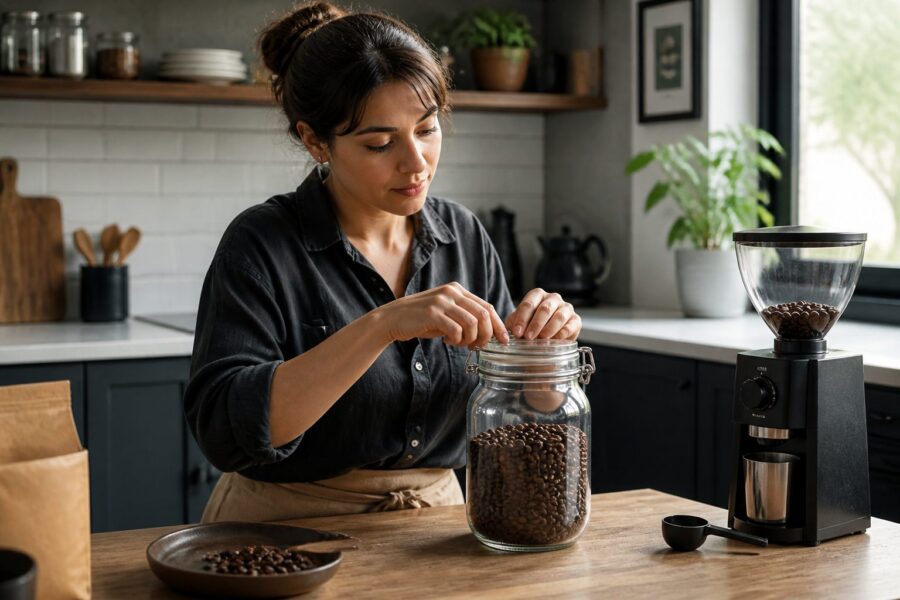
An opaque, airtight container can be useful if the original bag does not seal well or if you prefer a dedicated canister.
It should be clean and completely dry before beans go in, and its lid should close reliably.
A clear jar on display may look tidy, but light exposure makes it a less suitable place for long-term storage.
A container that is far larger than the amount of coffee leaves more air inside after each use.
You do not need to buy specialized equipment to address that; use the bag the coffee came in if it closes properly, or choose a container that holds the quantity you typically keep on hand.
Avoid topping up a container with new beans before cleaning out the old residue.
Coffee oils and small fragments can collect on the walls and lid, so empty the container, clean it according to its material, and let every part dry before refilling.
What to do after opening a bag
- Open the package only when you are ready to use it, and avoid leaving it open while preparing other parts of breakfast.
- Press excess air out gently when the package design allows it, without crushing the beans.
- Roll or fold the top closed and fasten the built-in seal or a clip.
- Put the package in a cool, dark, dry cupboard rather than beside a heat source.
- Take out the amount you need, reseal promptly, and return the beans to the same storage spot.
A resealable plastic bag can work as a practical short-term container if it closes well and stays dry.
The material is less important than whether the package is clean, protected from light, and closed between uses; avoid reusing a bag that held something with a strong smell or oily residue.
Buying a quantity you can use while the coffee still tastes appealing also simplifies storage.
There is no universal schedule that fits all coffees and households, so pay attention to the roast information, package condition, and your own taste rather than treating a generic timeline as a guarantee.
Should coffee beans go in the refrigerator
For everyday use, the refrigerator is usually inconvenient because opening and closing the package can expose beans to moisture and nearby food odors.
A sealed package taken in and out of a cold space may also encounter condensation as it warms, so the refrigerator is not a simple freshness shortcut.
The freezer is a separate question.
Freezing can be useful when you need to hold an unopened portion for longer than your normal routine, but repeated thawing and refreezing is not a good habit.
Divide coffee into portions before freezing, seal them well, and thaw a portion while it remains sealed so condensation forms on the outside of the package rather than on the beans.
Once a frozen portion has come to room temperature, use it as part of your ordinary routine rather than cycling it between freezer and counter.
Freezer conditions, package materials, and handling vary, so this method is best considered an option for a longer hold, not a requirement for every bag.
Whole beans and ground coffee need different care
Whole beans generally expose less surface area to air than ground coffee, which is one reason grinding shortly before brewing can preserve more aroma in the cup.
That does not make pre-ground coffee unusable; it simply means the package should be closed promptly and protected from air and moisture.
If convenience matters more than grinding at home, buy a package size you can use comfortably and reseal it carefully.
Keep ground coffee dry and away from strong odors, because its greater exposed surface can pick up environmental changes more readily than whole beans.
Do not store beans in the grinder hopper for an extended period if the grinder sits in a warm or bright spot.
A hopper may be convenient for daily use, but a closed bag or container in a cupboard provides better protection between brewing sessions.
How to judge freshness without a rigid deadline
Roast date and best-by date communicate different things.
A roast date tells you when the coffee was roasted, while a best-by date is a package label chosen by its producer; neither date by itself tells you exactly how a cup will taste after a particular storage history.
Notice the aroma when you open the package and the flavor after brewing.
Coffee that has become muted may still be drinkable, but changing the ratio or grind will not bring back aromas that have faded.
Store the next bag better or buy a smaller quantity if the current one regularly sits unused for a long time.
Discard coffee if it becomes damp, develops visible mold, or has an unusual odor that suggests contamination.
Ordinary loss of aroma is different from visible spoilage, and coffee should not be consumed when it appears contaminated.
A storage routine that is easy to keep
For a typical bag used over days or weeks, close its original valve bag after each use and place it in a dark cupboard.
If the seal has failed, transfer the beans to a clean, dry, opaque container that closes well; keep it away from appliances and use the beans according to your own taste.
For longer storage, consider whether portioning and freezing is worth the extra handling, and keep each portion sealed until it has thawed.
The main goal is a routine that protects beans from repeated exposure without adding steps you will not follow.
Good storage will not make every coffee taste the same, nor does it guarantee a specific number of fresh-tasting days.
It gives the beans a steadier environment, lets you notice how the coffee changes, and makes the cup more predictable from one morning to the next.
Keep beans in a sealed package or clean airtight container in a cool, dark, dry cupboard. Limit air, light, moisture, and heat, and grind only what you plan to brew.
There is no single timeline that fits every roast, package, and storage condition. Coffee gradually loses aroma, so use the roast and package information alongside your own taste rather than treating a generic duration as a guarantee.
A clean, dry resealable bag can work for everyday storage if it closes well and is kept away from light, heat, and moisture. Protect it from strong odors and reseal it promptly after taking beans out.
Close the original bag firmly or transfer the beans to a clean, dry, airtight container. Keep it in a dark cupboard and open it only long enough to measure the coffee you need.