
Precision agriculture is rapidly evolving, and at the forefront of this transformation are portable soil sensors agriculture. These innovative devices empower farmers with real-time data, enabling them to make informed decisions about irrigation, fertilization, and overall soil management. Embracing these technologies is no longer a futuristic dream, but a practical necessity for optimizing crop yields and promoting sustainable farming practices.
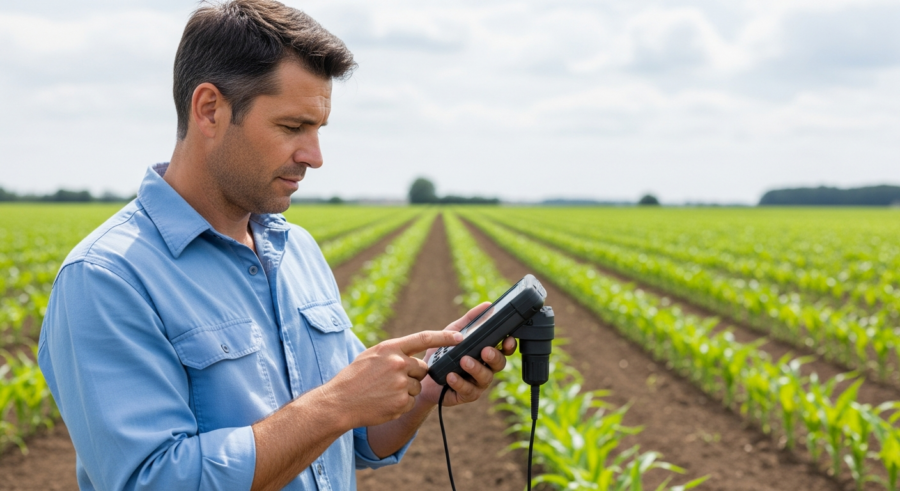
Gone are the days of relying solely on traditional soil testing methods that are time-consuming and often provide delayed results. With portable soil sensors, farmers can now access immediate insights into their soil’s condition, directly in the field.
This shift towards data-driven agriculture promises to revolutionize the way we cultivate our land, ensuring greater efficiency, reduced environmental impact, and ultimately, a more secure food supply.
Types of Portable Soil Sensors
The world of portable soil sensors agriculture is diverse, offering a range of technologies tailored to specific needs. Soil moisture sensors, nutrient sensors, and soil pH meters are among the most commonly used tools, each providing unique insights into the soil’s composition and health.
Understanding the different types of sensors available is crucial for selecting the right tools for your farm.
Soil moisture sensors are designed to measure the water content in the soil, a critical factor for plant growth. These sensors help farmers optimize irrigation schedules, preventing both overwatering and underwatering, which can lead to significant yield losses.
Capacitance sensors, time-domain reflectometry (TDR) sensors, and frequency domain reflectometry (FDR) sensors are popular choices, each with its own advantages in terms of accuracy, cost, and ease of use. TDR sensors are known for their high accuracy, while capacitance sensors are often more affordable.
Nutrient sensors, on the other hand, focus on measuring the levels of essential nutrients in the soil, such as nitrogen, phosphorus, and potassium. These sensors enable farmers to fine-tune their fertilization strategies, ensuring that plants receive the right amount of nutrients at the right time, maximizing growth and minimizing environmental impact.
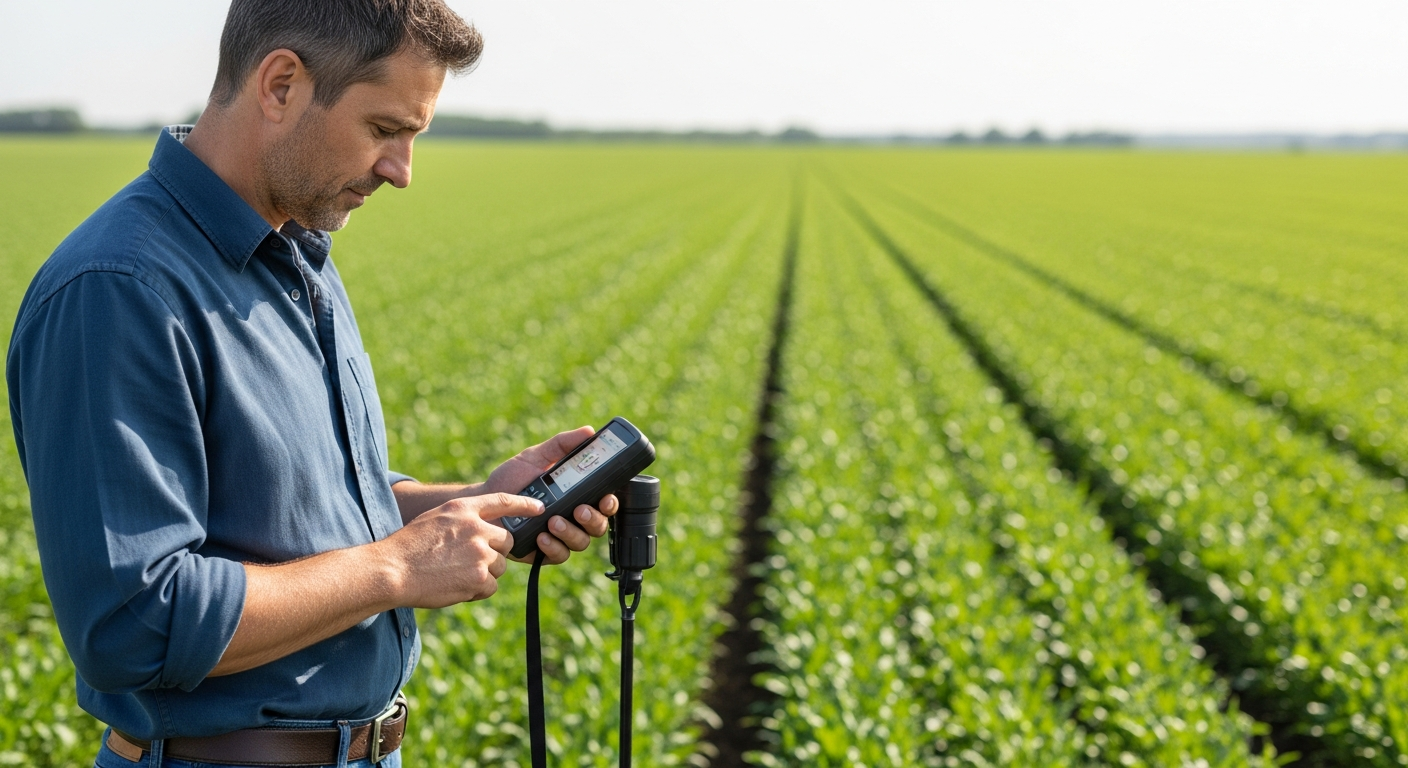
Ion-selective electrodes (ISEs) and optical sensors are commonly used for nutrient detection, providing valuable data for precision fertilization. Optical sensors are particularly useful for measuring nitrate levels, a key indicator of nitrogen availability.
Soil pH meters are essential for determining the acidity or alkalinity of the soil, a critical factor that affects nutrient availability and plant health. Maintaining the correct pH level is crucial for ensuring that plants can effectively absorb nutrients from the soil.
Portable pH meters allow farmers to quickly and easily assess soil pH levels in different areas of their fields, enabling them to make targeted adjustments to improve soil conditions. Some meters use a simple probe that is inserted into the soil, while others require a soil sample to be mixed with water before testing.
How Portable Sensors Work
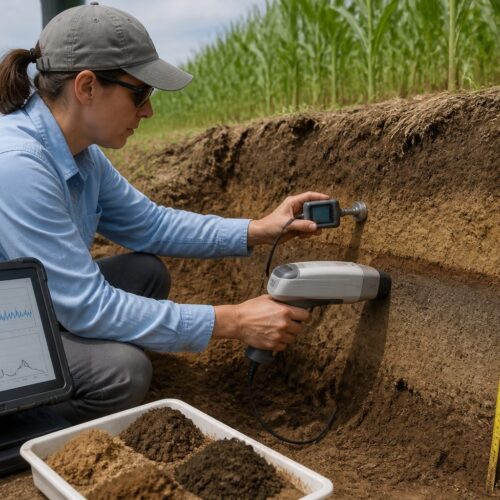
Portable soil sensors agriculture employ a variety of technologies to gather data about soil conditions. Understanding the basic principles behind these sensors can help farmers make informed decisions about their use and interpretation of the data they provide.
Each type of sensor utilizes different methods to measure specific soil properties.
Soil moisture sensors, for example, often rely on measuring the dielectric constant of the soil, which is directly related to its water content. Capacitance sensors measure the soil’s ability to store an electrical charge, which increases with water content, while TDR sensors send an electromagnetic pulse through the soil and measure the time it takes for the pulse to return, which is also affected by water content.
Nutrient sensors, such as ion-selective electrodes, work by measuring the concentration of specific ions in the soil solution. These electrodes are designed to be sensitive to particular ions, such as nitrate or potassium, and produce an electrical signal that is proportional to the concentration of that ion.
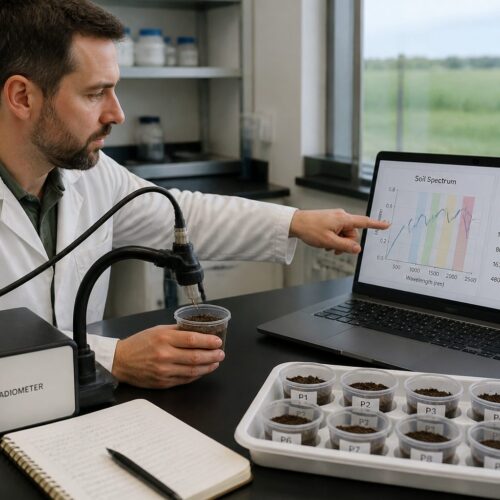
Optical nutrient sensors, on the other hand, use light to measure the concentration of nutrients in the soil. These sensors emit light at specific wavelengths and measure the amount of light that is absorbed or reflected by the soil, which is related to the concentration of certain nutrients.
Soil pH meters typically use a glass electrode to measure the hydrogen ion concentration in the soil. The electrode produces an electrical potential that is proportional to the pH of the soil, providing a direct measurement of its acidity or alkalinity.
Regardless of the specific technology used, portable soil sensors generally provide a digital readout of the measured parameter, which can be easily recorded and analyzed. Many sensors also offer wireless connectivity, allowing data to be transmitted to a central database or farm management system for further analysis and decision-making.
Benefits of Using Portable Sensors in Agriculture
The adoption of portable soil sensors agriculture offers a multitude of benefits for farmers, ranging from improved crop yields to reduced environmental impact. By providing real-time data on soil conditions, these sensors enable farmers to make more informed decisions, optimizing their resource use and improving overall farm management.
The advantages extend beyond just increased productivity.
| Benefit | Description | Impact |
|---|---|---|
| Improved Irrigation Management | Real-time soil moisture data | Reduces water waste, prevents over/underwatering |
| Optimized Fertilization | Precise nutrient level monitoring | Minimizes fertilizer runoff, maximizes nutrient uptake |
| Early Disease Detection | Monitoring soil conditions that favor disease | Allows for timely intervention, reduces crop losses |
| Enhanced Crop Yields | Data-driven decision-making | Increases overall productivity and profitability |
One of the primary benefits of using portable sensors is improved irrigation management. By monitoring soil moisture levels in real-time, farmers can avoid overwatering, which wastes water and can lead to root rot, and underwatering, which stresses plants and reduces yields.
Portable sensors allow for targeted irrigation, delivering water only where and when it is needed, resulting in significant water savings and improved crop health.
Integrating Sensor Data with Farm Management Systems
To fully leverage the power of portable soil sensors agriculture, it’s essential to integrate their data with farm management systems (FMS). This integration allows for a holistic view of farm operations, enabling farmers to make data-driven decisions that optimize resource use and improve overall efficiency.
A well-integrated FMS can transform raw sensor data into actionable insights.
Farm management systems typically provide a centralized platform for collecting, storing, and analyzing data from various sources, including soil sensors, weather stations, and other farm equipment. By integrating sensor data with these systems, farmers can gain a comprehensive understanding of their farm’s performance, identifying areas for improvement and optimizing their management practices.
The integration process often involves using wireless communication technologies, such as Bluetooth or Wi-Fi, to transmit data from the sensors to a central hub or gateway. This gateway then uploads the data to the FMS, where it can be processed and analyzed.
Many FMS platforms offer advanced analytics tools that can automatically generate reports and recommendations based on the sensor data. For example, the system might identify areas of the field that are experiencing water stress and recommend adjusting irrigation schedules accordingly, or it might detect nutrient deficiencies and suggest targeted fertilization strategies.
Some FMS platforms also offer decision support tools that can help farmers evaluate different management options and predict their potential impact on crop yields and profitability. These tools can take into account a variety of factors, including soil conditions, weather forecasts, and market prices, to provide farmers with the information they need to make informed decisions.
Comparing Different Sensor Technologies
When selecting portable soil sensors agriculture, it’s important to carefully consider the different sensor technologies available and choose the ones that best suit your specific needs and budget. Each technology has its own strengths and weaknesses, and the optimal choice will depend on factors such as the type of crops you grow, the size of your farm, and the level of precision you require.
A thorough comparison can prevent costly mistakes.
- Capacitance sensors for affordable moisture monitoring
- TDR sensors for high-accuracy soil moisture measurements
- ISEs for precise nutrient level detection
- Optical sensors for convenient nitrate monitoring
- Electrode pH meters for reliable acidity measurements
Capacitance sensors are a popular choice for measuring soil moisture due to their relatively low cost and ease of use. These sensors measure the soil’s ability to store an electrical charge, which is directly related to its water content. However, capacitance sensors can be affected by soil type and salinity, so it’s important to calibrate them properly for your specific conditions.
Time-domain reflectometry (TDR) sensors offer higher accuracy than capacitance sensors, but they are also more expensive. TDR sensors send an electromagnetic pulse through the soil and measure the time it takes for the pulse to return, which is affected by the soil’s water content. TDR sensors are less sensitive to soil type and salinity than capacitance sensors, making them a good choice for a wider range of conditions.
Maintenance and Calibration of Portable Sensors
To ensure the accuracy and reliability of portable soil sensors agriculture, regular maintenance and calibration are essential. Proper care and calibration will not only extend the lifespan of your sensors but also ensure that the data they provide is accurate and reliable, leading to better decision-making and improved farm management.
Neglecting maintenance can lead to inaccurate readings and costly mistakes.
Maintenance typically involves cleaning the sensors regularly to remove dirt and debris that can interfere with their readings. For soil moisture sensors, it’s important to keep the sensor surface clean and free of any buildup that could affect its ability to measure the soil’s dielectric constant.
For nutrient sensors, it’s important to clean the electrodes regularly to remove any contaminants that could affect their sensitivity. Soil pH meters also require regular cleaning to ensure accurate readings.
Calibration involves comparing the sensor’s readings to a known standard and adjusting the sensor’s output to match the standard. Soil moisture sensors can be calibrated by comparing their readings to gravimetric soil moisture measurements, which involve drying a soil sample in an oven and measuring its weight before and after drying.
Nutrient sensors can be calibrated using standard solutions of known nutrient concentrations. Soil pH meters are typically calibrated using buffer solutions of known pH values.
The frequency of maintenance and calibration will depend on the type of sensor, the conditions in which it is used, and the manufacturer’s recommendations. It’s important to follow the manufacturer’s instructions carefully to ensure that your sensors are properly maintained and calibrated.
Future Trends in Soil Sensing Technology
The field of soil sensing technology is constantly evolving, with new innovations emerging all the time. As technology advances, we can expect to see even more sophisticated and user-friendly portable soil sensors agriculture that provide farmers with even greater insights into their soil’s condition.
These advancements promise to further revolutionize precision agriculture.
One trend is the development of more compact and affordable sensors that can be easily deployed in large numbers across a field. These low-cost sensors will enable farmers to create high-resolution maps of soil conditions, providing a detailed picture of the spatial variability in their fields.
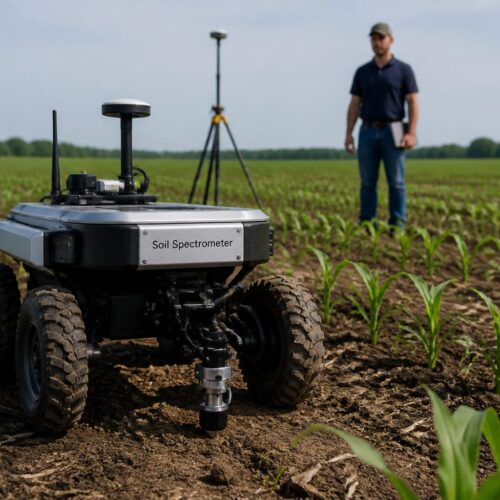
Another trend is the integration of sensors with other technologies, such as drones and robotics, to automate data collection and analysis. Drones equipped with soil sensors can quickly and efficiently survey large areas, providing farmers with a comprehensive overview of their soil’s condition.
Robotics can be used to automate soil sampling and analysis, reducing the time and labor required for these tasks. These automated systems will enable farmers to collect more data more frequently, providing a more complete picture of their soil’s condition over time.
We can also expect to see the development of more advanced sensors that can measure a wider range of soil properties, including soil organic matter, soil microbial activity, and soil compaction. These sensors will provide farmers with a more holistic understanding of their soil’s health, enabling them to make more informed decisions about their management practices.
Case Studies: Successful Sensor Implementations
Real-world examples of successful portable soil sensors agriculture implementations can provide valuable insights and inspiration for farmers considering adopting these technologies. Examining how other farmers have used sensors to improve their operations can help you understand the potential benefits and challenges of implementing these technologies on your own farm.
These case studies demonstrate the practical value of sensor technology.
One example comes from a vineyard in California, where soil moisture sensors were used to optimize irrigation schedules. By monitoring soil moisture levels in real-time, the vineyard manager was able to reduce water use by 20% while maintaining or even improving grape quality.
The sensors also helped the manager identify areas of the vineyard that were experiencing water stress, allowing for targeted irrigation to address these issues. This resulted in more uniform grape ripening and improved overall yields.
Another case study comes from a corn farm in Iowa, where nutrient sensors were used to optimize fertilization strategies. By monitoring nutrient levels in the soil, the farmer was able to reduce fertilizer use by 15% without sacrificing yields.
The sensors also helped the farmer identify areas of the field that were deficient in certain nutrients, allowing for targeted fertilization to address these deficiencies. This resulted in more efficient nutrient use and reduced environmental impact.
Overcoming Challenges in Sensor Adoption
While the benefits of portable soil sensors agriculture are clear, there are also some challenges that farmers may face when adopting these technologies. Overcoming these challenges is essential for ensuring successful implementation and maximizing the return on investment.
Addressing these hurdles can pave the way for widespread adoption.
One challenge is the initial cost of the sensors and associated equipment. While the cost of sensors has been decreasing in recent years, it can still be a significant investment for some farmers, particularly those with smaller operations.
However, it’s important to consider the long-term benefits of using sensors, such as reduced water and fertilizer costs, improved yields, and reduced environmental impact. These benefits can often offset the initial investment within a few years.
Another challenge is the complexity of interpreting the sensor data and using it to make informed decisions. Some farmers may lack the technical expertise to analyze the data and develop effective management strategies.
However, many sensor manufacturers and farm management system providers offer training and support to help farmers understand the data and use it effectively. There are also a growing number of consultants who specialize in precision agriculture and can provide expert guidance.
Conclusion
Portable soil sensors agriculture are transforming the way we farm, offering farmers unprecedented access to real-time data about their soil’s condition. By embracing these technologies, farmers can optimize their resource use, improve crop yields, and promote sustainable farming practices.
The future of agriculture is undoubtedly data-driven, and portable soil sensors are playing a key role in this revolution.
As sensor technology continues to evolve and become more affordable, we can expect to see even wider adoption of these tools in the years to come. Farmers who embrace this technology will be well-positioned to thrive in the increasingly competitive and environmentally conscious agricultural landscape.
Investing in portable soil sensors and integrating their data with farm management systems is not just a technological upgrade; it’s an investment in the future of your farm and the sustainability of our food supply.