
Precision agriculture is transforming how we manage our soils. New technologies allow for detailed analysis of soil properties, informing more effective and sustainable farming practices. Soil spectroscopy is emerging as a powerful tool in this revolution, offering rapid and cost-effective insights into soil composition.
This article will explore the use of soil spectroscopy for measuring soil organic matter (SOM). We’ll cover the basics of how it works, its applications, and how it can be integrated into organic matter management plans. Our focus will be on spectral analysis of SOM, a practical guide for those seeking to improve soil health and fertility.
Understanding and managing soil organic matter is crucial for sustainable agriculture. This is because SOM is directly linked to soil health, fertility, and overall ecosystem function. We’ll also look at case studies of successful applications of soil spectroscopy in organic matter management, offering real-world examples of its benefits.
Understanding the Importance of Soil Organic Matter
Soil organic matter is the fraction of the soil consisting of plant and animal tissue in various stages of breakdown. It includes everything from fresh plant residues to the highly stable humus.
SOM is not just dead stuff in the dirt, it’s the lifeblood of healthy soil. It influences soil structure, water retention, nutrient availability, and biological activity.
One of the most significant benefits of SOM is its role in improving soil structure. Organic matter acts like glue, binding soil particles together to create aggregates.
These aggregates improve soil porosity, allowing for better water infiltration and aeration. This is essential for root growth and overall plant health.
SOM also increases the soil’s water-holding capacity. Organic matter can hold several times its weight in water, making it available to plants during dry periods.
This is particularly important in sandy soils, which have low water retention. The addition of SOM can transform these soils into more productive agricultural land.
Furthermore, SOM is a reservoir of essential plant nutrients. As organic matter decomposes, it releases nutrients such as nitrogen, phosphorus, and sulfur in forms plants can use.
This slow-release nutrient supply reduces the need for synthetic fertilizers. This makes agriculture more sustainable and environmentally friendly.
How Soil Spectroscopy Measures Soil Organic Matter
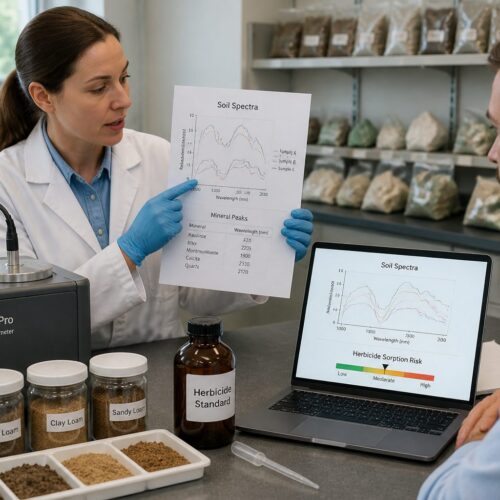
Soil spectroscopy is a technique that uses light to analyze the chemical composition of soil. It is based on the principle that different soil components absorb and reflect light at different wavelengths.
By measuring the reflectance of light from a soil sample, we can determine the amounts of various constituents, including soil organic matter.
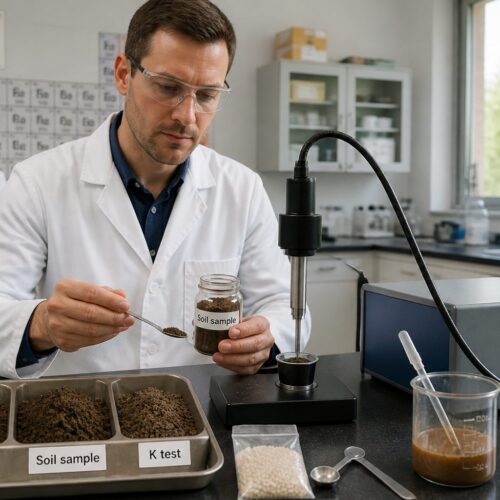
The process begins with collecting a soil sample from the field. The sample is then dried and ground to a fine powder to ensure a uniform surface for analysis.
The prepared sample is then placed in a spectrometer, which directs a beam of light onto the soil. The spectrometer measures the amount of light reflected by the sample across a range of wavelengths.
The resulting spectrum is a unique fingerprint of the soil’s composition. Different organic compounds in the soil absorb light at specific wavelengths, creating characteristic peaks and valleys in the spectrum.
By analyzing these spectral features, we can quantify the amount of soil organic matter present. Sophisticated algorithms and calibration models are used to relate the spectral data to SOM content.
These models are typically developed by correlating spectral data with laboratory measurements of SOM. The lab measurements are time-consuming and expensive, but they provide the ground truth for calibrating the spectroscopic method.
Once calibrated, the spectroscopic method can rapidly analyze many samples. This makes it a cost-effective alternative to traditional laboratory methods.
Understanding Spectral Signatures
Different types of organic matter have distinct spectral signatures. Humus, for example, exhibits a broad absorption feature in the visible and near-infrared regions.
This is due to the presence of aromatic carbon structures and various functional groups. Fresh plant residues, on the other hand, have stronger absorption features in the shortwave infrared region.
| Organic Matter Type | Spectral Region | Characteristic Features |
|---|---|---|
| Humus | Visible and Near-Infrared (VNIR) | Broad absorption, aromatic carbon |
| Fresh Plant Residues | Shortwave Infrared (SWIR) | Strong absorption, cellulose, lignin |
| Microbial Biomass | UV-Visible | Absorption by pigments and proteins |
| Decomposing Material | VNIR and SWIR | Variable, depends on decomposition stage |
Understanding these spectral signatures allows us to differentiate between different types of organic matter. This provides more detailed information about soil carbon cycling.
Spectral analysis of SOM can also provide insights into the quality of organic matter. Ratios of different spectral bands can be used to estimate the degree of humification, which is an indicator of organic matter stability.
Using Spectral Data to Monitor Organic Matter Levels
Soil spectroscopy can be used to monitor changes in organic matter levels over time. This is particularly useful for assessing the impact of different management practices on soil carbon sequestration.
By collecting spectral data at regular intervals, we can track the accumulation or loss of organic matter in the soil. This provides valuable feedback on the effectiveness of soil management strategies.
For example, if a farmer implements a cover cropping system, soil spectroscopy can be used to monitor the increase in SOM. The spectral data can also be used to optimize the timing and type of cover crop.
Similarly, if a farmer is concerned about soil degradation, spectroscopy can be used to track the decline in SOM. This information can be used to implement corrective measures, such as reduced tillage or increased organic amendments.
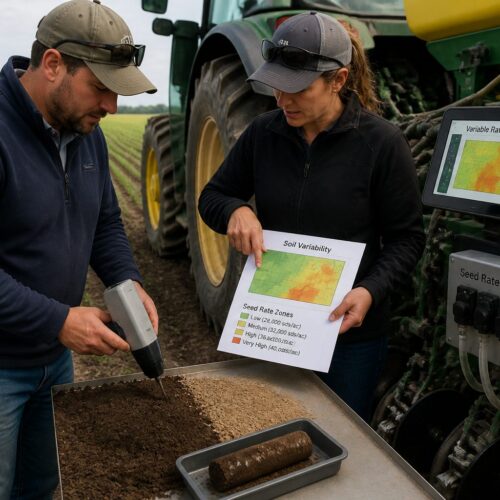
Soil spectroscopy is also useful for creating spatial maps of organic matter content. By collecting spectral data at multiple locations across a field, we can generate a detailed map of SOM distribution.
These maps can be used to guide variable rate application of fertilizers and organic amendments. This ensures that resources are applied where they are needed most, improving efficiency and reducing environmental impact.
Remote sensing techniques can also be used to collect spectral data over large areas. Satellite and airborne sensors can provide a broad overview of soil organic matter distribution across entire farms or regions.
This is particularly useful for monitoring soil health at a landscape scale. It can help identify areas that are vulnerable to degradation and prioritize conservation efforts.
Improving Soil Organic Matter Through Management Practices
Several management practices can be used to increase soil organic matter levels. These practices generally involve increasing the input of organic materials to the soil and reducing the rate of decomposition.
One of the most effective ways to increase SOM is through the use of cover crops. Cover crops are plants grown specifically to protect and improve the soil.
They add organic matter to the soil through their root systems and above-ground biomass. Cover crops also help to reduce soil erosion and suppress weeds.
Another important practice is no-till farming. No-till farming involves planting crops without plowing or tilling the soil. Tillage can disrupt soil aggregates and increase the rate of organic matter decomposition.
By eliminating tillage, we can preserve soil structure and reduce carbon loss. This allows organic matter to accumulate over time.
The addition of compost and other organic amendments can also increase SOM. Compost is decomposed organic matter that can be added to the soil to improve its physical, chemical, and biological properties.
Other organic amendments include manure, biochar, and crop residues. These materials provide a source of carbon and nutrients for soil microorganisms, which help to build SOM.
Crop rotation is another important practice for maintaining soil health. Rotating crops can help to break pest and disease cycles, improve nutrient cycling, and increase SOM.
Integrating Spectroscopy Data with Organic Matter Management Plans
Soil spectroscopy can be a valuable tool for developing and implementing organic matter management plans. The data provided by spectroscopy can help to inform decisions about which management practices to use and how to optimize their implementation.
By using spectroscopy to monitor SOM levels, farmers can track the effectiveness of their management practices. This allows them to make adjustments as needed to achieve their goals.
- Baseline SOM assessment
- Regular monitoring of SOM changes
- Spatial mapping of SOM distribution
- Optimization of cover crop selection
- Evaluation of compost application rates
Spectroscopy can also be used to assess the quality of organic matter in the soil. This information can be used to select organic amendments that are best suited to the specific needs of the soil.
For example, if the soil is low in humus, a farmer might choose to apply a compost that is high in humic substances. If the soil is low in nutrients, a farmer might choose to apply a manure that is rich in nitrogen and phosphorus.
Case Studies: Successful Organic Matter Management Applications
Several case studies have demonstrated the effectiveness of using soil spectroscopy for organic matter management. These studies have shown that spectroscopy can provide valuable insights into soil health and help to improve agricultural practices.
One study in Iowa used soil spectroscopy to monitor the impact of different tillage practices on SOM. The study found that no-till farming resulted in a significant increase in SOM compared to conventional tillage.
The spectral data also revealed changes in the quality of organic matter. The no-till soils had a higher proportion of stable humus compared to the conventionally tilled soils.
Another study in California used soil spectroscopy to guide the application of compost in almond orchards. The study found that variable rate application of compost based on spectral data resulted in higher yields and improved nut quality.
The spectral data also helped to optimize the amount of compost applied. This reduced the cost of compost and minimized the risk of nutrient leaching.
A third study in Brazil used soil spectroscopy to assess the impact of different cover cropping systems on SOM. The study found that certain cover crops were more effective at increasing SOM than others.
The spectral data also provided insights into the mechanisms by which cover crops improve soil health. The cover crops that were most effective at increasing SOM also had the highest lignin content.
The lignin helps to stabilize organic matter in the soil, making it more resistant to decomposition. These case studies demonstrate the potential of soil spectroscopy to improve organic matter management.
Challenges and Limitations
While soil spectroscopy offers many advantages, it also has some limitations. One of the main challenges is the need for calibration models.
These models must be developed using laboratory measurements of SOM, which can be time-consuming and expensive. The accuracy of the spectroscopic method depends on the quality of the calibration model.
Another limitation is that soil spectra can be affected by other soil properties. Soil moisture, texture, and mineralogy can all influence the reflectance of light from the soil.
These factors must be taken into account when interpreting spectral data. Sophisticated algorithms can be used to correct for these effects, but they add complexity to the analysis.
The cost of spectroscopic equipment can also be a barrier for some users. High-quality spectrometers can be expensive, although lower-cost portable devices are becoming more available.
The data analysis also requires specialized knowledge and software. This can be a challenge for farmers and other users who are not familiar with spectroscopy.
Despite these challenges, soil spectroscopy is becoming more accessible and user-friendly. As the technology improves and costs decrease, it is likely to become an increasingly important tool for soil management.
Ongoing research is focused on developing more robust calibration models. This will reduce the need for laboratory measurements and improve the accuracy of the spectroscopic method.
Future Trends in Soil Spectroscopy
The field of soil spectroscopy is rapidly evolving. New technologies and applications are constantly being developed, promising to further enhance our ability to understand and manage soil health.
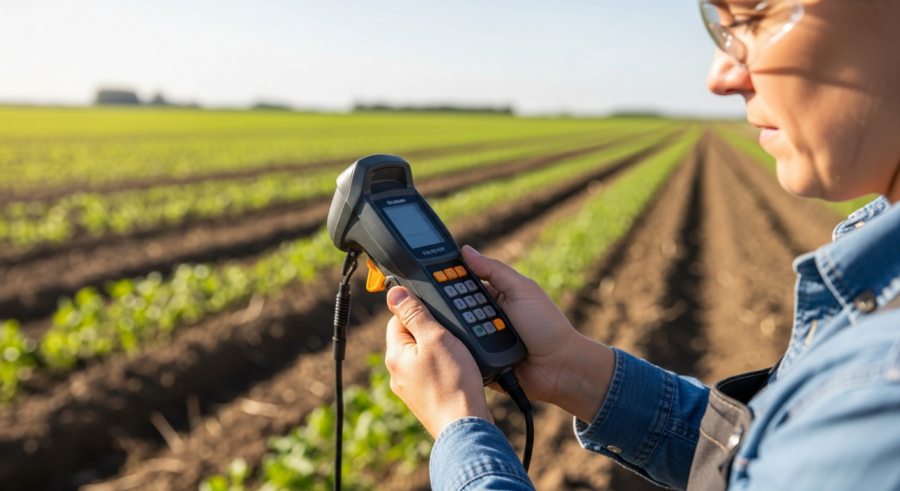
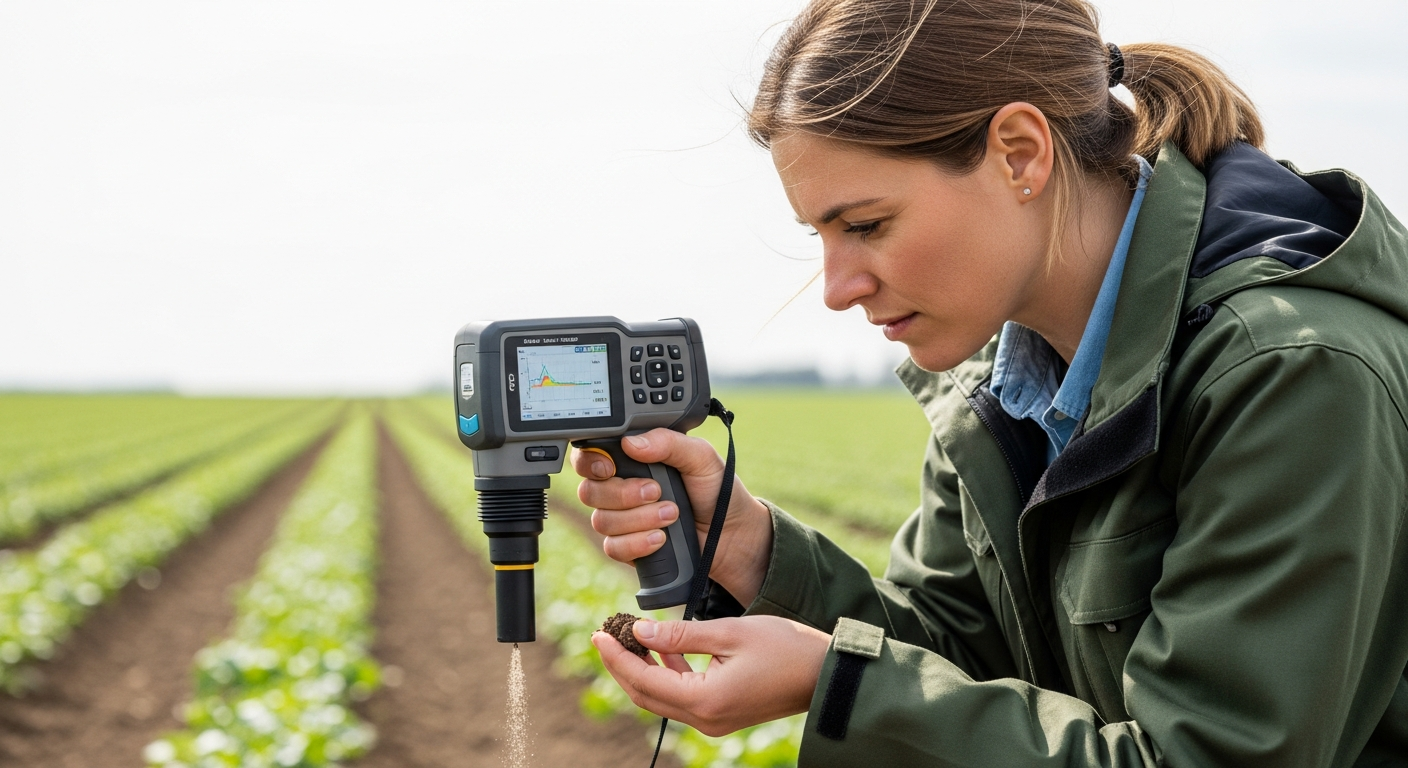
One trend is the development of more portable and affordable spectrometers. These devices can be used in the field to collect real-time data on soil properties.
This allows farmers to make informed decisions about soil management practices on the spot. Another trend is the integration of soil spectroscopy with other precision agriculture technologies.
For example, spectroscopy data can be combined with GPS and GIS to create detailed maps of soil properties. These maps can be used to guide variable rate application of fertilizers, pesticides, and irrigation.
Machine learning algorithms are also being used to analyze soil spectral data. These algorithms can identify complex patterns and relationships that are not apparent to the human eye.
This can lead to new insights into soil processes and improved predictions of soil behavior. The integration of soil spectroscopy with remote sensing technologies is also expanding.
Satellite and airborne sensors can provide a broad overview of soil properties over large areas. This information can be used to monitor soil health at a regional or national scale.
These advances will make soil spectroscopy an even more powerful tool for sustainable agriculture. It will help farmers to improve soil health, increase crop yields, and reduce environmental impact.
Conclusion
Soil spectroscopy is a valuable tool for measuring and monitoring soil organic matter. It offers a rapid, cost-effective, and non-destructive alternative to traditional laboratory methods.
By integrating spectroscopy data with organic matter management plans, farmers can make informed decisions about soil management practices. This can lead to improved soil health, increased crop yields, and reduced environmental impact.
The future of soil spectroscopy is bright. Ongoing research and technological advancements are making it an even more powerful tool for sustainable agriculture.
As the technology becomes more accessible and user-friendly, it is likely to play an increasingly important role in soil management. The spectral analysis of SOM is crucial for understanding carbon cycling.