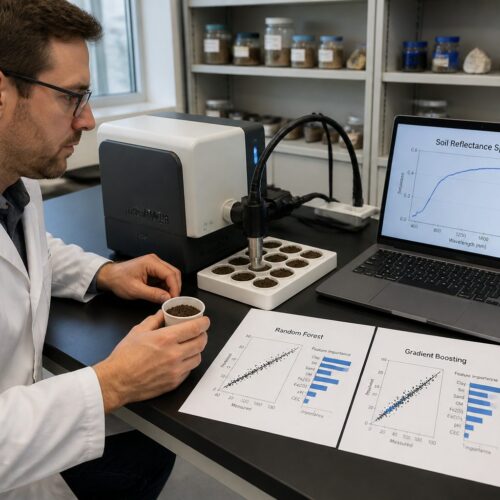

In precision agriculture, the in-depth analysis of soil spectral data is crucial for understanding various soil properties and optimizing crop yields effectively. Conventional preprocessing methods often fall short in their performance, especially when dealing with the complexities inherent in spectral data, leading to suboptimal results in soil analysis that can impact agricultural productivity.
Wavelet transforms offer a powerful and innovative alternative to these conventional techniques, addressing many limitations that are inherent in traditional preprocessing methods. They provide enhanced and sophisticated capabilities for spectral signal processing in soil analysis, making them essential tools for modern agricultural practices that seek to maximize efficiency and output.
This article delves into the numerous advantages of wavelet transforms in soil spectroscopy, exploring their various applications in both feature extraction and modeling. By enhancing the understanding of these concepts, agricultural professionals can better leverage soil NIR wavelet decomposition for significantly improved decision-making processes in farming and land management.
Limitations of Conventional Preprocessing That Wavelets Overcome
Conventional preprocessing techniques, such as baseline correction and normalization, often struggle significantly with noise and variability found within spectral data. These traditional methods may inadvertently remove valuable information critical to accurate interpretations of soil properties, leading to less informed agricultural decisions and practices.
Wavelet transforms, on the other hand, excel in managing non-stationary signals and can effectively isolate noise from genuine spectral features, which enhances their utility. This capability allows for a more accurate representation of soil characteristics, enabling better-informed agricultural practices that can lead to improved crop yields and soil health.
By overcoming the numerous limitations associated with conventional methods, wavelet transforms significantly enhance the overall reliability of soil spectral analysis. This improvement is crucial for precision agriculture, where every detail concerning soil health and composition can dramatically impact crop productivity and agricultural success.
Moreover, wavelet transforms facilitate multi-resolution analysis, allowing researchers to examine soil spectra at various scales and depths. This flexibility is particularly beneficial when dealing with heterogeneous soil conditions that may vary widely across different fields and geographical locations.
As we continue to advance in the field of precision agriculture, understanding the limitations of conventional preprocessing methods and the advantages provided by wavelet transforms becomes imperative for researchers and agronomists. This knowledge equips them with the necessary tools needed to optimize soil analysis methodologies effectively and improve overall agricultural outcomes.
Discrete vs. Continuous Wavelet Transforms for Spectral Data
Wavelet transforms can be effectively categorized into discrete and continuous types, each having unique applications and benefits in the analysis of spectral data. Discrete wavelet transforms (DWT) are particularly effective for feature extraction in soil spectral studies, as they allow for efficient representation of the data.
In contrast, continuous wavelet transforms (CWT) provide a more comprehensive view of the spectral data but are computationally intensive and require more processing power. Understanding the distinctions between these two transforms is essential for selecting the appropriate method tailored to specific soil analysis tasks and objectives.
DWT is advantageous primarily for its ability to condense data while still retaining critical information, making it ideal for wavelet spectroscopy soil analysis. This method effectively reduces dimensionality, which in turn enhances the efficiency of subsequent modeling processes and data interpretation efforts.
CWT, while providing richer detail and a more nuanced view of the spectral data, may introduce complexities that are unnecessary for certain straightforward applications. Therefore, discerning when to apply each type can significantly impact the outcomes of soil spectral feature extraction and the insights drawn from such analyses.
Ultimately, the choice between using discrete and continuous wavelet transforms hinges on the specific goals of the analysis and the nature of the spectral data being examined. A clear understanding of these options supports more effective and targeted soil analysis in the context of precision agriculture, optimizing both resource use and crop management strategies.
Selecting the Right Mother Wavelet for Soil Reflectance Spectra
The selection of the mother wavelet is a crucial step for optimizing the wavelet transform in the analysis of soil reflectance spectra. Each mother wavelet possesses distinct characteristics that may suit different types of spectral data, which can influence the outcomes of the analysis significantly.
Choosing the appropriate mother wavelet can have a profound influence on the accuracy and reliability of the resulting spectral features extracted from the data. Commonly used mother wavelets in soil spectral analysis include Haar, Daubechies, and Symlets, each of which offers unique advantages tailored to specific analytical needs.
| Mother Wavelet | Characteristics | Best Use Case |
|---|---|---|
| Haar | Simplest wavelet, good for step functions | Basic soil property analysis |
| Daubechies | Compactly supported, smooth | Detailed soil spectra |
| Symlets | Symmetrical, less phase distortion | High-resolution soil analysis |
This table highlights the strengths and best use cases for various mother wavelets in the context of soil spectral analysis, providing a quick reference for researchers. Understanding these nuances helps researchers tailor their analytical approach to fit the specific characteristics of the soil being studied, ultimately leading to better insights.
Ultimately, selecting the right mother wavelet not only enhances the effectiveness of wavelet transforms in soil spectral feature extraction but also influences the overall accuracy of the analyses conducted. This informed choice can lead to more accurate interpretations of soil properties and significantly improved agricultural outcomes through better management practices.
Decomposing a Soil Spectrum Into Approximation and Detail Coefficients
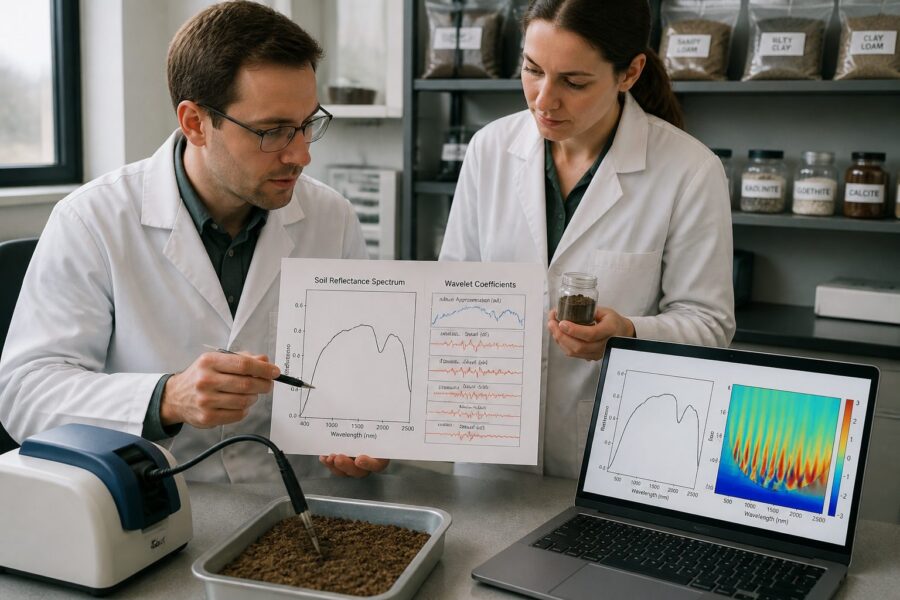
Wavelet decomposition involves a systematic process of breaking down a soil spectrum into both approximation and detail coefficients. This analytical process allows for a much clearer understanding of the underlying spectral features that play a vital role in soil analysis.
Approximation coefficients capture the broad trends of the spectrum, while detail coefficients provide deeper insights into finer variations that may be present. Together, they form a comprehensive picture of the soil’s spectral characteristics, which is necessary for effective analysis and modeling.
This dual representation is not merely beneficial but essential for effective soil spectral modeling, as it enables the identification of important features that may influence soil health and productivity over time. By leveraging both sets of coefficients, researchers can significantly enhance the accuracy of their analyses and better inform agricultural practices.
Moreover, analyzing both approximation and detail coefficients can reveal critical information regarding soil moisture levels, organic matter content, and nutrient availability. This knowledge is vital for optimizing crop management practices in precision agriculture, as it allows farmers to make data-driven decisions that enhance productivity.
Through the process of wavelet decomposition, soil scientists can extract meaningful data that supports better decision-making in various agricultural contexts. This technique is a game-changer for those looking to utilize soil spectral data effectively, paving the way for advancements in soil management and agricultural sustainability.
Using Wavelet Coefficients as Input Features for Partial Least Squares Models
Integrating wavelet coefficients as input features for Partial Least Squares (PLS) models can significantly enhance the predictive capabilities of these models. This innovative approach allows for the efficient modeling of complex relationships that exist between soil spectral data and various soil properties.
Wavelet coefficients encapsulate essential information that can improve model performance, leading to more accurate and reliable predictions in soil analysis. By utilizing these coefficients, researchers can focus on the most relevant features for soil analysis, simplifying the modeling process.
This method not only streamlines the modeling process but also reduces the risk of overfitting, a common challenge in predictive modeling. As a result, PLS models become more generalizable, providing reliable insights into soil characteristics that can be applied across different contexts.
Moreover, employing wavelet coefficients can enhance the interpretability of the models, making it easier for researchers and agronomists to understand the underlying factors affecting soil properties. This aspect is particularly beneficial for agronomists seeking actionable insights from their analyses, allowing them to make informed decisions.
Incorporating wavelet coefficients into PLS models represents a forward-thinking and innovative approach to soil spectral analysis. It underscores the importance of advanced techniques in achieving precision agriculture goals, ultimately promoting better resource management and crop yields.
Noise Thresholding via Wavelet Decomposition in Low-Signal Spectra
Noise present in low-signal spectra can significantly hinder the accuracy of soil analysis and lead to misleading interpretations. Wavelet decomposition offers a robust and effective method for thresholding noise, thus enhancing the overall quality of spectral data that is analyzed.
By effectively separating noise from important spectral features, researchers can ensure that their analyses are based on reliable and high-quality data. This capability is particularly valuable in environments where signal quality may be compromised due to various external factors, such as soil type or moisture content.
- Improved signal clarity that leads to more accurate analyses
- Enhanced feature extraction capabilities, revealing important soil properties
- Reduced false positives in model predictions, increasing confidence in results
- Increased model reliability, making insights more actionable
- Better data-driven decisions, ultimately optimizing agricultural practices
Applying noise thresholding through wavelet decomposition can lead to significantly more accurate interpretations of soil properties and conditions. As a result, agricultural practices can be optimized based on reliable insights derived from well-analyzed spectral data, benefiting both farmers and researchers.
Comparing Wavelet-Based Models to Standard Savitzky-Golay Preprocessing
When comparing wavelet-based models to those using standard Savitzky-Golay preprocessing methods, notable differences and advantages emerge that are worth considering. Wavelet transforms generally outperform Savitzky-Golay methods in handling noise and retaining essential spectral features that are critical for accurate analysis.
This advantage is crucial for soil spectral feature extraction, as it ensures that vital information is not lost during the preprocessing phase, enhancing the overall quality of the data. Wavelet-based models provide greater flexibility and efficiency in analyzing complex soil spectral data, leading to more reliable outcomes.
Moreover, wavelet methods facilitate multi-resolution analysis, which enables researchers to gain a deeper understanding of the spectral data being analyzed. This capability allows for more precise modeling of soil properties and improved agricultural outcomes, ultimately benefiting crop management practices.
In contrast, Savitzky-Golay preprocessing methods may introduce artifacts that can mislead interpretations and obscure important spectral features. Understanding these differences helps researchers make informed choices about preprocessing techniques in soil analysis, ensuring that the best methods are employed for each unique situation.
Ultimately, the comparison highlights the numerous advantages of wavelet-based approaches in precision agriculture, showcasing their effectiveness in enhancing the reliability and accuracy of soil spectral analysis. These methods promote better crop management practices, making them indispensable tools for modern agricultural professionals.
Computational Implementation in Python Using PyWavelets
Implementing wavelet transforms in Python has been made accessible through the PyWavelets library, a powerful tool designed for wavelet analysis. This library provides a straightforward interface for performing wavelet analysis on soil spectral data, making it easier for researchers to adopt these techniques.
With PyWavelets, researchers can easily apply various wavelet transforms and decompositions to their spectral data, facilitating efficient spectral signal processing in soil analysis. The ease of use offered by this library enables researchers to focus more on their analyses and less on the complexities of implementation.
Here’s a simple code snippet to get started with wavelet decomposition:
“`python
import numpy as np
import pywt
data = np.array([…]) # Your soil spectral data here
coeffs = pywt.wavedec(data, ‘db1’) # Using Daubechies wavelet
“`
This code snippet initializes an array with soil spectral data, applies the Daubechies wavelet transform, and outputs the decomposition coefficients derived from the analysis. Such implementations empower researchers to conduct sophisticated analyses with relative ease, promoting deeper insights into soil properties and conditions.
Published Studies Demonstrating Wavelet Improvements in Soil Spectral Modeling
Numerous studies have been conducted that highlight the effectiveness of wavelet transforms in enhancing soil spectral modeling, showcasing tangible improvements in predictive accuracy and feature extraction capabilities. These investigations consistently showcase how wavelet-based approaches significantly outperform traditional methods in estimating soil organic matter content and other critical metrics.
For instance, research has shown that wavelet-based approaches can lead to more accurate estimations of soil properties, thereby facilitating better management practices. Such findings underscore the potential of wavelet spectroscopy soil analysis in advancing precision agriculture practices and promoting sustainable farming methods.
Furthermore, various studies have documented successful applications of wavelet techniques across different soil types, conditions, and environmental settings. These results validate the versatility and robustness of wavelet transforms in soil spectral analysis, proving their effectiveness in a wide range of agricultural contexts.
As the field of soil spectroscopy continues to evolve, ongoing research remains dedicated to exploring innovative applications of wavelet methods. This ongoing exploration promises to further enhance the accuracy and reliability of soil analysis in precision agriculture, ultimately leading to improved agricultural productivity and sustainability.
In conclusion, wavelet transforms represent a significant advancement in the field of soil spectral analysis, offering innovative solutions to conventional challenges. Their ability to overcome traditional limitations and improve predictive modeling makes them an invaluable tool for precision agriculture, paving the way for future advancements in sustainable farming practices.