
Understanding potassium fixation in clay-rich soils is crucial for effective soil K management in precision agriculture. This phenomenon can significantly impact potassium availability for crops, making it essential to comprehend its underlying mechanisms and implications on agricultural practices.
Potassium fixation refers to the process by which potassium ions are held tightly within the structure of clay minerals, rendering them unavailable for plant uptake and affecting overall soil fertility. This blog will explore the mineral types responsible for potassium fixation, the importance of spectral identification, and a variety of strategies for optimizing potassium fertilization to improve crop yield and quality.
With the advent of advanced soil spectroscopy techniques, farmers can now map potassium fixation zones more accurately than ever before. This enhanced understanding aids in developing targeted potassium management strategies for improved crop yields, allowing for more efficient use of fertilizers and resources in precision agriculture.
Understanding Potassium Fixation in Clay-Rich Soils
Potassium fixation is predominantly observed in clay-rich soils, where specific clay minerals can trap potassium ions within their layered structures. This trapping occurs in the interlayers of certain clay minerals, which can lead to reduced availability of potassium for plant use, thus necessitating a thorough understanding of this phenomenon for agricultural effectiveness.
Understanding the mineralogical composition of soil is vital in determining the extent of potassium fixation and its impact on plant growth. The type of clay minerals present significantly influences how much potassium can be fixed within the soil matrix and subsequently released for plant uptake, dictating the need for tailored fertilization strategies.
Soils rich in smectite and vermiculite clays are particularly prone to potassium fixation due to their unique structural properties. These minerals possess a high cation exchange capacity, which can lead to significant retention of potassium ions, making it challenging for plants to access this essential nutrient efficiently.
In contrast, soils with kaolinite and illite exhibit lower rates of potassium fixation, which allows for more potassium to remain available for plant uptake. This difference highlights the importance of understanding clay mineralogy in developing effective soil potassium management strategies to enhance overall crop productivity and health.
Incorporating knowledge about potassium fixation into soil management practices can significantly enhance crop production and sustainability. Consequently, farmers can optimize potassium fertilization based on the specific mineralogy of their soils, leading to improved nutrient efficiency and reduced fertilizer costs.
Mineral Types That Fix Potassium and How to Identify Them Spectrally
The primary minerals responsible for potassium fixation include smectite, vermiculite, and certain illitic clays that can hold potassium ions tightly within their crystal structures. Identifying these minerals through spectral analysis allows for a more nuanced and effective approach to potassium management, enabling farmers to make informed decisions based on the specific conditions of their soils.
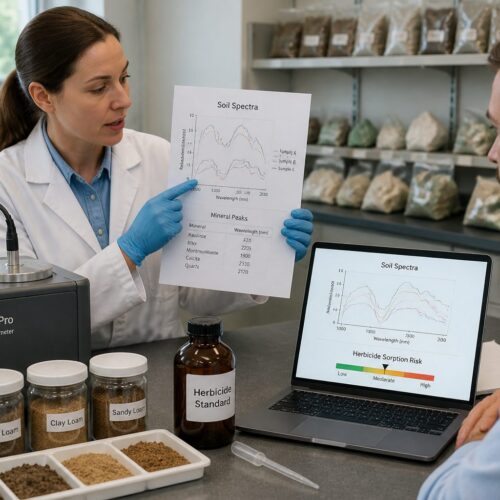
Spectral techniques, such as near-infrared (NIR) spectroscopy, enable the identification of specific clay minerals in soil samples with remarkable accuracy. This method provides crucial insight into the mineral composition that influences not only potassium availability but also the overall health of the soil ecosystem.
For example, smectite minerals can be identified by characteristic absorption features in the NIR spectrum, which can provide essential information about their presence and concentration in the soil. Similarly, vermiculite shows distinct spectral signatures, allowing for differentiation in potassium fixation potential, thus aiding in precise nutrient management.
By utilizing soil spectroscopy, farmers can pinpoint areas with high potassium fixation potential, leading to more effective and targeted fertilization strategies. This information is invaluable for tailoring potassium management practices to specific field conditions, ensuring that crops receive the nutrients they require for optimal growth.
Overall, the integration of mineralogical data from soil spectroscopy into potassium management strategies can lead to more effective use of fertilizers and improved agricultural outcomes. This approach enhances potassium availability and optimizes crop yields, contributing to sustainable farming practices and food security.
Differentiating Exchangeable, Fixed and Structural Potassium Pools
In soil chemistry, potassium exists in three distinct pools: exchangeable, fixed, and structural, each playing a unique role in plant nutrition and soil fertility. Understanding these pools is critical for effective potassium management in clay-rich soils, where the balance of these different forms can significantly impact crop yields.
Exchangeable potassium is readily available for plant uptake, while fixed potassium is tightly bound within clay minerals and is not directly accessible to plants under normal conditions. Structural potassium, on the other hand, is a component of the mineral lattice and is also not available for plant use, further complicating the nutrient dynamics in soil.
| Potassium Pool | Availability | Mineral Associations |
|---|---|---|
| Exchangeable | High | Soil solution, adsorbed on clay |
| Fixed | Low | Smectite, vermiculite |
| Structural | Very Low | Feldspars, micas |
| Plant Uptake | Only exchangeable | N/A |
Each potassium pool plays a vital role in soil fertility and crop nutrition, influencing how effectively plants can absorb this essential nutrient. Understanding the differences among these pools allows farmers to develop targeted potassium fertilization strategies that enhance crop productivity and overall soil health.
By assessing the availability of each potassium pool, farmers can make informed decisions about fertilizer applications tailored to their specific soil conditions. This knowledge is fundamental for optimizing potassium management in precision agriculture, ensuring that crops receive the nutrients they require for optimal growth and development.
Field Mapping of High-Fixation Zones Using Portable Spectrometers
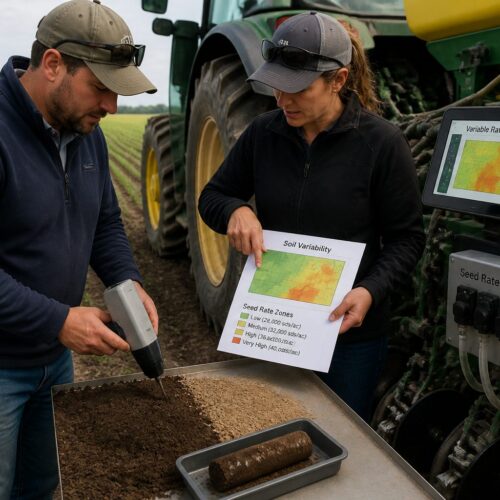
Field mapping of potassium fixation zones can dramatically improve potassium management practices by allowing farmers to visualize and understand the spatial variability of soil properties. Utilizing portable spectrometers enables real-time analysis of soil mineralogy in the field, providing immediate data that can influence decision-making processes.
These portable devices can quickly identify areas with high potassium fixation potential, enabling targeted potassium applications that can enhance nutrient uptake efficiency. By mapping these zones accurately, farmers can optimize their fertilization strategies, ensuring that potassium is applied where it is needed most for crop growth.
Real-time data collection enhances decision-making, ensuring that potassium is applied where it is needed most, thus reducing waste and improving overall resource management. This targeted approach not only maximizes crop uptake but also minimizes environmental impacts associated with over-fertilization.
Furthermore, field mapping assists in understanding the spatial variability of soil properties, which can influence crop performance across different areas of a field. This knowledge is crucial for developing site-specific management plans tailored to individual field conditions, thereby increasing overall agricultural efficiency.
Ultimately, using portable spectrometers for field mapping provides a robust tool for precision agriculture, enabling farmers to adapt their practices to the unique characteristics of their soils. This technology helps farmers make data-driven decisions that improve productivity and sustainability in their farming operations.
Adjusting Potassium Application Rates Based on Fixation Risk
Adjusting potassium application rates based on fixation risk is a critical strategy for effective soil K management in various agricultural contexts. By understanding the fixation potential of their soils, farmers can tailor their fertilization practices accordingly, ensuring that crops receive the nutrients they need without unnecessary waste.
High-fixation soils require more careful potassium management to ensure that crops receive adequate nutrients for optimal growth and development. By adjusting application rates based on the degree of fixation, farmers can mitigate the risks associated with potassium fixation, ultimately improving crop performance.
- Test soil mineralogy to determine potassium fixation potential
- Assess fixation potential through soil analysis and spectral data
- Determine appropriate application rates based on soil characteristics
- Monitor plant uptake to evaluate nutrient efficiency
- Adjust strategies as needed to optimize potassium management
By implementing these adjustments, farmers can enhance potassium availability for crops, leading to improved plant health and productivity in the long term. This proactive approach not only supports crop yields but also contributes to sustainable farming practices by minimizing unnecessary inputs.
Therefore, understanding fixation risk is essential for potassium fertilization optimization in precision agriculture. This knowledge allows for more efficient use of resources, ultimately supporting sustainable farming practices and enhancing agricultural profitability.
Split Application Strategies Informed by Mineralogical Maps
Split application strategies are an effective way to enhance potassium management in clay-rich soils, allowing farmers to apply fertilizers at strategic intervals throughout the growing season. By leveraging mineralogical maps that detail potassium fixation potential, farmers can time their applications to coincide with critical growth stages when crops need nutrients the most.
This approach allows for the efficient use of fertilizers, ensuring that potassium is available to plants when they require it for optimal growth and productivity. Additionally, split applications can help reduce the risk of potassium fixation, as smaller doses are less likely to become tightly bound within the soil matrix.
By applying smaller doses throughout the growing season, farmers can improve nutrient uptake and minimize potential losses due to leaching or fixation. This strategy not only enhances crop performance but also supports environmental sustainability by reducing excess fertilizer runoff into surrounding ecosystems.
Informed decision-making, based on mineralogical maps, allows farmers to apply potassium more strategically, maximizing its availability for crops while minimizing waste. This targeted approach can significantly increase the effectiveness of potassium fertilization practices, resulting in higher yields and better resource management.
Overall, split application strategies driven by mineralogical insights provide a smart solution for managing potassium in precision agriculture. Farmers can optimize their inputs and achieve better yields through this innovative approach, ultimately leading to more sustainable farming practices and improved economic viability.
Long-Term K Buildup Monitoring Through Repeated Spectral Surveys
Long-term monitoring of potassium buildup is essential for sustainable soil management and effective nutrient management practices. Repeated spectral surveys can provide valuable insights into how potassium accumulates in the soil over time, enabling farmers to track changes in potassium pools and make necessary adjustments to their management practices.
By analyzing spectral data collected over multiple growing seasons, farmers can track changes in potassium levels and assess the effectiveness of their fertilization strategies. This proactive approach ensures that potassium levels remain balanced and available for optimal crop health, thereby enhancing overall agricultural productivity.
Through consistent monitoring, farmers can identify trends in potassium fixation and availability, allowing them to make informed decisions regarding future potassium applications. This knowledge enables farmers to optimize their nutrient management strategies based on actual soil conditions, rather than relying solely on generalized recommendations.
Furthermore, long-term monitoring contributes to better resource management and enhances the sustainability of agricultural practices. It allows farmers to adapt their strategies based on actual soil conditions, ensuring that they are applying the right amount of potassium at the right time for maximum crop benefit.
Ultimately, repeated spectral surveys facilitate a deeper understanding of potassium dynamics in soils, providing farmers with the information they need to make data-driven decisions. This ongoing assessment is crucial for effective soil management in precision agriculture, allowing for continuous improvement in crop production and environmental stewardship.
Economic Impact of Potassium Fixation on Row Crop Profitability
The economic impact of potassium fixation on row crop profitability is significant and cannot be overlooked. Understanding how fixation influences potassium availability directly affects financial decisions regarding fertilizer applications, which can ultimately determine the success or failure of a farming operation.
When potassium is fixed in the soil, it is less available for plant uptake, which can result in reduced crop yields and quality. This reduction directly affects profitability, making effective potassium management essential for successful farming and long-term viability in the agricultural sector.
Farmers who account for potassium fixation in their management practices can optimize their fertilization strategies, leading to improved crop health and subsequent increases in yield. This optimization not only enhances crop productivity but also improves overall farm profitability by ensuring that resources are utilized efficiently and effectively.
Investing in technologies like soil spectroscopy can provide farmers with the insights needed to manage potassium effectively and sustainably. This investment can lead to better resource allocation, enhanced nutrient efficiency, and improved economic outcomes, all of which are critical for maintaining competitiveness in today’s agricultural landscape.
In summary, understanding the economic implications of potassium fixation is vital for maximizing row crop profitability and ensuring the sustainability of farming practices. Effective potassium management strategies can significantly impact the bottom line for farmers, ultimately supporting the economic health of the agricultural industry.
Combining XRF Elemental Data With NIR Organic Matter for K Management
Combining X-ray fluorescence (XRF) elemental data with near-infrared (NIR) spectroscopy provides a comprehensive approach to potassium management that can greatly enhance understanding of soil nutrient dynamics. This integration allows for a more detailed understanding of soil composition and potassium dynamics, enabling farmers to make well-informed decisions regarding nutrient applications.
By analyzing both elemental and organic matter data, farmers can gain insights into how potassium interacts within the soil ecosystem, including its availability and fixation tendencies. This understanding enhances the ability to manage potassium effectively in precision agriculture, ensuring that crops receive the nutrients they need for optimal growth and development.
Such combined analyses can reveal important correlations between organic matter content and potassium availability, providing critical information for determining optimal fertilization strategies tailored to specific soil conditions. By leveraging this integrated data, farmers can enhance their potassium management practices and improve overall soil fertility.
Farmers can utilize this comprehensive information to optimize their fertilizer applications, ensuring that they are providing the right amount of potassium at the right time to meet the needs of their crops. By understanding the relationships between soil constituents, they can ultimately maximize nutrient efficiency and crop yield while minimizing environmental impacts.
In conclusion, the synergy between XRF elemental data and NIR organic matter analysis represents a powerful tool for potassium management in modern agriculture. This integrated approach supports sustainable agriculture by maximizing nutrient efficiency and promoting responsible resource management practices among farmers striving for long-term success.