
Managing perennial pastures effectively means knowing what is happening beneath the surface, especially concerning soil nutrients. Traditional soil testing often involves sending samples to a lab, which can be slow and offer limited spatial detail across a large field. This is where soil spectroscopy pasture management comes into its own, providing rapid, non-destructive nutrient monitoring capabilities right where you need them.
Precision agriculture demands a more granular understanding of soil conditions, particularly in grazed fields where nutrient distribution is rarely uniform. Understanding the variability in pasture soil analysis using spectroscopy helps farmers make smarter decisions about fertilization and grazing rotations. This technology directly supports better management of grazing soil nutrients, leading to healthier forage and more productive livestock.
Embracing advanced techniques like soil spectroscopy allows you to move beyond guesswork and implement targeted strategies for optimal forage growth. It offers an unprecedented look at your pasture’s health, enabling proactive adjustments that can save money and improve environmental outcomes. This approach transforms how we think about pasture management, making nutrient monitoring more efficient and impactful than ever before.
How Grazing Pressure Creates Nutrient Variability Across Pastures
Livestock grazing on a pasture does not distribute nutrients evenly across the field; their movement patterns create significant variability. Animals tend to congregate in certain areas, like around water sources, shade trees, or gates, leading to concentrated manure deposits in those spots. This uneven distribution means some areas receive an abundance of nutrients while others become depleted over time.
The act of grazing itself also contributes to this imbalance, as animals selectively consume forage. They often prefer specific plant species or younger, more palatable growth, leaving less desirable plants or overgrazed patches behind. This selective grazing pressure impacts the cycling of nutrients, as different plants absorb and return nutrients to the soil at varying rates.
Areas of heavy traffic from livestock can also lead to soil compaction, which hinders nutrient uptake and water infiltration. Compacted zones often show reduced microbial activity, further disrupting the natural processes that make nutrients available to plants. Understanding these physical impacts is essential for effective grazing soil nutrients management.
Conversely, areas where animals rest or shelter frequently accumulate higher levels of organic matter and specific nutrients from their urine and feces. These hotspots can become excessively rich, potentially leading to nutrient runoff or imbalances that favor certain weed species. Identifying these zones requires careful pasture soil analysis.
Over time, without intentional management, these natural grazing patterns create a mosaic of nutrient-rich and nutrient-poor zones across the pasture. This makes uniform fertilizer applications inefficient and often wasteful, as some areas may receive too much while others still suffer from deficiencies. Precision monitoring through soil spectroscopy pasture management helps address this challenge head-on.
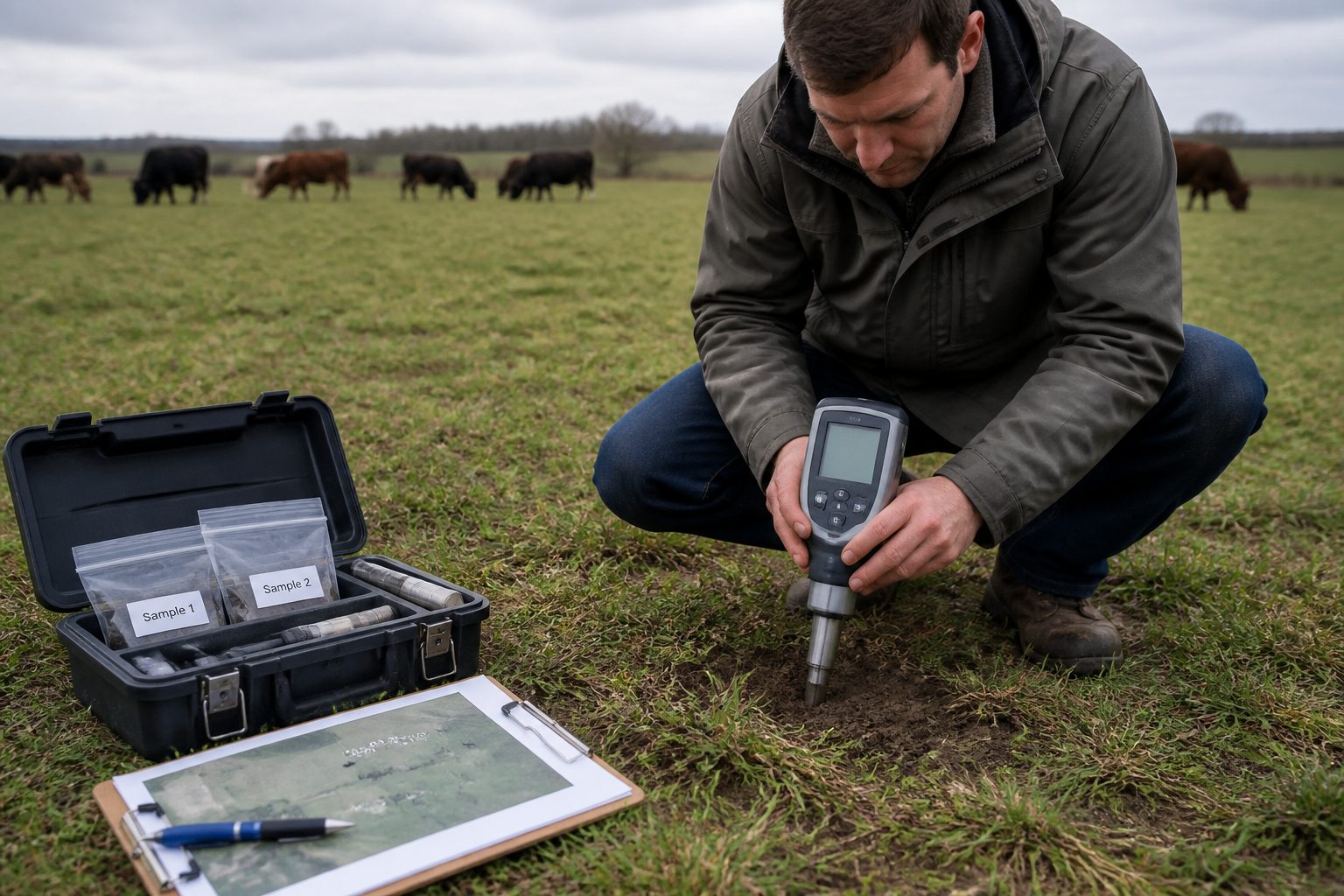
The movement of nutrients also varies with the type of livestock and their diet, influencing the composition of their waste. Different species have distinct preferences and digestive systems, leading to varied nutrient returns to the soil. This complexity highlights why a one-size-fits-all approach to pasture fertilization rarely yields optimal results.
Effective forage soil mapping must account for these dynamic processes to truly reflect the pasture’s nutrient status. Recognizing the spatial variability caused by grazing pressure allows for targeted interventions that promote healthier, more productive pastures. It truly changes how we approach nutrient management in a grazing system.
Key Spectral Indicators for Phosphorus, Potassium, and Organic Matter
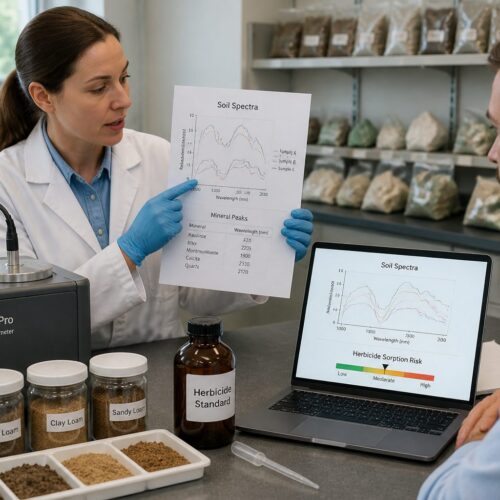
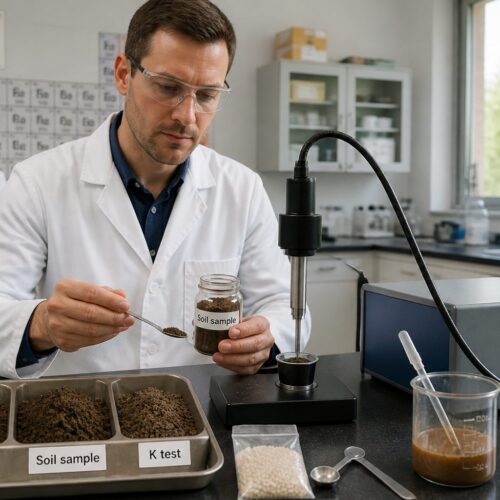
Soil spectroscopy relies on how different soil components absorb, reflect, or emit light at various wavelengths across the electromagnetic spectrum. Each nutrient or soil property has a unique spectral signature, allowing us to identify and quantify its presence. This technique offers a fast, non-destructive way to measure critical elements like phosphorus, potassium, and organic matter directly in the field.
For example, organic matter, a cornerstone of soil health, has strong absorption features in the visible and near-infrared regions, primarily due to its complex carbon structures. Phosphorus and potassium, while not directly spectrally active themselves, can be inferred through their correlation with other soil properties or specific absorption bands influenced by their compounds. Understanding these indicators is essential for effective pasture soil analysis spectroscopy.
| Nutrient/Indicator | Spectral Range (nm) | What it Indicates |
|---|---|---|
| Organic Matter (OM) | 400-2500 (Visible to Mid-Infrared) | Soil carbon content, water holding capacity, microbial activity, nutrient retention. |
| Phosphorus (P) | Indirect (via OM, iron oxides) | Plant available phosphorus levels, often correlated with soil texture and pH. |
| Potassium (K) | Indirect (via clay minerals, OM) | Exchangeable potassium levels, essential for plant water regulation and disease resistance. |
| Nitrogen (N) | Indirect (via OM, protein content) | Total nitrogen content, a key driver of plant growth and protein synthesis. |
Sampling Strategy for Irregular-Shaped Pasture Blocks
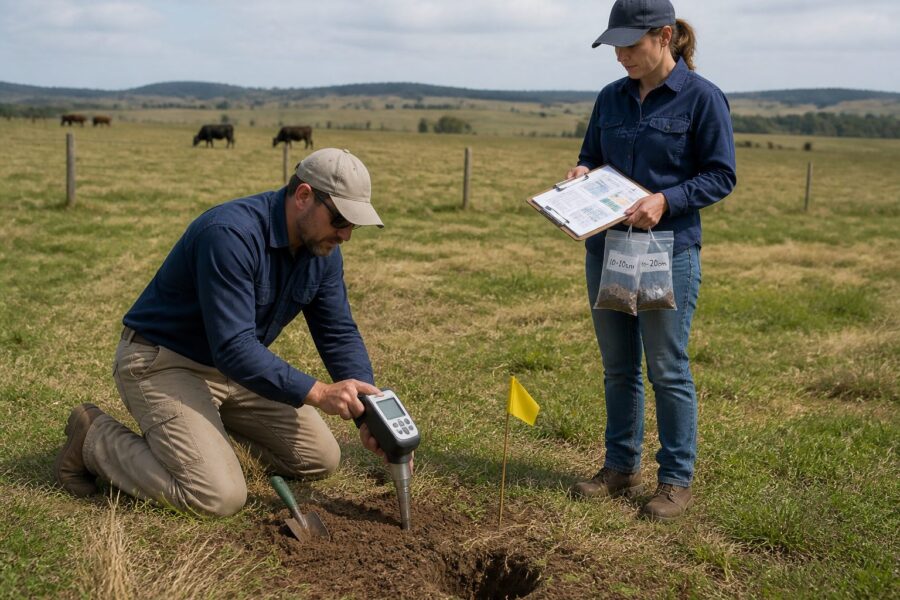
Pastures rarely come in neat, rectangular blocks, which means a standard grid-sampling approach might not be the most efficient or accurate strategy. Irregular shapes demand a more thoughtful and adaptable sampling plan to capture the true spatial variability of nutrients. Using GPS-enabled devices with soil spectroscopy tools becomes incredibly valuable here.
One effective method involves creating management zones based on historical data, topography, or visual observations of pasture performance. Within these zones, you can then implement a targeted sampling approach, ensuring that areas with distinct characteristics are adequately represented. This zone-based strategy helps focus your efforts where variability is most pronounced, optimizing your pasture soil analysis spectroscopy.
For truly irregular fields, a transect sampling method can be highly practical. This involves walking along predefined lines across the pasture, taking spectral measurements at regular intervals. Multiple transects crossing the field at different angles can provide a comprehensive picture of nutrient distribution, even in complex geometries.
Another approach combines grid sampling with smart interpolation. While a perfect grid may not fit the boundary, you can establish a virtual grid and collect samples at the closest accessible points within each cell. Advanced software can then interpolate the data to generate accurate forage soil mapping for the entire irregular area.
Always consider the impact of fixed features like water troughs, shade structures, or frequently used animal trails when designing your sampling routes. These areas are almost guaranteed to show different nutrient profiles due to concentrated animal activity. Including these specific spots in your sampling plan ensures a more complete understanding of grazing soil nutrients.
Remember that the goal is not just to collect data, but to collect representative data that accurately reflects the varying conditions across your pasture. This means being flexible with your sampling points and adapting to the unique characteristics of each field. A well-executed sampling strategy forms the foundation for meaningful soil spectroscopy pasture management.
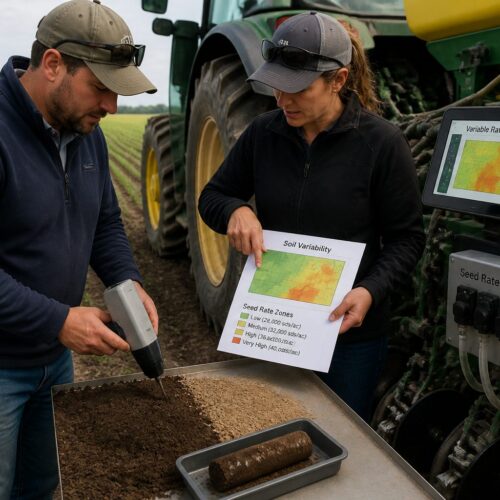
Using a handheld or vehicle-mounted spectrometer with real-time GPS integration simplifies the process of recording exact locations for each measurement. This precision is critical for generating accurate spectral maps and ensuring that follow-up actions like variable-rate fertilization are applied correctly. It removes much of the guesswork from traditional sampling methods.
Interpreting Spectral Maps to Identify Overgrazed and Recovery Zones
Spectral maps generated from soil spectroscopy data offer a color-coded visual representation of nutrient levels and soil properties across your pasture. Learning to interpret these maps is a critical skill for any farmer looking to implement precision grazing strategies. These maps quickly highlight areas of deficiency or excess, making it easy to spot problem zones.
Typically, darker or cooler colors on a map might indicate lower nutrient concentrations or less organic matter, often correlating with areas that have been overgrazed. These are zones where livestock have spent too much time, removing excessive forage and potentially compacting the soil. Identifying these spots is the first step toward remediation.
Conversely, lighter or warmer colors could point to higher nutrient levels, possibly indicating areas of nutrient accumulation from manure deposits or zones that have been rested effectively. These recovery zones show healthy soil conditions and good forage growth. They provide valuable insights into successful management practices.
Overgrazed zones often display lower organic matter content and reduced levels of key grazing soil nutrients like phosphorus and potassium. The spectral map provides immediate evidence of these issues, allowing you to prioritize these areas for intervention. You might consider reducing grazing pressure or applying targeted soil amendments.
By comparing maps over different grazing cycles or seasons, you can track the progress of recovery zones and observe the impact of your management decisions. A successful recovery zone will show an increase in organic matter and nutrient levels over time. This dynamic feedback helps refine your soil spectroscopy pasture management approach.
Look for patterns that align with known animal behavior or environmental factors, such as slopes, low-lying areas, or proximity to water. These correlations can help explain the observed nutrient distribution and inform future pasture layout or fencing decisions. Understanding these patterns is key to proactive management.
Ultimately, interpreting spectral maps empowers you to make data-driven decisions about rotating livestock, resting pastures, or applying specific soil amendments. This targeted approach ensures that resources are used efficiently, leading to healthier soil, more robust forage, and sustained productivity. Forage soil mapping becomes a powerful tool in your management arsenal.
Using Spectroscopy Data to Time Fertilizer Applications
Timing fertilizer applications precisely is just as important as the amount applied, especially in dynamic pasture environments. Soil spectroscopy pasture management provides the real-time data needed to make these critical timing decisions, moving beyond calendar-based applications to a more responsive system. This approach ensures nutrients are available when plants need them most, minimizing waste and maximizing uptake.
By identifying specific nutrient deficiencies through spectral maps, you can schedule fertilizer applications to coincide with periods of active forage growth or after significant grazing events. This targeted timing prevents nutrients from leaching away or being locked up in the soil before plants can utilize them. It’s a smarter way to manage grazing soil nutrients and support vigorous pasture growth.
- Apply phosphorus and potassium before spring growth begins.
- Target nitrogen applications after each grazing rotation.
- Fertilize depleted zones when soil moisture is optimal.
- Avoid application during heavy rainfall forecasts.
- Adjust timing based on forage species growth cycles.
- Consider soil temperature for microbial activity.
- Re-scan fields before a second application for verification.
Comparing Pre- and Post-Grazing Spectral Scans
To truly understand the impact of your grazing practices, comparing pre- and post-grazing spectral scans offers invaluable insights into nutrient dynamics. This direct comparison allows you to quantify how much nutrient removal occurred and how nutrients were redistributed by the livestock. It provides a clear, data-driven picture of your pasture’s response to grazing pressure.
A pre-grazing scan establishes a baseline of existing nutrient levels and organic matter before animals enter the paddock. This initial map shows you the starting condition of the soil, highlighting any existing deficiencies or areas of high fertility. It sets the stage for accurate assessment of changes.
Once the livestock have moved on, a post-grazing scan reveals the immediate effects of their presence. You can observe areas where forage consumption led to a reduction in certain nutrients or organic matter. This information helps identify zones that experienced heavy grazing and require a longer recovery period.
More importantly, the post-grazing scan also highlights areas where nutrients have been deposited through manure and urine. These nutrient-enriched spots show where the animals spent more time, effectively fertilizing those specific areas. Understanding these redistribution patterns is key to optimizing grazing soil nutrients management.
By overlaying the pre- and post-grazing maps, you can create difference maps that clearly show increases or decreases in specific nutrient levels. These difference maps are powerful tools for visualizing the efficiency of nutrient cycling within your pasture. They pinpoint exactly where the grazing impact was greatest, both positively and negatively.
This comparative analysis helps validate your grazing rotation plans and informs future decisions about stocking density and rest periods. If certain areas consistently show significant nutrient depletion after grazing, it suggests that grazing pressure needs adjustment. This feedback loop is essential for continuous improvement in soil spectroscopy pasture management.
Ultimately, this approach helps you fine-tune your grazing system to promote more even nutrient distribution and quicker pasture recovery. It offers tangible evidence of your management’s effectiveness, allowing for informed adjustments that lead to healthier soils and more resilient forage production. This detailed pasture soil analysis spectroscopy helps you master your grazing system.
Building a Nutrient Monitoring Routine for Perennial Pastures
Establishing a consistent nutrient monitoring routine using soil spectroscopy is fundamental for long-term pasture health and productivity. It transforms reactive management into a proactive strategy, allowing you to anticipate and address nutrient imbalances before they impact forage growth. A well-structured routine ensures you always have up-to-date information on your soil’s condition.
Begin by conducting a comprehensive baseline scan of all your perennial pastures at the start of the growing season. This initial forage soil mapping provides a foundational understanding of your fields’ nutrient status and highlights any existing variability. It gives you a starting point for all future comparisons and interventions.
Schedule follow-up scans at strategic intervals throughout the year, ideally before and after major grazing rotations or fertilizer applications. These periodic checks allow you to track changes in grazing soil nutrients over time and assess the effectiveness of your management decisions. Consistency is key to building a robust dataset.
Integrate your spectral data with other farm records, such as grazing dates, fertilizer application rates, and forage yield observations. This holistic approach provides a more complete picture of your pasture ecosystem and helps identify correlations between management practices and soil health outcomes. Data integration makes your soil spectroscopy pasture management truly powerful.
Regularly review your spectral maps and historical data to identify trends and persistent problem areas. Are certain paddocks consistently low in organic matter? Do specific zones always show nutrient accumulation? Recognizing these patterns helps refine your long-term pasture management strategy.
Adjust your fertilizer plans, grazing rotations, and even pasture renovation schedules based on the insights gained from your monitoring routine. This adaptive management approach ensures that your interventions are targeted and responsive to the actual needs of your soil. It moves you away from generic solutions toward precision agriculture.
Finally, consider investing in training for your team on how to operate the spectroscopy equipment and interpret the data effectively. Empowering your farm staff with this knowledge ensures the routine is consistently applied and the insights are fully utilized. This commitment to continuous learning will pay dividends in pasture productivity and sustainability.
Conclusion
Adopting soil spectroscopy for pasture management represents a significant leap forward in how we care for our grazing lands. It moves us beyond broad assumptions to precise, data-driven decisions that benefit both the environment and the farm’s bottom line. This technology truly empowers farmers with actionable insights.
The ability to rapidly monitor grazing soil nutrients across varied pasture landscapes allows for unprecedented accuracy in nutrient allocation. We can now pinpoint exactly where nutrients are needed, reducing waste and ensuring optimal forage growth. This precision is a game-changer for sustainable agriculture.
By leveraging pasture soil analysis spectroscopy, farmers can build more resilient and productive perennial pastures, capable of supporting healthier livestock and enhancing ecological balance. The detailed forage soil mapping provided helps identify overgrazed areas and track recovery, leading to more informed grazing rotations. It’s about working smarter, not just harder.
Implementing a routine of pre- and post-grazing scans, coupled with strategic sampling for irregular blocks, creates a dynamic feedback loop for continuous improvement. This systematic approach ensures that every management decision is backed by solid data. It transforms pasture management into a science.
Embrace the future of soil spectroscopy pasture management to unlock the full potential of your grazing operations. It is an investment in efficiency, sustainability, and long-term profitability. Your pastures, your livestock, and your business will thank you for it.