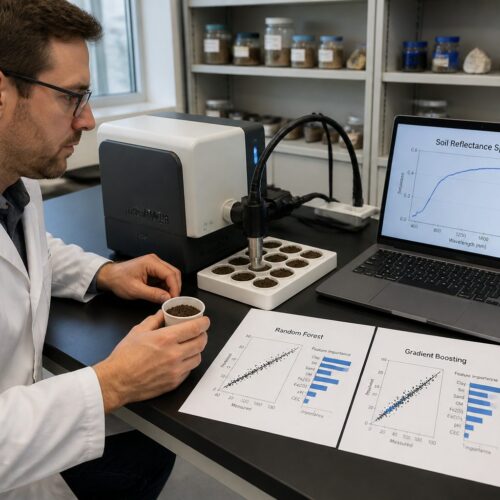


Soil spectroscopy is a powerful tool for precision agriculture, enabling rapid and non-destructive assessment of soil properties. However, the accuracy of spectroscopic measurements is significantly influenced by soil particle size, making it a critical factor in data interpretation and analysis.
Understanding and controlling the effects of soil particle size is essential for obtaining reliable and meaningful results from soil spectroscopy. This article examines how soil particle size affects spectroscopy measurements, explores methods for determining particle size distribution, and discusses strategies for preparing soil samples and correcting spectral data to minimize these effects.
By addressing these challenges, we can unlock the full potential of soil spectroscopy for precision agriculture, leading to more informed decisions regarding soil management and crop production. Let’s dive into the details of how soil particle size spectroscopy impacts our analysis.
Understanding the Role of Particle Size in Soil Spectroscopy
Soil particle size refers to the distribution of mineral particles within a soil sample, typically classified into sand, silt, and clay fractions. These particle size fractions significantly influence the physical and chemical properties of soil, affecting water retention, nutrient availability, and overall soil fertility.
Spectroscopic measurements, which rely on the interaction of light with soil components, are particularly sensitive to variations in particle size. The way light interacts with soil is affected by how big the particles are.
Larger particles, like sand, tend to scatter light more effectively, while smaller particles, like clay, can absorb light or cause diffuse reflectance. This means that the particle size distribution directly influences the spectral signature obtained from a soil sample, making it crucial to consider when interpreting spectroscopic data.
Therefore, to accurately assess soil properties using spectroscopy, it is essential to understand how different particle size fractions contribute to the overall spectral response. Ignoring these effects can lead to misinterpretations and inaccurate predictions of soil characteristics.
Particle size also influences the surface area available for chemical reactions. Smaller particles have a larger surface area per unit mass, leading to increased adsorption of nutrients and pollutants.

This increased surface area also affects the availability of water to plants. Soils with a higher proportion of smaller particles tend to retain more water, which can be crucial in arid and semi-arid environments.
The mineral composition of each particle size fraction can also vary, further complicating the interpretation of spectroscopic data. Different minerals have different spectral signatures, adding another layer of complexity to the analysis.
Therefore, a comprehensive understanding of soil particle size, mineralogy, and their interactions is essential for accurate soil characterization using spectroscopy. This knowledge will allow for more effective soil management and improved crop production.
How Particle Size Affects Light Scattering
Light scattering is a phenomenon where light deviates from a straight trajectory due to interactions with particles in its path. In soil spectroscopy, light scattering is primarily influenced by the size, shape, and refractive index of soil particles.
Larger particles, such as sand, exhibit Mie scattering, characterized by strong forward scattering and wavelength-dependent intensity. This type of scattering can reduce the amount of light reaching the detector, leading to lower reflectance values, especially at shorter wavelengths.
Smaller particles, like clay, tend to cause Rayleigh scattering, where the scattering intensity is inversely proportional to the fourth power of the wavelength. This means that shorter wavelengths are scattered more intensely than longer wavelengths, resulting in a spectral slope with decreasing reflectance towards the blue end of the spectrum.
Moreover, the surface roughness of soil particles also contributes to light scattering. Rougher surfaces cause more diffuse scattering, while smoother surfaces result in more specular reflection.
The packing density of soil particles also influences light scattering. Tightly packed soils tend to exhibit more multiple scattering events, increasing the path length of light within the sample.
This increased path length can enhance the absorption of light by soil constituents, leading to lower reflectance values. The angle of incidence of the light beam also affects the scattering pattern.
Different angles of incidence can result in different proportions of forward and backward scattering. This can affect the overall spectral signature of the soil sample.
Therefore, it is crucial to control the angle of incidence and the packing density of soil samples during spectroscopic measurements to minimize variations in light scattering. These controls will improve the accuracy and repeatability of the results.
Methods for Determining Soil Particle Size Distribution
Determining soil particle size distribution is a critical step in understanding and correcting for particle size effects in soil spectroscopy. Several methods are available for measuring the relative proportions of sand, silt, and clay in a soil sample, each with its own advantages and limitations.
The most common methods include sieve analysis, sedimentation, and laser diffraction. Sieve analysis is suitable for measuring the sand fraction, while sedimentation and laser diffraction are used for determining the silt and clay fractions.
| Method | Particle Size Range | Principle |
|---|---|---|
| Sieve Analysis | > 50 µm (Sand) | Separation based on particle size using sieves |
| Sedimentation (Hydrometer) | 0.2 µm – 50 µm (Silt & Clay) | Settling velocity of particles in a liquid medium |
| Laser Diffraction | 0.02 µm – 2000 µm (Sand, Silt, Clay) | Scattering pattern of laser light by particles |
| Pipette Method | < 2 µm (Clay) | Sampling particles at specific depths and times during sedimentation |
Sieve analysis is a simple and cost-effective method, but it is limited to measuring particles larger than 50 µm. Sedimentation methods, such as the hydrometer method, are based on Stokes’ Law, which relates the settling velocity of particles to their size and density.
Laser diffraction is a more advanced technique that uses the scattering pattern of laser light to determine the particle size distribution. It can measure a wider range of particle sizes than sieve analysis or sedimentation methods.
The pipette method involves carefully drawing samples at specific depths and times during the sedimentation process. This allows for a more precise determination of the clay fraction.
Each method has its own sources of error. Sieve analysis can be affected by particle aggregation, while sedimentation methods can be influenced by temperature and viscosity variations.
Laser diffraction can be sensitive to particle shape and refractive index. Therefore, it is important to choose the appropriate method based on the specific requirements of the study and to be aware of the potential sources of error.
Preparing Soil Samples with Controlled Particle Size
Proper soil sample preparation is essential for minimizing particle size effects and ensuring the accuracy of spectroscopic measurements. The goal is to create a homogeneous sample with a consistent particle size distribution, reducing variability in spectral data.
This typically involves several steps, including air-drying, grinding, and sieving the soil sample. Air-drying removes moisture, which can affect spectral reflectance, while grinding reduces aggregate size and increases sample homogeneity.
Sieving is used to separate the soil into different particle size fractions, allowing for the selection of a specific size range for spectroscopic analysis. A commonly used sieve size is 2 mm, which removes larger debris and aggregates, providing a more uniform sample.
However, excessive grinding can alter the mineral composition of the soil, so it’s important to use a gentle grinding technique. Ball milling or mortar and pestle grinding are often preferred over mechanical grinding to minimize mineral alteration.
The air-drying process should be carried out at a controlled temperature to avoid altering the chemical properties of the soil. Oven-drying at high temperatures can lead to oxidation of organic matter and changes in mineral structure.
After grinding, the soil sample should be thoroughly mixed to ensure homogeneity. This can be achieved by using a mechanical mixer or by manually shaking the sample in a sealed container.
The sieving process should be performed carefully to avoid losing fine particles. Using a set of sieves with different mesh sizes can help to separate the soil into different particle size fractions.
The selected particle size fraction should be stored in a clean, dry container to prevent contamination. Proper labeling of the sample is also essential for tracking and analysis.
Correcting for Particle Size Effects in Spectral Data
Even with careful sample preparation, particle size effects can still influence spectral data. Therefore, it’s often necessary to apply mathematical corrections to minimize these effects and improve the accuracy of spectroscopic predictions.
Several spectral pretreatments and data transformations can be used to correct for particle size variations. These include multiplicative scatter correction (MSC), standard normal variate (SNV) transformation, and derivative spectroscopy.
MSC aims to remove additive and multiplicative effects caused by light scattering, while SNV normalizes the spectra to have a mean of zero and a standard deviation of one, reducing overall spectral variability. Derivative spectroscopy enhances spectral features and minimizes baseline shifts caused by particle size differences.
These correction methods can significantly improve the correlation between spectral data and soil properties, leading to more accurate predictions. The choice of correction method depends on the specific soil type and the nature of the particle size effects.
Multiplicative Scatter Correction (MSC) works by calculating a reference spectrum from the average of all spectra in the dataset. Each individual spectrum is then corrected by subtracting a baseline and dividing by a multiplicative factor.
Standard Normal Variate (SNV) transformation centers and scales each spectrum individually, removing both additive and multiplicative effects. This is particularly useful for correcting for variations in path length and scattering intensity.
Derivative spectroscopy involves calculating the first or second derivative of the spectra, which enhances the spectral features and minimizes baseline shifts. This can be helpful for identifying subtle differences in soil properties.
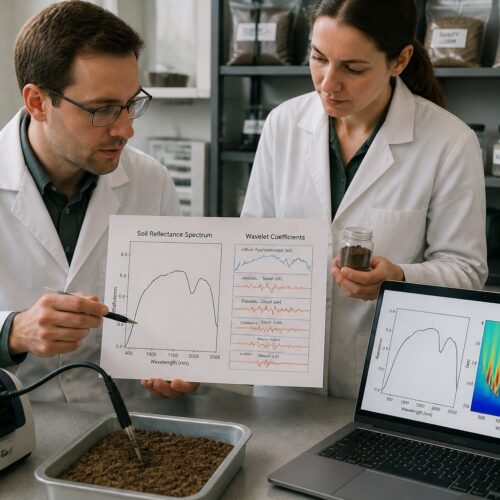
Other correction methods include detrending, which removes linear trends from the spectra, and wavelet transformations, which decompose the spectra into different frequency components. The effectiveness of each method depends on the specific dataset and the nature of the particle size effects.
Optimizing Spectroscopy for Different Soil Textures
Different soil textures, such as sandy, silty, and clayey soils, exhibit distinct spectral characteristics due to variations in particle size distribution. Optimizing spectroscopy for different soil textures requires tailoring sample preparation and data analysis techniques to account for these differences.
For sandy soils, which are dominated by larger particles, it’s important to focus on minimizing light scattering effects. For clayey soils, which have a high proportion of fine particles, it is essential to address the effects of diffuse reflectance and mineral composition.
- Use coarser grinding for sandy soils to avoid excessive particle size reduction
- Apply MSC or SNV to correct for light scattering in sandy soils
- Use derivative spectroscopy to enhance spectral features in clayey soils
- Consider mineralogical corrections for clayey soils to account for the influence of specific clay minerals
- Develop separate calibration models for different soil textures to improve prediction accuracy
Sandy soils often have lower organic matter content, which can further reduce the spectral signal. Silty soils, with their intermediate particle size, tend to exhibit a more balanced spectral response.
Clayey soils, due to their high surface area and water retention capacity, can be more susceptible to moisture variations. This can affect the spectral reflectance, requiring careful control of soil moisture during measurements.
Developing separate calibration models for different soil textures can significantly improve the accuracy of spectroscopic predictions. This approach allows for the specific characteristics of each soil type to be taken into account.
Another approach is to use a spectral library, which contains a collection of spectra from different soil types. The spectral library can be used to identify the soil texture of an unknown sample based on its spectral signature.
The Impact of Mineralogy on Spectroscopy Measurements
Beyond particle size, soil mineralogy plays a significant role in influencing spectroscopy measurements. Different minerals exhibit unique spectral absorption and reflection features, which can either enhance or mask the effects of particle size.
For instance, iron oxides, commonly found in soils, have strong absorption bands in the visible region, which can dominate the spectral response, particularly in soils with high iron content. Similarly, clay minerals, such as montmorillonite and kaolinite, have characteristic absorption features in the near-infrared region, which can interfere with the detection of other soil constituents.
Therefore, when interpreting soil spectral data, it’s essential to consider the mineralogical composition of the soil. This can be achieved through complementary analyses, such as X-ray diffraction (XRD), which provides detailed information about the mineral phases present in the soil.
By integrating mineralogical data with spectroscopic measurements, it is possible to develop more robust and accurate models for predicting soil properties. Accounting for mineralogy can significantly improve the reliability of soil spectroscopy in diverse environments.
The presence of carbonates can also significantly affect the spectral response of soils. Carbonates have strong absorption features in the mid-infrared region, which can interfere with the detection of other soil constituents.
The type and amount of organic matter in the soil also influence the spectral signature. Different types of organic matter have different absorption and reflection characteristics.
The interaction between minerals and organic matter can further complicate the interpretation of spectral data. Organic matter can coat mineral surfaces, altering their spectral properties.
Therefore, a comprehensive understanding of soil mineralogy, organic matter content, and their interactions is crucial for accurate soil characterization using spectroscopy. This understanding will lead to more reliable predictions of soil properties.
Advanced Techniques for Particle Size Analysis
While traditional methods like sieve analysis and sedimentation are widely used, advanced techniques offer more detailed and precise measurements of soil particle size distribution. These techniques can provide valuable insights into the complex interactions between particle size and spectral properties.
Dynamic light scattering (DLS) and atomic force microscopy (AFM) are two such advanced techniques. DLS measures the size of particles in suspension by analyzing the fluctuations in scattered light intensity, providing information about the hydrodynamic diameter of the particles.
AFM, on the other hand, provides high-resolution images of soil particle surfaces, allowing for the direct measurement of particle size and shape. These techniques can be particularly useful for characterizing the fine fractions of soil, such as clay minerals and organic matter, which are difficult to analyze using traditional methods.
By combining advanced particle size analysis with spectroscopic measurements, researchers can gain a deeper understanding of the relationships between soil texture, mineralogy, and spectral reflectance. This knowledge can be used to develop more accurate and reliable models for soil characterization and monitoring.
Another advanced technique is X-ray microtomography (XMT), which provides three-dimensional images of soil structure. XMT can be used to visualize the arrangement of soil particles and pores, providing insights into soil physical properties.
Scanning electron microscopy (SEM) is another powerful tool for characterizing soil particle morphology. SEM provides high-resolution images of soil particle surfaces, allowing for the identification of surface features and mineral composition.
These advanced techniques can be combined with spectroscopic measurements to develop more comprehensive models of soil properties. By integrating data from multiple sources, it is possible to gain a more complete understanding of soil behavior.
The cost and complexity of these advanced techniques can be a limiting factor. However, the benefits of increased accuracy and detail can outweigh the costs in many applications.
Applications in Precision Agriculture
Understanding and addressing the influence of soil particle size on spectroscopy measurements has significant implications for precision agriculture. By accurately characterizing soil properties using spectroscopy, farmers can make more informed decisions regarding nutrient management, irrigation, and tillage practices.
For example, knowing the particle size distribution of a field can help farmers tailor fertilizer applications to match the specific nutrient requirements of different soil types. Sandy soils, which have low water and nutrient retention capacity, may require more frequent applications of smaller fertilizer doses, while clayey soils, which retain water and nutrients more effectively, may benefit from less frequent, larger applications.
Similarly, understanding the effects of particle size on soil moisture content can help farmers optimize irrigation strategies. By using spectroscopy to monitor soil moisture levels in real-time, farmers can avoid over- or under-watering their crops, improving water use efficiency and reducing the risk of water stress.
Moreover, soil particle size information can be used to guide tillage practices. Excessive tillage can disrupt soil structure and lead to soil erosion, particularly in sandy soils.
Spectroscopy can also be used to monitor soil health indicators, such as organic matter content and nutrient levels. This information can help farmers to identify areas of their fields that require special attention.
By integrating spectroscopy with other precision agriculture technologies, such as GPS and variable rate applicators, farmers can optimize their management practices and improve crop yields. This integrated approach can lead to more sustainable and efficient farming practices.
The use of spectroscopy in precision agriculture can also help to reduce the environmental impact of farming. By optimizing fertilizer and irrigation applications, farmers can minimize nutrient runoff and water waste.
This can lead to improved water quality and reduced greenhouse gas emissions. Precision agriculture techniques are becoming increasingly important for ensuring food security and environmental sustainability.
Future Trends in Soil Spectroscopy
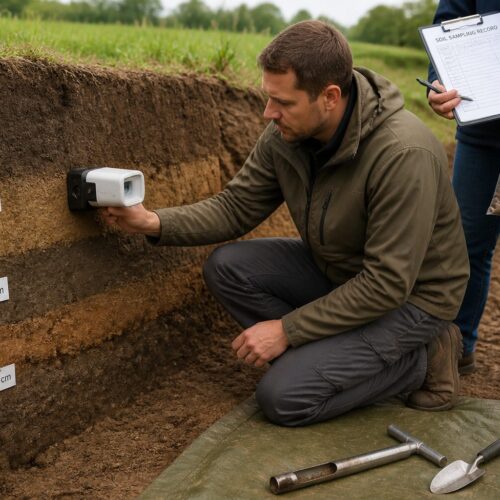
The field of soil spectroscopy is constantly evolving, with new technologies and techniques emerging to improve the accuracy and efficiency of soil characterization. One promising trend is the development of portable and handheld spectrometers, which allow for rapid, on-site measurements of soil properties.
These devices can be used to create high-resolution maps of soil variability across a field, providing farmers with detailed information about soil conditions. Another trend is the integration of spectroscopy with other sensing technologies, such as remote sensing and proximal sensing.
By combining data from multiple sources, it is possible to develop more comprehensive and accurate models of soil properties. For example, remote sensing data can be used to estimate soil organic matter content over large areas, while proximal sensing data can be used to validate and refine these estimates at the field scale.
Furthermore, advances in data analysis techniques, such as machine learning and artificial intelligence, are enabling researchers to extract more information from soil spectral data. These techniques can be used to identify complex relationships between spectral reflectance and soil properties, leading to more accurate predictions and improved soil management practices.
The development of more robust and user-friendly software for spectral data analysis is also a key trend. This will make it easier for researchers and practitioners to use spectroscopy for soil characterization.
Another trend is the development of spectral libraries that contain spectra from a wide range of soil types and conditions. These libraries can be used to identify the soil type of an unknown sample based on its spectral signature.
The use of unmanned aerial vehicles (UAVs) or drones equipped with spectrometers is also becoming increasingly popular. This allows for the rapid and cost-effective collection of spectral data over large areas.
The integration of spectroscopy with other analytical techniques, such as chromatography and mass spectrometry, is also a promising area of research. This can provide a more comprehensive understanding of soil composition and properties.
Conclusion
Soil particle size significantly influences spectroscopy measurements, making it a critical factor to consider in precision agriculture. Understanding how different particle size fractions affect light scattering and spectral reflectance is essential for obtaining accurate and reliable data.
By employing appropriate sample preparation techniques, correcting for particle size effects in spectral data, and optimizing spectroscopy for different soil textures, we can unlock the full potential of this powerful tool. Soil particle size spectroscopy is a powerful tool for understanding soil.
As technology continues to advance, soil spectroscopy will play an increasingly important role in sustainable agriculture, enabling farmers to make more informed decisions and manage their resources more effectively. Addressing these challenges will lead to better soil management.
The future of soil spectroscopy is bright, with new technologies and techniques constantly emerging to improve its accuracy and efficiency. By embracing these advancements, we can unlock the full potential of soil spectroscopy for precision agriculture and sustainable soil management.
Continued research and development in this area are essential for ensuring food security and environmental sustainability. Investing in soil spectroscopy research will have a significant impact on the future of agriculture.
Education and training are also crucial for promoting the adoption of soil spectroscopy in precision agriculture. Farmers and practitioners need to be trained on how to use spectroscopy effectively and interpret the results accurately.
Collaboration between researchers, practitioners, and industry is essential for driving innovation in soil spectroscopy. By working together, we can develop new technologies and techniques that will benefit farmers and the environment.
Soil spectroscopy is a valuable tool for understanding and managing our soil resources. By harnessing its power, we can create a more sustainable and productive agricultural system.