
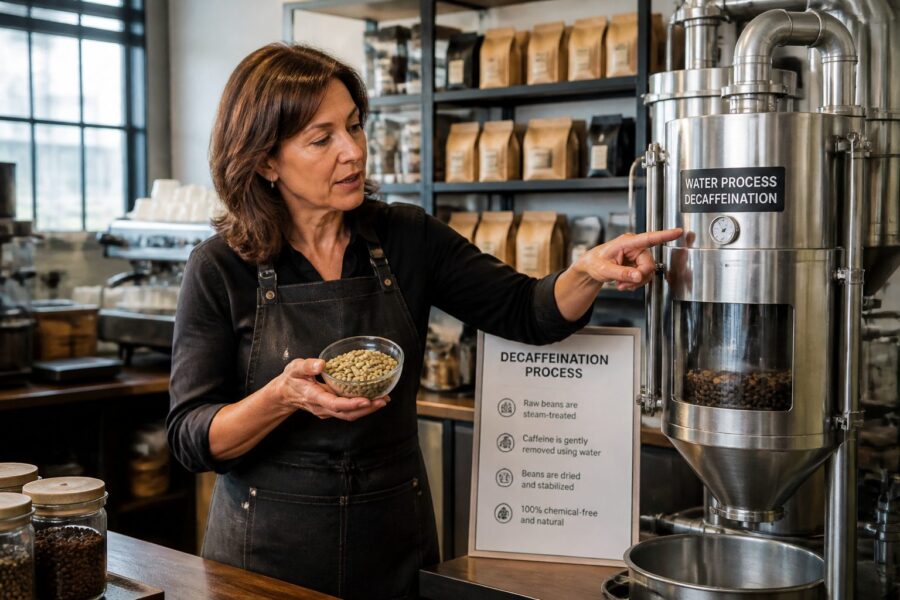
Decaf coffee begins as green, unroasted coffee beans that go through a process to remove most of their caffeine before roasting.
The broad sequence is to prepare the beans so caffeine can move out, separate caffeine through a chosen method, and dry the beans before they are roasted.
Several processes are used, and the method can affect how a producer describes the coffee, but decaffeination does not turn coffee into a different plant or beverage.
Why decaffeination happens before roasting
Coffee beans are typically decaffeinated while they are still green because the process needs to reach caffeine inside the bean before roasting changes its structure.
The beans are exposed to water, steam, or another process that helps mobilize caffeine, then treated to draw caffeine away while retaining as much of the coffee’s flavor material as possible.
After processing, the beans are dried and can be roasted and brewed like other coffee.
The details vary with the method and processor, so a label may identify a process without describing every factory step.
Water-based decaffeination
Water-based methods use water to move caffeine out of green coffee while controlling contact with flavor compounds.
In some approaches, a coffee extract is filtered to remove caffeine, then used in a controlled process with another batch of beans.
Swiss Water is a named water-process brand, while other water-based processes may use different equipment or specifications.
A water-process label tells you something about how caffeine was removed, but it does not automatically predict a particular taste or quality.
Solvent-based methods
Some decaffeination methods use a solvent to selectively remove caffeine from green coffee beans.
The beans may first be steamed or soaked so caffeine becomes easier to extract, then exposed to a solvent that binds with caffeine.
Producers use different process designs, including methods where the solvent contacts beans directly and methods where it treats a water extract.
The specific solvent and process depend on the producer, so it is more accurate to read the product’s own process description than assume all solvent methods are identical.
A processing term alone is not a reason to make a health claim; the dossier does not establish that one method is safer or better for every consumer.
Carbon dioxide decaffeination
Carbon dioxide can also be used in a controlled process to extract caffeine from green coffee.
Under specific processing conditions, carbon dioxide acts as a solvent for caffeine, which can then be separated from the beans.
The equipment and conditions are specialized, and the process is carried out by a coffee processor rather than replicated as a home method.
A package may mention carbon dioxide processing, but detailed operating conditions are specific to the facility and product.
Does decaf mean caffeine-free
Decaf means that most caffeine has been removed, not that every trace has necessarily disappeared.
The exact remaining amount depends on the beans, method, serving size, and brewing preparation, so a cup of decaf should not be treated as identical to a caffeine-free drink.
The University of Queensland’s public health explainer describes decaffeination as removal of caffeine from green beans and notes that decaf can still contain some caffeine.
If avoiding caffeine entirely is important, consult the product details and appropriate health guidance rather than relying only on the word decaf.
Does decaf taste different from regular coffee
Decaffeination can affect flavor compounds along with caffeine, so some decaf coffees taste different from their caffeinated counterparts.
The outcome depends on the green coffee, process, roast, storage, and brewing choices, making the word decaf an incomplete flavor description.
A producer’s tasting description and roast information may offer more useful clues about the cup than the decaffeination label by itself.
When comparing a decaf with a regular coffee, brew them using similar water and preparation so differences in recipe do not overwhelm the comparison.
How to read a decaf coffee label
- Look for a process name when the producer provides one, such as water, solvent, or carbon dioxide processing.
- Check whether the package gives an origin, roast description, or tasting notes, while treating those as product descriptions rather than guaranteed outcomes.
- Do not assume that a process label means the coffee contains absolutely no caffeine.
- Use the roaster’s product page for details when the package does not explain its terminology.
- Remember that instant coffee and whole-bean coffee describe product formats, not necessarily one decaffeination method.
A label can help explain processing, but it may not give a complete technical account of the producer’s method.
Once decaffeination is complete, the green beans are dried before a roaster applies heat to develop the roasted coffee that customers buy.
The process is performed before roasting because the beans are easier to treat in their unroasted state, and the goal is to reduce caffeine while retaining useful coffee characteristics.
Roasting and brewing still shape the final cup, so decaffeination is only one part of how the coffee ultimately tastes.
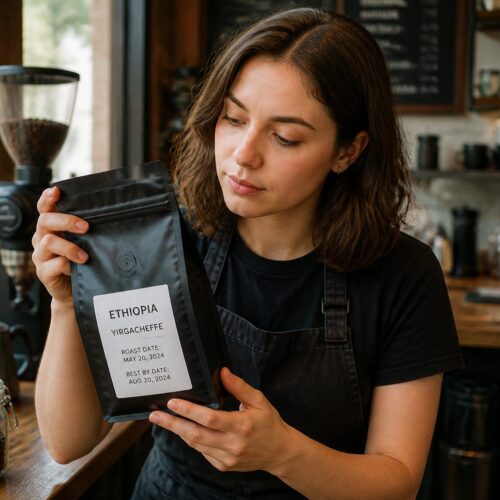
The package may identify a process name, but its flavor notes, origin, and roast profile describe other aspects of the coffee.
Those details are helpful when selecting a bag, though tasting descriptions remain descriptions rather than promises about what every person will perceive.
Check the roaster’s own explanation if a package uses an unfamiliar process term or gives little detail.
Look for whether the method is water-based, solvent-based, or uses carbon dioxide, while recognizing that these categories include different process designs.
Do not infer the exact remaining caffeine amount from a process label unless the producer provides relevant product information.
Avoid treating terms such as natural or chemical-free as complete technical descriptions, since they do not explain the full sequence used to process the coffee.
A clear product page should explain its chosen language, but a short label may only provide a brief overview.
A label may describe the coffee as water processed or identify a branded method, yet the actual operation and product details should come from the producer.
If the package says only decaf, do not assume which method was used or how much caffeine remains.
A roaster may answer questions about a particular bag, but a general article cannot reliably infer factory details from the color or taste of roasted beans.
Decaffeination describes a processing step, while roast and brew choices remain important to the final drink.
The amount of caffeine left is not something that can be deduced simply by tasting the cup, since roast and brewing variables affect the experience.
For product-specific questions, the producer is a better source than broad claims attached to an entire processing category.
Questions about decaf coffee
The dossier does not establish a general health comparison between decaf and caffeinated coffee. Individual considerations vary, so this article focuses on how the beans are processed rather than offering personal health advice.
The dossier lists water-based and carbon dioxide methods as well as solvent-based processes, but labels and process details vary by producer. Check the product description for the method rather than assuming from the word decaf.
Decaffeination is an additional processing step applied to green beans before roasting. The exact steps depend on the method and processor, and the term alone does not describe every detail.