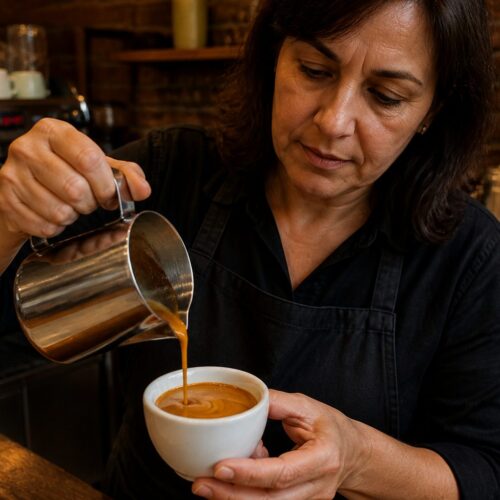


Macchiato, cortado, and flat white all pair espresso with milk, but each name points to a different balance and texture.
Cafés use the terms with some variation, so the clearest comparison is the usual idea behind each drink rather than a universal ounce-by-ounce recipe.
What a macchiato usually means
A traditional espresso macchiato is espresso marked with a small amount of milk or milk foam.
The Italian word macchiato means marked or stained, a useful clue to the drink’s espresso-forward character.
Because the milk addition is small, the espresso remains the main flavor and the serving is usually smaller than a latte or flat white.
Some coffee chains use macchiato for larger drinks with layered milk and espresso, so the menu context matters when ordering.
What a cortado usually means
A cortado pairs espresso with a modest amount of steamed milk, with the milk intended to soften the shot without turning it into a large milk drink.
The word is associated with the idea of cutting the espresso with milk, and many cafés serve the drink in a small glass.
Some descriptions use roughly equal parts espresso and milk, but measurements vary by café and cup.
Cortado milk is often lightly textured rather than piled with a thick cap of foam.
What a flat white usually means
A flat white is espresso combined with steamed milk that has a fine, integrated microfoam texture.
It is commonly served larger than a macchiato or cortado, while remaining more espresso-focused than a large latte in many café menus.
The term can refer to different cup sizes and espresso recipes, especially across regions, so the name does not guarantee a fixed ratio.
The smooth milk texture is part of the familiar flat-white profile, but the exact balance depends on preparation.
Macchiato, cortado, and flat white compared
| Drink | Usual milk amount | Texture and balance | Common serving impression |
|---|---|---|---|
| Macchiato | A small mark of milk or foam | Strongly espresso-forward | Small and concentrated |
| Cortado | A modest amount of steamed milk | Espresso softened by milk | Compact and balanced |
| Flat white | More steamed milk with fine microfoam | Smooth and integrated | Larger than a macchiato or cortado |
This comparison describes broad café conventions, not a binding recipe that every shop follows.
How the milk changes the flavor and feel
With a macchiato, the small milk addition can round the edge of espresso while leaving its flavor prominent.
A cortado places more milk alongside espresso, so the drink can taste more balanced without becoming as milk-forward as a larger café beverage.
A flat white has enough steamed milk to create a smoother, fuller mouthfeel, while microfoam helps the milk blend closely with espresso.
The beans and shot recipe still matter: a different roast or espresso extraction can shift sweetness, bitterness, and perceived intensity in any of the three.
Milk type also affects texture, and some alternatives foam differently from dairy milk.
Which drink is strongest
A macchiato often tastes most espresso-forward because it contains the least milk, but strength is not fixed by the name.
A cortado or flat white may use more espresso than a particular macchiato, and serving size can change how concentrated the drink seems.
If you mean caffeine rather than flavor intensity, the number of espresso shots is more useful to ask about than the drink name.
A more intense flavor does not by itself establish more caffeine, because the recipe and coffee used vary.
How to order when café recipes differ
Ask whether the café means an espresso macchiato or a larger branded drink if its menu does not explain the term.
For a cortado, you can ask about cup size or the shop’s usual espresso-to-milk balance without assuming that every bar follows one ratio.
For a flat white, ask how it differs from the café’s latte if size and milk texture matter to you.
A clear question about serving size is often more useful than requesting an exact traditional measurement that the shop may not use.
If you enjoy one version, remember the café and its recipe because another shop may interpret the same name differently.
Drink names travel across regions and menus, and cafés may adapt them to local cup sizes or customer expectations.
That is why the same word can produce different amounts of milk or espresso from one counter to another.
A menu description that lists ingredients or size is more informative than an assumption based on the traditional name alone.
A chain may also define macchiato differently from an independent café, so the familiar espresso macchiato is not the only menu usage a customer may encounter.
When a drink arrives, the visible milk layer can offer a clue to the preparation, but it cannot establish a precise recipe.
Start with how much milk you want relative to espresso, then consider whether you prefer foam or a smoother steamed-milk texture.
Choose an espresso macchiato for a small milk accent, a cortado for a compact balance, or a flat white for more integrated milk in a larger serving.
Those descriptions are practical guides rather than guarantees, and asking about the shop’s own recipe removes much of the guesswork.
If you are comparing menus, look for shot count and cup size because those details explain strength more clearly than the drink label by itself.
Once you find a version you like, describing its size and milk texture helps a barista understand your preference even if the café uses a different name.
If a café offers several flat-white sizes, the larger version may have a different espresso balance from the smaller version even though both use the same name.
Milk foam is made from air incorporated during steaming, and its bubbles and texture affect the sensation of each sip.
The drink names can still help a customer communicate a preference, as long as the café’s local recipe is understood.
A short menu question often resolves the uncertainty: ask what size it is and how much milk the regular serving contains.
A café’s menu can also distinguish a traditional espresso macchiato from a latte macchiato or another house drink, so the milk-to-espresso sequence may not match the smaller Italian-style serving.
When the names are unfamiliar, focus on two concrete details: how much milk is used and whether it is lightly textured or foamed.
Those details describe the physical cup more clearly than debating which drink is most authentic, since café practices and regional habits differ.
A customer who wants a small coffee taste with only a little milk can explain that preference directly if a menu’s macchiato description is ambiguous.
Likewise, asking for a compact drink with balanced espresso and steamed milk communicates much of what people seek in a cortado, even if the café does not list one.
Questions about macchiatos, cortados, and flat whites
An espresso macchiato is espresso marked with a small amount of milk or foam. Some chains use the word for larger drinks, so check how a particular café defines it.
A cortado combines espresso with a modest amount of steamed milk to soften the shot. Serving size and proportions vary among cafés.
A flat white is espresso with steamed milk and fine, integrated microfoam. Its size and espresso-to-milk balance differ by café and region.