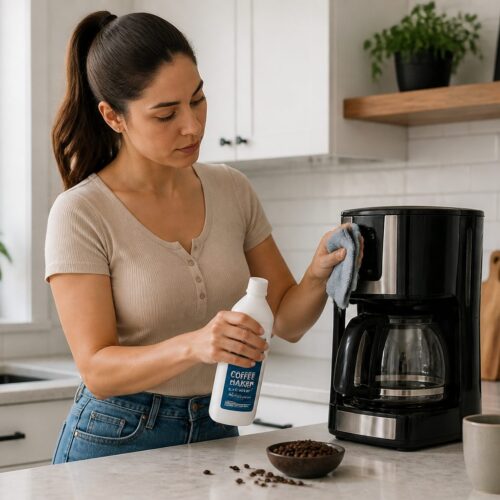

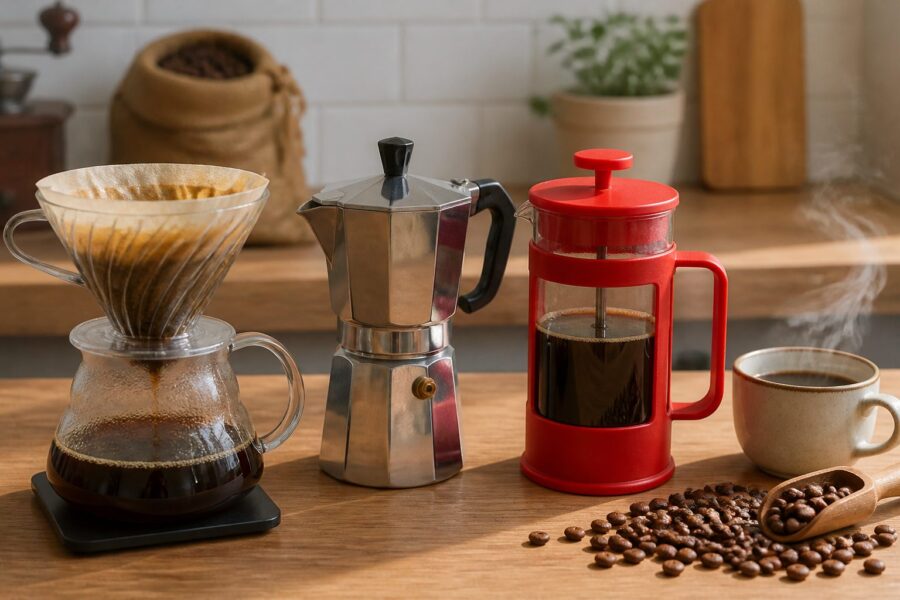
When comparing glass vs stainless steel coffee maker designs, start by separating the brewer from the carafe.
A brewer may use a glass pot, a stainless thermal carafe, or a mix of materials, and those parts affect handling in different ways.
There is no material that is automatically better for every kitchen.
Glass makes it easy to see the coffee and remaining amount, while stainless steel is opaque and often chosen for a durable or insulated serving vessel.
Compare the carafe, not just the coffee maker label
A glass carafe is usually paired with a warming plate on many drip machines, while a stainless carafe may be double-walled or otherwise insulated.
These are design patterns, not guarantees, so inspect the construction of the specific model rather than assuming the material tells the whole story.
The carafe has several jobs: it catches brewed coffee, pours into a cup, and holds the remaining portion.
Ask how you serve coffee at home before treating one material as a quality verdict.
| Feature | Glass carafe | Stainless steel carafe |
|---|---|---|
| Seeing the amount | Coffee level is visible | Usually opaque unless it has a viewing window |
| Handling | Often easy to inspect, but may break if dropped | Usually resists shattering, though dents and scratches are possible |
| Heat approach | May rely on a warming plate | May use insulation to retain heat |
| Cleaning visibility | Stains or residue can be seen | Interior condition may be harder to inspect |
| Pouring clues | Some models have a clear fill line | Check the lid and spout design on the individual model |
What glass changes in everyday use
A transparent pot lets you see how much coffee remains without lifting the lid.
That is convenient when several people are pouring from the same batch or when you want to avoid brewing more than you need.
Glass also lets you notice residue, discoloration, or a cloudy film during cleaning.
The tradeoff is that glass can crack or break if it hits a hard sink, counter, or floor, and replacement carafes are not always interchangeable across brands or models.
A warming plate can keep a pot warm, but the machine’s design determines how the plate operates and whether it shuts off automatically.
Continued heating can change the coffee as it sits, so serve the amount you need and consult the manual for the machine’s intended use.
What stainless steel changes in everyday use
Stainless steel is opaque, so you may need a fill indicator or to lift the lid to check the remaining coffee.
The material is less likely than glass to shatter from an ordinary bump, although a metal vessel can still dent, and its lid or handle may be the part that needs the most care.
Some steel carafes are insulated, which can help them retain heat without relying on a hot plate.
Insulation varies by construction, and an uninsulated stainless vessel does not keep coffee warm simply because it is metal.
The opening and lid matter when cleaning.
A narrow mouth can make it harder to reach the bottom, while removable lids may expose areas where residue can collect; check the manual before putting parts in a dishwasher or using a brush that could damage a finish.
Does the material change the taste?
The taste in the cup depends on the coffee, water, brew, serving temperature, and how long the coffee sits.
A glass carafe and a stainless carafe can be part of different heating or insulation systems, so reports about flavor may reflect more than the container material alone.
If you notice an off taste, first clean the carafe and lid as directed, then consider whether coffee has been sitting on a warming plate or stored in the vessel for a long time.
Do not assume that all stainless steel imparts a flavor or that glass guarantees a better cup.
A useful home comparison keeps the coffee and brewing method consistent.
Brew one batch, divide it between clean vessels if the models allow, and taste at the same interval; treat the result as your own observation rather than a rule for every brewer.
Which coffee maker material is healthiest?
The research results show this is a common question, but ‘healthiest’ cannot be established from the carafe material alone.
A complete coffee maker contains several components, and design, condition, cleaning, and the surfaces that contact water or coffee all matter.
Use equipment as its manufacturer directs, replace damaged parts with compatible parts, and stop using a vessel with a cracked surface or a lid that no longer closes correctly.
For questions about a particular material or component, look for the manufacturer’s materials and care information rather than relying on a broad material label.
A stainless carafe is not automatically safer than a glass one, and a glass carafe is not a statement about the entire machine.
Check all coffee-contact parts on the model you are considering, including seals, lids, filter basket, and water path where information is available.
Cleaning and maintenance differences
Glass makes it easier to see whether a rinse removed visible residue.
Wash the pot using the care instructions, and avoid sudden temperature changes if the manufacturer warns against them because thermal shock can damage some glass.
For stainless steel, rinse promptly after serving and inspect the inside under good light.
Use only cleaning tools and agents permitted by the manual, since abrasive pads or unsuitable chemicals may scratch or discolor a surface.
- Empty leftover coffee instead of leaving it to dry into a film.
- Clean the lid and spout as well as the main vessel, following the model’s instructions.
- Let removable parts dry fully before putting them back together when the manual calls for it.
- Check for a worn seal, loose handle, crack, dent, or lid problem before regular use.
- Do not assume a carafe is dishwasher-safe because it is made of glass or steel.
A practical way to choose
Choose glass if seeing the remaining coffee matters to you and you can handle a breakable pot carefully.
It may suit a household that serves the batch soon and likes the visible level, but check the warming plate and its instructions.
Choose an insulated stainless carafe if you prefer a vessel that can sit away from a hot plate or want to reduce the chance of shattering.
Confirm that its lid pours cleanly, the opening is wide enough for your cleaning routine, and its thermal construction fits your expectations.
Before buying, confirm replacement-part availability and compatibility, carafe capacity, dimensions, lid design, and cleaning directions.
These practical details often decide whether a brewer fits your routine better than the material name on the box.
The clearest comparison is the one tied to your habits: how soon you drink the coffee, whether visibility matters, where you clean the vessel, and whether you want a warming plate.
Glass and stainless steel can both work well when the complete machine is suited to the way you brew and serve.
Neither is best for every use. Glass offers visibility, while stainless steel may be more resistant to shattering and can be insulated; the model’s construction and care instructions matter.
Choose based on serving habits, heat retention design, ease of cleaning, and durability. The materials alone do not guarantee a particular taste.
That cannot be determined from a carafe material alone. Review the specific machine’s coffee-contact components, materials information, condition, and manufacturer care guidance.