

If you are asking whether you can make espresso without an espresso machine, the answer depends on what you mean by espresso.
A moka pot, AeroPress, and French press can each make a strong cup, but they do it through different brewing mechanisms.
That distinction matters when choosing a method or adapting a recipe for a latte, an Americano-style drink, or a small cup on its own.
The result may be useful and enjoyable without matching the pressure, texture, or extraction of a machine-made shot.
What makes espresso different from strong coffee?
Espresso is a brewing method in which hot water is forced through a compact bed of finely ground coffee under pressure.
Espresso machines control that process with a pump or another pressure mechanism, which is why a small serving can be concentrated and carry a distinct texture.
“Strong coffee” is less precise: people may mean a bold flavor, a high coffee-to-water ratio, a small serving, or a brew that tastes intense.
A concentrated French press or moka pot coffee may fit one of those meanings, but intensity alone does not make it espresso.
A useful comparison is to think about how the water meets the grounds.
A drip brewer lets water pass through a bed under gravity, a French press steeps grounds in water, and a moka pot uses heated water and steam pressure in its own chambered design.
Espresso-style alternatives are best understood by their actual method rather than by a promise that they reproduce a café shot.
That keeps expectations realistic and makes it easier to choose an approach for the cup you want.
Choose an alternative by the result you want
A moka pot is a stovetop brewer that produces a concentrated coffee with a distinctive, robust profile.
It suits someone who wants a small, full-flavored brew and is comfortable following the pot’s own instructions for filling, heating, and cleaning.
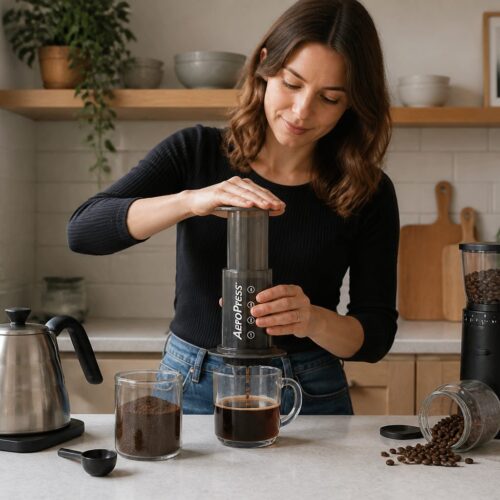
An AeroPress uses a chamber, filter, and plunger to brew coffee, with the press helping move brewed liquid through the filter.
Its versatility lets people vary coffee amount, water, grind, and steeping approach, so recipes differ rather than forming a single universal espresso substitute.
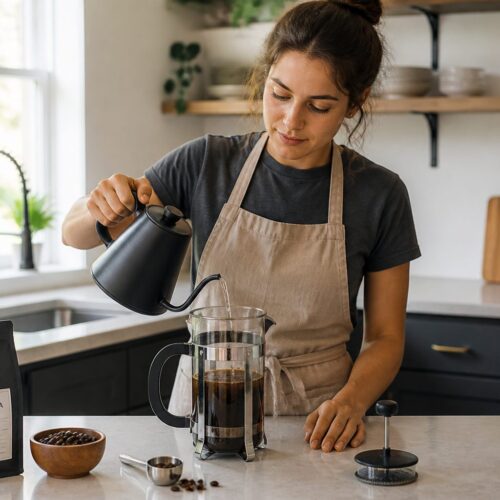
A French press steeps grounds in water before a mesh plunger separates the liquid.
It can make a rich cup, but its immersion and metal-filter approach differs from espresso extraction, and the cup may contain more suspended particles than a paper-filtered brew.
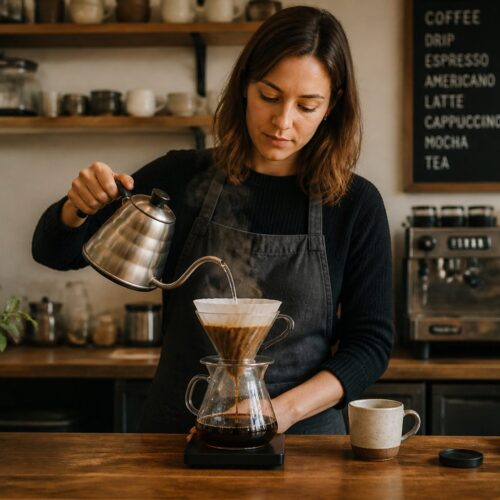
A standard drip machine is convenient for a mug or carafe, not a direct route to a machine-style shot.
Concentrating a drip recipe may make it taste stronger, but it does not change the brewer’s basic extraction method.
| Method | What it does well | What it is not |
|---|---|---|
| Moka pot | Makes small, concentrated stovetop coffee | Not an espresso machine shot |
| AeroPress | Allows compact, filtered brews with flexible recipes | Not pressure extraction equivalent to an espresso machine |
| French press | Produces an immersed, full-bodied cup | Not a finely filtered espresso shot |
| Drip brewer | Makes a larger gravity-brewed cup | Not designed to create espresso by using a smaller serving |
How to make a concentrated cup without overpromising
Start with the brewer you already own and read its instructions before changing the grind or dose.
Manufacturer guidance takes priority because chamber capacity, filter setup, heat source, and safe handling differ among devices.
Use a recipe written for that brewer as the baseline.
If you want a more intense cup, change one variable at a time, such as the amount of coffee or the final serving volume, then record whether the change improves the balance.
Avoid tamping grounds into a device that was not designed for tamping.
A recipe that borrows espresso terminology can make a moka pot or French press sound more similar to an espresso machine than its construction supports.
For a French press, the brewing time and grind influence the cup, but the brewer remains an immersion method.
For a moka pot, keep assembly and heat management aligned with the pot’s directions rather than treating it like an espresso portafilter.
For an AeroPress, consult the instructions for the specific model and filter arrangement.
Different recipes may use different water amounts, temperatures, and pressing techniques, so avoid assuming that a single online ratio applies to every setup.
Can you use regular coffee instead of espresso beans?
“Espresso beans” is commonly a roast or marketing description, not a separate botanical type of coffee.
Beans roasted or blended for espresso may be chosen to suit that style, but the label alone does not determine whether a brewer can use them.
Ground coffee must match the equipment’s requirements.
A grind suitable for a drip machine may be too coarse for a particular espresso machine, while a very fine grind can behave differently in a moka pot, AeroPress, or French press.
The safest approach is to use the grind range and dose guidance supplied for the brewer.
If you buy pre-ground coffee, check that it is intended for your method; if you grind at home, adjust gradually rather than jumping to the finest setting.
Taste can help guide changes, but it cannot identify a precise technical cause on its own.
A cup that seems thin may call for a different recipe or serving size, while harshness can have several possible causes, including grind, water, and brewing conditions.
Adapting the drink for milk or a longer serving
A concentrated moka pot or AeroPress brew can serve as a base for a milk drink, though the finished cup will not taste exactly like one made with espresso.
Milk softens some flavors and changes the balance, so begin with a small amount and adjust to preference.
For a longer drink, add hot water to the concentrate rather than assuming that increasing the original brew volume will preserve the same flavor.
This makes the strength easier to adjust in the cup and does not require claiming that the result is a traditional Americano.
If the alternative tastes too strong, dilution is a simple adjustment.
If it tastes weak, make the next brew more concentrated within the brewer’s capacity instead of forcing a method beyond its intended operation.
Common mistakes when seeking espresso without a machine
- Calling every bold or small coffee an espresso obscures how the brewer works.
- Using one recipe across different devices ignores differences in chamber, filter, and water contact.
- Changing grind, dose, and water volume at once makes the result difficult to interpret.
- Treating espresso-labeled beans as a requirement can distract from grind fit and brewing method.
- Ignoring the manufacturer’s setup and cleaning instructions can lead to poor results or equipment misuse.
The clearest expectation is simple: a home brewer can make concentrated coffee that works in many of the same drinks, but it does not automatically reproduce espresso.
Once you choose the style of cup you want, the right alternative is the one whose process and routine suit your kitchen.
Questions readers ask
A moka pot, AeroPress, or French press can produce concentrated coffee, but each uses a different brewing process and none should be described as identical to espresso from an espresso machine.
You can make a small, intense coffee with other brewers, though traditional espresso depends on the pressure-based process of an espresso machine.
Coffee sold for drip or other methods can be brewed in an espresso machine if its grind and the machine instructions are suitable, but a regular brewer will not create espresso just by using espresso-labeled beans.