
How long to brew coffee depends on what ‘brew time’ means for the method.
In a French press, it usually means the time grounds steep in water; in pour-over, it can mean the time water takes to pass through the bed; in an automatic drip machine, it may describe the machine’s full cycle.
Those clocks are related to extraction, but they are not interchangeable.
Use time as a diagnostic clue, not a universal finish line.
If a pour-over drains much faster than it did yesterday, or a French press tastes different after a longer steep, look at grind, water flow, dose, and the recipe before making a large correction.
Steep time and drawdown are different clocks
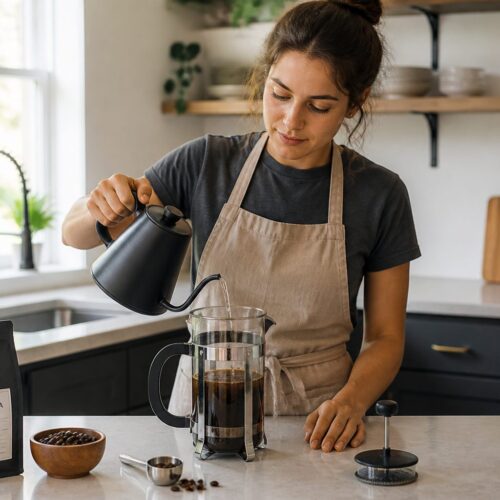
Steep time measures how long coffee grounds remain in contact with water, as in a French press or many cold-brew recipes.
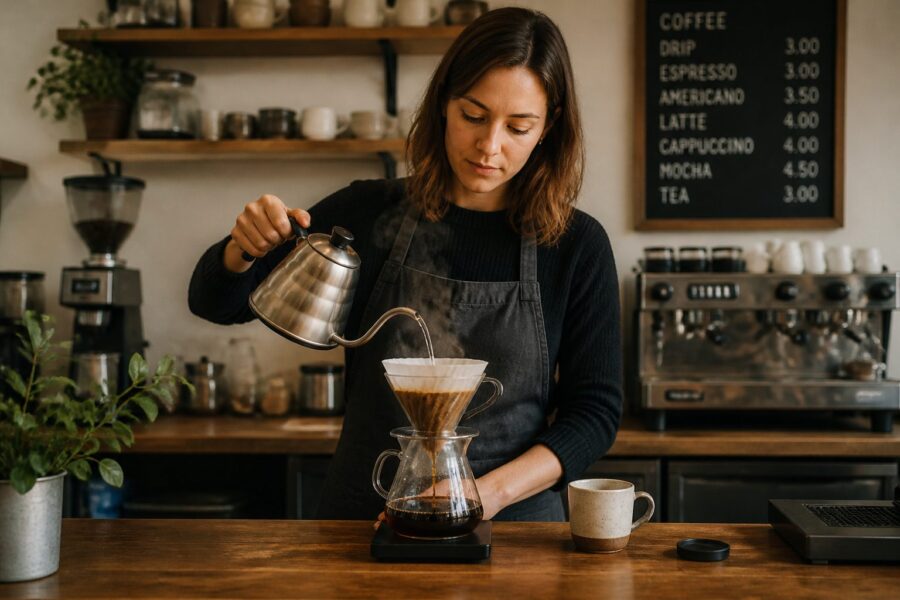
Drawdown describes water draining through the grounds and filter, as in pour-over.
Immersion methods let coffee sit together with water; percolation methods continually pass water through a bed.
Automatic drip brewing combines several phases: the machine heats and distributes water, the grounds remain wet while water passes through, and brewed coffee collects below.
The cycle’s displayed duration may include stages that a recipe timer does not.
Compare like with like when deciding whether a process is running unusually long.
Espresso is also measured differently from an immersion steep.
The shot runs under a machine’s brewing system, so a time listed in an espresso recipe applies to that recipe and equipment, not to a French press or filter brew.
A single chart that treats all these clocks as equivalent can mislead.
How long to brew coffee in common methods
Published recipes offer different targets even for the same brewer.
The research results show this clearly for French press: one guide gives a short standard steep, while another argues for a longer range.
That disagreement is a useful reminder to use the recipe for your own method as a starting point and evaluate the cup.
| Method | What the time usually describes | Why the recipe matters |
|---|---|---|
| French press | The steep before plunging and serving | Grind size and the method’s instructions influence the chosen steep. |
| Pour-over | The time water takes to pass through the coffee bed | Pour pattern, grind, filter, and dose affect drawdown. |
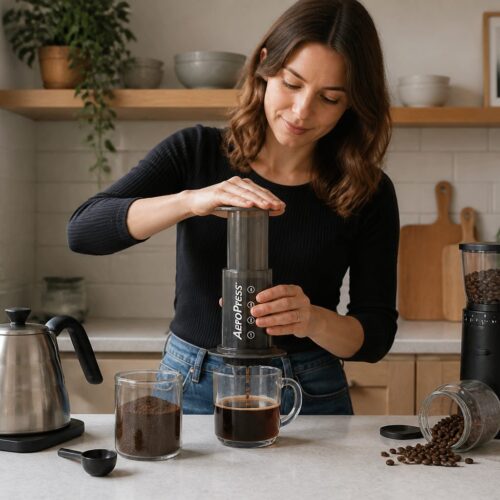
| AeroPress | A recipe-specific immersion and press sequence | Different recipes use different chamber, agitation, and pressing steps. |
| Moka pot | The heating and extraction process on the stovetop | Pot size, heat, and signs of completion matter; follow the maker’s directions. |
| Cold brew | A long contact period using cool or room-temperature water | Recipes vary in grind, ratio, temperature, and whether concentrate is intended. |
| Automatic drip | The machine’s cycle and water passage through grounds | The brewer controls much of the process, so compare with its manual and normal cycle. |
For a French press, start from the instructions or recipe you actually intend to use and time the steep consistently.
If the cup seems too light or too heavy, change one factor on a later brew.
A longer steep is not automatically better, just as the shortest recipe is not automatically the cleanest.
For pour-over, record the total time from the first pour until the bed finishes draining if the recipe defines time that way.
Some recipes divide the process into bloom and later pours.
Use the same start and stop points each time; otherwise, two recorded times may describe different parts of the brew.
What changes the time in a pour-over
Grind size is one major influence on flow.
Finer grounds can slow water movement through the bed, while coarser grounds may drain more quickly, though filter shape and pouring also matter.
If the drawdown changes after you switch grinders or coffee, note that before concluding that the brewer is malfunctioning.
The way water is poured affects how the bed settles and how evenly it becomes wet.
A forceful stream can disturb grounds, while a highly uneven pour may leave some areas less saturated.
Keep your pouring pattern reasonably steady during a comparison so the time provides useful information.
Filter type, dripper geometry, and the amount of coffee affect resistance and flow.
A reusable filter can behave differently from paper, and a brewer filled with a larger dose may not drain like a small dose.
These differences make the recipe and equipment important context for any time target.
If a pour-over suddenly takes longer, check for a very fine grind, clogged filter, or grounds packed unevenly.
If it runs much faster, consider whether the grind is coarser, the dose is smaller, or the pouring pattern changed.
Treat these as things to inspect rather than automatic diagnoses.
Use brew time to troubleshoot taste
A fast drawdown and a weak or sharp cup can occur together, but time alone does not prove under-extraction.
Water temperature, grind distribution, coffee freshness, and the water-to-coffee amount also influence what reaches the cup.
Record the flavor and the timing together before changing anything.
A slow brew and a harsh or drying cup can suggest that the recipe needs attention, but a longer clock does not explain every bitter taste.
Check the grind, agitation, and filter cleanliness.
A dirty reusable filter may drain slowly and contribute stale flavors that a timer cannot identify.
For immersion, record both the steep and what happens after plunging.
Pressing immediately versus leaving the coffee in the press can affect what is poured into the cup.
If you want a clearer comparison, decant the coffee consistently rather than letting one sample continue steeping in the vessel.
A repeatable timing routine
- Choose one recipe and write down its method, coffee amount, water amount, grind, and time definition.
- Start and stop the timer at the same points for each brew.
- Keep the brewer, filter, and pouring or stirring routine unchanged while testing.
- Taste the result and record a plain description, such as thin, balanced, or drying.
- Adjust one variable on the next brew, then compare rather than relying on memory.
A phone timer is enough for most home brewing.
Precision to a fraction of a second rarely helps when the dose, grind, or pour changes between brews.
What matters is a clear and repeatable method of timing, not a sophisticated stopwatch.
If you are following a manufacturer’s instructions, keep the machine’s recommended operation in view.
Do not extend a cycle or interfere with a brewer’s moving parts to force a particular time.
For a stovetop pot, use its own directions and pay attention to its normal completion cues rather than copying an immersion timer.
Why published brew-time charts disagree
A time recommendation depends on the variables a recipe assumes.
One French press method may use a particular grind and serving routine; another may use a different grind or leave the coffee in contact longer.
If an article reports a time without explaining those details, it may not transfer cleanly to your setup.
Brewers also differ in capacity and shape.
An AeroPress recipe’s timing may specify when to stir, wait, and press, while another recipe may change all three steps.
A moka pot uses heat on a stovetop, so the overall time changes with pot size and burner conditions.
Cold brew deserves its own category because the method uses a long steep, and recipes differ on whether the result is served as brewed or diluted.
Do not shorten or lengthen a batch based only on a hot-brew chart.
Follow a recipe that matches the grind and serving style you want.
Frequently asked questions
Recipes disagree because grind, steeping approach, and serving routine differ. Use the instructions for one recipe consistently, time the steep the same way each time, and adjust in small steps based on the cup.
AeroPress timing depends on the recipe’s immersion, stirring, and pressing sequence. Follow a recipe designed for your setup and define the timer points before comparing results.
There is no single time that fits every moka pot and stove. Follow the pot maker’s instructions and use the method’s normal completion cues rather than applying a French press or pour-over timer.