
Coffee brewing water temperature changes how quickly soluble material moves from ground coffee into the cup.
It is a useful adjustment, but not a magic setting: grind, dose, pouring, contact time, and the brewer all shape the result too.
A sensible approach is to begin with a repeatable recipe and change temperature only when you have a reason.
That distinction matters because a single number cannot describe every kettle, drip machine, roast, and brewing style.
Treat temperature as one part of a system, then taste what changed instead of chasing a supposedly perfect setting.
Why temperature affects extraction
Water is the solvent in a brewed cup, and temperature affects how readily it draws soluble compounds from coffee.
Warmer water generally extracts more readily during the same contact time; cooler water tends to extract more slowly.
This is a practical direction, not a promise that every hotter cup will taste bitter or every cooler cup will taste sour.
Extraction is not a single flavor dial.
Coffee contains many soluble compounds, and they do not all appear at the same pace or contribute the same sensory impression.
A small temperature shift can change balance, especially when the rest of the recipe is held steady, but the result depends on the coffee and method.
Temperature also changes during brewing.
Water cools as it leaves the kettle, meets a room-temperature brewer, flows through grounds, and sits in an open vessel.
A kettle display therefore describes water at one point; it does not guarantee that every part of the coffee bed stays at that exact temperature.
What is the best water temperature to brew coffee?
There is no universally best temperature for every home brew.
Published coffee guides commonly give a hot-water range for immersion and filter brewing, but those recommendations are starting points rather than a rule that overrides a machine manual or a recipe designed for a specific method.
The research results themselves show a range of views and method-specific suggestions.
For a first attempt, use the guidance that came with your brewer or a trusted recipe, and keep it consistent.
If the instructions simply say to use hot water, choose a repeatable kettle routine rather than trying to estimate an exact degree from memory.
A basic kettle without temperature control can still make consistent coffee.
Boiling water is not automatically a mistake.
It loses heat as it is poured and can work in some recipes, while other recipes specify a lower target.
The useful question is whether your own cup tastes balanced and whether you can repeat the process, not whether one temperature is forbidden.
| Brewing situation | What to keep in mind |
|---|---|
| Pour-over | Water cools during pouring and can vary with kettle, brewer, and room conditions. |
| Automatic drip | The machine controls heating; consult its instructions instead of assuming a user-set temperature. |
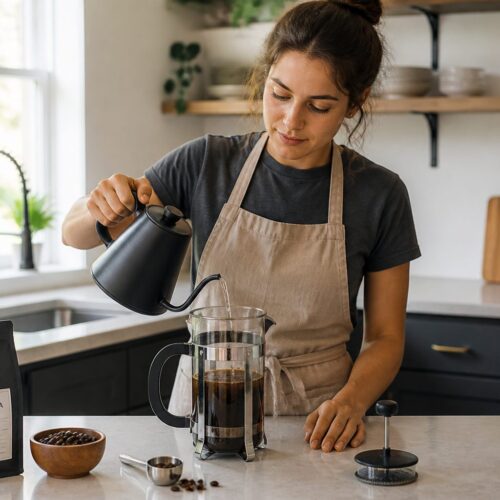
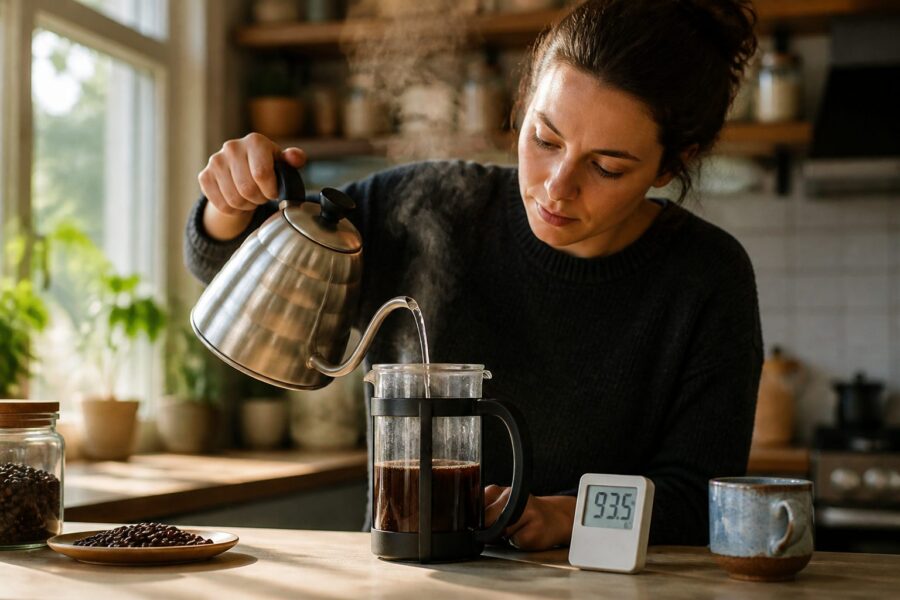
| French press | Immersion time, grind, and the moment you press affect the cup alongside water heat. |
| Cold brew | The method uses cool or room-temperature water and a much longer steep, so hot-brew targets do not apply directly. |
How to make a controlled temperature adjustment
Change one variable at a time.
Keep the coffee, dose, water amount, grind setting, filter, and pour pattern the same, then use a slightly different water temperature on the next brew.
If you also change the grind and steep time, you will not know which change affected the cup.
- Write down the coffee and the recipe you already use, including the brewer and grind setting.
- Choose a small temperature change that your kettle or routine can repeat; avoid making several changes at once.
- Brew and taste after the cup has cooled enough to evaluate comfortably.
- Record whether the cup seems less sharp, more balanced, flatter, or harsher, then decide whether to keep the change.
A thermometer or a temperature-controlled kettle can improve repeatability, but neither is required to learn the basic relationship.
If you do not own one, use the same sequence each time, such as heating water to a boil and allowing a consistent pause before pouring.
The exact pause is affected by kettle size, water volume, and room conditions, so it should be treated as your routine rather than a universal conversion.
Diagnose flavor before blaming water heat
A sharp or thin cup may prompt a temperature change, but it can also reflect grind size, uneven wetting, a short contact time, or the coffee itself.
Check whether water flowed through the bed unusually quickly, whether grounds remained dry, or whether your dose changed.
Those clues may point to a different variable.
A bitter or drying cup can have several causes as well.
A very fine grind, long contact, uneven extraction, old residue in the brewer, or a dark roast may contribute.
Lowering temperature is one test, but cleaning the equipment or correcting the brew time may be the more relevant fix.
Use tasting language carefully. ‘Sour’ and ‘bitter’ describe impressions, not laboratory readings, and people use them differently.
Compare two cups side by side if possible; a direct comparison makes subtle shifts easier to notice than trying to remember yesterday’s cup.
Why a machine may produce a different result
Automatic machines heat water internally, and their design determines how the water reaches the coffee.
You may not be able to set a temperature at all.
If a machine has a temperature setting, the owner’s manual explains how it operates; do not assume a displayed setting measures the coffee bed throughout the brew.
Water volume and machine condition matter too.
A small batch may behave differently from a full carafe, and mineral buildup can interfere with a brewer’s operation.
If the result changes suddenly, check the manual’s cleaning and descaling guidance before changing your recipe repeatedly.
For pour-over, the kettle stream, preheated dripper, and pouring pace alter how quickly the bed cools and drains.
These are reasons to keep a routine steady while experimenting.
They are not reasons to seek expensive equipment before you can identify what you dislike in the cup.
A simple way to keep learning
Temperature makes the most sense as a controlled variable, not as a contest to hit an exact figure.
Choose one coffee, use a stable recipe, change the water heat modestly, and note the outcome.
When a cup improves, repeat the same approach once more before deciding that the setting is reliable.
If the difference is hard to detect, return to the original recipe and look at variables that create larger visible changes, such as grind consistency, water distribution, or brewer cleanliness.
A clear routine is more helpful than a string of adjustments that cannot be compared.
In short, use the brewer’s directions as your anchor, then let the cup guide careful experiments.
Temperature can shift extraction, but it works alongside the other choices that shape a home-brewed cup.
Frequently asked questions
There is no single best setting for every coffee and method. Begin with the brewer or recipe instructions, keep your process repeatable, and adjust only if the cup gives you a reason.
Warmer water generally extracts soluble material more readily during the same contact time, while cooler water tends to extract more slowly. The effect depends on grind, contact, coffee, and brewer.
Follow the instructions for your method when available. Without a specified setting, choose a consistent hot-water routine and make small, controlled changes rather than treating one number as universal.
For a suggested starting temperature by brewing method and roast level, see the Coffee Brewing Temperature Guide.