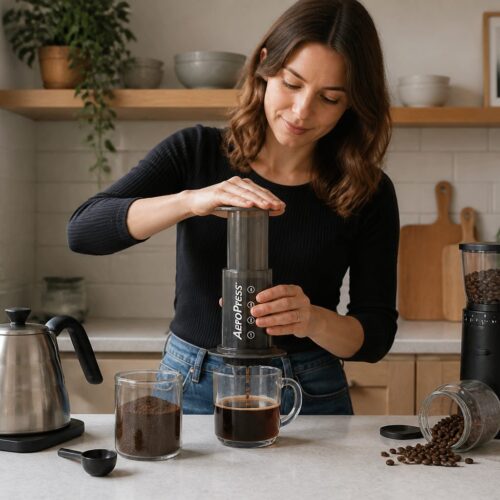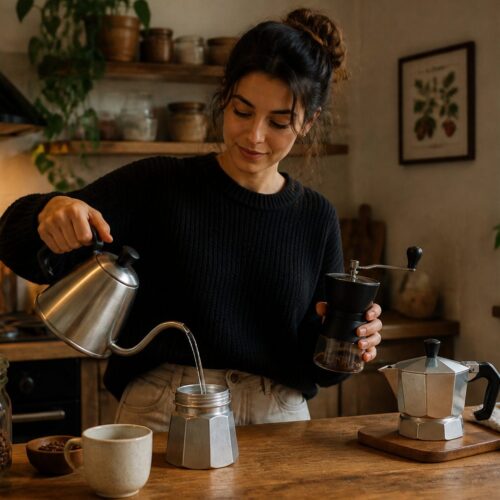

To brew coffee for one consistently, first decide how much finished coffee you want, then measure both coffee and water for that serving.
A single-cup pour-over, French press, or small automatic brewer can all work; the repeatable part is keeping your dose, water amount, grind, and method consistent.
The phrase one cup can mean a mugful or a smaller measuring-cup serving, so use the amount you plan to drink rather than relying on a machine’s cup markings.
A kitchen scale makes it easier to repeat a recipe, but a measured scoop can work if you use it the same way each time.
Choose a method that fits one serving
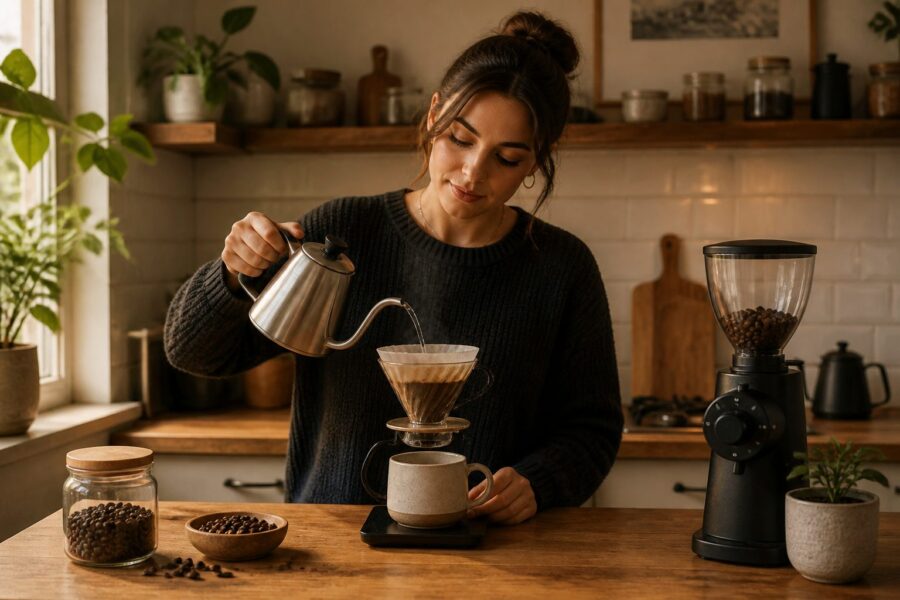
Pour-over gives you direct control over how much water you add and is naturally suited to brewing a single mug when the dripper is the right size.
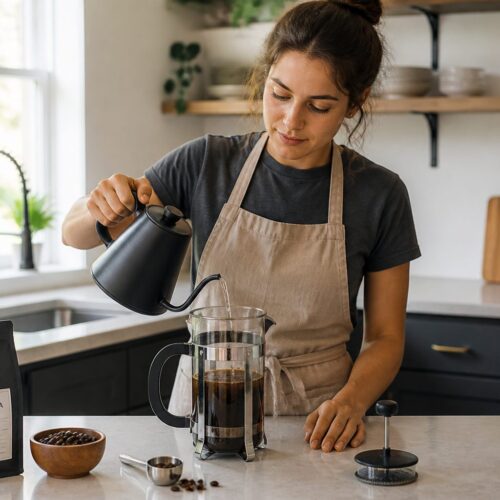
A French press can also make one portion, provided the amount is enough for the press to work as intended and the grounds are not left steeping after serving.
An automatic coffee maker may have a minimum batch size or a special single-serve setting.
Check the manual for your machine’s capacity and instructions; a tiny amount in a large basket may not brew the same way as a full pot.
Choose the method you will actually use on a weekday.
A simple, repeatable setup is more useful than a complicated recipe you abandon after a few mornings.
Set a starting coffee-to-water ratio
A ratio describes the weight of dry coffee compared with the weight of water.
For example, a 1:16 ratio means one part coffee for sixteen parts water by weight; 15 grams of coffee paired with 240 grams of water is one example of that relationship.
Treat a ratio as a starting point, not a rule that determines the perfect cup.
The final serving volume will be lower than the water poured in because the grounds retain some water, and personal preference may lead you to use more or less coffee.
If you do not own a scale, use the same scoop and fill it consistently, then make small adjustments after tasting.
Scoops are less exact because bean size, grind, and how tightly coffee is packed can change the amount they hold.
| What to keep steady | Why it helps |
|---|---|
| Water amount | Sets the serving size and the ratio |
| Coffee dose | Changes strength and extraction potential |
| Grind setting | Affects how quickly water moves through or around grounds |
| Brewing method | Changes contact time and filtration |
| Pouring or steeping routine | Makes one brew easier to compare with the next |
A repeatable single-cup pour-over
- Set a dripper over a mug or carafe that can safely hold the finished brew.
- Place a compatible paper or reusable filter in the brewer and rinse it if its material and instructions allow.
- Measure the coffee dose and water amount for the serving you want.
- Add grounds, wet them evenly with a small initial pour, then continue adding water in a controlled way without overflowing the brewer.
- Let the water drain, remove the brewer, and taste the coffee before changing the recipe.
The first wetting is often called a bloom in pour-over brewing.
It gives the grounds an initial contact with water before the rest of the brew, but exact timing and pouring patterns vary by recipe and equipment.
If you are using a metal filter, more oils and some fine particles may pass through than with paper.
That affects texture and cleanup, not the basic need to measure a consistent amount of coffee and water.
Using a French press for one person
A French press works by steeping grounds in water and separating them with a plunger screen.
Measure a serving that fits your press, add the grounds and water, stir only if your routine calls for it, then press gently and pour the coffee into your mug.
Do not leave the finished coffee sitting with the grounds if you want to stop extraction at serving time.
Pouring it out separates the drink from the bed, while leaving liquid in the press can make later cups taste different from the first.
French presses often let more sediment into the cup than paper-filter methods.
If the texture bothers you, let the drink settle briefly or pour slowly, and avoid disturbing the final grounds at the bottom.
A preheated mug can keep the finished drink warmer for a little longer, especially if the mug is thick or the room is cool.
Pour warm water into it while you prepare the coffee, then empty it before brewing if the method calls for the brewer to sit on the mug.
If you are making coffee before work, weigh the dose and water the evening before only if you can keep the dry grounds protected and the equipment clean.
Grinding right before brewing is a preference, not a requirement for a repeatable recipe; the important thing is to avoid changing several details at once.
Some single-serve machines use pods or proprietary baskets, so serving size depends on the model’s instructions.
Check the available settings and minimum fill rather than assuming that a machine marked with cup icons uses the same ounce definition as your favorite mug.
Troubleshoot one cup without changing everything
If the coffee tastes weak, first check whether the dose is consistent and whether the water amount is larger than intended.
Adjust the coffee dose modestly or change the grind one step at a time, then repeat the same method.
If it tastes bitter or harsh, a very fine grind or a long contact time may be contributing.
Try a slightly coarser grind or a shorter contact time, but change just one variable so you can tell whether the adjustment helped.
A sour or thin cup can have more than one cause, so do not assume that adding coffee is always the answer.
Check how evenly the grounds were wetted, whether water flowed too quickly, and whether your recipe changed from the previous brew.
- Write down the coffee, grind setting, dose, and water amount the first time you like a recipe.
- Use the same mug or serving target to avoid confusing different portions with different strength.
- Rinse reusable brewing parts after use and clean them according to their instructions.
- When testing an adjustment, change one brewing variable at a time.
A good one-cup routine does not require a particular machine or a complicated series of pours.
Choose a method suited to one serving, measure a consistent recipe, and make small changes based on what you taste.
Frequently asked questions
Use a method designed for a single serving, measure a consistent amount of coffee and water, and follow the same grind and brewing steps each time. A pour-over or suitably sized French press can work well.
It depends on the serving size and preferred strength. A ratio such as 1:16 can provide a starting point by weight, then adjust the dose gradually to suit your taste.
The best method is one that fits your equipment and produces a cup you enjoy. Pour-over offers control over a single serving, while a French press uses immersion; consistent measurements make either easier to repeat.
To scale a recipe down to a single cup, use the Coffee Brewing Ratio Calculator.