
A French press is easiest to clean when you separate the loose grounds from the washable parts before they dry.
A simple routine after each brew removes residue from the carafe and plunger without treating every model as if it were made from the same materials.
This step-by-step care routine explains how to empty the press, wash its components, and handle the filter assembly.
If your manufacturer gives different care instructions, use those for your particular brewer.
Let the press cool, then separate the parts
After serving, let the brewer cool enough to handle comfortably.
Hot water and a recently heated carafe can cause burns, so do not rush to disassemble it while it is still too hot.
Lift out the plunger assembly and set it aside.
Grounds left in the carafe are easier to remove before they dry, but avoid forcing a screen or twisting a component that does not come apart as expected.
Some plungers separate into a rod, screen, and retaining pieces; others are designed to remain assembled for routine washing.
Check the product instructions before taking the filter stack apart, especially if you are unsure how the pieces fit back together.
Remove used coffee grounds without clogging the drain
Use a spoon or spatula to transfer the bulk of the wet grounds into a waste container.
A small amount of water can help gather residue, but avoid sending a large mass of grounds into a sink drain.
If a film of grounds remains, add water to the carafe, swirl gently, and pour through a fine strainer over a waste container if needed.
The goal is to keep solids out of plumbing rather than force them through a narrow drain.
Do not use a sharp knife or abrasive object to scrape the glass or metal interior.
A non-scratch utensil and a rinse are usually enough to loosen the remaining particles before washing.
When traveling or camping, pack out grounds with other waste where local rules require it.
Do not assume that grounds belong in every outdoor area or public drain.
Wash the carafe and plunger
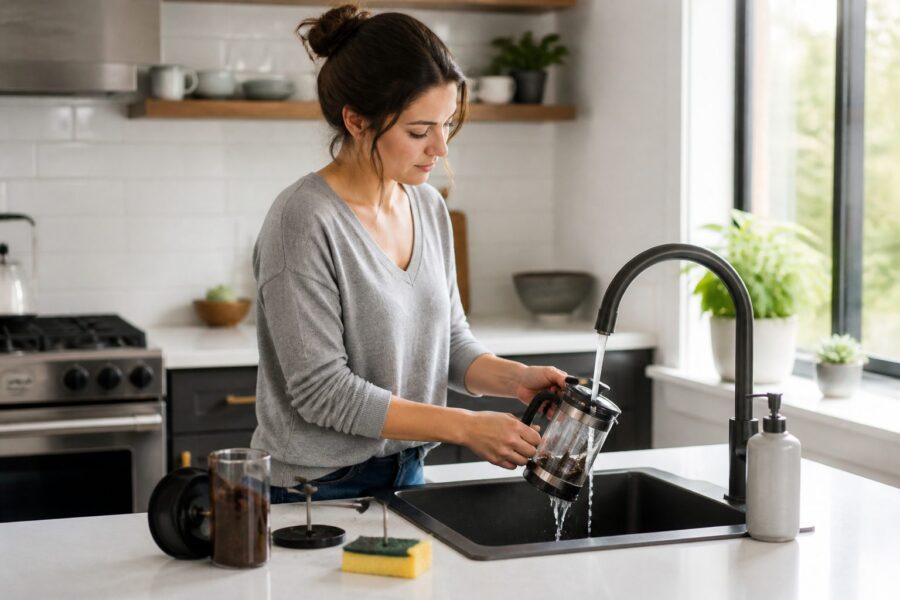
Wash the carafe with warm water and ordinary dish soap, using a soft sponge or cloth that suits its material.
Clean the bottom and the area near the spout, where fine particles can settle.
Wash the plunger rod and filter assembly as directed.
Move soapy water through the mesh and around the screen edges, where coffee residue can remain after a quick rinse.
A carafe-safe brush can help reach the base of a tall vessel, but check that the brush will not scratch a coated or delicate interior.
For a glass carafe, avoid sudden temperature changes that could stress the glass.
Dishwasher use depends on the specific model and component.
A stainless-steel body, glass vessel, plastic lid, and filter assembly may have different care requirements, so do not assume every piece can go in the dishwasher.
Clean the filter screen without damaging it
The mesh screen catches fine grounds while allowing brewed coffee through.
Rinse both sides under running water and inspect the edges for trapped residue before putting the press away.
If the filter stack is designed to disassemble, separate it only as the manual shows and wash each piece.
Keep the parts in order so the screen, support plate, and retaining component return to their correct positions.
Do not bend the mesh or scrub it with a stiff metal brush.
A distorted screen can fit poorly or allow more sediment through, and abrasive cleaning may shorten the useful life of the assembly.
If oils or fine particles remain after ordinary washing, soak or deep-clean the assembly only with a method approved by the manufacturer.
Avoid mixing cleaners or applying a strong chemical without checking the product directions.
Rinse and dry before reassembly
Rinse the carafe, plunger, and any separated components until soap and visible particles are gone.
A thorough rinse helps prevent detergent residue from affecting the next brew.
Dry the parts fully with a clean towel or let them air-dry in a suitable place.
Storing a damp press assembled can leave moisture trapped around the filter and lid.
Once dry, put the plunger assembly back together according to the manual.
Check that the screen sits flat and the pieces are secure without overtightening threaded parts.
If you cannot remember the original order, do not guess based on a different French press model.
Look up the maker’s instructions or a diagram for your exact brewer before using it again.
A quick routine after each brew
A repeatable sequence keeps cleaning manageable and makes it less likely that grounds will dry around the filter.
Use this checklist as a general routine, adjusting it to the directions for your model:
- Let the press cool enough to handle safely.
- Remove the plunger and scoop the bulk of grounds into waste.
- Rinse away remaining particles without pouring a large amount of grounds into the drain.
- Wash the carafe and plunger components with dish soap and a suitable soft tool.
- Rinse thoroughly and let all parts dry before reassembly or storage.
The routine does not need to involve a deep clean after every cup.
Regular washing of the parts that touch coffee is the important daily task; a deeper treatment should follow the product instructions and the condition of the filter.
When a deeper clean may be useful
If a clean press still has an oily smell or visible film, inspect the screen, the underside of the lid, and the joints where parts meet.
Residue often remains in small spaces that a quick rinse misses.
Use only a soak or cleaning product that the maker permits for the materials involved.
Glass, stainless steel, plastic, and coated surfaces do not always respond to the same method.
If the mesh is torn, bent, or no longer seats properly, cleaning may not solve the problem.
Consult the manufacturer about the correct replacement component rather than trying to repair a damaged screen with household tools.
Visible mold or a persistent musty odor calls for careful cleaning and complete drying, but follow the manufacturer’s safety guidance for the press.
If a component cannot be cleaned effectively or its material is damaged, stop using it until you can determine the appropriate next step.
Pay extra attention to the plunger after brewing coffee with a fine grind.
Fine particles can settle around the screen and retaining plate, so rinse those areas from both sides before drying the assembly.
Questions about cleaning a French press
Let it cool, remove the plunger, scoop out most grounds, rinse the remaining particles, and wash the carafe and filter parts with dish soap. Follow the maker’s directions for any pieces that disassemble.
Scoop the bulk of the grounds into household waste or another suitable collection, and avoid sending a large mass into the sink drain. Local composting options depend on the rules and facilities where you live.
Yes, wash the parts that contact coffee after use, including the carafe and plunger assembly. The exact dishwasher or deep-cleaning instructions depend on the press materials and model.