

Does freshly ground coffee taste better?
Often it can taste more aromatic than coffee that was ground earlier, because grinding exposes much more of the bean to air.
But a grinder does not guarantee a better cup: the coffee, grind consistency, storage, water, and brewing method all matter, and pre-ground coffee can still be convenient and enjoyable.
The useful question is what changes in your own routine when you grind just before brewing.
Fresh grinding gives you control over grind size and lets you keep whole beans intact until use, while pre-ground coffee saves time and removes the need to own or maintain a grinder.
What happens when coffee is ground
Whole beans have a relatively small exposed surface compared with the many particles created by grinding.
Once ground, coffee releases aroma and interacts with air more readily, so its aromatic character can fade over time depending on packaging and storage.
That change is gradual, not an instant collapse in quality.
A sealed package of pre-ground coffee can remain useful, while poorly stored whole beans can lose aroma too.
Grinding shortly before brewing simply reduces the time grounds spend exposed before water reaches them.
A fresh grind also releases gases from the beans during brewing, which may affect how a coffee bed behaves in some methods.
A visible bloom can be interesting, but its size is not a reliable score for flavor or proof that one bag is better than another.
Fresh grinding gives you control over size
Different brewers often call for different grind textures.
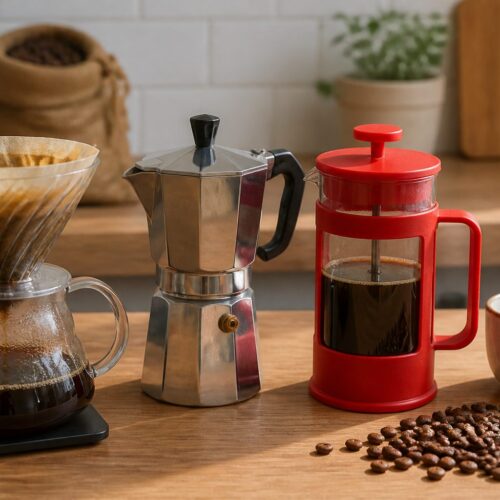
Pour-over and drip commonly begin around medium, French press often uses a coarser grind, and espresso requires a finer adjustment matched to the machine.
Having a grinder lets you move between these textures instead of relying on a single grind chosen for one use.
That flexibility is useful when changing methods or troubleshooting a cup.
If water runs through too quickly or too slowly, a small grind adjustment may help, although flow and flavor can also be affected by filter, dose, pouring, and equipment.
A grinder also introduces a new variable.
Inconsistent particles can produce uneven extraction, and a poorly matched setting may make a brew taste thin, sharp, harsh, or muddy.
Freshness alone does not compensate for a grind that does not suit the brewer.
When pre-ground coffee is a sensible choice
Pre-ground coffee is practical when speed, simplicity, or limited kitchen space matters.
It avoids the sound and cleanup of a grinder, and it can be a reasonable fit if you use one brewing method and buy a package size that you finish at a pace that suits you.
It also removes a piece of equipment that needs attention.
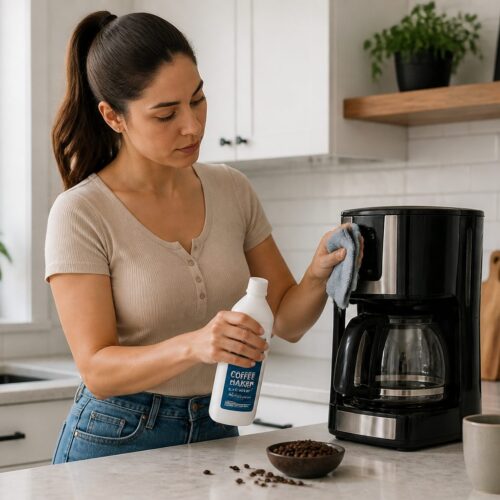
Grinders collect fine particles and coffee oils, and they need cleaning according to their instructions.
If you do not want that extra routine, well-stored pre-ground coffee may be the better choice for your household.
The important storage habits are similar: close the package carefully, keep it away from heat, moisture, light, and strong odors, and avoid transferring coffee to a damp container.
Since ground coffee has more exposed surface, prompt resealing is especially useful.
How to compare the two fairly
A fair comparison holds as much constant as possible.
Use the same coffee if available, brew with the same water and method, measure the coffee and water, and avoid changing the recipe midway.
Compare freshly ground beans with pre-ground coffee at a similar roast and age when you can.
If the beans and ground coffee are different products, the result tells you about those two coffees, not grinding alone.
Roast, origin, processing, age, and storage can all influence flavor, so avoid concluding that fresh grinding caused every difference in the cup.
Taste the coffees at a comfortable drinking temperature and note aroma, body, and the finish in plain language.
You might prefer the aroma of the fresh grind but find pre-ground more consistent in your brewer; that is useful information for choosing a routine, not a wrong answer.
Why freshly ground coffee can taste weak
Freshly ground coffee can still taste weak if the coffee-to-water ratio is low, the grind is too coarse for the method, or the brew does not extract as expected.
The age of the beans and the water can matter as well, and a fresh aroma does not necessarily mean the finished cup will feel concentrated.
Check the dose and water first, then hold them steady while adjusting grind in a small step.
If the cup is weak but clean, a modest ratio change may increase concentration; if it is thin and sour, grind or contact time may also need attention.
Do not assume that grinding finer always makes coffee stronger in a pleasant way.
A fine grind can change extraction speed and may cause a harsh or uneven cup, particularly if it clogs a filter or does not fit the method.
A simple fresh-grinding routine
- Store whole beans in a closed package or clean, dry container in a cool, dark cupboard.
- Measure only the amount of beans needed for the next brew.
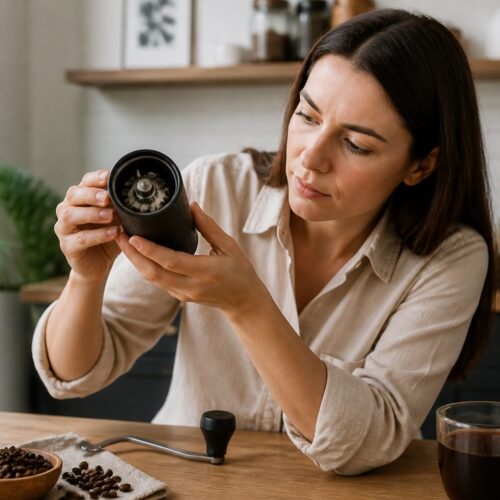
- Set the grinder for the brewing method and follow the grinder instructions.
- Brew with a measured amount of water and keep notes if you are adjusting a recipe.
- Brush or clean the grinder only as the manufacturer directs.
Grinding only what you need avoids leaving a large batch of grounds exposed and makes it easier to change grind size for another brewer.
Keep the grinder dry unless its manufacturer specifically allows a wet cleaning method, and do not force burr settings outside their normal range.
If mornings are rushed, portioning beans ahead can preserve convenience without grinding a large amount days in advance.
You can also choose pre-ground coffee for weekdays and whole beans for a slower weekend brew; routines do not have to be all or nothing.
What a grinder cannot promise
A grinder cannot make old, poorly stored coffee taste newly roasted, and it cannot fix water or equipment problems by itself.
It cannot make every brewing method taste alike or guarantee that a flavor note printed on a bag will appear in your cup.
The result depends on the whole recipe.
A consistent grinder can make adjustments easier to repeat, but a basic grinder used carefully may be enough for a simple routine, while an expensive grinder is not a substitute for measuring ingredients and maintaining the brewer.
When choosing between whole beans and pre-ground coffee, weigh the flavor difference you notice against the time, space, and care that grinding requires.
If you enjoy the cup and can repeat it, convenience is a legitimate part of the decision.
Choosing what fits your coffee routine
Try freshly ground coffee if you want to compare aroma, adjust grind for different methods, or keep whole beans until brewing.
Pre-ground coffee may suit you better when convenience matters most or when the cups you already make are satisfying.
Fresh grinding often gives coffee a brighter aroma and more control over brewing, but it is a tool rather than a guarantee.
The best choice is the one that fits your storage habits, equipment, and taste without turning a simple cup into a chore.
It can taste more aromatic because grounds lose aroma over time, but the result depends on coffee, storage, grind, water, and brewing. Fresh grinding does not guarantee that every cup will taste better.
Whole beans offer control over grind size and let you grind close to brewing, while pre-ground coffee is convenient and needs no grinder. Choose according to the difference you taste and the routine you will maintain.
Fresh grinding does not automatically make coffee more concentrated. Coffee-to-water ratio primarily affects concentration, while grind size affects extraction and the way the brew develops.
Check the coffee-to-water ratio and grind setting, then consider water and brew time. Freshness alone cannot compensate for a recipe that produces a thin cup.