

To make coffee stronger without bitterness, first decide what stronger means to you.
It can mean a more concentrated cup, a fuller flavor, or a drink that holds its coffee character when milk or ice is added.
Those goals overlap, but they are not identical, so adding grounds is not always the right first move.
Concentration is mostly affected by the amount of coffee relative to water, while bitterness can be influenced by extraction, roast, water, and coffee condition.
A good troubleshooting routine changes one variable at a time and keeps the rest of the recipe steady.
Separate strength from bitterness
A cup can be concentrated without tasting harsh, and a mild cup can still be bitter.
More coffee for the same water usually increases concentration, but if the brewing process already extracts an unpleasant flavor, increasing the dose may make that taste more noticeable instead of fixing it.
Start by describing the problem precisely.
If the coffee tastes watery but clean, the ratio may need more coffee or less water.
If it tastes dry, harsh, or persistently bitter, inspect grind, contact time, brew method, and coffee freshness before changing the ratio.
Taste descriptions are personal and can overlap.
A dark roast may have a bold, roasty profile that one person enjoys and another calls bitter; a bright coffee may taste sour to someone expecting a mellow cup.
Use these words as observations rather than objective diagnoses.
Adjust the coffee-to-water ratio first for concentration
Measure coffee and water, preferably by weight, so each test is comparable.
Choose a ratio you already enjoy as a baseline, then add a small amount of coffee or use slightly less water if the cup is too weak.
Keep your grind and brewing time unchanged during that comparison.
For instance, if a measured recipe tastes thin, increase coffee modestly while holding water constant, then taste the next brew.
If the cup becomes more substantial but turns harsh, return to the earlier dose and investigate extraction; do not keep increasing coffee in the hope that bitterness will disappear.
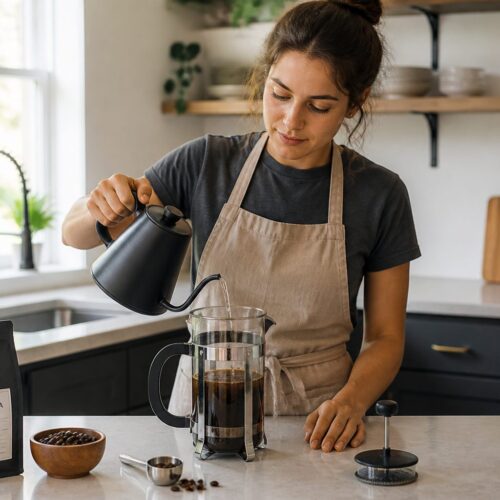
A scoop is less predictable than a scale because the amount it holds changes with grind and how it is filled.
If you rely on a scoop for convenience, use the same scoop and filling habit every time, and consider weighing it once so you know approximately how much coffee your routine uses.
Use grind size to tune extraction
A finer grind exposes more surface area to water and can change how quickly extraction proceeds.
If a brew is harsh or overly bitter, a slightly coarser grind is one useful test, especially when the recipe involves a long contact time; if it is thin or sour, a small move finer may help.
These are starting clues, not guaranteed fixes.
Espresso, pour-over, drip, and French press behave differently, and the grinder’s numbered settings are not standardized.
Move one small step at a time, repeat the same recipe, and record the result rather than jumping several settings at once.
For a drip machine or pour-over, unusually slow flow may point toward a fine grind or a clogged filter, but pouring technique and equipment can also slow the brew.
In a French press, a finer grind can leave more fine particles in the cup; coarser grounds and careful pouring may reduce that sensation.
Check contact time and water handling
Longer contact can allow more extraction, but time is tied to method.
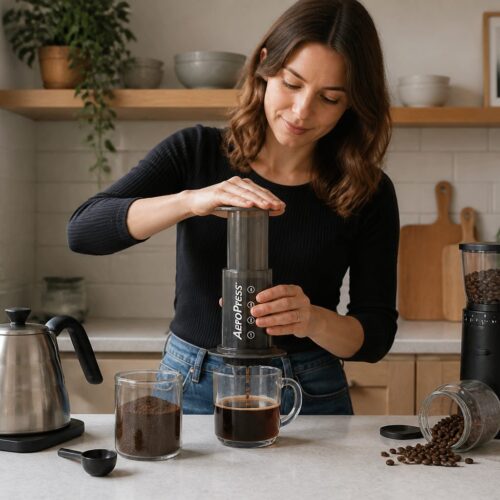
In immersion brewing, steep duration is a direct part of the recipe; in pour-over, water flow and drawdown are connected to grind, filter, pouring, and dose.
Change time only in a way your method allows and keep notes on the result.
Water temperature can affect extraction, but avoid chasing a tiny temperature change before checking the basic recipe and grind.
Use water suitable for brewing and follow the equipment’s instructions, especially with hot-water appliances.
If you test a lower temperature, keep the same dose, grind, and duration to make the comparison meaningful.
Clean brewing equipment matters because old coffee residue can add stale or rancid flavors that are easily mistaken for bitterness.
Wash removable components as directed and descale a machine according to its manual; do not assume a stronger recipe will cover residue from a neglected brewer.
Choose coffee and roast with the cup in mind
Roast level affects the flavors a coffee may express, but dark roast does not automatically mean more caffeine or a stronger brew.
If you consistently dislike smoky or deeply roasted flavors, a lighter or medium roast may better fit your preference, though labels and flavor still vary between coffees.
Coffee that has been open for a long time can lose aroma and taste flat or stale.
Keep beans or grounds sealed in a cool, dry, dark place, and grind whole beans close to brewing when that fits your routine.
Fresh grinding is not a guarantee of a sweeter cup if the recipe is poorly matched.
Water can also affect what you taste.
If the same coffee changes markedly between locations or water sources, compare using a consistent, potable water source; do not add household chemicals or unverified additives to alter flavor.
A controlled troubleshooting sequence
- Brew your usual recipe and write down coffee, water, method, grind, and approximate contact time.
- If the cup is weak but not harsh, adjust the ratio slightly toward more coffee while holding the other variables steady.
- If bitterness dominates, keep the ratio and test a modestly coarser grind or shorter steep where appropriate.
- Clean the brewer and grinder as their instructions allow, then repeat the comparison with the same coffee.
- Keep the change that improves the cup and avoid changing multiple variables in one test.
This sequence helps separate a concentration problem from an extraction problem.
It also prevents a common cycle in which a drinker adds grounds, gets a heavier but still harsh cup, then adds milk or sugar to mask the result without learning what caused it.
When additions help and when they do not
Milk, cream, or a non-dairy alternative can soften the perceived sharpness of a finished drink, but it does not change how the coffee was extracted.
If that is the style you enjoy, use it; if you want a less bitter black coffee, adjust the brew rather than relying on an addition to conceal the flavor.
Ice can dilute hot coffee as it melts, so a drink intended to be served cold may need a recipe designed for dilution or a chilled brewing approach.
Simply brewing an already weak cup over ice can make it taste even thinner.
Sugar changes perceived sweetness but does not remove bitter compounds from the brew.
Additions are personal choices, not repairs that make every underlying recipe balanced.
Build a stronger cup you can repeat
Choose a measured ratio that gives the concentration you want, then tune extraction with small grind or timing adjustments if bitterness remains.
Keep the coffee, water, equipment, and serving style consistent while testing, and make one change per brew.
A satisfying strong cup is not defined by the darkest roast or the largest scoop.
It is the result of a recipe that suits the coffee and your preference, with enough concentration to feel full and an extraction that does not leave the finish unpleasant.
Milk or another addition can soften perceived bitterness, but it does not change the extraction. For a less bitter black coffee, review grind, brew time, equipment cleanliness, and the coffee itself.
More coffee for the same water usually makes the brew more concentrated, but scoops vary in weight. If the cup is already bitter, extra grounds may make it heavier without solving the source of the bitterness.
Measure a consistent ratio to set concentration, then adjust grind or contact time in small steps if the flavor is harsh. Change one variable at a time and taste the result.
There is no method that guarantees a bitterness-free cup for every coffee. Start with clean equipment and a repeatable recipe, then adjust grind and timing gradually to suit your coffee and taste.
To test a stronger or milder ratio, use the Coffee Brewing Ratio Calculator.