
How to make better drip coffee starts with a simple idea: change one brewing variable at a time, then taste the result.
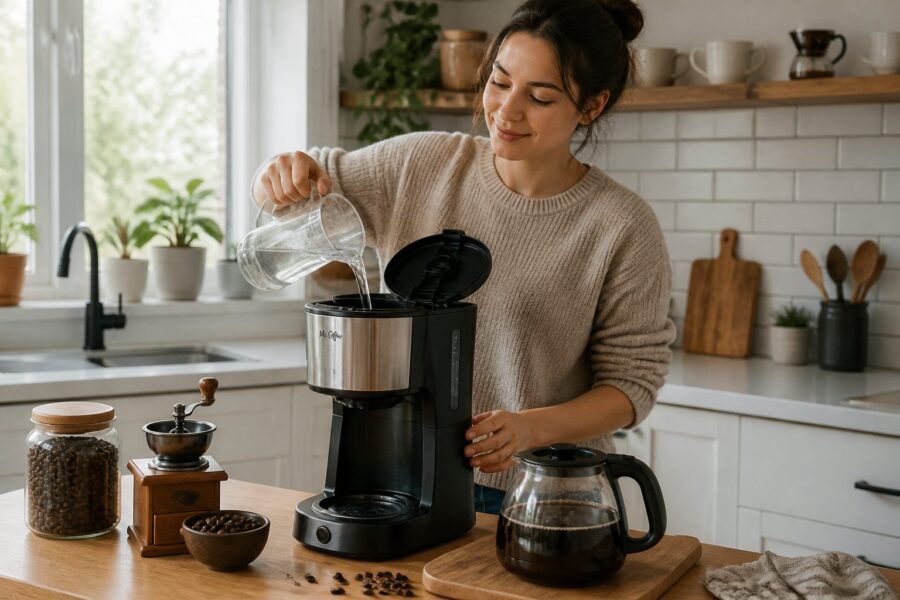
An automatic machine removes much of the pouring work, but coffee freshness, grind, water, dose, and cleanliness still shape the pot.
Start with the coffee and the machine
Coffee that has lost much of its aroma can make a flat pot even when the machine is working properly.
Keep beans or grounds sealed in their original bag or another airtight container, away from heat, moisture, and direct light, and use them while their aroma still seems lively.
Whole beans let you grind shortly before brewing, while pre-ground coffee can be a sensible choice when convenience matters more than extra control.
Neither choice repairs stale coffee, so begin by checking the package condition and smell rather than assuming a new machine is the answer.
Residue from earlier pots can add stale, oily flavors.
Wash the carafe, filter basket, and other removable parts that contact coffee according to the machine manual; wipe the outside and keep soap residue out of the brew path.
Descaling is different from washing removable parts because it addresses mineral deposits inside the machine.
The right product and schedule depend on the brewer, so follow its manufacturer’s instructions instead of using an improvised cleaner that may damage seals or leave an unwanted taste.
Choose a grind that lets water flow evenly
A medium grind is a useful starting point for many automatic drip brewers, but basket design and brew time vary.
Grounds that are very fine can slow water movement and encourage a harsh, over-extracted cup; very coarse grounds may let water pass quickly and leave the coffee tasting weak or sharp.
Look at the bed after brewing as a clue, not a precise measurement.
A deep, muddy bed or unusually slow draining basket can suggest the grind is too fine, while an uneven bed may reflect how the shower head distributes water or how the filter sits in the basket.
When the coffee tastes harsh, try moving the grinder slightly coarser while keeping the coffee dose and water volume unchanged.
If the cup seems thin or sour, try a small move finer, then repeat the same batch size so the comparison is meaningful.
Grinder settings are not universal.
A setting marked 10 on one grinder does not translate directly to a setting marked 10 on another, so use the machine’s flow and the taste in the cup to guide adjustments.
Measure a repeatable coffee-to-water dose
A scale makes it easier to repeat a recipe than scoops alone because coffee density and scoop packing differ.
The National Coffee Association’s About Coffee brewing guide gives a general starting range of one to two tablespoons of ground coffee for each six ounces of water; a scale-based ratio can make comparisons more consistent when a recipe specifies mass.
For a practical test, record how much coffee and water you use for one familiar pot.
If it tastes weak, increase the coffee dose modestly or reduce the water slightly; if it tastes too intense, reverse one of those changes rather than changing both at once.
| What you notice | First variable to test | Keep steady |
|---|---|---|
| Watery or faint flavor | Increase the coffee dose a little | Grind and water volume |
| Harsh or drying finish | Try a slightly coarser grind | Dose and batch size |
| Sour or underdeveloped taste | Try a slightly finer grind | Dose and machine setting |
| Flavor changes from pot to pot | Measure the dose and water | Coffee and brew size |
Strength and extraction are related but not identical.
Adding more grounds can make brewed coffee more concentrated without necessarily correcting a sour or harsh flavor caused by grind, water flow, or uneven brewing.
Check water and brew temperature without guessing
Coffee is mostly water, so strong odors or an unpleasant taste in tap water can show up in the pot.
Start with cold, fresh water that tastes good on its own; the National Coffee Association advises against distilled or softened water for brewing in its general drip guidance.
Avoid assuming that hotter water always improves a cup.
Automatic brewers control their own heating, and a household user often has little direct access to that setting; focus first on freshness, dose, grind, and cleaning before replacing equipment or trying to alter its heating system.
If the machine repeatedly produces coffee that tastes dull despite clean parts and measured ingredients, consult the manual for normal operation and maintenance.
A brewer that no longer heats or distributes water as designed may need service, but taste alone does not identify a specific fault.
Make the filter and basket work as intended
Use a filter shaped for the basket and seat it fully before adding grounds.
A folded edge that collapses or a filter that sits unevenly can change water flow or allow grounds into the carafe.
Paper filters are disposable and easy to clear after brewing, while reusable filters need regular washing to remove trapped oils and fine particles.
Match the filter type to the machine’s instructions, since basket dimensions and filter shapes are not interchangeable in every brewer.
Do not pack the grounds down unless the machine specifically instructs you to do so.
A level bed gives the water a more even path than a compressed layer that may slow drainage in some spots.
Use a small tasting routine to troubleshoot
Write down the coffee, grind setting, dose, water volume, and any noticeable taste.
A short note such as “same beans, one notch coarser, less drying finish” is more useful than trying to remember several changes after breakfast.
- Brew a familiar batch with clean equipment and a measured dose.
- Taste it after it has cooled enough to assess comfortably, and describe the main issue in plain terms.
- Choose one adjustment, such as grind size or dose, and leave the others alone.
- Repeat the batch and compare the result before making another change.
If you are trying to make really strong drip coffee, add coffee gradually rather than overfilling the basket.
Too many grounds can overflow or impede drainage, depending on the machine, and concentrated coffee is not automatically balanced coffee.
A smaller cup made with the same recipe will not necessarily taste identical to a full pot because brewers may behave differently at different fill levels.
Check the minimum and maximum batch sizes in the manual and use the machine within those limits.
Common questions about better drip coffee
Begin with fresh-tasting coffee, clean removable parts, a suitable grind, and a measured dose of coffee and water. Adjust one variable at a time so you can tell what changed.
Use fresh water that tastes good, fit the filter correctly, keep the brewer clean, and record a repeatable recipe. If you change grind or dose, keep the batch size steady for the comparison.
Increase the coffee dose gradually or use slightly less water while staying within the brewer’s fill limits. If the cup is strong but unpleasant, troubleshoot grind and flow rather than adding still more coffee.