

Choosing between a manual vs electric coffee grinder comes down to how grinding fits into your daily routine; Both types can use burrs, and both can prepare coffee for home brewing; the useful differences are effort, speed, noise, capacity, portability, adjustment, and how often you grind.
The word manual does not mean imprecise, and electric does not automatically mean consistent; Grinder design, construction, adjustment range, and your brewing needs matter more than the power source alone.
What manual and electric grinders do
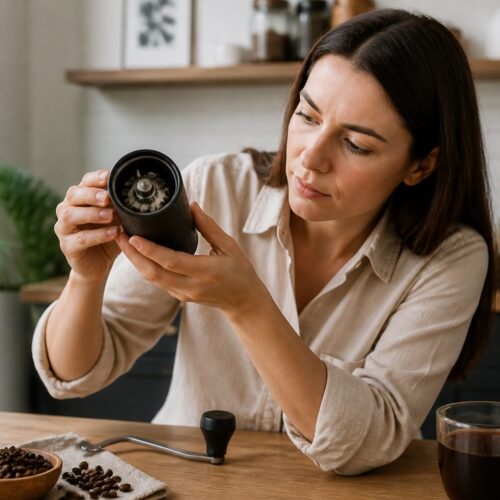
A manual grinder turns a handle that drives its grinding mechanism, and many use burrs that process coffee between two surfaces; Models vary in how comfortably they turn, how many settings they offer, and how much coffee they can hold.
An electric grinder uses a motor, and burr models typically have settings to change the grind while blade models chop beans in a chamber; Check whether a model uses burrs or blades rather than treating every electric grinder as the same type.
A useful comparison starts with the coffee you brew; A hand burr grinder and an electric burr grinder may both offer useful grind control, while an electric blade grinder may trade that control for a simple, quick operation.
| Daily factor | Manual grinder | Electric grinder |
|---|---|---|
| Effort | Requires turning a handle | Motor performs the grinding |
| Speed | Usually takes more hands-on time | Often convenient for repeated doses |
| Noise | No motor sound, though grinding is audible | Motor and grinding noise vary by model |
| Portability | Often compact and does not need a power outlet | Needs suitable power and counter or travel space |
| Capacity | Many models are designed for smaller doses | Some models can handle larger batches |
The table describes common design tendencies, not a guarantee for every model; Read capacity, dimensions, operating directions, and adjustment details before choosing a particular grinder.
When a manual grinder fits your routine
A manual grinder can suit someone who brews one serving at a time and does not mind turning a handle; It can also be a practical fit when counter space is limited or when you want to grind coffee away from an outlet, provided the device is intended for that use.
Because there is no motor, the sound profile differs from an electric grinder; It is not silent: beans still make noise as they are crushed, and the handle and body can produce sound; But someone who wants to avoid a motor running early in the morning may prefer the manual operation.
Manual grinding takes active time and effort, especially with larger doses or a very fine setting; If you prepare several servings each morning or find repetitive hand movement inconvenient, the extra work can outweigh any advantage in size or portability.
A manual burr grinder may offer a useful path to controlled grind adjustment, but check how its setting changes work and whether the markings are clear; Some designs require multiple turns or careful adjustment, and a grinder that is awkward to set can be difficult to use consistently.
When an electric grinder is more convenient
An electric grinder is convenient when you prepare multiple doses, grind frequently, or prefer a hands-off step; You add the beans, set the controls, and let the motor do the work, although you still need to measure the dose and follow the machine’s instructions.
Electric burr models can make repeated grinding less physically demanding; Their settings may also be quicker to change, depending on the design; Before buying, check how the adjustment behaves, whether it can return to a familiar position, and how easily the grinder can be cleaned.
The motor adds noise and requires power, and the appliance needs a place on the counter or in storage; If you live in a small space, consider the grinder’s footprint, cord arrangement, and how its sound may fit your household routine.
An electric grinder’s label does not tell you whether it uses burrs or blades; Blade models are often simple to operate, but they do not provide the same direct grind-size adjustment as burr models; If repeatable grind size matters, inspect the mechanism and settings rather than choosing based only on the word electric.
How the brew method changes the decision
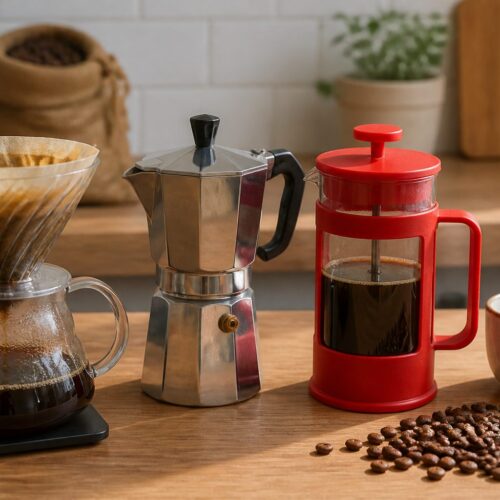
For pour-over, grind adjustments can help you respond to a cup that tastes too sharp, thin, or harsh; Either manual or electric burr grinders can serve this purpose if their range fits the dripper, and if you are willing to make small changes and taste the result.
For French press, the goal is generally a coarser grind that works with immersion and a mesh filter; A manual grinder may handle a single serving comfortably, while an electric grinder may be more convenient for a larger carafe; The right capacity depends on how much you brew at once.
Espresso places tighter demands on grind adjustment than many other home methods; Check the grinder maker’s description for espresso suitability, the available fine range, and the ability to adjust in small steps; Neither a manual nor an electric label alone confirms that it will work well with your espresso machine.
If you use several methods, think about the range of settings and how easily you can move between them; A grinder that is capable of a wide range but hard to reset may frustrate you more than a simpler model suited to one main brewing method.
Consistency matters more than the power source
Grind consistency influences how quickly water extracts from coffee; Smaller particles expose more surface area and tend to extract faster than larger pieces, so a batch with a broad mix of sizes can be harder to brew evenly.
This does not mean every electric grinder is more consistent than every manual grinder; A well-made manual burr grinder may give useful control, and an inexpensive electric blade grinder may not; Compare the grinding mechanism, adjustment, build, and use case.
For a fair home comparison, use the same beans, coffee dose, water amount, and brewing process; Keep one grinder setting stable, then compare the cups; If you change the device, dose, and brew recipe at the same time, you will not know which change affected the result.
It is also worth deciding whether you actually need to grind at home; Pre-ground coffee can be a reasonable choice when convenience matters more than controlling the grind yourself; The decision is about the routine and cup you want, not a requirement that every coffee drinker own a grinder.
Questions to ask before choosing
- How many servings do I grind at once?
- Will turning a handle feel manageable for that dose and grind size?
- Do I want to avoid motor noise, or value the faster hands-off operation?
- Does the grinder have an adjustment range suited to my brew method?
- Can I clean, store, and operate it comfortably?
- Would pre-ground coffee be simpler for my actual routine?
These questions often settle the choice more clearly than a feature list; A single-cup pour-over drinker who enjoys the grinding step may be comfortable with a manual model; a household making a full pot before work may prefer an electric burr grinder.
Use the grinder you will reach for
Choose manual if the effort, time, and smaller footprint suit your routine; Choose electric if repeated doses, speed, or reduced hand effort matter more; In either case, match the grinding mechanism and adjustment range to your main brewing method.
Once you have a grinder, change settings in small steps and keep notes about the coffee and brew; Familiarity with one device can be more useful than repeatedly changing equipment, because you learn how your own settings affect the cup.
The better grinder is not automatically the one with a motor or the one that requires more skill; It is the model whose operation, capacity, and controls fit the way you make coffee often enough to keep using it.
Choose a manual grinder if you usually prepare small doses and do not mind turning a handle; An electric grinder may fit better when you grind larger batches, want faster operation, or prefer less physical effort; Compare the mechanism and settings as well as the power source.
Grinding by hand is useful when you value portability, a compact setup, or a motor-free routine; It takes more time and effort, so it is not automatically better for every household or dose size.
Either type must have an adjustment range suitable for espresso and allow changes fine enough for your machine and recipe; Check the specific grinder’s stated capabilities; its manual or electric operation alone does not determine suitability.