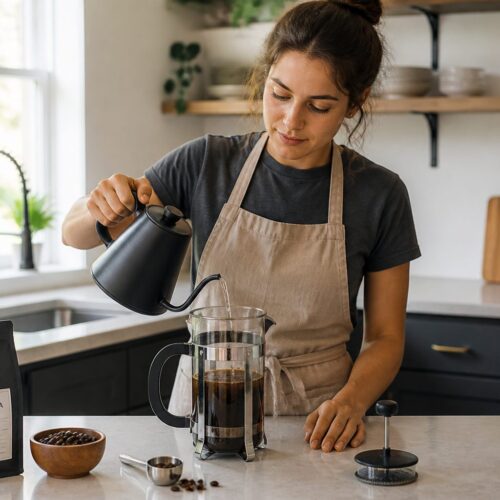

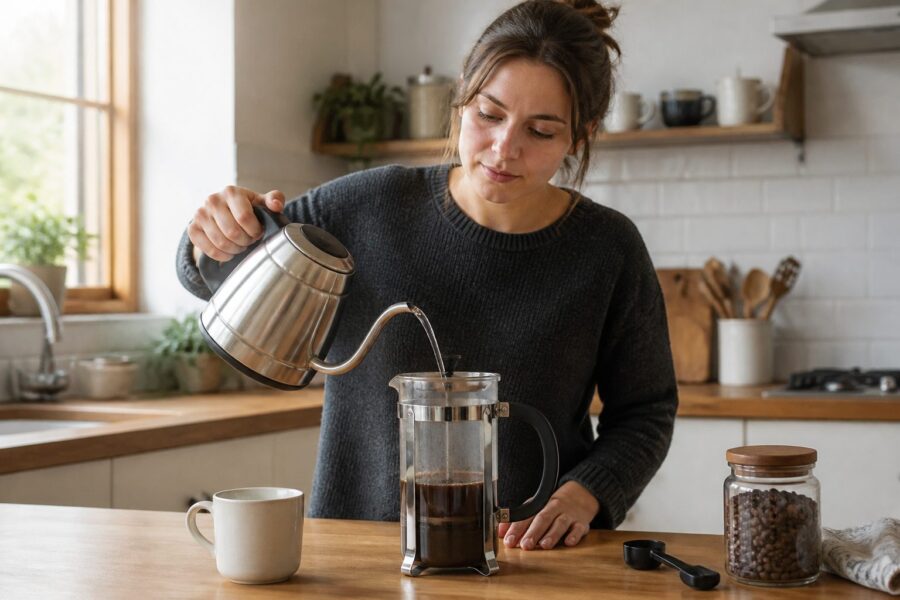
French press coffee comes from steeping grounds directly in hot water, then separating them with a mesh plunger; Measure a starting ratio, use a coarse grind, let the coffee steep, and press gently; these steps also give you a basis for adjusting a cup that tastes weak, bitter, or muddy.
The French press is an immersion brewer, so water and grounds stay together during the steep; That differs from pour-over, where water passes through the coffee bed and filter; the process and grind-size clues are therefore not interchangeable.
Choose coffee, grind, and dose
Use beans or ground coffee intended for brewing, and begin with a coarse grind similar to coarse breadcrumbs; A very fine grind can pass through or around the mesh and leave a gritty cup, while an extremely coarse grind may make extraction harder to adjust.
A burr grinder makes it easier to set and repeat a coarse grind, but pre-ground coffee can work; If the package is ground finer than ideal for a press, shorten the steep slightly and pour the drink carefully, since fine particles may settle less cleanly.
A common starting ratio is 1 part coffee to 15 or 16 parts water by weight; For 480 grams of water, use about 30 to 32 grams of coffee, then adjust after tasting.
| Water | Coffee at 1:15 | Coffee at 1:16 |
|---|---|---|
| 240 g | 16 g | 15 g |
| 360 g | 24 g | 22.5 g |
| 480 g | 32 g | 30 g |
The vessel’s printed cup capacity may not match a standard drinking cup measurement; If you want to prepare a particular amount, measure the water you plan to use instead of relying only on the number of cups stamped on the press.
Without a scale, use the same scoop and fill it consistently, knowing that bean shape, grind size, and how tightly grounds settle can change the actual amount; Keep the scoop method fixed and adjust by taste.
Heat water and prepare the press
Use hot water suitable for brewing and pour it soon after heating; Some guides suggest letting boiling water rest briefly, while others specify a temperature; exact recommendations vary, so use the method you can repeat and follow any limits in your brewer’s instructions.
Warm the carafe with hot water if you want to reduce the temperature drop from a cold vessel, then discard that water; This step is optional, but it makes the brewing setup more consistent when comparing batches.
Set the French press on a stable, heat-safe surface and check that the plunger assembly is clean and intact; Do not fill above the vessel’s safe level, and leave enough room to press without hot liquid pushing over the rim.
Steep and plunge step by step
Add the ground coffee to the empty carafe, pour in the measured water, and make sure the grounds are wetted; A gentle stir can help any dry clumps disperse, but avoid vigorous agitation that might send grounds up the sides.
Place the lid and plunger on top with the mesh above the liquid, rather than pressing immediately; Steep for about four minutes as a practical starting point, then taste and adjust the duration on a later brew if the cup seems underdeveloped or too intense.
Press slowly and steadily; If the plunger meets strong resistance, stop instead of forcing it; very fine grounds or a misaligned mesh may be obstructing movement; Check that the assembly is positioned correctly and follow the maker’s directions.
- Measure coffee and water, then add the grounds to the carafe.
- Pour in hot water and gently wet any dry patches.
- Set the lid in place with the plunger raised and steep for about four minutes.
- Press slowly, stop if the plunger resists, and serve the coffee promptly.
Plunging separates most grounds from the liquid, but it does not stop extraction perfectly; Coffee left sitting in contact with the grounds can continue to change in flavor, so pour what you plan to drink into cups or a separate vessel after plunging.
Adjust strength and diagnose flavor
If the coffee tastes weak but otherwise pleasant, increase the coffee dose slightly while keeping the water amount fixed; This changes the brew strength without altering every part of the process.
If the cup tastes harsh or bitter, first check grind size and steep time; A finer grind or longer contact can make extraction proceed differently; try a coarser setting or a shorter steep in a separate brew rather than changing both at once.
If the coffee is thin or sharply sour, use the same beans and ratio while testing a slightly finer grind or a longer steep; These are diagnostic changes, not guarantees, because the coffee, water, and individual palate all influence the result.
A muddy cup often points to excessive fine particles, sediment stirred up during pouring, or a mesh that needs cleaning; Let the grounds settle briefly after pressing and pour smoothly without shaking the carafe.
Keep a short record of the dose, water amount, grind description, steep time, and taste; A note such as ’30 grams, 480 grams water, coarse, four minutes, clean but light’ makes the next adjustment more deliberate than relying on memory.
Making a smaller or larger serving
To make one serving, scale the water and coffee down using the same ratio rather than trying to use a full batch’s dose in a small amount of water; The press should still contain enough liquid for the plunger to work smoothly, so check the minimum usable quantity described by the brewer’s maker.
For two servings, multiply the recipe while staying below the press’s fill limit; Do not pack grounds into the carafe or fill it to the lid; room is needed for safe pouring and to avoid hot coffee spilling when the plunger moves.
If you only have ground coffee, use it as supplied and focus on dose and steep time; A finer pre-ground texture may produce more sediment, which can be reduced by pouring gently and leaving the final cloudy portion in the carafe.
Clean the French press after brewing
Allow the carafe to cool enough to handle safely, then remove the used grounds; Do not pour a mass of grounds down a drain, where they can accumulate; discard them in household waste or compost them if that is suitable for your local setup.
Disassemble the plunger only as the manufacturer describes, rinse away trapped coffee particles, and wash the parts with appropriate dish soap; Coffee oils and fine sediment can collect around the mesh and frame, so clean those surfaces rather than rinsing only the glass.
Dry the components before reassembling or storing them; If the carafe is glass, handle it carefully and inspect it for damage before filling it with hot water; follow the product instructions for cleaning and temperature use.
Build a repeatable French press routine
Start with a coarse grind, a 1:15 or 1:16 ratio, hot water, and a four-minute steep; Press slowly and pour the drink away from the grounds, then adjust dose, grind, or time based on the cup.
The recipe is a framework, not a contest for a single perfect ratio; Keep the method steady long enough to learn what each change does, and use the French press’s direct contact and mesh filter to create the fuller-bodied style you prefer.
A common starting ratio is 1 part coffee to 15 or 16 parts water by weight; For 480 grams of water, use about 30 to 32 grams of coffee, then adjust to your taste.
Use a coarse grind, add measured coffee and hot water, gently wet the grounds, steep for about four minutes, and press slowly; Pour the coffee out after plunging so it does not keep sitting with the grounds.
There is no single mandatory ratio; A useful starting range is 1:15 to 1:16 by weight, meaning one gram of coffee for every 15 or 16 grams of water; adjust the dose to make the cup stronger or lighter.
To work out grounds and water for your press, try the Coffee Brewing Ratio Calculator.