
Precision agriculture is revolutionizing how we manage our soils, offering unprecedented opportunities to optimize crop production and promote environmental sustainability. Soil spectroscopy, coupled with mineralogy, plays a central role in this transformation, providing rapid, cost-effective, and non-destructive methods for assessing soil properties. These advanced techniques are particularly valuable for monitoring and verifying soil carbon sequestration, a critical strategy for mitigating climate change and enhancing soil health.
The ability to accurately measure and track changes in soil carbon stocks is essential for effective carbon accounting and the development of sustainable agricultural practices. Soil carbon sequestration spectroscopy offers a powerful tool for achieving these goals, enabling farmers, policymakers, and researchers to make informed decisions about land management and climate change mitigation.
In this article, we will explore the application of soil carbon sequestration spectroscopy in precision agriculture, focusing on its role in monitoring and verification. We’ll cover the fundamental principles of soil carbon sequestration, the various spectroscopic methods used for carbon measurement, and the challenges and opportunities associated with this technology.
Understanding Soil Carbon Sequestration
Soil carbon sequestration is the process of capturing atmospheric carbon dioxide (CO2) and storing it in the soil as organic carbon. This natural process is driven by photosynthesis, where plants absorb CO2 from the air and convert it into biomass.
When plants die, their organic matter decomposes, and some of the carbon is incorporated into the soil as soil organic carbon (SOC). The amount of carbon stored in the soil depends on a variety of factors, including climate, soil type, land management practices, and vegetation cover.
Agricultural practices can significantly impact soil carbon sequestration. Conventional farming methods, such as intensive tillage and monoculture cropping, can deplete SOC stocks, releasing CO2 back into the atmosphere.
Conversely, sustainable agricultural practices, such as no-till farming, cover cropping, crop rotation, and the application of organic amendments, can enhance SOC sequestration, helping to mitigate climate change and improve soil health. These practices promote the accumulation of organic matter in the soil, increasing its capacity to store carbon.
The process of carbon sequestration is not just about storing carbon; it’s also about improving soil quality. Soils rich in organic carbon are more fertile, have better water-holding capacity, and are more resistant to erosion. This leads to increased crop yields and resilience to drought and other environmental stresses.
Understanding the dynamics of soil carbon is crucial for developing effective strategies for climate change mitigation and sustainable agriculture. By promoting practices that enhance carbon sequestration, we can improve soil health, increase crop production, and reduce greenhouse gas emissions. This creates a win-win situation for farmers, the environment, and society as a whole.
Furthermore, soil carbon sequestration plays a vital role in global carbon cycling. Soils are one of the largest terrestrial carbon sinks, storing more carbon than the atmosphere and vegetation combined. Protecting and enhancing this carbon sink is essential for achieving global climate goals.
Therefore, promoting sustainable land management practices that enhance soil carbon sequestration is a critical component of any comprehensive climate change mitigation strategy. This requires a concerted effort from farmers, policymakers, researchers, and consumers to adopt and support practices that build soil carbon.
The Role of Spectroscopy in Carbon Monitoring
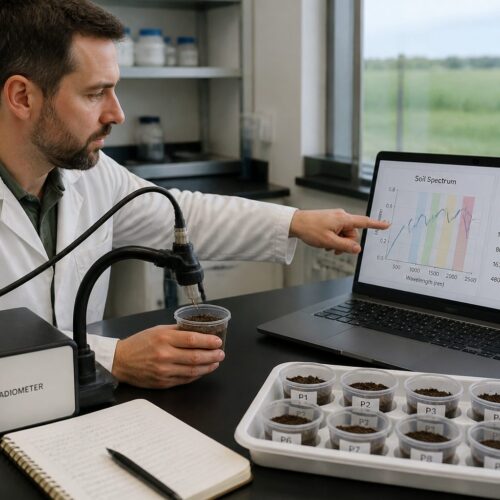
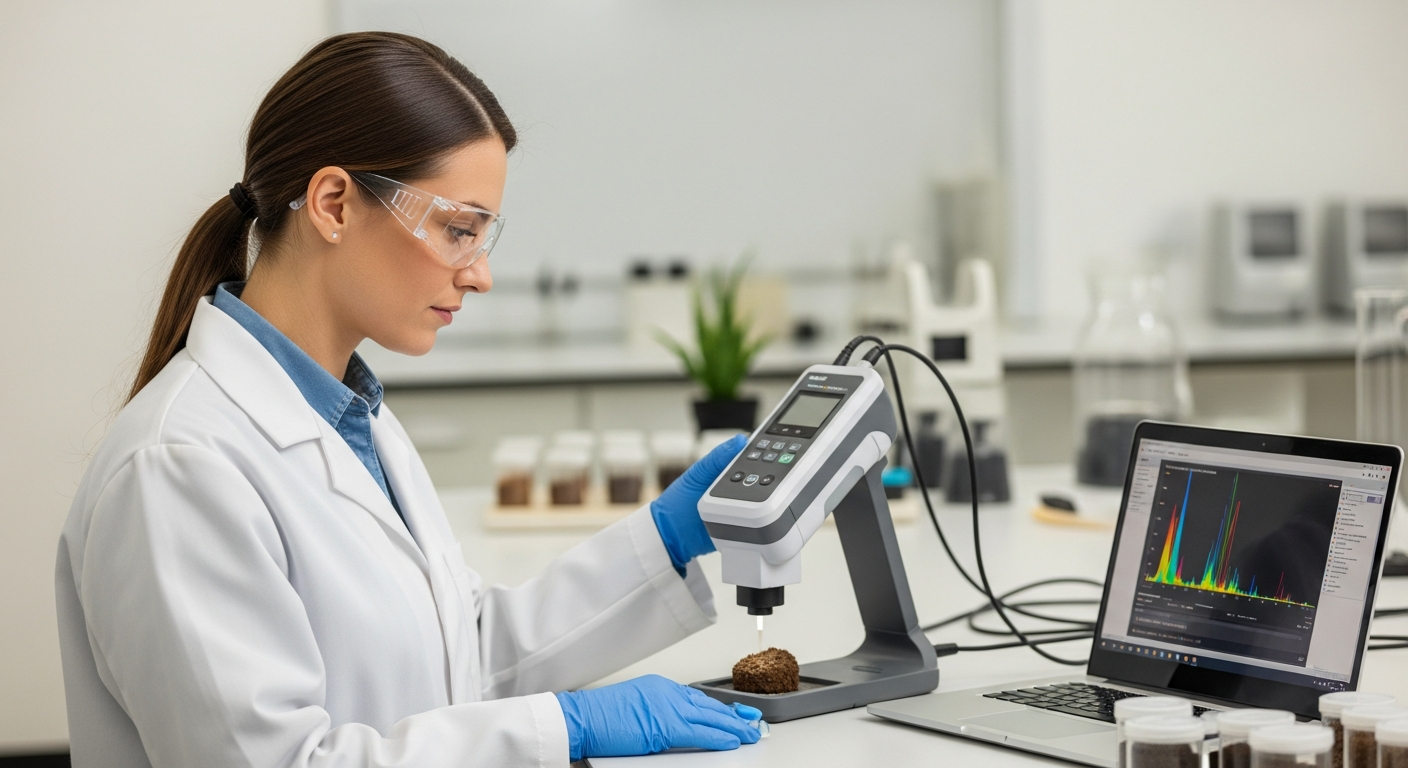
Spectroscopy is a technique that measures the interaction of electromagnetic radiation with matter. In the context of soil science, spectroscopy involves shining light onto a soil sample and analyzing the reflected or absorbed light.
Different soil components, including organic carbon, have unique spectral signatures, meaning they absorb and reflect light in specific ways. By analyzing these spectral signatures, we can determine the composition and properties of the soil, including its SOC content.
Spectroscopy offers several advantages over traditional laboratory methods for measuring SOC. It is rapid, cost-effective, non-destructive, and can be used to analyze large numbers of samples quickly.
This makes it well-suited for precision agriculture applications, where timely and spatially explicit information about soil properties is needed to optimize management decisions. Spectroscopy can be used to create detailed maps of SOC distribution across fields, allowing farmers to target management practices to areas where they will have the greatest impact.
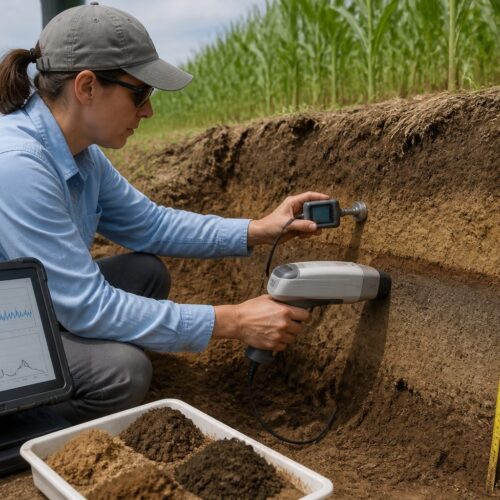
Traditional methods for measuring SOC often involve collecting soil samples and sending them to a laboratory for analysis, a process that can be time-consuming and expensive. Spectroscopy, on the other hand, can be performed in the field using portable instruments, providing real-time data on soil properties.
The non-destructive nature of spectroscopy is another significant advantage. Traditional methods often require the destruction of the soil sample, preventing further analysis. Spectroscopy allows for repeated measurements on the same sample, enabling the monitoring of changes in SOC over time.
Furthermore, spectroscopy can be used to measure other soil properties in addition to SOC, such as soil moisture, texture, and nutrient content. This provides a more comprehensive understanding of soil health and can inform a wider range of management decisions.
The ability to rapidly analyze large numbers of samples is particularly valuable for precision agriculture, where farmers need to monitor soil properties across entire fields. Spectroscopy enables the creation of detailed maps of soil variability, allowing farmers to target their management practices to specific areas of the field.
Methods for Measuring Soil Organic Carbon Spectroscopically
Several spectroscopic techniques can be used to measure SOC, each with its own strengths and limitations. Visible near-infrared (Vis-NIR) spectroscopy is one of the most widely used methods.
Vis-NIR spectroscopy measures the reflectance of light in the visible (400-700 nm) and near-infrared (700-2500 nm) regions of the electromagnetic spectrum. The spectral features in these regions are related to the presence of organic matter, as well as other soil components such as clay minerals and iron oxides.
| Spectroscopic Technique | Spectral Region | Advantages | Limitations |
|---|---|---|---|
| Vis-NIR Spectroscopy | 400-2500 nm | Rapid, cost-effective, non-destructive | Affected by soil moisture and texture |
| Mid-Infrared (MIR) Spectroscopy | 2500-25000 nm | Sensitive to specific organic functional groups | Requires more sample preparation |
| Laser-Induced Breakdown Spectroscopy (LIBS) | UV-Vis-NIR | Minimal sample preparation, can measure total carbon | Lower sensitivity for SOC |
| Raman Spectroscopy | Vis-NIR | Provides information on molecular structure | Can be affected by fluorescence |
Mid-infrared (MIR) spectroscopy is another powerful technique for measuring SOC. MIR spectroscopy measures the absorption of light in the mid-infrared region (2500-25000 nm) of the electromagnetic spectrum.
The spectral features in this region are related to the vibrations of specific organic functional groups, providing detailed information about the composition of soil organic matter. MIR spectroscopy is particularly useful for characterizing the different forms of carbon in the soil, such as humic acids and fulvic acids.
Laser-induced breakdown spectroscopy (LIBS) is a technique that uses a high-energy laser pulse to vaporize a small amount of soil. The resulting plasma emits light that can be analyzed to determine the elemental composition of the soil, including total carbon content.
Raman spectroscopy is a technique that measures the scattering of light by molecules. The Raman spectrum provides information about the vibrational modes of molecules, which can be used to identify and quantify different organic compounds in the soil.
Each of these spectroscopic techniques has its own advantages and limitations, and the choice of which technique to use depends on the specific application and the desired level of detail. Vis-NIR spectroscopy is often used for rapid screening of soil samples, while MIR spectroscopy is used for more detailed characterization of soil organic matter.
Verifying Carbon Credits with Spectroscopic Data
Carbon credits are tradable instruments that represent the removal or reduction of one metric ton of CO2 equivalent from the atmosphere. Farmers who implement practices that enhance soil carbon sequestration can generate carbon credits, which they can then sell to companies or organizations seeking to offset their carbon emissions.
However, to ensure the integrity of carbon markets, it is essential to accurately verify the amount of carbon sequestered in the soil. Soil carbon sequestration spectroscopy can play a critical role in this verification process, providing a rapid and cost-effective means of assessing changes in SOC stocks.
By repeatedly measuring SOC levels in fields over time using spectroscopic methods, we can track the impact of different management practices on carbon sequestration. This data can then be used to calculate the amount of carbon sequestered and to generate verifiable carbon credits.
The use of spectroscopy for carbon credit verification can help to increase transparency and trust in carbon markets, encouraging greater adoption of sustainable agricultural practices. It also allows for more frequent and spatially detailed monitoring of SOC, providing valuable feedback to farmers and policymakers.
The process of verifying carbon credits involves establishing a baseline SOC level, implementing sustainable agricultural practices, and then monitoring changes in SOC over time. Spectroscopy can be used to measure SOC levels at each stage of this process, providing a robust and verifiable assessment of carbon sequestration.
The accuracy and reliability of spectroscopic measurements are crucial for ensuring the integrity of carbon credits. This requires careful calibration and validation of spectroscopic models, as well as the use of standardized protocols for data collection and analysis. Independent third-party verification can also help to increase trust in carbon credits generated from agricultural practices.
The use of spectroscopy for carbon credit verification can also help to reduce the cost of monitoring and verification. Traditional methods for measuring SOC are often expensive and time-consuming, making it difficult to verify carbon credits on a large scale. Spectroscopy provides a more cost-effective and efficient means of monitoring SOC, making it easier to scale up carbon credit programs.
Furthermore, the use of spectroscopy can help to incentivize farmers to adopt sustainable agricultural practices. By providing a means of generating verifiable carbon credits, spectroscopy can create a new revenue stream for farmers who are implementing practices that enhance soil carbon sequestration. This can help to drive greater adoption of sustainable agriculture and contribute to climate change mitigation.
Challenges in Quantifying Soil Carbon
Despite the numerous advantages of soil carbon sequestration spectroscopy, there are also several challenges associated with its application. One of the main challenges is the complexity of soil itself.
Soil is a heterogeneous mixture of organic matter, minerals, water, and air, and its spectral properties can be influenced by a variety of factors, including soil moisture, texture, and mineral composition. These factors can interfere with the accurate determination of SOC content, requiring careful calibration and validation of spectroscopic models.
- Soil heterogeneity
- Spectral interferences
- Calibration and validation
- Data processing and analysis
- Scalability and cost
Addressing these challenges requires the development of robust spectroscopic models that can account for the effects of confounding factors. It also requires the collection of high-quality field data for calibration and validation, as well as the development of standardized protocols for data processing and analysis.
Soil heterogeneity is a major challenge because SOC content can vary significantly even within a small area. This means that multiple measurements are needed to accurately represent the average SOC content of a field. Stratified sampling techniques can help to reduce the impact of soil heterogeneity on spectroscopic measurements.
Spectral interferences from other soil components, such as clay minerals and iron oxides, can also affect the accuracy of spectroscopic measurements. These components can absorb and reflect light in the same regions of the spectrum as organic carbon, making it difficult to isolate the spectral signature of SOC. Mathematical techniques, such as spectral deconvolution, can be used to minimize the impact of spectral interferences.
Calibration and validation are essential steps in the development of accurate spectroscopic models. Calibration involves relating spectroscopic measurements to known SOC values, while validation involves testing the accuracy of the model on an independent dataset. A large and representative dataset is needed for both calibration and validation.
Data processing and analysis can also be challenging, particularly when dealing with large datasets. Specialized software and expertise are needed to process spectroscopic data and to develop accurate predictive models. Open-source software packages, such as R and Python, can be used for data processing and analysis.
Policy Implications for Carbon Sequestration
Soil carbon sequestration has significant policy implications for climate change mitigation and sustainable agriculture. Governments around the world are increasingly recognizing the importance of SOC as a carbon sink and are implementing policies to promote its sequestration.
These policies include financial incentives for farmers who adopt sustainable agricultural practices, as well as regulations aimed at reducing soil degradation and promoting soil health. Soil carbon sequestration spectroscopy can play a vital role in supporting these policies by providing a means of monitoring and verifying their effectiveness.
By providing accurate and timely information about SOC stocks, spectroscopy can help policymakers to design more effective policies and to track progress towards climate change mitigation goals. It can also help to ensure that carbon credits generated from agricultural practices are credible and verifiable, promoting greater investment in sustainable agriculture.
Furthermore, the use of spectroscopy can help to raise awareness among farmers and the public about the importance of soil carbon sequestration and the benefits of sustainable agriculture. This can lead to greater adoption of practices that enhance SOC stocks, contributing to both climate change mitigation and improved food security.
Policy instruments such as carbon pricing and carbon taxes can incentivize farmers to adopt practices that enhance soil carbon sequestration. These instruments create a financial incentive for farmers to reduce their carbon emissions and to sequester carbon in the soil.
Regulations aimed at reducing soil degradation, such as restrictions on intensive tillage and requirements for cover cropping, can also promote soil carbon sequestration. These regulations help to protect SOC stocks and to prevent the release of carbon into the atmosphere.
Financial incentives, such as subsidies and tax credits, can encourage farmers to adopt sustainable agricultural practices that enhance soil carbon sequestration. These incentives can help to offset the costs of implementing new practices and to make sustainable agriculture more economically viable.
Public awareness campaigns can help to educate farmers and the public about the importance of soil carbon sequestration and the benefits of sustainable agriculture. These campaigns can promote greater adoption of practices that enhance SOC stocks and contribute to climate change mitigation.
Future Trends in Soil Spectroscopy
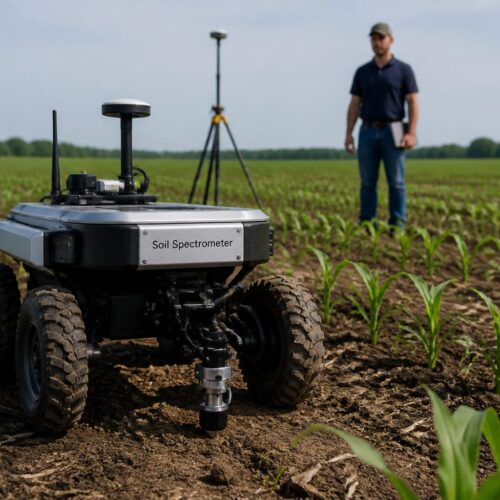
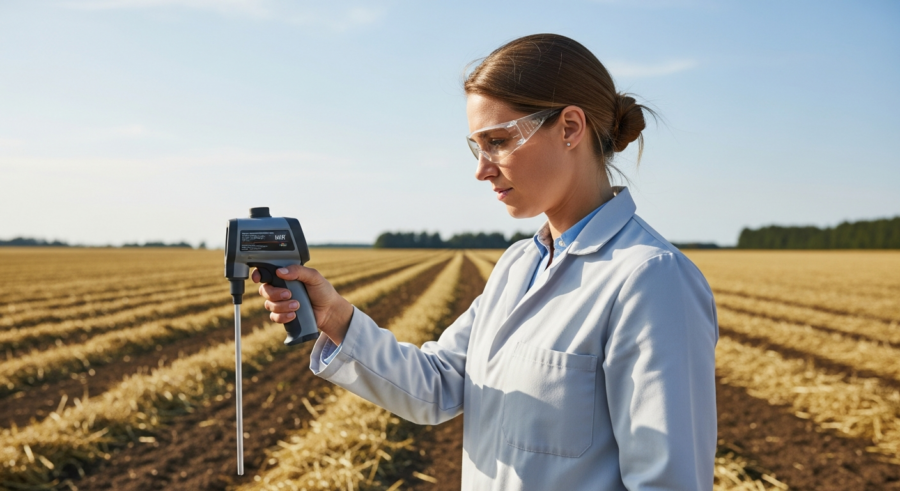
The field of soil spectroscopy is rapidly evolving, with new technologies and applications emerging all the time. One of the most promising trends is the development of portable and handheld spectrometers.
These devices allow for on-site measurement of SOC and other soil properties, eliminating the need to transport samples to the laboratory. This can significantly reduce the cost and time associated with soil analysis, making spectroscopy more accessible to farmers and researchers.
Another trend is the integration of spectroscopy with other remote sensing technologies, such as drones and satellites. This allows for the creation of high-resolution maps of SOC distribution across large areas, providing valuable information for precision agriculture and carbon accounting.
Furthermore, advances in data processing and machine learning are enabling the development of more accurate and robust spectroscopic models. These models can account for the effects of confounding factors and can be used to predict SOC content with greater precision.
The development of portable and handheld spectrometers is making spectroscopy more accessible to farmers and researchers in developing countries. These devices can be used to monitor soil health in remote areas and to support sustainable agriculture practices.
The integration of spectroscopy with other remote sensing technologies is enabling the creation of detailed maps of soil properties at a regional and global scale. This information can be used to monitor soil degradation, to assess the impact of climate change on soil health, and to support sustainable land management practices.
Advances in data processing and machine learning are enabling the development of more sophisticated spectroscopic models that can predict a wider range of soil properties. These models can be used to assess soil fertility, to predict crop yields, and to optimize fertilizer application.
The use of artificial intelligence (AI) is also transforming the field of soil spectroscopy. AI algorithms can be used to automate data processing, to identify patterns in spectroscopic data, and to develop more accurate predictive models.
Case Studies of Successful Implementation
Several case studies have demonstrated the successful implementation of soil carbon sequestration spectroscopy in precision agriculture. In one study, researchers used Vis-NIR spectroscopy to map SOC distribution across a farm in Iowa.
They then used this information to guide the application of variable-rate fertilizer, resulting in increased crop yields and reduced fertilizer costs. In another study, researchers used mid-infrared (MIR) spectroscopy to monitor the impact of different tillage practices on SOC sequestration in a field in Brazil.
They found that no-till farming resulted in significantly higher SOC levels compared to conventional tillage, highlighting the potential of this practice for climate change mitigation. These case studies demonstrate the practical benefits of using spectroscopy for soil carbon monitoring and management.
They also highlight the importance of tailoring management practices to specific soil conditions and environmental factors. By providing detailed information about SOC distribution and dynamics, spectroscopy can help farmers to make more informed decisions and to optimize their management practices for both productivity and environmental sustainability.
A case study in Australia used Vis-NIR spectroscopy to assess the impact of grazing management on soil carbon sequestration. The researchers found that rotational grazing, where livestock are moved frequently between pastures, resulted in higher SOC levels compared to continuous grazing.
A case study in China used MIR spectroscopy to monitor the impact of different organic amendments on soil carbon sequestration. The researchers found that the application of compost and biochar resulted in significantly higher SOC levels compared to the control treatment.
A case study in Europe used LIBS to assess the impact of different land use practices on soil carbon stocks. The researchers found that forests had the highest SOC stocks, followed by grasslands, and then croplands.
These case studies demonstrate the versatility of soil carbon sequestration spectroscopy and its potential to support sustainable land management practices in a variety of different environments. They also highlight the importance of using spectroscopy in conjunction with other data sources, such as climate data and management records, to gain a comprehensive understanding of soil carbon dynamics.
Conclusion
Soil carbon sequestration spectroscopy is a powerful tool for monitoring and verifying SOC stocks in agricultural soils. Its rapid, cost-effective, and non-destructive nature makes it well-suited for precision agriculture applications and carbon accounting.
By providing accurate and timely information about SOC dynamics, spectroscopy can help farmers, policymakers, and researchers to make informed decisions about land management and climate change mitigation. While there are challenges associated with the application of spectroscopy, ongoing research and development are addressing these issues and expanding its potential.
As the field of soil spectroscopy continues to evolve, we can expect to see even greater adoption of this technology in precision agriculture and carbon markets. This will contribute to more sustainable agricultural practices, enhanced soil health, and a more resilient food system.
Ultimately, soil carbon sequestration spectroscopy offers a valuable tool for achieving the dual goals of mitigating climate change and ensuring food security. Its continued development and application will be essential for creating a more sustainable and resilient future for agriculture.
The future of agriculture depends on our ability to manage soils sustainably. Soil carbon sequestration spectroscopy provides a powerful tool for achieving this goal, enabling us to monitor soil health, to track the impact of management practices, and to promote the adoption of sustainable agriculture.
By investing in research and development, by supporting the adoption of spectroscopy in precision agriculture, and by promoting policies that incentivize soil carbon sequestration, we can create a more sustainable and resilient food system for future generations.
The potential benefits of soil carbon sequestration spectroscopy are enormous. By harnessing the power of this technology, we can improve soil health, mitigate climate change, and ensure food security for all.
Let us embrace the opportunities offered by soil carbon sequestration spectroscopy and work together to create a more sustainable and resilient future for agriculture.