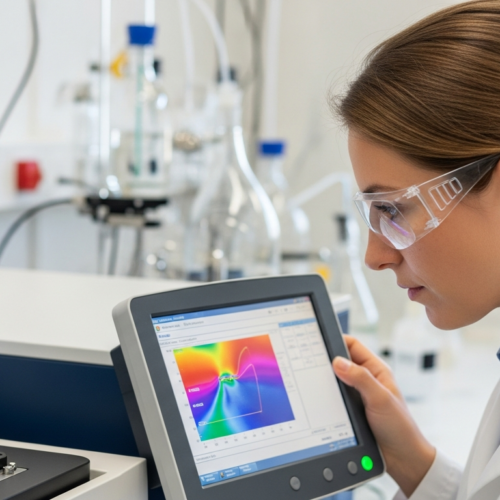

X-ray diffraction soil mineralogy is a powerful analytical technique used to identify the crystalline components of soil. This method, often abbreviated as XRD, allows researchers and agricultural professionals to determine the mineral composition of soil samples. Understanding the mineralogy of soil is very important in precision agriculture for optimizing crop production and managing soil health.
By identifying specific minerals, we can infer important information about soil properties such as nutrient availability, water-holding capacity, and potential contamination. This information can then be used to make informed decisions regarding fertilization, irrigation, and remediation strategies. X-ray diffraction soil mineralogy has become an indispensable tool for precision agriculture, offering insights that lead to more sustainable and efficient farming practices.
In this comprehensive guide, we will explore the principles behind x-ray diffraction soil mineralogy, the steps involved in preparing soil samples for analysis, and how to interpret the resulting diffraction patterns. We will also discuss the advantages and limitations of this technique, providing you with a solid understanding of how it can be applied in precision agriculture. Let’s begin by covering the basics.
The Fundamentals of X-Ray Diffraction
X-ray diffraction (XRD) is a technique that exploits the interaction of X-rays with the crystalline structure of minerals. When X-rays strike a crystalline material, they are diffracted, or scattered, by the regularly spaced atoms within the crystal lattice. The angles and intensities of these diffracted X-rays provide a unique “fingerprint” for each mineral, allowing for its identification.
The underlying principle of XRD is Bragg’s Law, which describes the conditions under which constructive interference occurs between X-rays diffracted from parallel planes of atoms. Bragg’s Law is expressed as nλ = 2dsinθ, where n is an integer representing the order of diffraction, λ is the wavelength of the X-rays, d is the spacing between the atomic planes, and θ is the angle of incidence of the X-ray beam. When this equation is satisfied, the diffracted X-rays reinforce each other, resulting in a peak in the diffraction pattern.
In an XRD experiment, a beam of X-rays is directed onto a soil sample, and the intensity of the diffracted X-rays is measured as a function of the diffraction angle (2θ). The resulting data is plotted as a diffraction pattern, which shows the intensity of the diffracted X-rays versus the diffraction angle. Each mineral in the sample will produce a characteristic set of peaks in the diffraction pattern, corresponding to the different atomic planes within its crystal structure.
By comparing the observed diffraction pattern to known patterns for various minerals, the mineral composition of the soil sample can be determined. The intensity of the peaks in the diffraction pattern is proportional to the amount of each mineral present in the sample, allowing for semi-quantitative analysis. This information is invaluable for understanding the soil’s physical and chemical properties, which in turn affect plant growth and nutrient availability.
Preparing Soil Samples for XRD Analysis
Proper soil sample preparation is very important for obtaining accurate and reliable x-ray diffraction soil mineralogy results. The goal of sample preparation is to isolate the mineral fraction of the soil and to present it to the X-ray beam in a form that maximizes diffraction signal and minimizes background noise. There are several key steps involved in preparing soil samples for XRD analysis, including sample collection, pre-treatment, and mounting.

First, representative soil samples must be collected from the field. This typically involves taking multiple subsamples from different locations and depths within the area of interest and combining them to form a composite sample. The number and location of subsamples should be determined based on the size and variability of the field, as well as the specific objectives of the study.
Once the composite sample has been collected, it must be pre-treated to remove organic matter and other non-mineral components that can interfere with the XRD analysis. This usually involves a combination of physical and chemical treatments, such as air-drying, grinding, sieving, and treatment with hydrogen peroxide to remove organic matter. The specific pre-treatment steps will depend on the type of soil and the nature of the analysis being performed.
After pre-treatment, the mineral fraction of the soil sample is typically ground to a fine powder to ensure that the crystallites are randomly oriented. This helps to minimize preferred orientation effects, which can distort the diffraction pattern and lead to inaccurate mineral identification. The powdered sample is then mounted onto a sample holder for analysis.
Identifying Crystalline Minerals in Soil Using XRD
X-ray diffraction (XRD) is uniquely suited for identifying crystalline minerals in soil due to its ability to probe the atomic structure of materials. Each mineral has a unique crystal structure, which results in a distinctive diffraction pattern when exposed to X-rays. By comparing the diffraction pattern of a soil sample to known patterns of various minerals, the mineral composition of the soil can be determined.
The process of mineral identification involves several steps. First, the diffraction pattern of the soil sample is collected using an X-ray diffractometer. Next, the positions (2θ angles) and intensities of the peaks in the diffraction pattern are carefully measured.
| Mineral | Chemical Formula | Key XRD Peaks (2θ, degrees) |
|---|---|---|
| Quartz | SiO2 | 20.8, 26.6, 50.1 |
| Feldspar (Albite) | NaAlSi3O8 | 22.0, 27.9, 28.1 |
| Kaolinite | Al2Si2O5(OH)4 | 12.3, 24.8, 38.5 |
| Montmorillonite | (Na,Ca)0.33(Al,Mg)2Si4O10(OH)2·nH2O | 6.2, 19.8, 28.5 |
| Calcite | CaCO3 | 29.4, 39.4, 43.2 |
These peak positions and intensities are then compared to reference patterns in mineral databases, such as the Powder Diffraction File (PDF) maintained by the International Centre for Diffraction Data (ICDD). By matching the observed peaks to those of known minerals, the identity of the minerals present in the soil sample can be determined.
Interpreting XRD Diffraction Patterns
Interpreting x-ray diffraction (XRD) patterns is a crucial step in understanding the mineral composition of soil samples. The diffraction pattern is a plot of X-ray intensity versus diffraction angle (2θ), with each peak in the pattern corresponding to a specific set of atomic planes within a mineral’s crystal structure. The position and intensity of these peaks provide valuable information about the minerals present in the sample.
The first step in interpreting an XRD pattern is to identify the peaks that correspond to known minerals. This is typically done by comparing the observed peak positions to reference patterns in mineral databases such as the ICDD PDF database. Software programs are available that can automatically search these databases and identify potential mineral matches based on the observed peak positions.
Once the mineral phases have been identified, the relative amounts of each mineral can be estimated from the intensities of their corresponding peaks. The intensity of a peak is proportional to the amount of the mineral present in the sample, as well as other factors such as the mineral’s crystal structure and the experimental conditions used to collect the data. Quantitative analysis techniques, such as the Rietveld refinement method, can be used to obtain more accurate estimates of mineral abundances.
In addition to identifying mineral phases and estimating their abundances, XRD patterns can also provide information about the crystallinity and particle size of the minerals present in the sample. Broad peaks indicate poorly crystalline materials or small particle sizes, while sharp peaks indicate well-crystalline materials with larger particle sizes. The shape and width of the peaks can be analyzed to estimate the average crystallite size and strain within the mineral grains.
Quantitative Analysis of Minerals with XRD
While x-ray diffraction soil mineralogy is excellent for identifying the types of minerals present in a sample, it can also be used for quantitative analysis to determine the amounts of each mineral present. Quantitative XRD analysis is important in precision agriculture for accurately assessing soil composition and nutrient availability. Several methods are available for quantitative analysis, ranging from simple peak intensity comparisons to more sophisticated techniques like Rietveld refinement.
One common approach is to use calibration curves, where the intensities of specific peaks for each mineral are compared to a series of standards with known mineral concentrations. By measuring the peak intensities in the unknown sample and comparing them to the calibration curves, the concentrations of the minerals can be determined. However, this method requires careful preparation of standards that closely match the composition and particle size of the unknown samples.
Rietveld refinement is a more advanced technique that involves fitting a calculated diffraction pattern to the observed diffraction pattern of the sample. This method takes into account the crystal structures of all the minerals present in the sample, as well as instrumental factors and other sources of error. By refining the structural parameters and scale factors for each mineral, the Rietveld method can provide accurate estimates of mineral abundances.
Another approach is to use the Reference Intensity Ratio (RIR) method, which involves comparing the intensities of specific peaks for each mineral to the intensity of a reference material, such as corundum. The RIR values are determined experimentally for each mineral and can be used to calculate the weight fractions of the minerals in the sample. This method is relatively simple to implement but requires accurate RIR values for all the minerals present in the sample.
Advantages and Limitations of XRD in Soil Science
X-ray diffraction (XRD) is a very valuable tool in soil science, but it has both advantages and limitations that must be considered when interpreting results. Understanding these aspects is important for using XRD effectively in precision agriculture. Let’s review the pros and cons.
XRD offers several advantages, including its ability to identify a wide range of crystalline minerals, its relatively simple sample preparation requirements, and its non-destructive nature. It provides direct information about the mineral composition of soil, which is important for understanding soil properties and processes. However, XRD also has limitations.
- Limited detection of amorphous materials
- Requires crystalline material
- Can be affected by preferred orientation
- Requires careful sample preparation
- Data interpretation can be complex
One limitation is that XRD is not sensitive to amorphous or poorly crystalline materials, which may be present in significant amounts in some soils. Another limitation is that XRD analysis can be affected by preferred orientation of the mineral grains, which can distort the diffraction pattern and lead to inaccurate mineral identification. Careful sample preparation techniques are needed to minimize these effects.
Applications of XRD in Precision Agriculture
X-ray diffraction soil mineralogy plays a crucial role in precision agriculture by providing detailed insights into soil composition. This information is useful for optimizing crop production, managing soil health, and ensuring sustainable farming practices. Let’s explore some specific applications of XRD in this field.
One key application is in determining nutrient availability. The presence and abundance of certain minerals can directly impact the availability of essential nutrients for plant growth. For example, the presence of potassium-bearing minerals like feldspars can indicate a potential source of potassium, while the presence of phosphate minerals can indicate a potential source of phosphorus.
XRD can also be used to assess soil weathering and degradation. The presence of clay minerals like kaolinite and montmorillonite can indicate the degree of weathering that has occurred in the soil. Changes in mineral composition over time can also provide insights into soil degradation processes, such as erosion and nutrient depletion.
Furthermore, XRD can be used to identify potential contaminants in soil. The presence of heavy metal-bearing minerals or other pollutants can be detected using XRD, providing valuable information for environmental monitoring and remediation efforts. This is especially important in areas with a history of industrial activity or intensive agriculture.
Future Trends in XRD for Soil Analysis
The field of x-ray diffraction soil mineralogy is constantly evolving, with new developments and applications emerging all the time. As technology advances, we can expect to see even more sophisticated and powerful XRD techniques being used for soil analysis. These advancements will enable us to gain a deeper understanding of soil composition and its impact on plant growth and environmental sustainability.
One trend is the development of portable and field-deployable XRD instruments. These instruments allow for on-site analysis of soil samples, eliminating the need to transport samples to a central laboratory. This can save time and money, as well as provide real-time information for decision-making in the field.
Another trend is the integration of XRD with other analytical techniques, such as spectroscopy and microscopy. By combining XRD data with information from other sources, we can obtain a more complete picture of soil composition and properties. For example, combining XRD with infrared spectroscopy can provide information about both the mineral and organic components of soil.
In addition, there is growing interest in using XRD to study the nanoscale structure of soil minerals. Nanoscale minerals play an important role in soil processes such as nutrient cycling and contaminant transport. Advanced XRD techniques, such as synchrotron-based XRD, can provide detailed information about the structure and composition of these nanoscale minerals.
Conclusion
In conclusion, x-ray diffraction soil mineralogy is an invaluable tool for precision agriculture. It provides detailed information about the mineral composition of soil, which is important for optimizing crop production, managing soil health, and ensuring sustainable farming practices. By understanding the principles behind XRD, the steps involved in sample preparation, and how to interpret diffraction patterns, agricultural professionals can use this technique to make informed decisions about soil management.
As technology continues to advance, we can expect to see even more sophisticated and powerful XRD techniques being developed for soil analysis. These advancements will enable us to gain a deeper understanding of soil composition and its impact on plant growth and environmental sustainability. Embrace x-ray diffraction soil mineralogy for a more sustainable future.