

Conclusion
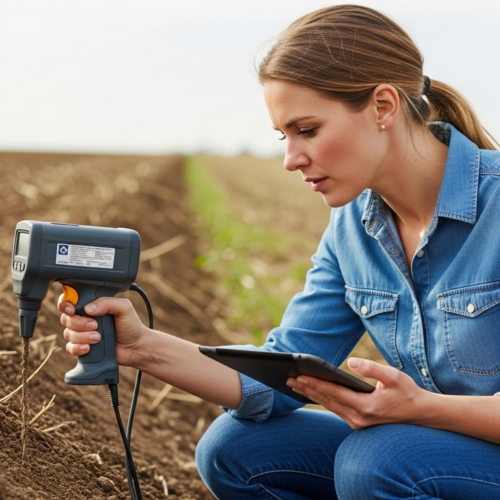
Soil spectroscopy offers a cost-effective and efficient alternative to traditional soil testing methods. While the initial investment may be higher, the long-term economic benefits, including reduced fertilizer costs, improved yields, and enhanced soil health, can outweigh the initial expenses.
Government incentives and support programs can further reduce the financial burden of adopting this technology. By developing a comprehensive soil management plan and integrating soil spectroscopy with other precision agriculture tools, farmers can maximize their return on investment and promote sustainable agricultural practices.
In today’s data-driven world, precision agriculture is rapidly evolving. Farmers are constantly seeking innovative methods to optimize crop yields while minimizing costs, and soil analysis plays a critical role in this pursuit.
Traditional soil testing methods, while reliable, can be time-consuming and expensive. Soil spectroscopy offers a promising alternative, providing rapid and cost-effective insights into soil composition, but many farmers are unsure about the soil spectroscopy cost effectiveness.
This article examines the initial costs of adopting soil spectroscopy and compares them to traditional methods. We’ll also explore the long-term economic benefits, government incentives, and real-world case studies to demonstrate the potential return on investment.
Initial Costs of Implementing Soil Spectroscopy
Implementing soil spectroscopy requires an initial investment in equipment and training. The cost of a portable soil spectrometer can range from $10,000 to $50,000, depending on its features and accuracy.
Laboratory-based spectrometers, which offer higher precision, can cost significantly more. Beyond the equipment itself, training personnel to operate and interpret the data is essential.
Training programs can range from a few hundred to several thousand dollars per person. Another cost factor is software for data analysis and interpretation.
While some spectrometers come with basic software, advanced analytical tools may require additional subscriptions or licenses. It is also important to calibrate and maintain the equipment regularly.
The initial investment also depends on the scale of the operation. Small farms might opt for more affordable, portable devices. Larger agricultural enterprises could benefit from investing in higher-end, more precise laboratory-grade equipment.

Consider the cost of accessories, such as sample preparation tools and specialized containers. These seemingly minor expenses can add up and should be factored into the overall initial cost assessment.
Don’t forget about the potential need for consulting services to help set up the equipment and integrate it into existing workflows. Expert advice can be invaluable in avoiding costly mistakes and ensuring optimal performance.
Finally, remember to budget for ongoing maintenance and repairs. Spectrometers, like any sophisticated equipment, require regular servicing to maintain their accuracy and reliability.
Comparing Spectroscopy to Traditional Methods
Traditional soil testing methods typically involve collecting soil samples and sending them to a laboratory for analysis. The cost per sample can range from $20 to $100 or more, depending on the number of parameters being tested.
These parameters often include pH, nutrient levels (nitrogen, phosphorus, potassium), and organic matter content. The turnaround time for results can vary from a few days to several weeks.
In contrast, soil spectroscopy offers rapid, on-site analysis. A single scan can provide data on multiple soil properties simultaneously, significantly reducing the time and labor involved in soil assessment.
While the initial investment in spectroscopy equipment may be higher, the long-term cost per analysis can be lower, especially for large-scale operations. Traditional methods also require careful sample collection and handling to ensure accurate results.
Traditional methods often involve the use of harsh chemicals and reagents, which can pose environmental concerns. Spectroscopy, on the other hand, is a non-destructive and environmentally friendly technique.
The speed of spectroscopy allows for more frequent testing, providing a more dynamic understanding of soil conditions. This can lead to more timely and effective interventions, optimizing resource use and minimizing environmental impact.
Consider the logistical challenges associated with traditional soil testing, such as transportation of samples and potential delays in receiving results. These factors can significantly impact decision-making and overall efficiency.
Furthermore, traditional methods may not always capture the spatial variability of soil properties within a field. Spectroscopy, with its ability to perform rapid, on-site analysis, can provide a more detailed and accurate representation of soil conditions across the landscape.
Detailed Cost Comparison: Traditional vs. Spectroscopy
Understanding the detailed costs associated with both traditional and spectroscopy methods is crucial for making informed decisions. This comparison helps to clarify the economic benefits of each approach.
Let’s consider a scenario where a farmer needs to analyze 100 soil samples for pH, NPK, and organic matter. The table below illustrates a cost comparison.
| Cost Factor | Traditional Methods | Soil Spectroscopy |
|---|---|---|
| Equipment/Setup | Sample collection tools ($100) | Spectrometer ($25,000) |
| Sample Analysis | $50/sample x 100 samples = $5,000 | Minimal (electricity, maintenance) |
| Labor (Collection) | 20 hours @ $20/hour = $400 | 10 hours @ $20/hour = $200 |
| Labor (Analysis) | Minimal (lab handles analysis) | 5 hours @ $30/hour (data processing) = $150 |
| Training | Basic sampling techniques (minimal cost) | Spectrometer operation & data analysis ($1,000) |
| Total Cost | $5,500 | $26,350 |
The table highlights the higher upfront cost of spectroscopy, primarily due to the equipment purchase. However, the cost per sample analysis is significantly lower with spectroscopy, especially when considering the time savings.
Over time, as the number of samples increases, the cost per sample for spectroscopy decreases, making it a more economically viable option. The labor costs also need to be carefully considered.
While traditional methods may have lower initial labor costs, the cumulative labor costs for sample collection and transportation can be substantial. Spectroscopy reduces these labor costs by enabling on-site analysis.
Furthermore, the accuracy and precision of the data obtained through spectroscopy can lead to more efficient resource allocation, resulting in further cost savings in the long run. It is important to note that these are estimated costs and can vary depending on specific circumstances.
Long-Term Economic Benefits
The long-term economic benefits of soil spectroscopy extend beyond the cost per analysis. Soil spectroscopy enables more precise nutrient management, reducing fertilizer costs and minimizing environmental impact.
By identifying nutrient deficiencies and excesses, farmers can apply fertilizers only where and when needed. This targeted approach optimizes crop yields while preventing over-fertilization, which can lead to water pollution and soil degradation.
Soil spectroscopy can also help farmers monitor soil health over time. Regular monitoring allows for early detection of soil degradation issues, such as erosion, compaction, and salinization.
Addressing these issues promptly can prevent yield losses and maintain long-term soil productivity. Improved water management is another potential benefit of soil spectroscopy.
Spectroscopy data can be used to optimize irrigation schedules, reducing water consumption and preventing waterlogging. This is particularly important in regions with limited water resources.
Reduced fertilizer and water use not only lowers input costs but also minimizes the environmental footprint of agriculture. This can enhance the sustainability of farming operations and improve their long-term profitability.
Furthermore, soil spectroscopy can help farmers make more informed decisions about crop selection and rotation. By understanding the specific nutrient requirements of different crops, farmers can optimize their cropping systems to maximize yields and minimize soil degradation.
The ability to quickly assess soil health indicators, such as organic matter content and microbial activity, allows for proactive management of soil fertility. This can lead to healthier soils, more resilient crops, and increased long-term productivity.
Government Incentives and Support
Recognizing the importance of sustainable agriculture, many governments offer incentives and support for adopting precision farming technologies. These incentives can help offset the initial costs of implementing soil spectroscopy.
Tax credits, grants, and subsidies are common forms of government support. For example, the Environmental Quality Incentives Program (EQIP) in the United States provides financial and technical assistance to farmers who implement conservation practices, including precision nutrient management.
Some states and local governments offer additional incentives specifically for adopting soil testing technologies. Farmers should research available programs in their region to take advantage of these opportunities.
Participating in research and demonstration projects can also provide access to funding and technical support. These projects often involve partnerships between universities, government agencies, and private companies.
Government programs often prioritize technologies that promote environmental stewardship and reduce the environmental impact of agriculture. Soil spectroscopy aligns well with these goals, making it a prime candidate for funding and support.
Many governments also offer educational programs and training workshops to help farmers adopt precision farming technologies. These programs can provide valuable knowledge and skills, enabling farmers to effectively utilize soil spectroscopy and other advanced tools.
In addition to financial incentives, governments may also provide regulatory support for the adoption of sustainable agricultural practices. This can include streamlined permitting processes and reduced compliance burdens for farmers who implement environmentally friendly technologies.
Farmers should actively engage with government agencies and agricultural organizations to stay informed about available incentives and support programs. Building relationships with these stakeholders can help farmers access the resources they need to successfully adopt soil spectroscopy and other precision farming technologies.
Case Studies: Cost-Benefit Analysis
Several case studies demonstrate the economic benefits of soil spectroscopy in various agricultural settings. A study in California found that using soil spectroscopy to optimize nitrogen fertilization in almond orchards resulted in a 20% reduction in fertilizer costs.
This reduction led to a significant increase in net profit for the growers. Another study in the Midwest examined the use of soil spectroscopy in corn production.
Researchers found that targeted fertilizer application based on spectroscopy data increased yields by 5% while reducing fertilizer use by 15%. In Australia, soil spectroscopy has been used to map soil properties and guide variable-rate irrigation in vineyards.
This approach improved water use efficiency and reduced the risk of salinity, leading to higher grape quality and yields. These case studies illustrate the potential for soil spectroscopy to improve profitability and sustainability in agriculture.
A case study in a developing country showed that smallholder farmers using soil spectroscopy were able to increase their crop yields by 30% while reducing their fertilizer costs by 25%. This demonstrates the potential of soil spectroscopy to improve the livelihoods of farmers in resource-constrained environments.
Another case study focused on the use of soil spectroscopy to monitor soil carbon sequestration in agricultural soils. The study found that farmers who adopted soil conservation practices and used soil spectroscopy to monitor their progress were able to increase soil carbon levels, leading to improved soil health and climate change mitigation.
A study in Europe examined the use of soil spectroscopy to assess soil contamination levels in urban gardens. The study found that soil spectroscopy was a rapid and cost-effective method for identifying contaminated areas, allowing for targeted remediation efforts.
These case studies highlight the diverse applications of soil spectroscopy and its potential to address a wide range of agricultural and environmental challenges. The economic benefits of soil spectroscopy are evident across different crops, regions, and farming systems.
Maximizing the Return on Investment
To maximize the return on investment in soil spectroscopy, farmers should develop a comprehensive soil management plan. This plan should include regular soil testing, data analysis, and targeted interventions.
Investing in training and education is also essential for ensuring that personnel can effectively operate the equipment and interpret the data. Additionally, farmers should integrate soil spectroscopy data with other precision agriculture technologies, such as GPS, variable-rate applicators, and remote sensing.
- Regular equipment calibration
- Proper sample collection techniques
- Integration with existing farm management systems
- Continuous data monitoring
- Seeking expert consultation when needed
Data interpretation is key; understanding the nuances of the spectral data and translating them into actionable management decisions is crucial. This requires ongoing learning and adaptation.
Consider partnering with agricultural consultants or researchers who have expertise in soil spectroscopy and precision agriculture. Their guidance can help you optimize your soil management practices and maximize your return on investment.
Regularly evaluate the performance of your soil management plan and make adjustments as needed. Soil conditions can change over time, so it’s important to continuously monitor and adapt your practices to maintain optimal soil health and productivity.
Document your soil management practices and track your results. This will allow you to identify areas for improvement and demonstrate the value of soil spectroscopy to other farmers and stakeholders.
The Role of Soil Mineralogy
Soil mineralogy plays a significant role in determining soil fertility and overall health. Different minerals contribute varying nutrients and affect soil properties like water retention and cation exchange capacity.
Understanding the mineral composition of soil can help farmers make informed decisions about soil amendments and fertilization. Soil spectroscopy can be used to estimate the mineral content of soil, providing valuable insights into its long-term productivity.
For instance, the presence of clay minerals like montmorillonite can influence soil’s ability to hold water and nutrients. Similarly, the presence of quartz can affect soil texture and drainage.
By analyzing the spectral signatures of different minerals, farmers can tailor their management practices to optimize soil health and crop yields. This is a huge advantage of soil spectroscopy and mineralogy for precision agriculture economics.
Specific minerals like feldspars provide potassium, an essential macronutrient, while others influence the soil’s pH buffering capacity. Knowing the mineralogy allows for targeted amendments to correct imbalances.
Soil spectroscopy can also help identify potentially harmful minerals or contaminants. Early detection allows for proactive remediation strategies, preventing long-term damage to the soil and crops.
The interaction between soil minerals and organic matter is also crucial for soil health. Spectroscopy can help assess this complex relationship and inform management practices that promote soil carbon sequestration and nutrient cycling.
Ultimately, understanding soil mineralogy through spectroscopy empowers farmers to make more precise and sustainable management decisions. This leads to improved soil health, increased crop yields, and reduced environmental impact.
Future Trends in Soil Spectroscopy
The field of soil spectroscopy is constantly evolving, with new technologies and applications emerging regularly. One trend is the development of more portable and affordable spectrometers.
These devices will make soil spectroscopy more accessible to small-scale farmers and researchers. Another trend is the integration of soil spectroscopy with remote sensing technologies, such as drones and satellites.
This integration will enable large-scale soil mapping and monitoring, providing farmers with a comprehensive view of their fields. Advances in data analytics and machine learning are also improving the accuracy and interpretability of soil spectroscopy data.
These advances will enable farmers to make more informed decisions about soil management and crop production. The future of soil spectroscopy looks promising, with the potential to transform agriculture and promote sustainable land management.
The development of handheld, ruggedized spectrometers will allow for real-time, on-the-go soil analysis. This will enable farmers to make immediate adjustments to their management practices based on current soil conditions.
The integration of artificial intelligence (AI) and machine learning algorithms will automate data analysis and interpretation, making soil spectroscopy more user-friendly and accessible to a wider range of users. AI can also help identify complex relationships between soil properties and crop yields, leading to more precise management recommendations.
The development of spectral libraries for different soil types and regions will improve the accuracy and reliability of soil spectroscopy data. These libraries will provide a reference point for comparing spectral signatures and identifying specific soil properties.
The use of soil spectroscopy in conjunction with other precision agriculture technologies, such as variable-rate applicators and automated irrigation systems, will further optimize resource use and improve crop yields. This integrated approach will enable farmers to fine-tune their management practices to meet the specific needs of their crops and soils.
Conclusion
Soil spectroscopy offers a cost-effective and efficient alternative to traditional soil testing methods. While the initial investment may be higher, the long-term economic benefits, including reduced fertilizer costs, improved yields, and enhanced soil health, can outweigh the initial expenses.
Government incentives and support programs can further reduce the financial burden of adopting this technology. By developing a comprehensive soil management plan and integrating soil spectroscopy with other precision agriculture tools, farmers can maximize their return on investment and promote sustainable agricultural practices.